


The operational landscape for unmanned aerial vehicles (UAVs) has fundamentally shifted. Gone are the days when a remote pilot could simply draw a few waypoints on a consumer-grade tablet and expect mission success in contested airspace. Today, executing Intelligence, Surveillance, and Reconnaissance (ISR) or kinetic payload delivery requires rigorous, uncompromising drone flight planning. If you send an aircraft into a hostile environment without accounting for electronic warfare (EW) threats, payload drop ballistics, and thermal crossover times, you are not conducting a mission; you are donating expensive hardware to the adversary.

From our experience engineering advanced platforms at China Moneypro UAV, we routinely see organizations attempt to use retrofitted commercial quadcopters for serious tactical applications. This is a catastrophic misallocation of resources. Precision operations demand special-grade Ground Control Stations (GCS), advanced sensor integration, and UAVs built for endurance and heavy payloads. In this guide, we strip away the theoretical fluff. We will break down exactly what tactical drone flight planning entails, how to architect missions for maximum survivability, and whether your current hardware is actually worth using, buying, or upgrading for your next deployment.
Quick Answer: What is Tactical Drone Flight Planning?
Tactical drone flight planning is the meticulous process of programming an autonomous or semi-autonomous UAV route to achieve specific surveillance or payload delivery objectives while actively mitigating environmental and hostile threats. It involves calculating 3D terrain masking, optimizing loiter altitudes for EO/IR gimbal cameras, establishing secure mesh radio communication links, and programming failsafe logic for GNSS denial. In most professional situations, we recommend pairing advanced mission planning software (like QGroundControl or Mission Planner) with a robust hybrid vtol drone. This combination guarantees the endurance required for extended overwatch and the vertical lift capacity necessary for precise, kinetic payload drops.
Table of Contents
- What It Is: The Anatomy of a Tactical Flight Plan
- How It Works: Surveillance vs. Attack Missions
- Operational Benefits of Advanced Planning
- Limitations and Hostile Realities
- Who Should Use Tactical Planning Systems
- Who Does Not Need Complex Mission Planning
- Common Operational Mistakes
- Crucial Hardware Buying Considerations
- Expert Recommendation from China Moneypro UAV
- Essential Mission Planning Tables
- The Bottom Line
- Frequently Asked Questions (FAQs)
What It Is: The Anatomy of a Tactical Flight Plan
At its core, advanced drone flight planning is a multi-layered digital blueprint executed by the UAV’s flight controller. It transcends basic A-to-B navigation. A tactical flight plan incorporates digital elevation models (DEM) to ensure the aircraft hugs the terrain (nap-of-the-earth flying) to evade radar detection. It establishes designated loiter zones for sustained target observation and computes precise release points for payload deployment.
Furthermore, professional drone flight planning integrates contingencies. What happens if the primary command link is jammed? The plan must contain pre-programmed rally points or autonomous “return-to-base” (RTB) logic that does not rely on spoofed GPS signals. For operators evaluating uav drones for sale, verifying that the platform’s autopilot supports open-source, encrypted mission planning protocols is non-negotiable.
How It Works: Surveillance vs. Attack Missions
The mechanics of your drone flight planning differ violently depending on the mission profile.
Surveillance (ISR) Missions: The objective is undetected longevity. Planners must utilize a long range drone with camera capabilities and position it at an altitude where it is visually and acoustically imperceptible, yet close enough for the EO/IR gimbal to achieve positive target identification. The flight plan will dictate circular or figure-eight loiter patterns to keep the sensor footprint continuously engaged on the target area, adjusting for wind drift to conserve battery or fuel.
Attack (Kinetic Payload) Missions: The objective is precision and egress. Drone flight planning for payload drops requires complex ballistic calculations. The flight controller must account for airspeed, altitude, wind shear, and the payload’s drag coefficient. For these operations, we frequently deploy a heavy lift vtol drone. The flight plan instructs the UAV to ingress at high speed, drop altitude rapidly at the terminal phase, release the payload via an automated PWM trigger, and immediately execute an evasive egress maneuver to avoid counter-fire.
Operational Benefits of Advanced Planning
Investing time in meticulous drone flight planning separates professional operators from amateurs. The primary benefit is mission assurance. By pre-programming the route, you eliminate the cognitive load on the pilot during high-stress encounters. If communications are severed, an automated plan ensures the aircraft completes its objective and returns home autonomously.
Additionally, software-driven planning optimizes fuel and battery consumption. By calculating the most aerodynamically efficient route and utilizing thermals or prevailing winds, an operator can stretch the loiter time of a long endurance vtol drone from three hours to four, providing critical extra minutes of overwatch for ground teams.
Limitations and Hostile Realities
We must employ commercial and practical judgment here: no flight plan survives first contact with a sophisticated adversary untouched. The greatest limitation in modern drone flight planning is reliance on Global Navigation Satellite Systems (GNSS). In contested zones, GPS/GLONASS signals will be jammed or spoofed. If your flight plan lacks optical flow navigation, visual odometry, or inertial navigation system (INS) fallbacks, your drone will drift helplessly and crash.
Another limitation is weather. A meticulously crafted payload drop plan is useless if sudden crosswinds exceed the aircraft’s crabbing limits. Operators must dynamically update flight plans using real-time meteorological data.
Who Should Use Tactical Planning Systems
For commercial users operating in the defense sector, border patrol agencies, elite private special contractors (PMCs), and directors of industrial uav solutions dealing with anti-poaching or critical infrastructure security. If your operational failure results in loss of life or massive financial liability, rigorous drone flight planning via specialized GCS software is mandatory.
Who Does Not Need Complex Mission Planning
For beginners, wedding videographers, or basic real estate photographers, investing in special-grade flight planning software and heavy-lift UAVs is a severe misallocation of funds. Standard out-of-the-box consumer drones with basic waypoint features are entirely sufficient for these low-risk visual applications.
Common Mistakes in Surveillance and Payload Operations
In our testing and post-mission debriefs, the most common mistake operators make is failing to account for payload weight degradation. An operator will map a 100-kilometer route assuming the drone flies at its unladen efficiency. When a 10kg kinetic payload is attached, the aerodynamic drag and weight drastically reduce the flight time. The drone executes the drop but runs out of power halfway through the egress route.
Another critical error is poor altitude selection during ISR. Flying too low exposes the UAV to small arms fire; flying too high degrades the resolution of the thermal imagery. Drone flight planning must strike the exact mathematical balance between sensor capability and acoustic stealth.
Crucial Hardware Buying Considerations
Software planning is only as effective as the hardware executing it. When sourcing fleets from a reputable vtol drone manufacturer, you must prioritize specific capabilities.
- Endurance vs. Stealth: For silent, low-altitude night surveillance, you require an electric vtol drone to eliminate engine noise. For 10-hour border patrol routes, an EFI gas-hybrid system is required.
- Payload Agnostic Systems: Do not buy locked-down proprietary drones. Your flight controller must be able to interface seamlessly with third-party EO/IR gimbals, laser designators, and drop mechanisms via standard protocols (MAVLink).
- Data Link Security: Ensure the aircraft supports AES-256 encrypted mesh radio communications. A compromised telemetry link renders your flight plan useless.
Expert Recommendation from China Moneypro UAV
China Moneypro UAV specializes in unmanned aerial systems and advanced sensor technologies, including UAV platforms, EO/IR gimbal cameras, radar systems, mesh radio communication, turbojet engines, GNSS antennas, infrared thermal & laser sensing, and other high-performance modules. We provide reliable, precise solutions for industrial inspection, environmental monitoring, mapping, and various professional applications worldwide.
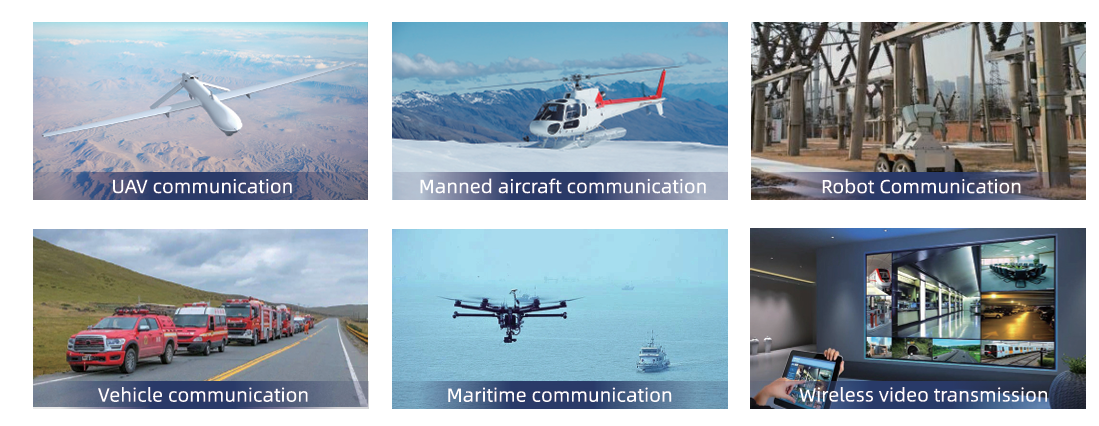
We recommend that security and defense contractors entirely abandon rotary-wing multicopters for any mission extending beyond 5 kilometers. For heavy-duty applications, the superior aerodynamic efficiency of fixed wing drones paired with VTOL capabilities is the only logical choice. Specifically, the long range vtol drone platform allows operators to plan deep-penetration surveillance routes, launch vertically from confined jungle or urban environments, transition to high-speed forward flight, and loiter silently for hours over the target. Match this hardware with rigorous drone flight planning, and your mission success rate will increase exponentially.
Essential Mission Planning Tables
| Mission Profile | Primary Planning Objective | Critical Flight Parameters |
|---|---|---|
| Covert Surveillance (ISR) | Sustained, undetected target observation | High-altitude loiter, thermal crossover timing, acoustic masking |
| Kinetic Payload Delivery | Precision drop and rapid egress | Wind vector calculation, high-speed ingress, automated release triggers |
| Border Patrol / Linear Scan | Maximum geographic coverage per sortie | Terrain following, automated camera tracking, energy optimization |
| Feature | Basic Software (e.g., DJI Pilot) | Tactical Software (e.g., QGroundControl, Mission Planner) |
|---|---|---|
| Waypoint Navigation | Simple 2D map clicking | Advanced 3D terrain integration and dynamic altitude adjustment |
| Payload Control | Basic camera shutter control | Automated PWM triggers for payload drops and gimbal lock-on |
| Failsafe Logic | Return-to-Home on signal loss | Continue mission autonomously, radio-silence mode, alternate rally points |
| Network Architecture | Point-to-point (easily jammed) | Mesh networking integration for beyond visual line of sight (BVLOS) |
| Pros (Advantages) | Cons (Limitations) |
|---|---|
| Eliminates pilot error and fatigue during extended 10-hour missions. | Cannot dynamically react to sudden, unmapped anti-aircraft threats without AI edge computing. |
| Guarantees payload drop precision based on mathematical ballistic calculations. | Requires extensive pre-flight intelligence and highly accurate digital elevation models. |
| Allows the UAV to complete the mission even under total radio jamming. | Lack of “human in the loop” can lead to target misidentification in complex environments. |
| If your drone flight planning requires… | You need… | Hardware Recommendation |
|---|---|---|
| Silent operation for low-altitude night surveillance | Zero-emission propulsion and high-res thermal imaging | Electric VTOL Drone |
| Dropping 10kg+ payloads deep in hostile territory | Massive lifting thrust and extended fuel capacity | Heavy Lift Hybrid VTOL Drone |
| 10+ hours of continuous overwatch for border security | Extreme endurance and robust wingspan | Hybrid VTOL Drone (EFI Engine) |
The Bottom Line
Mastering drone flight planning for surveillance and attack missions is not a software exercise; it is the definitive doctrine for modern tactical operations. A poorly planned flight renders the most expensive sensor payload entirely useless. By accounting for terrain, electronic warfare, and payload ballistics during the pre-flight phase, operators ensure mission survivability. However, software cannot compensate for inadequate hardware. To execute these complex plans successfully, commercial users and defense contractors must upgrade to industrial-grade platforms. Partnering with China Moneypro UAV to deploy robust, payload-agnostic VTOL systems is the most effective commercial decision you can make to guarantee the success of your next high-stakes mission.
Frequently Asked Questions (FAQ)
Can drone flight planning software operate without a GPS signal?
Yes. While standard consumer drones will drift and crash without GPS, tactical drone flight planning incorporates fallbacks. Advanced UAVs use Inertial Navigation Systems (INS), optical flow cameras, and visual odometry. The flight plan can be programmed to switch to these localized sensors instantly if GNSS jamming or spoofing is detected, allowing the drone to continue its surveillance or attack mission autonomously.
What is a loiter pattern, and why is it critical for surveillance?
A loiter pattern is a programmed flight path (usually a circle or figure-eight) that keeps the UAV positioned over a specific target area for an extended period. It is critical for surveillance because it allows the EO/IR gimbal camera to maintain a continuous, uninterrupted line of sight on the target, providing ground commanders with persistent, real-time intelligence without the drone flying out of sensor range.
How does a VTOL drone improve kinetic payload delivery?
A VTOL (Vertical Take-Off and Landing) fixed-wing drone combines the best of both worlds. It uses its fixed wings to travel long distances efficiently, penetrating deep into target zones. Upon reaching the drop zone, it can transition back to hover mode. This allows for highly precise, stationary payload drops—something a traditional fixed-wing aircraft moving at 100 km/h struggles to achieve accurately—before transitioning back to fast forward flight for rapid egress.
Authoritative Industry References
- Federal Aviation Administration (FAA): Guidelines on Unmanned Aircraft System Traffic Management (UTM) and airspace integration protocols for advanced UAV operations. Review FAA UAS Guidelines
- NATO Standardization Office: Documentation on STANAG 4586, the standard interface of the Unmanned Control System for NATO UAV interoperability in tactical environments. Explore NATO UAS Standards
- Defense Innovation Unit (DIU): Insights and commercial technology adoption strategies for integrating advanced autonomous drone platforms into national security operations. Read DIU Technology Reports