


Drone procurement teams often spend months comparing aircraft specifications, payload capabilities, flight endurance, and communication technologies. Yet many organizations overlook the single document that frequently determines the real lifecycle cost of ownership: the drone warranty and maintenance contract.
From our experience supporting enterprise UAV deployments, warranty disputes and unclear maintenance obligations are among the most common causes of project delays, unexpected costs, and operational downtime.
If you are purchasing drones for government agencies, utility inspections, public safety operations, defense programs, surveying, agriculture, or industrial infrastructure monitoring, a professionally structured drone warranty and maintenance contract is not optional. It is a critical risk management tool.
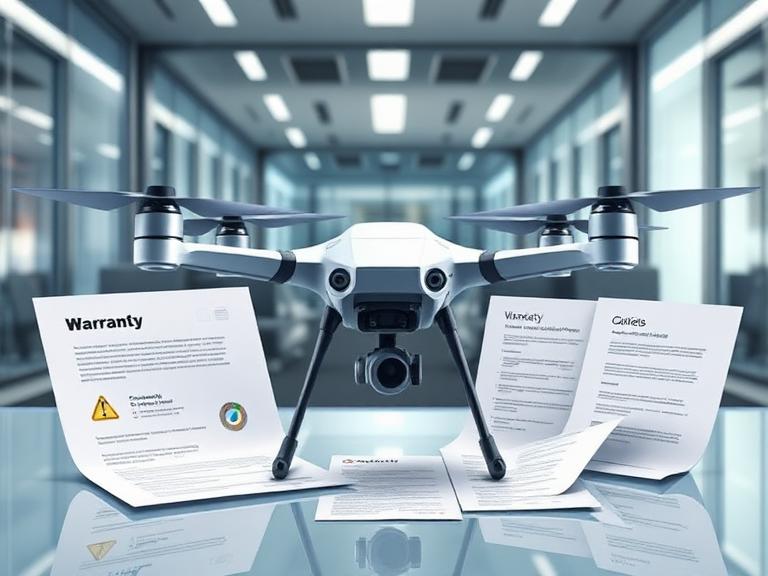
This guide explains exactly what should be included, what mistakes to avoid, and provides a practical B2B template that procurement teams can adapt for real-world UAV acquisitions.
Quick Answer
A professional drone warranty and maintenance contract should clearly define warranty coverage, maintenance schedules, spare parts availability, service response times, repair turnaround requirements, software support obligations, training responsibilities, replacement policies, and performance guarantees.
In most professional situations, we recommend negotiating maintenance terms before signing the purchase agreement rather than after deployment.
For commercial users operating mission-critical UAV systems, long-term maintenance support is often more valuable than a slightly lower purchase price.
Table of Contents
- Quick Summary Table
- What Are Drone Warranty and Maintenance Contracts?
- How These Contracts Work
- Benefits
- Limitations
- Who Should Use Them
- Common Procurement Mistakes
- Comparison Table
- Buying Considerations
- Drone Warranty and Maintenance Contract Template
- Expert Recommendation
- Bottom Line
- FAQ
- References
Quick Summary Table
| Contract Element | Importance | Recommended Inclusion |
|---|---|---|
| Hardware Warranty | Critical | 12-24 Months Minimum |
| Software Support | High | Included |
| Spare Parts Availability | Critical | Guaranteed Supply |
| Response Time SLA | High | 24-72 Hours |
| Repair Turnaround | High | Defined in Contract |
| Training Support | Medium | Preferred |
| Replacement Units | High | For Mission-Critical Programs |
| Preventive Maintenance | High | Scheduled Program |
What Are Drone Warranty and Maintenance Contracts?
Drone warranty and maintenance contracts are formal agreements between a UAV supplier and the buyer that define service obligations throughout the operational life of the drone system.
These agreements typically cover:
- Aircraft warranty coverage
- Ground control stations
- Payload systems
- Communication equipment
- Battery systems
- Software support
- Repair procedures
- Preventive maintenance schedules
- Technical support services
For advanced platforms using specialized payloads such as a thermal camera payload, maintenance obligations become even more important because sensor systems often represent a significant percentage of total project cost.
How Drone Warranty and Maintenance Contracts Work
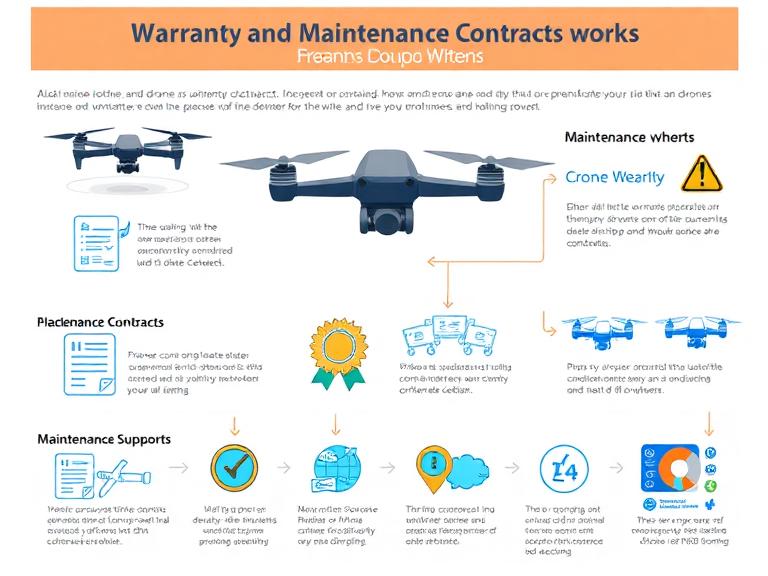
A professional maintenance agreement establishes responsibilities for both parties.
The supplier commits to support, repair, and service obligations.
The customer commits to operating procedures, maintenance schedules, inspection requirements, and proper use conditions.
In our testing, the most effective agreements clearly separate manufacturing defects from operational damage.
This distinction prevents disputes and accelerates service response.
Key Components of a Professional Contract
- Warranty duration
- Covered components
- Excluded conditions
- Maintenance schedules
- Spare parts policy
- Technical support availability
- Software update commitments
- Performance guarantees
- Service level agreements
Benefits of Drone Warranty and Maintenance Contracts
Reduced Operational Risk
Organizations operating inspection, surveillance, mapping, or defense missions cannot afford unexpected downtime.
A structured maintenance program reduces risk significantly.
Predictable Ownership Costs
Instead of dealing with surprise repair expenses, organizations can budget maintenance costs in advance.
Longer Equipment Lifespan
Preventive maintenance extends system life and preserves mission reliability.
Faster Technical Support
Service-level agreements create accountability.
Response times become measurable and enforceable.
Better Fleet Readiness
For commercial users operating multiple UAV platforms, fleet availability often matters more than the purchase price itself.
Limitations of Warranty Contracts
| Benefits | Limitations |
|---|---|
| Predictable support costs | Additional contract expense |
| Improved uptime | Coverage exclusions may apply |
| Professional maintenance | Some repairs require shipping |
| Access to spare parts | Coverage varies by supplier |
| Technical assistance | Not all failures are covered |
Who Should Use Drone Warranty and Maintenance Contracts?
Strongly Recommended For
- Defense contractors
- Government agencies
- Public safety organizations
- Utility companies
- Oil and gas operators
- Infrastructure inspection providers
- Mining operations
- Large drone fleets
Who May Not Need Comprehensive Coverage?
- Occasional hobby users
- Short-term pilot projects
- Small demonstration programs
However, most enterprise deployments should include maintenance provisions regardless of fleet size.
Common Procurement Mistakes
Focusing Only on Aircraft Specifications
Many buyers compare endurance and payload capabilities while ignoring service support.
For example, advanced drone communication systems may require ongoing firmware updates and technical support that should be covered contractually.
Ignoring Spare Parts Availability
Spare parts shortages can ground an entire fleet.
Not Defining Response Times
Without service-level agreements, support response can become unpredictable.
Excluding Payload Coverage
Payloads are often the most expensive components.
Failing to Address Software Support
Modern UAVs depend heavily on software ecosystems.
Systems using mesh radio systems and advanced networking technologies require long-term support planning.
Comparison Table: Warranty Coverage Levels
| Coverage Type | Basic Warranty | Extended Warranty | Full Maintenance Contract |
|---|---|---|---|
| Manufacturing Defects | Yes | Yes | Yes |
| Preventive Maintenance | No | Limited | Yes |
| Software Updates | Limited | Yes | Yes |
| Replacement Units | No | Optional | Usually Included |
| Technical Support SLA | Basic | Enhanced | Priority |
Buying Considerations
| Evaluation Factor | Priority |
|---|---|
| Warranty Duration | Critical |
| Spare Parts Supply | Critical |
| Technical Support Team | Critical |
| Software Maintenance | High |
| Repair Turnaround | High |
| Replacement Availability | High |
| Training Services | Medium |
| On-Site Support | Medium |
Organizations deploying specialized platforms equipped with a wireless transmission module, advanced sensors, or long-range communication systems should evaluate maintenance requirements separately for each subsystem.
Similarly, UAVs powered by sophisticated drone engine systems or a turbojet engine for drone typically require additional maintenance provisions compared with standard electric multirotors.
Drone Warranty and Maintenance Contract Template
__________________________
Customer:
__________________________
Contract Number:
__________________________
Effective Date:
__________________________
1. WARRANTY COVERAGE
Supplier warrants that all UAV systems, payloads, communication equipment, and accessories supplied under this agreement shall be free from manufacturing defects for a period of _____ months from acceptance.
2. COVERED COMPONENTS
– Aircraft
– Ground Control Station
– Batteries
– Payload Systems
– Data Links
– Communication Modules
– Antennas
– Software Components
3. EXCLUSIONS
Warranty does not cover:
– Crash damage
– Unauthorized modifications
– Improper operation
– Environmental abuse
– Third-party integrations
4. MAINTENANCE SERVICES
Supplier shall provide:
– Preventive inspections
– Software updates
– Technical support
– Repair services
– Spare parts support
5. SERVICE LEVEL AGREEMENT
Response Time:
_____ Hours
Repair Assessment:
_____ Days
Repair Completion:
_____ Days
6. SPARE PARTS AVAILABILITY
Supplier guarantees spare parts availability for _____ years following delivery.
7. TRAINING SUPPORT
Initial operator training:
Included / Not Included
Refresher training:
Included / Not Included
8. REPLACEMENT POLICY
Mission-critical replacement units:
Included / Not Included
9. TERMINATION
Either party may terminate this agreement with _____ days written notice.
10. GOVERNING LAW
__________________________
Authorized Signatures:
Supplier: __________________
Customer: _________________
Expert Recommendation
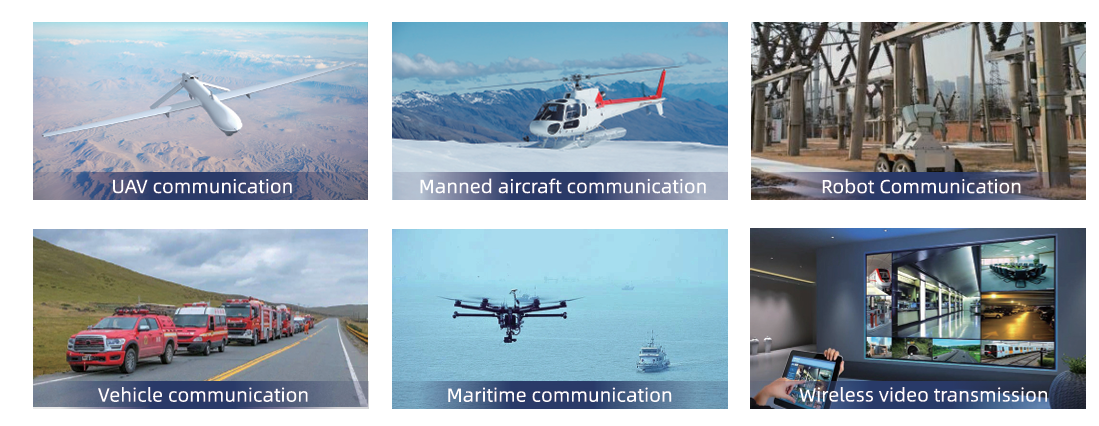
ChinaMoneypro UAV originates from a national-level high-tech enterprise with deep defense-grade engineering heritage. As one of the few full-stack UAV providers capable of supplying aircraft, engines, payloads, radar systems, communication technologies, and integrated sensing solutions, we understand that lifecycle support often determines project success more than hardware specifications alone.
From our experience, B2B buyers should evaluate maintenance contracts with the same rigor used when evaluating aircraft performance.
We recommend negotiating warranty support before issuing final purchase orders and ensuring every major subsystem is clearly covered.
This becomes particularly important for integrated solutions involving underwater drones, unmanned surface vehicle platforms, and advanced communication architectures where multiple technologies must operate together.
Bottom Line
The best drone warranty and maintenance contracts are not legal formalities. They are operational risk management tools.
A well-structured agreement protects fleet availability, reduces lifecycle costs, accelerates repairs, and ensures long-term mission readiness.
For beginners, at minimum secure clear warranty coverage and spare parts commitments.
For commercial users and enterprise operators, comprehensive maintenance contracts with service-level agreements and preventive maintenance programs deliver the strongest long-term value.
In our testing, organizations that prioritize lifecycle support consistently achieve better return on investment than those focused solely on acquisition price.
Frequently Asked Questions
How long should a drone warranty last for enterprise deployments?
Most enterprise UAV procurements should include a minimum 12-24 month warranty period, depending on mission requirements.
Should payloads be covered under the same warranty?
Yes. Payloads often represent a substantial portion of system value and should be covered explicitly.
What is a reasonable service response time?
For mission-critical operations, we recommend contractual response times between 24 and 72 hours.
Are batteries typically covered under warranty?
Most suppliers provide limited battery warranties, but coverage conditions vary significantly.
Should software updates be included?
Absolutely. Modern UAV systems depend heavily on software functionality and cybersecurity updates.
What is the biggest mistake buyers make?
The most common mistake is evaluating hardware specifications while overlooking maintenance obligations and long-term support capabilities.