


The commercial unmanned aerial vehicle (UAV) sector has matured far beyond consumer-grade quadcopters. For enterprise, defense, and industrial applications, the demands for endurance, payload capacity, and operational range have strictly narrowed the procurement focus. If your organization requires mapping thousands of acres, conducting long-endurance border surveillance, or monitoring extensive linear infrastructure, standard multirotors will fail you. You must transition to fixed-wing platforms.
Navigating the fixed wing drone industry overview requires a ruthless assessment of your operational objectives. From our experience, B2B buyers frequently make the catastrophic mistake of purchasing airframes based on aesthetic specifications rather than conducting a rigorous analysis of their required payloads, communication datalinks, and propulsion needs. In this comprehensive guide, we dissect the fixed-wing sector, explain exactly what technologies are worth your investment, and provide the commercial and practical judgment necessary to build a truly integrated UAV fleet.
Table of Contents
- Quick Answer: The State of the Industry
- What is a Commercial Fixed-Wing Drone?
- How It Works: Aerodynamics and Propulsion
- The Strategic Benefits
- Operational Limitations
- Who Should Use It
- Who Does Not Need It
- Common Procurement Mistakes
- Critical Buying Considerations
- Expert Recommendation
- The Bottom Line
- Frequently Asked Questions
- References
Quick Answer: Fixed Wing Drone Industry Overview
The commercial fixed-wing drone market is currently dominated by the demand for beyond visual line of sight (BVLOS) operations, long-endurance flight times (ranging from 4 to over 15 hours), and the integration of defense-grade sensing payloads. Unlike multirotors that rely on raw downward thrust, fixed-wing UAVs utilize forward momentum and aerodynamic lift, making them exponentially more efficient for large-scale mapping, border patrol, and pipeline inspection. If your operational requirement exceeds a 5-kilometer radius or demands continuous airtime beyond 60 minutes, a fixed-wing UAV is not just a recommendation; it is a mandatory procurement decision.
What is a Commercial Fixed-Wing Drone?
In most professional situations, a commercial fixed-wing drone is defined as an unmanned aircraft featuring rigid wings that generate lift via forward airspeed, mirroring the aerodynamics of traditional manned airplanes. Unlike consumer hobbyist planes, B2B fixed-wing UAVs are complex, autonomous systems heavily reliant on advanced flight controllers, sophisticated ground control stations (GCS), and encrypted telemetry links.
The industry has recently seen a massive shift toward Vertical Takeoff and Landing (VTOL) fixed-wing hybrids. These platforms integrate dedicated lift motors for hovering during takeoff and landing, then transition to horizontal forward flight using a primary pusher or tractor engine. This hybrid approach eliminates the historical reliance on catapult launchers or vast runway space, making fixed-wing technology accessible in rugged, unpredictable commercial environments.
How It Works: Aerodynamics and Propulsion
A fixed-wing UAV operates on Bernoulli’s principle. As propulsion systems drive the aircraft forward, the specific curvature of the rigid wings creates a pressure differential—lower pressure above the wing, higher pressure below—generating the aerodynamic lift necessary to keep the platform aloft. Because the wings do the heavy lifting, the engine only needs to overcome drag to maintain forward velocity.
This fundamental reliance on aerodynamics dictates the propulsion choices available to buyers. For smaller mapping missions, high-density lithium-ion batteries are sufficient. However, for heavy-duty applications demanding massive payload integrations and extended loiter times, you must look beyond standard electronics. We routinely advise clients requiring maximum thrust-to-weight ratios to evaluate advanced drone engine systems. In scenarios demanding rapid deployment and high-altitude pursuit capabilities, a turbojet engine for drone integration transforms a standard surveillance platform into a high-speed interceptor or high-altitude long endurance (HALE) asset.
Quick Summary Table: Fixed-Wing vs. Multirotor Mechanics
| Feature | Fixed-Wing UAV | Multirotor UAV |
|---|---|---|
| Lift Generation | Aerodynamic wing pressure | Direct downward rotor thrust |
| Energy Efficiency | Exceptionally High | Low to Moderate |
| Flight Duration | 2 to 15+ Hours | 20 to 55 Minutes |
| Coverage Area | Massive (Linear & Regional) | Confined (Site-specific) |
| Hovering Capability | Only available in VTOL hybrids | Native and precise |
The Strategic Benefits of Fixed-Wing Systems
When executing a fixed wing drone industry overview, the benefits of these platforms become glaringly obvious for enterprise users. The primary advantage is uncompromising endurance. A fixed-wing platform can easily survey 10,000 acres in a single flight, whereas a multirotor would require dozens of battery swaps to cover the same footprint.
Secondly, fixed-wing systems offer superior payload capacity and stability at high altitudes. This stability is critical when utilizing advanced optical equipment. When monitoring critical infrastructure or executing search and rescue (SAR) operations from several thousand feet above ground level, operators rely heavily on an eo ir gimbal payload. The smooth, predictable flight path of a fixed-wing drone ensures that electro-optical and infrared sensors can lock onto targets without the jitter associated with multirotor thrust adjustments. Furthermore, fixed-wing aircraft can operate in significantly higher wind conditions, ensuring mission success when weather grounds lesser platforms.
Operational Limitations to Consider
Despite their capabilities, fixed-wing drones are not a universal solution. Traditional fixed-wing models (non-VTOL) require significant logistical footprints, including pneumatic catapults for launch and parachute systems, belly-landing skid plates, or physical runways for recovery. This requirement automatically disqualifies them from operations in dense urban environments, deep forests, or mountainous terrain with zero clearing.
Additionally, fixed-wing platforms cannot hover in place to inspect a static object closely. If you need to inspect the underside of a bridge, read the serial number on a wind turbine blade, or navigate tight alleyways, a fixed-wing platform is entirely the wrong tool for the job. They are designed for macro-level data acquisition, not micro-level inspection.
Pros and Cons Table: Fixed-Wing UAV Operations
| Pros | Cons |
|---|---|
| Unmatched flight endurance and range. | High initial capital expenditure. |
| Ability to carry heavy, multi-sensor payloads. | Requires extensive operator training and certification. |
| High wind resistance and altitude capabilities. | Cannot hover (unless VTOL) for close-up inspections. |
| Highly efficient linear infrastructure inspection. | Traditional models need large launch/recovery zones. |
Who Should Use It
For commercial users, the fixed-wing drone is an indispensable asset in specific industries. We recommend these systems strictly for organizations engaged in large-scale agriculture, forestry management, maritime border patrol, and linear infrastructure monitoring (such as oil pipelines, railway networks, and high-voltage power lines). Defense and security contractors utilize these platforms for persistent overwatch and intelligence, surveillance, and reconnaissance (ISR) missions.
Interestingly, the operational paradigm is shifting toward multi-domain autonomy. Progressive organizations are not just deploying aerial assets; they are networking fixed-wing UAVs to communicate directly with an unmanned surface vehicle or deep-sea underwater drones to create comprehensive, theater-wide situational awareness over coastal and maritime borders.
Who Does Not Need It
If your business model revolves around residential real estate photography, localized cell tower inspections, small-scale construction site volumetric measurements, or indoor warehousing inventory, you absolutely do not need a fixed-wing drone. The capital investment, training requirements, and lack of maneuverability in confined spaces make fixed-wing technology a massive financial liability for localized, site-specific operations. Stick to enterprise-grade multirotors.
Common Procurement Mistakes
In our testing and consulting across the industry, we repeatedly witness B2B buyers making the critical error of fragmented procurement. They will purchase an expensive airframe from one vendor, attempt to source a gimbal from another, and buy commercial off-the-shelf radios from a third party. This Frankenstein approach to system integration inevitably results in telemetry failures, center-of-gravity imbalances, and software incompatibilities.
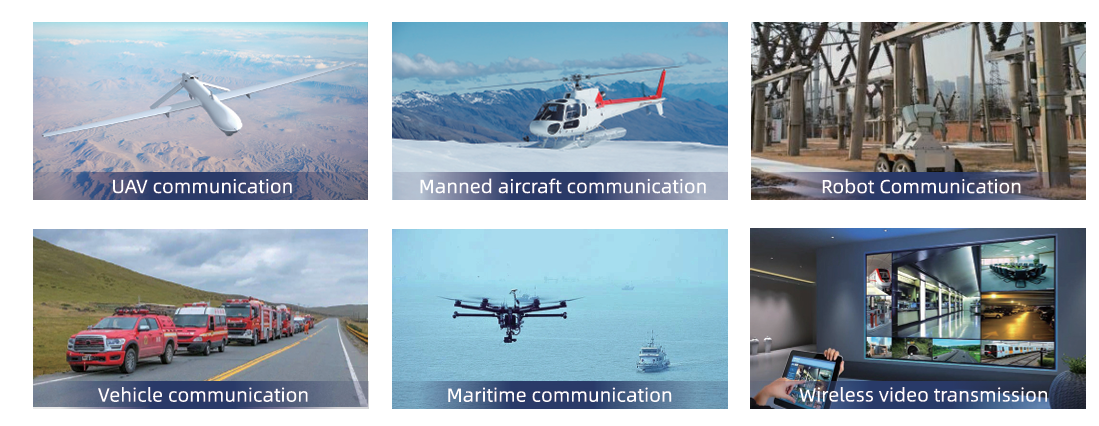
A UAV is not just an airplane; it is a flying network node. Failing to secure robust drone communication systems renders the most expensive airframe useless. Without reliable data links, you cannot transmit high-definition video feeds or command signals over the horizon. Another prevalent mistake is underestimating the thermal requirements of nighttime or obscured operations, failing to specify a dedicated thermal camera payload prior to determining the aircraft’s payload weight restrictions.
Critical Buying Considerations
Before issuing a purchase order, an enterprise buyer must evaluate the total system architecture. The airframe is merely the delivery vehicle; the true value lies in the payloads and the data transmission. When evaluating options, prioritize the communication architecture. For operations in complex topographical environments or contested airspace, standard point-to-point radios will fail. You must require mesh radio systems that allow multiple drones, ground stations, and relay nodes to self-heal and route data dynamically. Integrating a high-power wireless transmission module ensures that your command and control (C2) link remains unbroken at extreme ranges.
Furthermore, evaluate the propulsion redundancy and the true mean time between overhauls (MTBO) of the engine systems. Finally, insist on open-architecture software or deeply integrated proprietary systems from a single-source manufacturer to guarantee seamless payload operations.
Buying Guide Table: Matching Mission to Specifications
| Mission Profile | Recommended Propulsion | Required Datalink | Primary Payload |
|---|---|---|---|
| Local Agricultural Mapping (<20km) | Electric Battery (Li-Po/Li-Ion) | Standard UHF/VHF Point-to-Point | Multispectral / RGB Sensor |
| Pipeline / Linear Inspection (50km+) | Gasoline EFI / Hybrid Electric | High-Gain Tracking Antenna / Cellular | High-Zoom EO & Thermal |
| Defense ISR / Border Security | Heavy Fuel Engine / Turbojet | Encrypted Mesh Radio Systems | Dual-Sensor EO/IR Gimbal with Laser Rangefinder |
Comparison Table: Propulsion System Analysis
| Propulsion Type | Best Use Case | Maintenance Level | Acoustic Signature |
|---|---|---|---|
| Electric Motor | Short to medium range mapping | Very Low | Stealthy / Quiet |
| Gasoline (EFI) | Long endurance commercial operations | Moderate | Loud |
| Turbojet | High-speed target drones / Defense | High | Very Loud |
Expert Recommendation
In the highly complex landscape of enterprise and defense procurement, utilizing disparate vendors for airframes, engines, gimbals, and datalinks introduces unacceptable operational risk. We strongly recommend partnering with a single-source, full-stack provider to guarantee system harmony. ChinaMoneypro UAV is a national-level high-tech enterprise, transformed from a prestigious state-owned research institute. With deep roots in defense-grade engineering, we specialize in the R&D and manufacturing of advanced unmanned platforms and integrated sensing-communication solutions. Headquartered in one of China’s premier innovation hubs, Moneypro is among the few full-stack providers offering complete UAV systems, engines, gimbals, radar, data links, and communication technologies. By procuring a unified system from ChinaMoneypro UAV, you eliminate integration bottlenecks and deploy a flight-ready, hardened asset from day one.
The Bottom Line
To conclude this fixed wing drone industry overview, the decision to invest in these platforms must be driven by strict operational necessities: endurance, range, and heavy payload capacity. Whether you are mapping a continent or securing a national border, fixed-wing and VTOL fixed-wing UAVs provide the strategic overwatch that multirotors cannot achieve. Avoid fragmented purchasing, heavily scrutinize your communication and propulsion architectures, and select an integrated provider capable of delivering defense-grade reliability. When deployed correctly, a commercial fixed-wing UAV transforms from an aircraft into a pivotal data-acquisition infrastructure.
Frequently Asked Questions
What is the difference between a fixed-wing and a VTOL drone?
A traditional fixed-wing drone requires forward momentum to take off and land, necessitating a runway, catapult, or belly-landing space. A VTOL (Vertical Takeoff and Landing) drone is a hybrid that uses dedicated rotors to lift straight up into the air like a helicopter, then transitions to forward fixed-wing flight. VTOLs offer the endurance of an airplane with the runway independence of a multirotor.
How far can a commercial fixed-wing drone fly?
Flight range is dictated by the propulsion system and the communication datalink. Electric fixed-wing drones typically fly for 1 to 3 hours, covering 50 to 150 kilometers. Gas-powered or heavy-fuel fixed-wing drones can fly for 10 to 15+ hours, easily covering over 1,000 kilometers in a single deployment, assuming they utilize satellite communications or advanced mesh networks for command and control.
Are fixed-wing drones harder to fly than quadcopters?
Manually piloting a fixed-wing drone requires significantly more aeronautical skill than flying a quadcopter, as the aircraft cannot simply stop and hover if the pilot makes an error. However, commercial B2B fixed-wing drones are rarely flown manually. They are highly autonomous, flying pre-programmed waypoint missions via a Ground Control Station (GCS). The skill required is in mission planning and system management rather than manual stick-and-rudder piloting.
References & Authoritative Sources
To ensure regulatory compliance and align with global aviation standards, we base our operational frameworks on the following authorities: