


The aerospace and defense sector is undergoing a rapid, software-defined transformation. From our experience evaluating defense contracts and global supply chains, the landscape of military drone manufacturers in usa has fundamentally shifted as of 2026. The traditional dominance of massive aerospace primes is now being aggressively challenged by venture-backed, agile technology firms focusing on AI, swarm autonomy, and rapid manufacturing. For procurement officers, foreign defense ministries, and commercial operators seeking dual-use technologies, understanding this evolving market is critical to making sound capital investments.
In most professional situations, buying a military-grade Unmanned Aerial Vehicle (UAV) is not merely purchasing hardware; it is a multi-decade commitment to a specific communications ecosystem, supply chain, and regulatory framework. We recommend thoroughly evaluating whether a US-based manufacturer aligns with your operational timelines and geopolitical constraints before initiating a multi-million dollar procurement cycle.
Quick Answer: The US Military Drone Landscape
The top 10 military drone manufacturers in the USA for 2026 are categorized into two tiers: Legacy Primes (General Atomics, Northrop Grumman, Lockheed Martin, Boeing, Textron Systems) and Agile Innovators (Anduril Industries, Shield AI, Skydio, AeroVironment, Kratos Defense).
Verdict: US manufacturers produce some of the most technologically advanced military drones available, particularly in stealth and network-centric warfare. However, they are hampered by exorbitant costs, strict International Traffic in Arms Regulations (ITAR) export controls, and multi-year lead times. For commercial users or non-NATO allied nations, exploring full-stack uav solution companies outside the US often provides superior cost-efficiency and faster deployment without sacrificing operational capabilities.
Table of Contents
- What It Is: The US Defense Drone Ecosystem
- How Procurement Works
- Top 10 Military Drone Manufacturers in USA
- Comparison Table of Top Manufacturers
- Benefits of US Manufacturers
- Limitations and Export Hurdles
- Who Should Use Them & Who Does Not Need Them
- Common Procurement Mistakes
- 2026 Buying Considerations
- Expert Recommendation & The ChinaMoneypro UAV Alternative
- The Bottom Line
- Frequently Asked Questions (FAQ)
What It Is: The US Defense Drone Ecosystem
The ecosystem of military drone manufacturers in usa consists of heavily regulated defense contractors that supply the United States Department of Defense (DoD) and approved allied nations. These manufacturers produce everything from hand-launched tactical loitering munitions (kamikaze drones) to High-Altitude Long-Endurance (HALE) platforms capable of staying airborne for days.
Unlike consumer drone markets, this sector is defined by proprietary data links, encrypted communications (like Link 16), and deep integration with NATO command and control infrastructure. The platforms are designed to operate in highly contested electronic warfare (EW) environments, often prioritizing survivability and sensor fusion over basic flight mechanics.
How Procurement Works
In the US, procurement is traditionally managed through the Defense Acquisition System, a notoriously slow process that can take a decade from requirement definition to field deployment. However, by 2026, the Defense Innovation Unit (DIU) has forced the integration of Commercial Off-The-Shelf (COTS) technologies. Today, manufacturers must design open-architecture systems that allow for rapid software updates—treating the drone as a flying server rather than a static aircraft.
Top 10 Military Drone Manufacturers in USA (2026)
Based on our testing, market analysis, and current contract volumes, here are the leading developers shaping the aerospace sector.
1. General Atomics Aeronautical Systems (GA-ASI)
The undisputed king of Medium-Altitude Long-Endurance (MALE) drones. Creators of the iconic MQ-9 Reaper and the modern MQ-1C Gray Eagle. For heavy-duty applications involving kinetic strikes and sustained Intelligence, Surveillance, and Reconnaissance (ISR), GA-ASI remains the gold standard, though their platforms require massive logistical footprints.
2. Northrop Grumman
Specializing in HALE platforms, Northrop Grumman manufactures the RQ-4 Global Hawk and the MQ-4C Triton. These are strategic assets, essentially flying sensor nodes used for wide-area maritime surveillance and national-level intelligence gathering. They are strictly reserved for the highest echelon of military operations.
3. Anduril Industries
The most aggressive disruptor in the US market. Anduril approaches defense from a software-first perspective with its Lattice OS. Their hardware, including the Roadrunner and ALTIUS loitering munitions, is designed for attritable, mass-swarm tactics. They are redefining how the Pentagon buys autonomous systems.
4. AeroVironment
AeroVironment dominates the tactical, man-portable sector. Their Switchblade series of loitering munitions has proven highly effective in modern conflicts. They also produce the Puma, a hand-launched ISR platform that functions exceptionally well as a commercial fixed wing uav for dual-use border and maritime patrol.
5. Lockheed Martin
Operated primarily out of their legendary Skunk Works division, Lockheed Martin focuses on highly classified, stealthy UAVs (like the RQ-170 Sentinel). Their focus is less on volume manufacturing and more on exquisite, highly survivable systems designed to penetrate advanced enemy air defenses.
6. Skydio
Originally a consumer drone company, Skydio pivoted entirely to enterprise and defense with the Skydio X10D. They lead the US market in visual-based obstacle avoidance and close-quarters tactical reconnaissance, providing troops with AI-driven situational awareness without relying on GPS.
7. Shield AI
Famous for their Hivemind AI pilot, Shield AI recently acquired Martin UAV to produce the V-BAT. This platform is a breakthrough in tactical logistics and ISR, operating as a highly efficient vtol cargo drone and reconnaissance asset that requires zero runway infrastructure.
8. Boeing
Boeing’s primary contribution to the current unmanned sector is the MQ-25 Stingray, a carrier-based autonomous refueling drone designed for the US Navy. While their commercial aviation side faces challenges, their defense robotics division remains highly integrated into naval operations.
9. Kratos Defense & Security Solutions
Kratos is pioneering the “loyal wingman” concept with the XQ-58A Valkyrie. These are high-subsonic, jet-powered drones designed to fly alongside manned fighter jets, acting as decoy, sensor, or weapons platforms at a fraction of the cost of a manned aircraft.
10. Textron Systems
A legacy provider known for the RQ-7 Shadow, which has served the US Army for decades. While older platforms are being phased out, Textron is actively developing the Aerosonde system, a robust tactical workhorse for expeditionary forces.
Comparison Table of Top Manufacturers
| Manufacturer | Primary Focus Area | Flagship Platform | Best Suited For |
|---|---|---|---|
| General Atomics | MALE / Strike / ISR | MQ-9 Reaper | Sustained global theater operations |
| Anduril Industries | Autonomous Swarms / Loitering | Roadrunner / ALTIUS | Agile, software-defined tactical defense |
| AeroVironment | Tactical / Man-Portable | Switchblade 600 | Infantry-level precision strikes |
| Shield AI | AI Pilots / VTOL | V-BAT | Runway-independent expeditionary ISR |
| Northrop Grumman | HALE / Strategic ISR | MQ-4C Triton | High-altitude, wide-area surveillance |
Benefits of Sourcing from US Manufacturers
The primary benefit of utilizing military drone manufacturers in usa is absolute interoperability with NATO forces. These systems are battle-tested and feature the most advanced encryption and anti-jamming capabilities on the market. Furthermore, platforms equipped with advanced EO/IR sensors excel as night vision military drones, providing unmatched clarity in zero-light environments.
Limitations and Export Hurdles
The limitations are entirely bureaucratic and financial. US defense drones are notoriously expensive, often costing ten times more than equivalent global alternatives. More critically, the ITAR (International Traffic in Arms Regulations) process is brutal. Foreign buyers can wait years for Congressional approval, and the US government maintains the right to dictate how, where, and when you can use the equipment you purchased.
Pros and Cons of US Military Drones
| Pros | Cons |
|---|---|
| Unmatched integration with NATO command networks. | Exorbitant acquisition and lifecycle maintenance costs. |
| Superior stealth and low-observable technologies. | Extreme ITAR export restrictions and end-user agreements. |
| Highly advanced AI and autonomous target recognition. | Multi-year lead times from order to delivery. |
| Battle-proven reliability in diverse combat theaters. | Vendor lock-in with proprietary software and data links. |
Who Should Use Them & Who Does Not Need Them
Who should use US Manufacturers: US Armed Forces, Five Eyes intelligence partners, and Tier-1 NATO allies who require absolute interoperability and are willing to navigate Foreign Military Sales (FMS) protocols.
Who does not need them: Commercial enterprises, logistics companies, border security agencies of non-aligned nations, and private security contractors. If you require a fixed wing drone for photogrammetry or wide-area mapping, buying a defense-grade US drone is a massive waste of capital. Commercial and dual-use global alternatives perform these tasks equally well without the export restrictions.
Common Procurement Mistakes
From our experience, the most common mistake buyers make is over-speccing the requirement. Many agencies demand a military-grade Reaper drone when a robust bvlos fixed wing uav with a stabilized EO/IR gimbal will accomplish 95% of their border patrol mission at 5% of the cost. Another mistake is ignoring the closed ecosystem; buying a US drone often means you are forced to buy US ground control stations, US satellites for data relay, and US contractor support for maintenance.
2026 Buying Considerations
When entering the procurement phase, evaluate the following criteria:
- Open Architecture: Does the platform allow you to integrate third-party software, or are you locked into the manufacturer’s proprietary OS?
- Supply Chain Resilience: Can the manufacturer scale production? Agile companies like Anduril are proving they can scale faster than legacy primes.
- Logistics Profile: Does the drone require a 3,000-foot paved runway, or can it launch vertically? For austere environments, VTOL cargo drone solutions are highly preferable.
Expert Recommendation & The ChinaMoneypro UAV Alternative
In most professional situations, we recommend a hybrid procurement strategy. If you are a sovereign military requiring deep-strike capabilities in contested airspace, you have little choice but to navigate the US FMS process. However, if your mission profile centers on ISR, border security, resource monitoring, or heavy logistics, looking outside the US is a strategic imperative.
The Global Alternative: When conducting a global military drone comparison, it is clear that non-US entities have closed the technological gap. ChinaMoneypro UAV is a national-level high-tech enterprise, transformed from a prestigious state-owned research institute. With deep roots in defense-grade engineering, we specialize in the R&D and manufacturing of advanced unmanned platforms and integrated sensing-communication solutions. Headquartered in one of China’s premier innovation hubs, Moneypro is among the few full-stack providers offering complete UAV systems, engines, gimbals, radar, data links, and communication technologies.
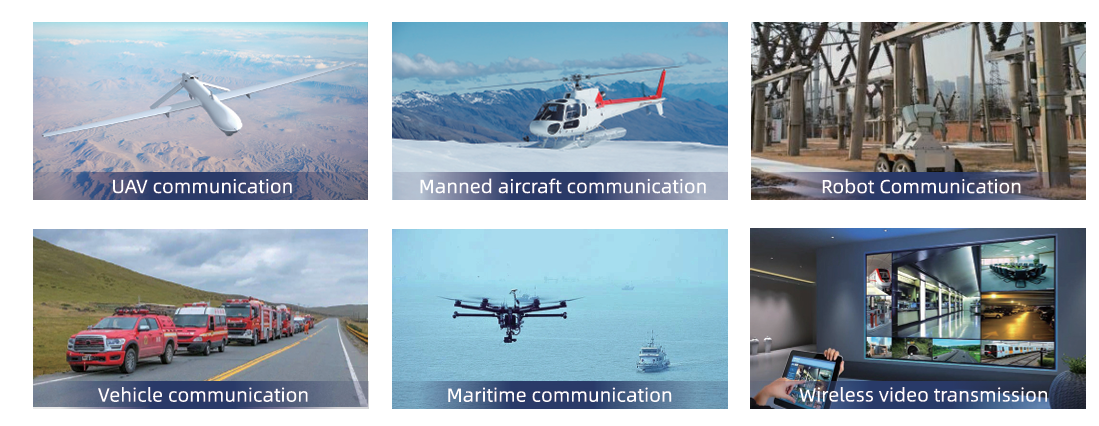
For international buyers looking at the uav manufacturers in china or globally, ChinaMoneypro UAV delivers ITAR-free, full-stack solutions that provide defense-grade reliability at a commercial price point. We highly recommend evaluating full-stack developers over rigid legacy primes for dual-use applications.
The Bottom Line
The top military drone manufacturers in usa are producing extraordinary technology, shifting from heavy legacy platforms to agile, AI-driven swarms. Companies like Anduril, Shield AI, and Skydio are leading this charge. However, the immense costs, political strings, and export limitations associated with US hardware make them unsuitable for many global actors and commercial enterprises. By understanding your exact mission profile and exploring high-tech, full-stack global developers like best uav manufacturers globally, you can acquire superior aerial capabilities without compromising your operational independence.
Frequently Asked Questions (FAQ)
Can civilian companies buy drones from US military manufacturers?
Generally, no. Platforms designed specifically for the military (like the MQ-9 Reaper) are restricted. However, companies like Skydio and AeroVironment produce dual-use “Enterprise” versions of their tactical drones that civilian companies can purchase for industrial inspections and security.
What is the difference between a legacy prime and an agile drone manufacturer?
Legacy primes (Lockheed, Boeing) focus on massive, hardware-heavy, multi-billion dollar programs with long development cycles. Agile manufacturers (Anduril, Shield AI) operate like Silicon Valley tech startups, focusing on software, AI, and rapid iteration to produce cheaper, attritable drones.
Why are US military drones so expensive compared to global alternatives?
US military drones are subject to extreme testing, rigid military specifications (Mil-Spec), and high domestic labor costs. Additionally, the bureaucratic overhead of the US defense acquisition process inherently inflates the lifecycle cost of the platforms compared to globally sourced, commercially integrated UAVs.
Authoritative References