


The battlefield of 2026 is fundamentally different from the conflicts of the past decade. With the rapid acceleration of artificial intelligence, electronic warfare (EW), and deep-strike capabilities, defense ministries worldwide are abandoning outdated, manpower-heavy reconnaissance tactics. At the center of this doctrinal shift is the integration of fixed wing drones in modern army modernization programs. If you are a procurement officer or a tactical commander, relying on legacy manned surveillance aircraft or short-range commercial quadcopters is no longer a viable strategy; it is a critical vulnerability.
From our experience engineering defense-grade unmanned platforms at ChinaMoneypro UAV, we see forces making severe miscalculations in their acquisition pipelines. Many attempt to force-fit short-endurance multirotors into wide-area border patrol or deep-strike targeting missions. To dominate contested airspace today, you must leverage the aerodynamic efficiency, heavy payload capacity, and autonomous persistence that only fixed-wing platforms can provide. This guide is designed to cut through the marketing noise and deliver actionable, commercial, and tactical judgment on how to effectively deploy these systems.
Quick Answer: Are Fixed Wing Drones Worth the Investment?
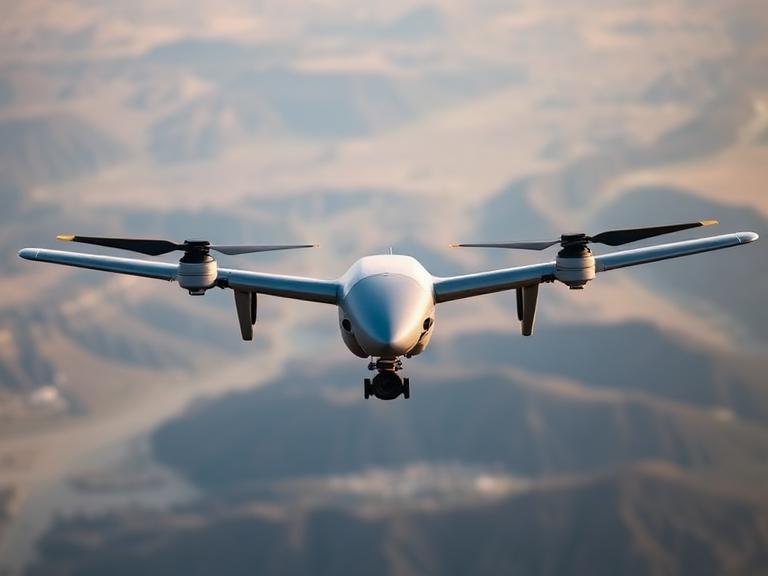
Absolutely. Fixed wing drones in modern army operations provide an unmatched return on investment regarding persistent domain awareness and strategic overwatch. Unlike multirotors, which consume massive battery power just to stay aloft, fixed-wing platforms generate aerodynamic lift, allowing them to loiter for 4 to 15 hours.
Expert Verdict: For long-range Intelligence, Surveillance, and Reconnaissance (ISR), communication relays, and target acquisition in GPS-denied environments, you must transition to fixed-wing or Hybrid VTOL systems. Do not waste defense budgets deploying multirotors for missions requiring operational radii exceeding 20 kilometers.
Table of Contents
What It Is: The Role of Fixed Wing Systems
When discussing fixed wing drones in modern army deployments, we are referring to unmanned aerial vehicles (UAVs) that utilize rigid wings to generate lift via forward airspeed, identical to traditional airplanes. In the context of 2026 special modernization, these are not the massive, multi-million-dollar strategic assets of the early 2000s that required massive airbases. Instead, the current focus is on Group 2 and Group 3 tactical UAVs—systems that can be transported in standard utility vehicles, rapidly assembled, and launched from austere environments.
These platforms serve as the undisputed workhorses for ISR missions, electronic signals intelligence (SIGINT), and artillery fire correction. By integrating high-resolution payloads on platforms like the fixed wing drones in our catalog, ground commanders obtain a God’s-eye view of the battlespace that persists long enough to track moving armor columns across hundreds of miles.
How It Works: Aerodynamics and VTOL Transition
The core mechanic of a fixed-wing UAV is its reliance on Bernoulli’s principle. Because the wings carry the weight of the aircraft, the propulsion system (whether an electric motor or an Electronic Fuel Injection (EFI) engine) only needs to overcome drag. This results in exponentially lower energy consumption compared to rotary-wing aircraft.
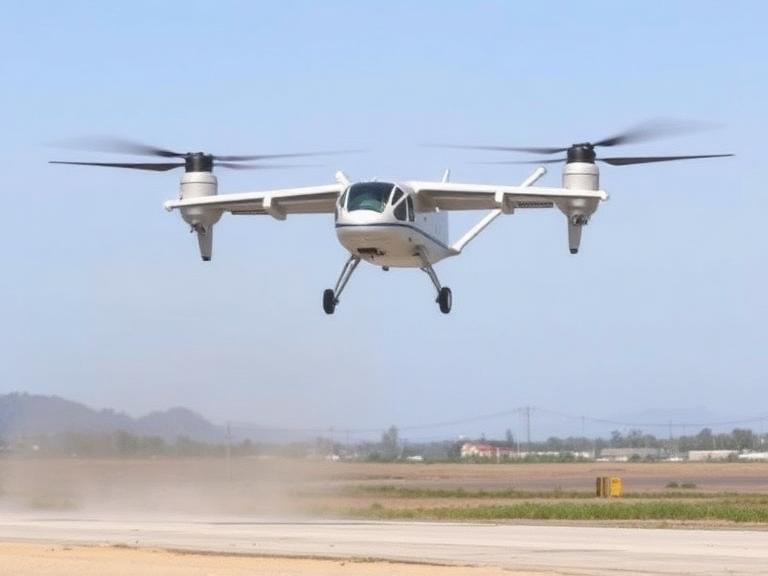
However, traditional fixed-wing aircraft require runways or bulky pneumatic catapults. To solve this logistical nightmare, the industry has universally shifted toward Hybrid VTOL (Vertical Take-Off and Landing) configurations. A hybrid vtol drone features dedicated vertical lift motors (similar to a quadcopter) to elevate the aircraft above tree lines or urban structures. Once safe altitude is reached, a rear pusher-propeller engages, accelerating the drone forward. As the wings generate lift, the vertical rotors power down and lock into aerodynamic alignment. This dual-flight envelope gives tactical units the runway independence of a helicopter combined with the speed and range of an airplane.
Tactical Benefits on the Battlefield
In most professional situations, the decision to integrate fixed wing drones in modern army units comes down to three operational advantages:
- Unmatched Endurance and Range: While a premium tactical quadcopter might fly for 45 minutes, a platform like our long endurance vtol drone can remain airborne for over 4 hours on electric power, and up to 10 hours using hybrid EFI engines. This enables persistent overwatch without constant battery swaps.
- Heavy Payload Capacity: Deep-strike targeting requires heavy, stabilized EO/IR (Electro-Optical/Infrared) gimbals with laser designators. A heavy lift vtol drone can carry 10kg or more, allowing for the integration of multiple sensors simultaneously, such as optical cameras combined with synthetic aperture radar (SAR).
- Acoustic and Visual Stealth: Operating at altitudes of 5,000 to 10,000 feet, fixed-wing platforms have an incredibly low acoustic signature. When gliding or operating at low RPMs, they are virtually undetectable by ground forces.
| Drone Type | Primary Advantage | Average Endurance | Best Special Use Case |
|---|---|---|---|
| Tactical Multirotor | Hovering precision, agility | 30 – 50 Minutes | Urban clearing, short-range trench overwatch |
| Traditional Fixed-Wing | Maximum efficiency, high speed | 5 – 15 Hours | Strategic mapping, deep border patrol (runway needed) |
| Hybrid VTOL Fixed-Wing | Runway independence + long range | 3 – 10 Hours | Frontline ISR, target acquisition, comms relay |
Operational Limitations
We believe in absolute transparency. Despite their superiority, fixed-wing and hybrid VTOL platforms are not flawless silver bullets. They have distinct limitations. First, they cannot hover in place with high efficiency. If a mission requires staring at a single window in an urban environment for an hour, a fixed-wing drone must continuously circle the target, which can alter the viewing angle and complicate laser designation.
Furthermore, their larger wingspans (often 2.5 to 4 meters) make them susceptible to severe crosswinds during the critical VTOL transition phase. Finally, the upfront capital expenditure is significantly higher than off-the-shelf consumer drones. You are paying for aerospace-grade carbon fiber, special-grade encrypted data links, and advanced avionics. If your budget only allows for disposable, attritable assets, high-end VTOLs may strain your procurement limits.
Who Should Use It
Any modern defense force engaging in theater-level operations must deploy these systems. Specifically, artillery battalions require them for beyond-visual-line-of-sight (BVLOS) fire correction. Border security forces tracking illicit cross-border movements across vast, hostile terrains will find platforms like the long range drone with camera indispensable. Additionally, naval units deploying from the decks of frigates heavily favor VTOL fixed-wing drones, as they require zero runway space while delivering horizon-extending radar coverage.
Who Does Not Need It
For beginners conducting basic perimeter security around a small, static forward operating base (FOB), a complex fixed-wing system is overkill. Similarly, infantry squads engaged in close-quarters urban combat (CQB) do not need fixed-wing assets; they require micro-drones that can fly through doorways and hover inside buildings. If your operational radius never exceeds 5 kilometers, stick to robust multirotor systems.
Common Procurement Mistakes
In our testing and consulting with global defense ministries, we repeatedly observe the same catastrophic procurement errors. The most common mistake is ignoring the electromagnetic environment. Buying a commercial-grade fixed-wing drone and deploying it into a modern combat zone is a recipe for disaster; commercial GPS and standard telemetry links will be jammed within minutes by enemy electronic warfare (EW) units.
Another frequent error is underestimating the logistical footprint of fuel. If you purchase gasoline-powered engines for endurance but your tactical units only carry JP-8 diesel, you have created a supply chain nightmare. This is why we often push clients toward an electric vtol drone for missions under 4 hours, simplifying field logistics entirely.
| Pros (Tactical Advantages) | Cons (Operational Challenges) |
|---|---|
| No runway required (launches from rough terrain/ships). | Larger physical footprint; harder to conceal on the ground. |
| Vastly superior flight time compared to quadcopters. | Higher radar cross-section (RCS) than micro-drones. |
| Ability to carry heavy, multi-sensor defense payloads. | Requires specialized operator training for transition phases. |
| Can glide to a safe landing if the main pusher motor fails. | Higher acquisition cost per unit. |
Buying Considerations
When selecting a platform from a vtol drone manufacturer, you must align the hardware with your specific tactical doctrine. Do not buy a drone based purely on a brochure’s maximum flight time. Consider the following:
| Mission Requirement | Key Specification to Prioritize | Recommended Solution |
|---|---|---|
| Persistent Border Overwatch | Endurance (10+ hours), EFI Engine | Heavy Lift Hybrid EFI VTOL |
| Silent Night-Time Infiltration | Low acoustic signature, Electric powertrain | All-Electric VTOL |
| High-Altitude Mapping/Targeting | Payload capacity (for heavy optical/laser payloads) | Long Range Fixed Wing (3.5m+ Wingspan) |
| Ship-to-Shore Reconnaissance | VTOL capability, Anti-corrosion materials | Compact Hybrid VTOL |
For commercial users looking to adapt defense technology for large-scale mining or agricultural surveys, ensure you evaluate platforms designed as industrial uav solutions, as they balance special-grade ruggedness with commercial software compatibility.
Expert Recommendation
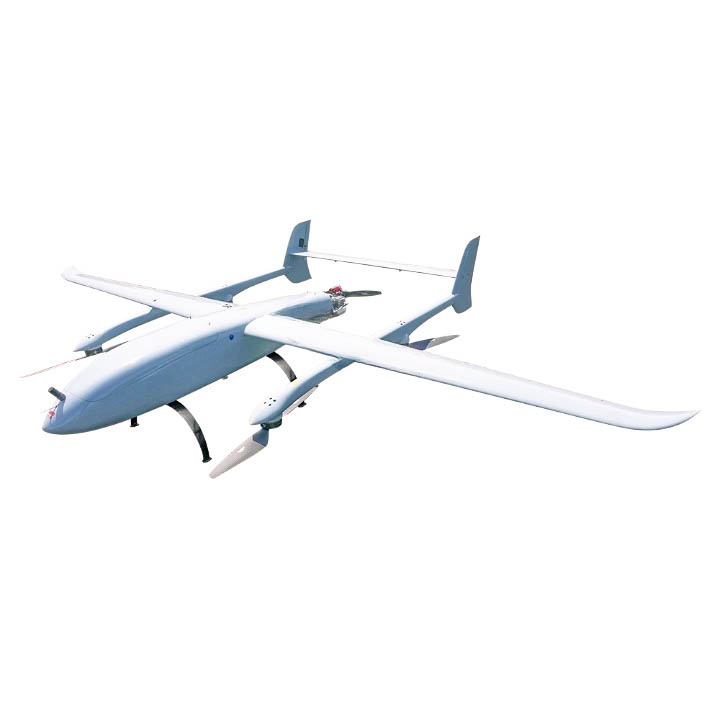
We recommend a decisive shift away from dependency on runways and fragile quadcopters. As a national-level high-tech enterprise transformed from a state-owned research institute, ChinaMoneypro UAV has engineered our platforms to survive the rigors of modern warfare. If you are upgrading your battalion’s capabilities in 2026, the China Moneypro M390 Hybrid VTOL is our definitive recommendation. With a robust 3.9m wingspan and 10 hours of flight time, it bridges the gap between strategic endurance and tactical, runway-independent deployment.
For heavy-duty applications demanding both lift and longevity, investing in full-stack providers who supply the drone, encrypted data link, and payload as a unified ecosystem prevents the integration failures common with piece-meal procurement. Stop settling for legacy systems; modernize your ISR architecture with purpose-built VTOL technology.
Frequently Asked Questions
Authoritative References
To further validate the strategic shift toward unmanned fixed-wing platforms in defense doctrines, we encourage procurement officers to review the current policies and market analyses from the following authoritative bodies:
- U.S. Department of Defense (DoD) – Review publications on the Replicator Initiative and the accelerated procurement of autonomous, attritable unmanned systems.
- North Atlantic Treaty Organization (NATO) – Consult standard agreements (STANAGs) regarding UAV interoperability, data link encryption, and joint airspace integration.
- Stockholm International Peace Research Institute (SIPRI) – Analyze global defense expenditure reports tracking the massive fiscal shift toward unmanned aerial vehicles and autonomous strike capabilities.