Unleashing Power: An In-Depth Look at the 2-Stroke Masterpiece
When it comes to high-performance engines for light aircraft and drones, few configurations balance power, weight, and simplicity as elegantly as a meticulously engineered 2-stroke. The model under review is a marvel of compact design, packing a formidable punch into a lightweight package. Designed for direct-drive applications, this engine leverages advanced materials and precise engineering to deliver reliable performance across a broad speed range. Whether you are powering a lightweight experimental aircraft or a heavy-lift drone, understanding its specifications is key to unlocking its full potential. This article delves into the core components, performance metrics, and unique features that make this powerplant a standout choice for demanding aviation and industrial uses. The focus keyword, 2-stroke engine specifications, will guide our exploration of its technical depth.
Core Mechanical Specifications
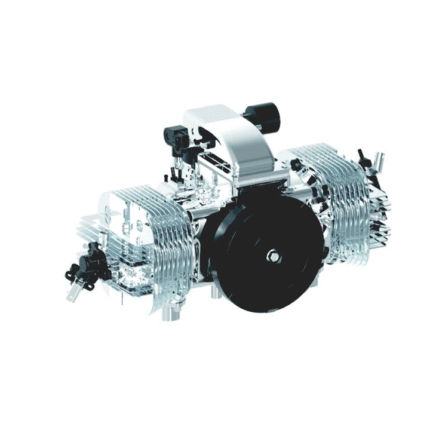
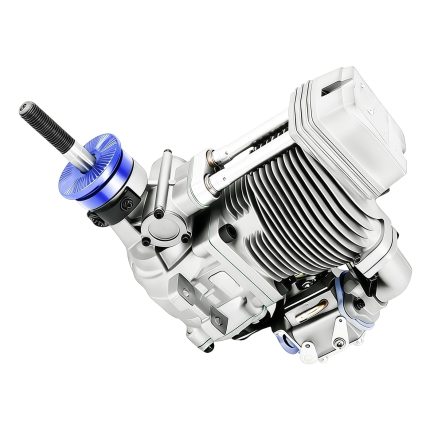
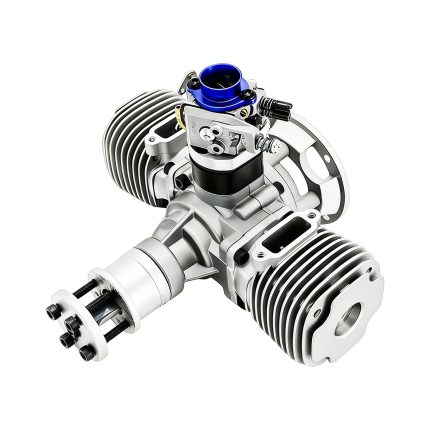
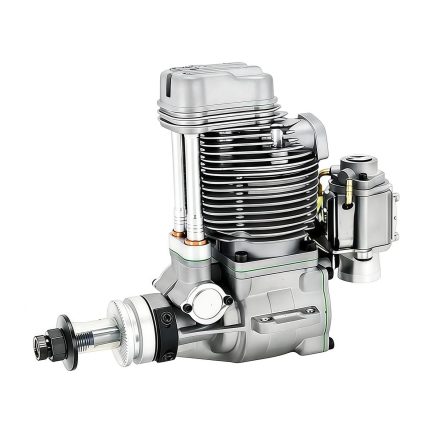
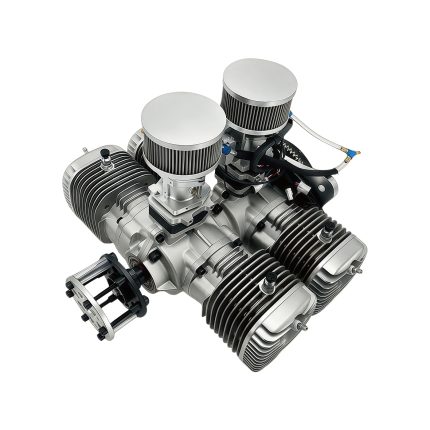
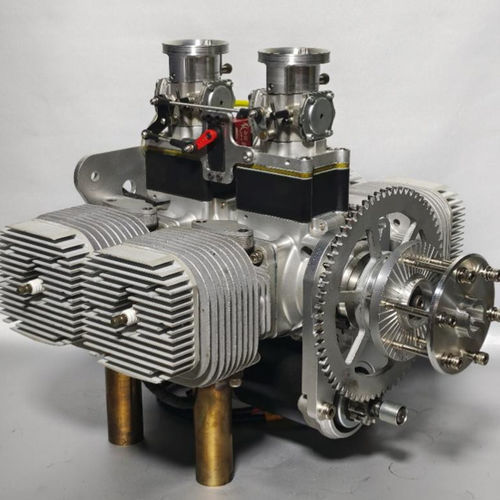
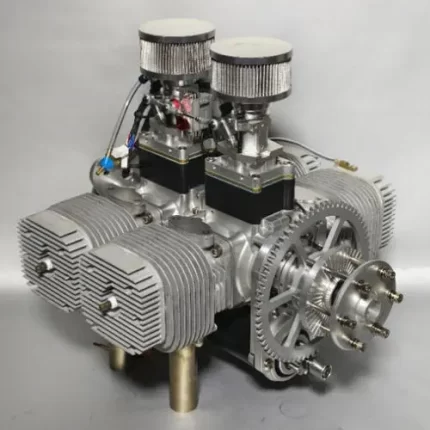
At the heart of this engine lies a robust 4-cylinder configuration, operating on a classic 2-stroke cycle. This design choice is deliberate, offering a high power-to-weight ratio essential for flight. The cylinder diameter is precisely 66mm, with a stroke travel of 40mm, resulting in a working displacement of 550cc. This displacement is optimized to deliver a broad torque curve, making it versatile for various propeller loads. The engine’s timing and fueling are tuned for a speed range of 1500 to 7500 RPM, ensuring smooth idle and vigorous top-end power. All structural components, from the crankcase to the cylinder, are crafted from high-grade aluminum alloy, with the cylinder featuring a specialized ceramic coating for enhanced durability and heat dissipation.
Fuel and Lubrication System
Reliable operation demands precise fuel management. This engine is designed to run on standard 92-95 octane gasoline, mixed at a 40:1 ratio with a fully synthetic 2-stroke lubricant. This mixture ensures proper lubrication of the crankshaft, piston, and cylinder walls while minimizing deposits and smoke. The combustion system is fed by a carburetor, featuring a reed valve intake that provides excellent throttle response and volumetric efficiency at varying RPMs. The ECU control utilizes advanced PWM and RS232 communication, operating on a 12-15V electrical system, allowing for fine-tuning of the ignition timing and fuel mapping.
Ignition and Starting
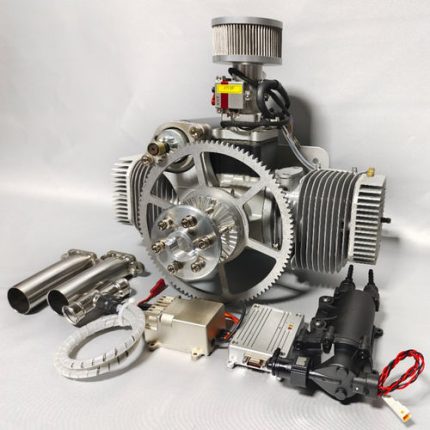
Ignition is handled by a reliable DC CDI (Capacitor Discharge Ignition) electronic system. This setup provides a hot, consistent spark across the entire RPM range. The specified spark plug is an NGK BPMR6A, gapped precisely between 0.6 and 0.7mm. To get the engine spinning, a powerful 12V 400W starter motor is employed, ensuring quick and reliable starts even in cold conditions. The generator is a three-phase permanent magnet alternator, offering multiple output options.
| Parameter | Value |
|---|---|
| Cylinder Diameter | 66mm |
| Piston Travel (Stroke) | 40mm |
| Working Displacement | 550cc |
| Speed Range | 1500 – 7500 RPM |
| Cooling System | Air Cooling |
| Rotation Direction (Facing Propeller) | Clockwise |
| Fuel Type | 92-95 Octane Gasoline |
| Oil Mix Ratio | 40:1 (Fully Synthetic) |
| Cylinder Material | Aluminum Alloy, Ceramic Coating |
| Crankcase Material | Machined Aluminum Alloy |
| Piston Material | Aluminum Alloy |
| Crankshaft | Precision Forged |
| Starter Motor | 12V / 400W |
| Ignition System | DC CDI Electronic |
| Ignition Operating Voltage | 12-15V |
| Spark Plug | NGK BPMR6A |
| Spark Plug Gap | 0.6 – 0.7 mm |
| Combustion System | Carburetor / Reed Valve Intake |
| ECU Control Form | PWM, RS232 |
| ECU Operating Voltage | 12-15V |
Performance, Output, and Dimensions
This engine’s power output is immensely scalable, ranging from 10 to 50 horsepower, depending on the specific tuning and propeller application. Its dry weight is similarly variable, falling between 10 and 50 kg, which underscores the importance of a complete, engineered package. The physical footprint is compact, with overall dimensions of 450mm in length, 300mm in width, and 345mm in height (including the exhaust pipe). This size makes it easy to integrate into tight nacelles or fuselage compartments. The power generation capabilities are equally impressive, offering a choice between a 14V 350W system or higher-output 28V systems at 600W, 1000W, or even 2000W. This electrical output is rectified and voltage-regulated, providing clean DC power for onboard avionics, servos, or drone flight controllers.
Generator and Transmission Options
The generator is a three-phase permanent magnet type, known for its efficiency and reliability. Power supply is managed through rectification and DC voltage regulation. The transmission form is pure direct drive, meaning the propeller is mounted directly to the crankshaft, eliminating gearbox weight, complexity, and parasitic losses. This system is ideal for applications requiring a simple, robust drivetrain. The recommended propeller range is broad, from 28×24 inches to 34×18 inches, allowing the user to fine-tune thrust for specific airframes.
| Attribute | Specification |
|---|---|
| Engine Power Output | 10 – 50 hp |
| Dry Weight | 10 – 50 kg |
| Dimensions (L x W x H) | 450 x 300 x 345 mm (incl. exhaust) |
| Generator Option 1 | 14V / 350W |
| Generator Option 2 | 28V / 600W, 1000W, 2000W |
| Generator Type | Three-Phase Permanent Magnet |
| Power Supply | Rectified, DC Voltage Regulated |
| Transmission Form | Direct Drive |
| Propeller Range | 28×24 to 34×18 inches |
| Engine Cycle | 2-Stroke |
| Number of Cylinders | 4 |
| Primary Application | Light Aircraft, Drones |
Conclusion: The Optimal Package for Specialized Flight
In summary, this 4-cylinder, 550cc 2-stroke engine represents a pinnacle of design for its class. Its comprehensive 2-stroke engine specifications—from the ceramic-coated aluminum cylinder and forged crankshaft to the versatile generator outputs and precise DC CDI ignition—demonstrate a commitment to performance and reliability. The flexible power range of 10-50 hp, combined with a lightweight structure and direct-drive simplicity, makes it an exceptional choice for builders of light aircraft and advanced drones who demand the utmost in power density and control. By understanding these detailed specifications, you can confidently integrate this powerplant into your next project, knowing that every component has been engineered for peak flight performance.