


ChinaMoneypro UAV is a national-level high-tech enterprise, transformed from a prestigious state-owned research institute. With deep roots in defense-grade engineering, we specialize in the R&D and manufacturing of advanced unmanned platforms and integrated sensing-communication solutions. Headquartered in one of China’s premier innovation hubs, Moneypro is among the few full-stack providers offering complete UAV systems, engines, gimbals, radar, data links, and communication technologies.
As developers of high-end autonomous systems at ChinaMoneypro UAV, we frequently encounter aerospace engineers struggling to lock down their navigation architecture. When it comes to dead reckoning, platform stabilization, and beyond-visual-line-of-sight (BVLOS) flight, your inertial measurement unit is the ultimate source of truth. Relying on consumer-grade sensors for a high-value drone is a catastrophic failure waiting to happen. To maintain absolute control in GNSS-denied environments, you need the best tactical grade MEMS IMU for unmanned aircraft.
From our experience, selecting an IMU requires stripping away the marketing jargon and looking strictly at the Allan variance charts. Whether you are outfitting an aerial platform or an unmanned surface vehicle, the right tactical grade MEMS IMU must deliver exceptional gyro bias stability and extreme resilience against vibration. In this guide, we will cut through the noise to help you make a definitive buying decision.
Quick Answer
If you want the absolute best tactical grade MEMS IMU for unmanned aircraft, we recommend looking at the Micro-Magic U4930, the Micro-Magic U6488, or the Analog Devices ADIS16490. From our experience, a true tactical grade MEMS IMU must deliver a gyro bias in-run stability of under 1°/hour and an angular random walk (ARW) below 0.1°/√hr. For commercial users building long-endurance platforms, the Micro-Magic U4930 provides a stunning 0.3°/h gyro bias stability and acts as a direct replacement for legacy systems. Alternatively, the Inertial Labs IMU-P series represents an outstanding SWaP-C optimized solution with 1°/hr stability.
Table of Contents
- What is a Tactical Grade MEMS IMU?
- How It Works: The Mechanics of Micro-Navigation
- Benefits of Upgrading to Tactical MEMS
- Limitations to Consider
- Who Should Use It & Who Does Not Need It
- Common Mistakes in IMU Integration
- Buying Considerations
- Expert Recommendation
- Quick Summary Table
- Comparison Table: Leading IMU Models
- Pros vs Cons Table
- Frequently Asked Questions
What is a Tactical Grade MEMS IMU?
An Inertial Measurement Unit (IMU) is an electronic device that measures and reports a body’s specific force, angular rate, and sometimes the magnetic field surrounding the body, using a combination of accelerometers, gyroscopes, and magnetometers. When we specifically discuss the best tactical grade MEMS IMU for unmanned aircraft, we are talking about a tier of performance that bridges the gap between cheap consumer chips and massively expensive Fiber Optic Gyroscopes (FOG).
Tactical grade performance generally dictates a gyroscope bias in-run stability between 0.1°/hour and 3°/hour. MEMS (Micro-Electro-Mechanical Systems) technology utilizes microscopic vibrating structures etched onto silicon wafers. When the UAV rotates, the Coriolis force acts on these vibrating structures, generating a measurable capacitive change. Unlike standard sensors, tactical grade units undergo rigorous factory calibration over extreme temperature ranges (often -40°C to +85°C) to mathematically compensate for thermal drift and non-linear errors.
How It Works: The Mechanics of Micro-Navigation
In most professional situations, the IMU functions as the inner ear of the flight controller. The gyroscopes provide real-time pitch, roll, and yaw rate data, allowing the flight computer to estimate the drone’s orientation through rapid mathematical integration. Simultaneously, the accelerometers detect linear acceleration and deceleration, feeding this data into an Extended Kalman Filter (EKF).
When you utilize sophisticated drone communication systems, the flight controller relies on the IMU to keep the antenna tracking perfectly aligned. If GPS signals are jammed or lost, the drone enters a dead-reckoning mode. The flight computer calculates the aircraft’s current position based solely on the last known GPS coordinate and the continuous feed of acceleration and rotation data from the IMU. Because integrating velocity over time inherently accumulates error, the extreme precision of a tactical grade MEMS IMU prevents the aircraft from immediately drifting out of the operational envelope.
Benefits of Upgrading to Tactical MEMS
The primary benefit of deploying the best tactical grade MEMS IMU for unmanned aircraft is the phenomenal SWaP-C (Size, Weight, Power, and Cost) advantage. Previously, achieving 1°/hr stability required a bulky FOG IMU weighing several kilograms. Today, modules like the Micro-Magic U6488 weigh a mere 50 grams and consume less than 2 watts of power.
For heavy-duty applications, such as integrating a turbojet engine for drone platforms, the vibrational immunity of modern tactical MEMS is unparalleled. They feature high-speed SPI interfaces (up to 2000Hz) that provide ultra-low latency data refreshes, allowing the flight controller to issue motor corrections in milliseconds. This guarantees a stable payload, which is critical when aiming lasers or utilizing high-zoom optical gimbals.
Limitations to Consider
We believe in commercial and practical judgment, which means acknowledging the limitations of MEMS technology. While the best tactical grade MEMS IMU for unmanned aircraft is highly capable, it is not a true strategic or navigation-grade sensor. If your mission profile requires hours of autonomous flight entirely without GNSS updates (such as operating underwater drones deep beneath the ocean surface), even a high-end MEMS IMU will eventually accumulate unacceptable drift.
Furthermore, MEMS sensors suffer from higher frequency noise compared to FOGs. They demand robust software-side filtering and mechanical vibration isolation mounts to perform at their advertised specifications. If you hard-mount a MEMS IMU directly to a vibrating drone engine systems chassis without dampening, the high-frequency acoustic noise will severely degrade the accelerometer’s output.
Who Should Use It & Who Does Not Need It
For commercial users: If you are operating beyond visual line of sight (BVLOS), conducting precision photogrammetry, or utilizing mesh radio systems in contested RF environments, upgrading to a tactical grade IMU is mandatory. It is the only way to ensure your $100K payload returns home if the GPS spoofing begins.
Who does not need it: For beginners building sub-250g hobby drones, FPV racers, or short-range agricultural spraying drones that strictly rely on continuous RTK GPS, spending $2,000 to $5,000 on a tactical IMU is a severe misallocation of capital. Standard industrial IMUs costing under $100 are perfectly adequate for line-of-sight hovering.
Common Mistakes in IMU Integration
From our experience, the most common mistake aerospace engineers make is obsessing over bias instability while completely ignoring Angular Random Walk (ARW) and Velocity Random Walk (VRW). Bias instability determines how much the sensor drifts over time at a constant temperature, but ARW dictates the underlying broadband noise of the gyroscope. A noisy gyro will feed erratic data to the flight controller, causing the motors to oscillate and burn excess battery power. You must ensure your ARW is below 0.1°/√hr.
Another fatal error is ignoring the mechanical integration. Failing to align the IMU orthogonal to the aircraft’s center of gravity requires heavy software matrix compensation, which introduces processing latency. Always align the IMU perfectly with the airframe’s axes.
Buying Considerations
When searching for the best tactical grade MEMS IMU for unmanned aircraft, you must evaluate the specifications objectively. We recommend focusing on the following core metrics:
- Gyroscope Bias In-Run Stability: Aim for 1°/hour or less. Anything above 3°/hour falls out of the tactical classification.
- Accelerometer Bias Stability: Look for values below 0.05 mg. High-end units like the ADIS16490 hit 0.0036 mg.
- Data Output Interface: You need an SPI or RS422 interface capable of at least 1000Hz to 2000Hz sampling rates to minimize latency.
- SWaP Profile: Ensure the weight of the unit does not negatively impact your payload capacity. Modern tactical MEMS should weigh between 10g and 150g.
Expert Recommendation
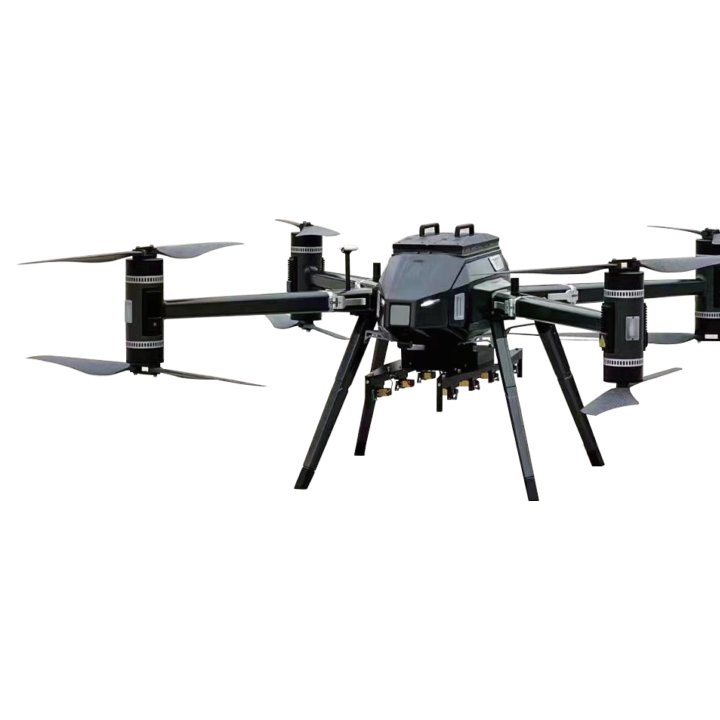
In most professional situations involving fixed-wing VTOLs or heavy-lift multirotors, we recommend deploying the Micro-Magic U4930 or the Inertial Labs IMU-P. These units provide absolute rock-solid stabilization that allows our wireless transmission module arrays to maintain continuous tracking links.
At ChinaMoneypro UAV, our uav technology solutions are engineered to withstand the most brutal electronic warfare and environmental conditions. If you are developing a platform intended for government, defense, or high-stakes industrial inspection, compromising on the IMU is an architectural flaw. The marginal cost increase of transitioning from an industrial MEMS to a tactical MEMS is entirely justified by the exponential increase in platform survivability during GPS outages.
Quick Summary Table
| IMU Classification | Typical Gyro Bias Stability | Primary Use Case | Estimated Cost Range |
|---|---|---|---|
| Consumer Grade | > 30°/hr | Smartphones, Toys, Basic Drones | $10 – $50 |
| Industrial Grade | 3°/hr to 10°/hr | Mapping Drones, Basic UGVs | $100 – $500 |
| Tactical Grade MEMS | 0.1°/hr to 3°/hr | BVLOS UAVs, Defense, High-End Gimbals | $1,000 – $10,000 |
| Navigation Grade (FOG/RLG) | < 0.01°/hr | Submarines, ICBMs, Satellites | $20,000+ |
Comparison Table: Leading IMU Models
| Model | Gyro Bias Stability | Angular Random Walk (ARW) | Weight | Best For |
|---|---|---|---|---|
| Micro-Magic U4930 | 0.3°/h | 0.02°/√h | 130g | HG4930 Replacement, Surveying |
| Analog Devices ADIS16490 | 1.8°/h | 0.09°/√h | ~45g | Low SWaP, Deep Integration |
| Micro-Magic U6488 | 1°/h | 0.065°/√h | 50g | Compact Drone Platforms |
| Inertial Labs IMU-P Tactical | 0.5°/h | 0.06°/√h | 70g | Platform Stabilization, AUVs |
Pros vs Cons Table: Tactical Grade MEMS
| Pros | Cons |
|---|---|
| Outstanding SWaP-C profile (compact and lightweight). | Cannot independently seek True North (requires dual GNSS or magnetometer). |
| Immune to massive shock loads that would shatter optical sensors. | Susceptible to high-frequency acoustic vibrations without proper damping. |
| Allows for 15-30 minutes of precise dead reckoning. | Not sufficient for multi-hour underwater navigation operations. |
| Mass-producible and far cheaper than FOG equivalents. | Requires rigorous factory thermal calibration to maintain accuracy. |
Frequently Asked Questions (FAQ)
Authoritative References & Standards
- IEEE Standard Specification Format Guide and Test Procedure for Inertial Sensor Equipment (IEEE Std 1283-2006): Defines the rigorous testing methodologies for establishing Allan variance, bias instability, and scale factor errors in tactical inertial sensors.
- MIL-STD-810G: The United States military standard emphasizing tailoring an equipment’s environmental design and test limits to the conditions that it will experience throughout its service life, critical for validating ruggedized UAV IMUs.
- Federal Aviation Administration (FAA): Guidelines and requirements surrounding BVLOS (Beyond Visual Line of Sight) operations for unmanned aircraft systems, which heavily dictate the necessity of robust dead-reckoning capabilities through tactical inertial navigation.