


From our experience engineering advanced unmanned platforms at ChinaMoneypro UAV, achieving absolute navigational dominance in GPS-denied environments requires uncompromising inertial sensing. For decades, the aerospace and defense sectors were forced to rely on heavy, expensive, and fragile Fiber Optic Gyroscopes (FOG) or Ring Laser Gyroscopes (RLG) to maintain attitude accuracy without external aiding. However, the paradigm has irrevocably shifted. The rapid evolution of the low drift MEMS gyroscope has fundamentally rewritten the rules of Size, Weight, Power, and Cost (SWaP-C) for modern avionics.
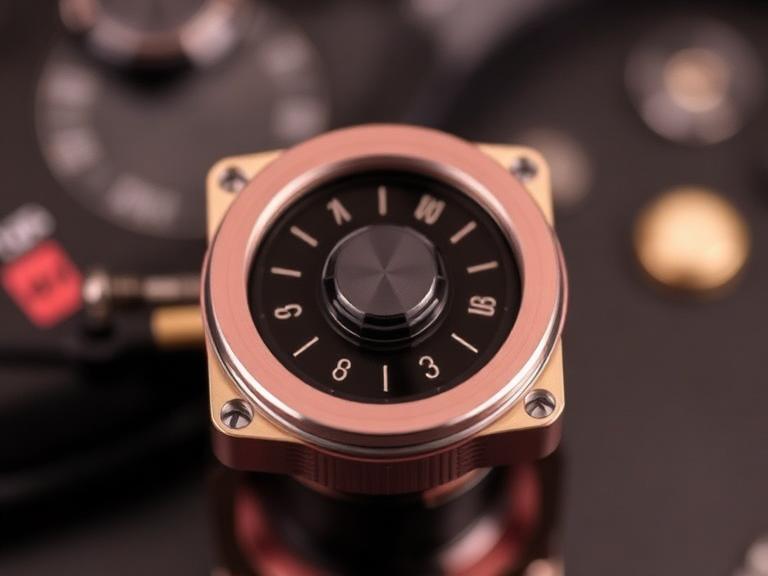
A low drift MEMS gyroscope is a tactical-grade solid-state sensor designed to measure angular velocity with extreme precision, typically exhibiting a bias instability between 0.1°/h and 10°/h. It provides highly reliable short-to-medium-term dead-reckoning capabilities, allowing UAVs, autonomous vehicles, and stabilized optical payloads to maintain accurate heading and attitude data even when GNSS (GPS) signals are jammed or lost entirely.
Quick Answer: Executive Summary
- The Core Metric: You must evaluate the sensor based on its bias instability, which represents the lowest point on the Allan Variance curve. Tactical-grade performance is defined by a drift of less than 1°/hr to 5°/hr.
- Primary Benefit: Unlocks true tactical dead-reckoning and jitter-free payload stabilization at a fraction of the cost, size, and weight of legacy optical gyroscopes.
- Is it worth upgrading? Yes, unequivocally. For commercial users and defense contractors, upgrading from an industrial-grade IMU to a tactical low drift MEMS gyroscope is the definitive difference between completing a mission in hostile airspace and catastrophic drone loss.
Table of Contents
- What is a Low Drift MEMS Gyroscope?
- How It Works: The Physics of Inertial Measurement
- The Strategic Benefits of Tactical MEMS
- Limitations and Harsh Realities
- Who Should Use It & Who Does Not Need It
- Common Mistakes During Integration
- Crucial Buying Considerations
- Data and Decision Matrices
- Expert Recommendation from ChinaMoneypro UAV
- Frequently Asked Questions
What is a Low Drift MEMS Gyroscope?
At its core, a low drift MEMS (Micro-Electromechanical Systems) gyroscope is a microscopic, solid-state silicon sensor that detects rotational rate across three orthogonal axes. Unlike the cheap, noisy consumer-grade sensors found in smartphones and gaming consoles—which exhibit horrific drift rates exceeding tens or hundreds of degrees per hour—a tactical-grade low drift MEMS gyroscope is manufactured using highly advanced photolithography techniques. It sits securely in the middle of the performance hierarchy, bridging the massive gap between industrial-grade components and exorbitant navigation-grade submarine sensors.
In most professional situations, we define “low drift” strictly through the lens of the Allan variance method. Proposed originally by David Allan in 1966 to study high-precision oscillators, this time-domain analysis method is the industry standard for identifying random error sources in inertial sensors. An Allan variance plot charts the gyroscope’s drift in rotational degrees per hour against the integration time (Tau) on a log-log scale. When analyzing this curve, engineers can separate and quantify the five distinct independent noise components of a MEMS device: quantization noise, angle random walk (ARW), bias instability, rate random walk, and rate ramp.
How It Works: The Physics of Inertial Measurement
Understanding whether a low drift MEMS gyroscope is actually worth using requires a brief dive into its operational physics. MEMS gyroscopes operate on the principle of the Coriolis effect. Inside the microscopic silicon die, a proof mass is continuously driven into high-frequency oscillation (the drive mode). When the host vehicle experiences a rotation, the Coriolis force induces a secondary, orthogonal vibration on that proof mass (the sense mode). Specialized capacitive electrodes measure this minute secondary displacement, generating an electrical signal directly proportional to the angular velocity.
However, all gyroscopes are plagued by two primary, inherent errors that dictate their true quality: bias instability and Angle Random Walk (ARW). From our experience, the distinction between the two is vital. Bias instability is a low-frequency, slowly changing drift (flicker noise) that determines the absolute best stability the gyroscope can achieve when stationary. It dictates long-term heading reliability. Conversely, ARW is high-frequency white noise that integrates over time, determining short-term precision and angular jitter. A premium low drift MEMS gyroscope utilizes advanced signal processing, proprietary resonator designs, and exhaustive factory thermal calibration to mathematically suppress these specific errors, ensuring the computed heading remains accurate without constant GPS correction.
The Strategic Benefits of Tactical MEMS
The integration of a low drift MEMS gyroscope brings transformational advantages to modern unmanned systems, making the upgrade a no-brainer for serious operators.
First and foremost, it maximizes the critical SWaP-C matrix (Size, Weight, Power, and Cost). Achieving a bias instability of 0.5°/hr historically required a bulky, fragile Fiber Optic Gyroscope. Today, modern tactical MEMS deliver this identical performance in a solid-state package roughly the size of a postage stamp, drawing mere milliwatts of power. This lightweight architecture is the secret behind the extended flight times seen in the latest commercial fixed wing uav models.
Secondly, these sensors provide resilient dead-reckoning capabilities. If a drone loses satellite lock due to urban canyons, dense foliage, or malicious electronic spoofing, the flight controller relies entirely on the inertial measurement unit (IMU). A low drift MEMS gyroscope ensures the heading error accumulates at a glacial pace, allowing the aircraft to navigate autonomously to a safe recovery zone. This is a non-negotiable requirement for military drones operating on the modern battlefield.
Finally, low drift MEMS gyroscopes enable flawless payload stabilization. When integrating a high-magnification eo ir gimbal payload or a highly sensitive thermal camera payload, the exceptionally low Angle Random Walk (ARW) of a tactical MEMS sensor prevents the high-frequency jitter that ruins optical tracking algorithms.
Limitations and Harsh Realities
We must apply commercial and practical judgment: even the most expensive low drift MEMS gyroscope is not invincible. The most glaring limitation of MEMS technology compared to optical gyroscopes is its vulnerability to Vibration Rectification Error (VRE). Because the sensor relies on measuring the microscopic physical displacement of a silicon mass, intense, high-frequency mechanical vibration from combustion engines or unbalanced rotors can cause the “zero point” to shift dramatically, feeding false rotational data to the flight controller.
Furthermore, while the drift performance is exceptional for the price, it still cannot match the sheer navigation endurance of a strategic navigation-grade system. A tactical MEMS gyro (0.1°/h to 10°/h) is built for short-to-medium duration guidance (minutes to hours). It is not designed to guide a submarine under the polar ice cap for weeks at a time without external correction; for that, you still need a heavy navigation-grade IMU boasting an instability of <0.01°/hr.
Who Should Use It & Who Does Not Need It
Who Should Use It: We unequivocally recommend low drift MEMS gyroscopes for defense contractors, commercial surveyors, and logistics operators. If you are deploying a vtol cargo drone or overseeing critical cargo drone solutions over populated urban centers, a GPS drop-out cannot result in a crash. Similarly, operators utilizing a bvlos fixed wing uav for surveying require high-precision inertial data for Post-Processed Kinematics (PPK) modeling. Finally, developers of night vision military drones must use tactical-grade sensors to ensure targeting systems remain locked onto coordinates despite violent evasive maneuvers.
Who Does Not Need It: For beginners building hobbyist FPV quadcopters, or photographers flying basic camera drones for real estate, a low drift MEMS gyroscope is a massive waste of capital. Consumer-grade IMUs (which drift >10°/h) paired with strong satellite reception are perfectly adequate for maintaining a steady hover and executing basic waypoint flights. You do not need to spend thousands of dollars per axis if your drone never operates out of your visual line of sight.
Common Mistakes During Integration
In our experience consulting with various uav solution companies, the most frequent mistake is judging a gyroscope solely by its datasheet cover. Procurement teams often hyper-focus on the “typical bias instability” metric while completely ignoring the Angle Random Walk (ARW) parameter. A sensor might possess an excellent bias instability (great for navigation), but if its ARW is horrific, the sensor will output massive high-frequency noise, making it utterly useless for smooth gimbal stabilization.
Another catastrophic error is failing to perform full-system thermal soaking. Buying a factory-calibrated low drift MEMS gyroscope is useless if you mount it adjacent to a massive, heat-generating video transmitter without calibrating the entire flight controller enclosure across the full thermal envelope (-40°C to +85°C).
Crucial Buying Considerations
When you sit at the negotiating table with the best uav manufacturers and component suppliers, you must demand to see the Allan Variance plot for the specific production batch you are purchasing. Ensure the intersection of the curve meets your specific operational needs. Evaluate the export compliance of the sensor; one of the massive advantages of modern tactical MEMS (like certain models from silicon foundries) is that they are often non-ITAR restricted, allowing for global deployment without suffocating bureaucratic red tape.
For heavy-duty applications, heavily scrutinize the sensor’s Vibration Rectification Error (VRE) ratings. For context on why this matters internationally, reading a global military drone comparison reveals that superpowers are aggressively funding domestic MEMS foundries to create highly vibration-immune sensors for their next-generation hypersonic platforms.
Data and Decision Matrices
Quick Summary Table: Gyroscope Performance Grades
| IMU Grade | Typical Bias Instability | Primary Application | Cost Profile |
|---|---|---|---|
| Consumer Grade | > 10°/hr | Smartphones, VR gaming, basic toy drones | Ultra-Low ($1 – $10) |
| Industrial Grade | 1°/hr – 10°/hr | Robotics, agriculture, basic stabilization | Low to Medium ($50 – $300) |
| Tactical Grade (Low Drift MEMS) | 0.1°/hr – 10°/hr | UAVs, autonomous vehicles, guided munitions | High ($500 – $3,000+) |
| Navigation Grade (FOG/RLG) | < 0.01°/hr | Submarines, commercial aircraft, ICBMs | Astronomical ($20,000+) |
Comparison Table: Tactical MEMS vs. Fiber Optic Gyroscope (FOG)
| Specification | Tactical Low Drift MEMS | Fiber Optic Gyroscope (FOG) |
|---|---|---|
| Physical Size & Weight | Extremely small, lightweight (few grams) | Large, heavy (hundreds of grams to kilograms) |
| Power Consumption | Very Low (< 1 Watt) | High (Multiple Watts) |
| Vibration Immunity | Moderate to Good (requires isolation) | Excellent (immune to mechanical VRE) |
| Navigation Endurance | Short-to-Medium term (minutes to hours) | Long term (hours to days) |
Pros and Cons Table: Upgrading to a Low Drift MEMS Gyroscope
| Pros (Operational Advantages) | Cons (Engineering Challenges) |
|---|---|
| Provides mission-critical GPS-denied navigation and heading hold capabilities. | Requires stringent factory and system-level thermal calibration over -40°C to +85°C. |
| Solid-state architecture ensures exceptional resistance to high-G mechanical shock. | High cost compared to industrial sensors, dramatically increasing overall BOM cost. |
| Exceptionally low ARW allows for flawless, jitter-free optical payload stabilization. | Susceptible to acoustic noise and structural resonance if not isolated correctly. |
| Many high-end MEMS IMUs are ITAR-free, easing international commercial sales. | Still exhibits long-term drift over many hours, requiring eventual aiding (GNSS or Vision). |
Expert Recommendation from ChinaMoneypro UAV
Explain not only WHAT something is, but WHETHER it is actually worth using, buying, or upgrading. Upgrading to a tactical-grade low drift MEMS gyroscope is the single most critical avionics decision a commercial or defense operator can make. If your platform’s operational mandate requires absolute reliability in the face of electronic warfare, GPS jamming, or brutal environmental conditions, relying on industrial-grade sensors is professional negligence. It is definitively worth the financial premium to secure a sensor with a bias instability of under 1°/hr.
At ChinaMoneypro UAV, we do not just preach these standards; we manufacture them. As a national-level high-tech enterprise transformed from a prestigious state-owned research institute, we possess deep roots in defense-grade engineering. Headquartered in one of China’s premier innovation hubs, we are among the few full-stack providers globally that offer complete UAV systems equipped with our own integrated sensing-communication solutions. Our heavy-lift platforms rely exclusively on proprietary, low-drift MEMS inertial navigation systems, guaranteeing flawless performance for our global clients. As one of the premier uav manufacturers in china, we strongly recommend evaluating integrated platforms that already master this complex sensor fusion.
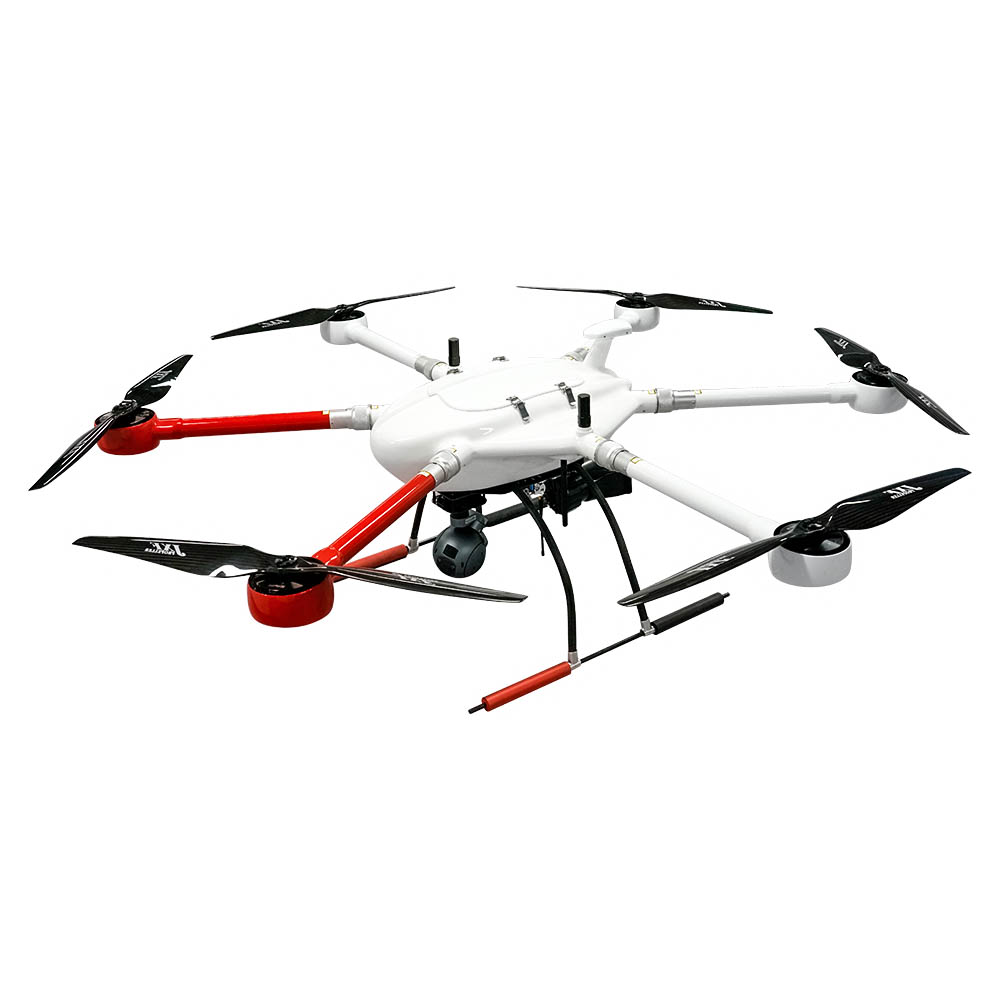
China Moneypro M160 Heavy Lift Hexacopter Drone
From our experience, the true test of a low drift MEMS gyroscope is its performance on a heavy-lift industrial platform operating in high-vibration environments. The China Moneypro M160 is a masterclass in aeronautical engineering. By integrating our top-tier tactical MEMS IMUs directly into the flight architecture, the M160 achieves unparalleled stability, centimeter-level hovering accuracy, and impenetrable dead-reckoning capabilities during critical heavy-lift cargo and defense payload missions.
Frequently Asked Questions
What is the difference between bias stability and bias instability in a MEMS gyroscope?
In practical engineering terms, bias instability represents the short-term random fluctuations (flicker noise) and dictates moment-to-moment precision and stabilization performance. Bias stability refers to the long-term accuracy and defines how far the navigation heading will drift over hours. Both metrics are critical, but instability is the primary specification derived from the lowest point of the Allan Variance plot.
Are all tactical-grade MEMS gyroscopes subject to ITAR restrictions?
No. While historically high-precision inertial sensors were strictly controlled under ITAR (International Traffic in Arms Regulations), many modern manufacturers have developed high-performance tactical MEMS IMUs (like the STIM300 series) that are completely ITAR-free. This significantly simplifies international deployment for commercial and dual-use UAV programs.
What does Angle Random Walk (ARW) mean for a drone’s camera gimbal?
Angle Random Walk (ARW) is the high-frequency white noise output by the gyroscope. For a camera gimbal, a high ARW means the control loop is constantly trying to correct for fake, microscopic movements, resulting in visible mechanical jitter. A low drift MEMS gyroscope with a very low ARW ensures the optical payload remains perfectly still, allowing for crystal-clear imaging at maximum optical zoom.
Authoritative References & Industry Standards
To ensure our aerodynamic and avionics recommendations adhere to the highest global engineering standards, we reference the following authoritative organizations:
- Institute of Electrical and Electronics Engineers (IEEE) – IEEE Standard Specification Format Guide and Test Procedure for Coriolis Vibratory Gyros.
- National Institute of Standards and Technology (NIST) – Research and validation of the Allan Variance methodology proposed by David Allan in 1966.
- Analog Devices Technical Resource Center – Deep-dive literature on the impact of Vibration Rectification Error (VRE) in high-performance MEMS IMUs.