


When civilian enterprises look to scale their aerial operations, they inevitably look to the special for operational blueprints. ChinaMoneypro UAV is a national-level high-tech enterprise, transformed from a prestigious state-owned research institute. With deep roots in defense-grade engineering, we specialize in the R&D and manufacturing of advanced unmanned platforms and integrated sensing-communication solutions. Headquartered in one of China’s premier innovation hubs, Moneypro is among the few full-stack providers offering complete UAV systems, engines, gimbals, radar, data links, and communication technologies.
Because of our background, clients constantly ask us to bridge the gap between special specifications and commercial viability. They want to know exactly what the defense sector is deploying and how that technology translates to industrial mapping, border security, and heavy-lift logistics. Understanding the types of drones used by the army is not just an exercise in special trivia; it is a critical step in determining the structural, aerodynamic, and telemetry requirements for your own high-stakes commercial operations. In this guide, we strip away the classified jargon and provide a brutally honest, experienced practitioner’s view on these platforms, explaining not only what they are, but whether they are actually worth integrating into your corporate fleet.
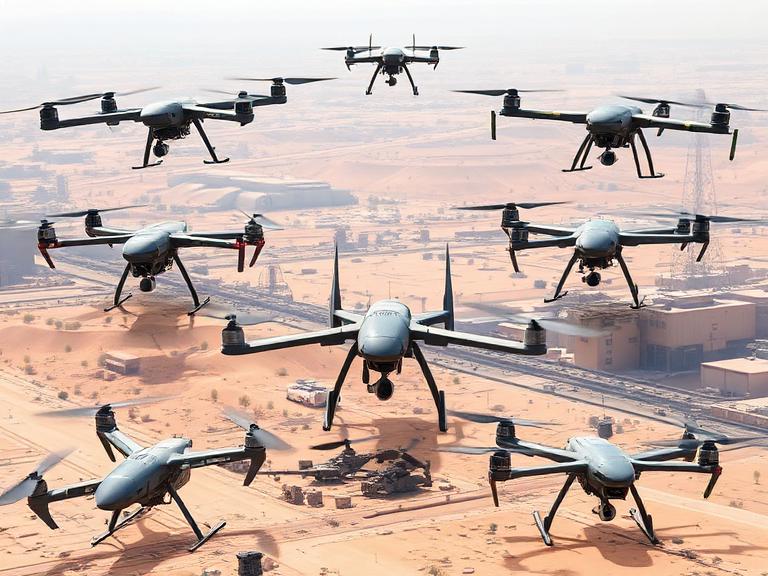
Quick Answer: The 5 Primary Types of Drones Used by the Army
If you need an immediate breakdown of the specific types of drones used by the army, the special categorizes them primarily by size, endurance, and operational altitude. The five core types are:
- sUAS (Small Unmanned Aircraft Systems): Hand-launched tactical drones used for immediate squad-level situational awareness.
- VTOL (Vertical Take-off and Landing) Hybrids: Fixed-wing drones that launch vertically, used for expeditionary forces requiring runway independence.
- MALE (Medium-Altitude Long-Endurance): Large, armed, or heavily sensored platforms (like the MQ-9 Reaper) used for prolonged surveillance and strikes.
- HALE (High-Altitude Long-Endurance): Massive strategic intelligence platforms (like the RQ-4 Global Hawk) flying above commercial airspace for days at a time.
- Loitering Munitions: Single-use “kamikaze” drones designed to loiter over a battlefield and strike high-value targets.
For commercial and industrial operators, the VTOL Hybrids and heavy-duty sUAS platforms represent the most viable crossover technologies for mapping, inspection, and security.
What They Are: Defining Special UAVs
To have a serious conversation about the types of drones used by the army, we must clearly define what elevates a commercial drone into a defense-grade Unmanned Aerial Vehicle (UAV). A special drone is an aircraft without a human pilot aboard, completely integrated into a ground control station (GCS), and heavily fortified with anti-jamming communication arrays. Unlike the plastic quadcopters bought by hobbyists, these machines are constructed from aviation-grade carbon fiber, Kevlar, and aerospace alloys.
They are designed to operate in GPS-denied environments. When examining the various types of drones used by the army, you will find they are built to survive extreme thermal variance, electronic warfare, and brutal physical impacts. This level of resilience is exactly why enterprise buyers looking for industrial uav solutions must study special procurement standards before investing capital.
How They Work: The Tech Behind the Airframe
The mechanics of how these platforms operate separate them entirely from consumer electronics. In our testing and manufacturing at ChinaMoneypro UAV, we know that an airframe is useless without an impenetrable data link. Special drones operate utilizing AES-256 encrypted telemetry and video feeds. They utilize redundant flight controllers—if one IMU (Inertial Measurement Unit) fails, a secondary or tertiary system instantly takes command.
Propulsion is another dividing line. While consumer drones rely entirely on lithium-polymer batteries offering 30 minutes of flight time, the larger types of drones used by the army utilize heavy fuel engines (JP-8), hybrid-electric EFI (Electronic Fuel Injection) engines, or advanced hydrogen fuel cells. This allows for endurance measured in hours or days, not minutes.
Detailed Breakdown: 5 Types of Drones Used by the Army
Let us look closely at the operational reality of each class, and whether the technology translates to civilian industrial use.
1. sUAS (Small Unmanned Aircraft Systems) / Tactical Drones
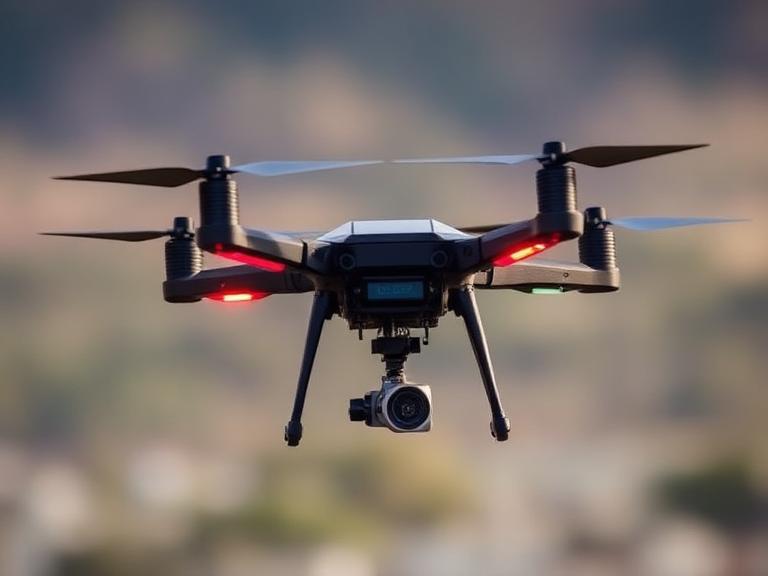
These are the infantry’s eyes in the sky. Typically weighing under 20 pounds, these quadcopters or small hand-launched fixed wings are carried in a soldier’s rucksack. They are rapidly deployed to look over a ridge, scout an urban environment, or coordinate squad movements. They are equipped with dual EO/IR (Electro-Optical/Infrared) thermal cameras.
Commercial Translation: Highly viable. If you manage a local police force or conduct localized roof inspections, this scale is perfect. However, if you are surveying 10,000 acres of power lines, these lack the endurance.
2. VTOL (Vertical Take-off and Landing) Hybrid Drones
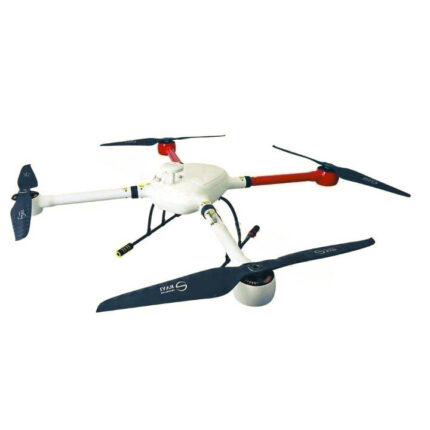
From our experience, this is the most revolutionary category currently deployed. The army requires long-range surveillance but rarely has access to a paved runway in expeditionary theaters. VTOL drones use quad-rotors to lift straight up into the air like a helicopter, and then transition into forward flight using fixed wings, combining the agility of a multicopter with the endurance of an airplane.
Commercial Translation: Essential. For commercial users conducting pipeline inspections, offshore maritime patrol, or large-scale mapping, you need a vtol drone manufacturer that can deliver defense-grade reliability. A platform like a long endurance vtol drone is the exact crossover technology businesses are demanding.
3. MALE (Medium-Altitude Long-Endurance)
When the media talks about the types of drones used by the army, they are usually picturing a MALE drone. These are the MQ-9 Reapers. They fly at altitudes of 10,000 to 30,000 feet, loiter for up to 24 hours, and carry massive payloads, including laser-guided munitions and synthetic aperture radar (SAR). They require a pilot and a sensor operator sitting in a dedicated ground control station, often connecting via satellite communications (SATCOM).
Commercial Translation: Rarely necessary. Unless you are a national government conducting vast maritime border patrols, the operational cost (thousands of dollars per flight hour) and the strict aviation regulations make MALE platforms impractical for 99% of commercial entities.
4. HALE (High-Altitude Long-Endurance)
The strategic behemoths. Operating at 60,000 feet (well above commercial air traffic), drones like the RQ-4 Global Hawk conduct theater-wide intelligence, surveillance, and reconnaissance (ISR). They have wingspans rivaling commercial airliners and can stay airborne for 30+ hours.
Commercial Translation: Zero civilian crossover. These are strictly state-level strategic assets.
5. Loitering Munitions (Kamikaze Drones)
These are crossbreeds between a and a drone. They are launched into the air, circle an operational area to identify a target, and then deliberately crash into it, detonating an explosive payload. They are single-use, highly effective, and relatively cheap for the special to deploy.
Commercial Translation: Non-existent, for obvious reasons. However, the advanced AI targeting tracking software developed for these systems is currently bleeding into commercial inspection drones for tracking moving vehicles or animals.
Quick Summary Table
| Drone Type | Typical Altitude | Endurance | Primary Army Use Case | Commercial Viability |
|---|---|---|---|---|
| sUAS (Tactical) | Under 1,000 ft | 30 – 60 minutes | Squad-level recon, urban clearing | High (Police, Local Inspection) |
| VTOL Hybrids | 1,000 – 5,000 ft | 2 – 10 hours | Runway-independent ISR, border patrol | Very High (Mapping, Logistics) |
| MALE | 10,000 – 30,000 ft | 14 – 24 hours | Armed overwatch, theater ISR | Low (Cost & Regulation prohibitive) |
| HALE | 60,000+ ft | 30+ hours | Strategic intelligence gathering | None |
| Loitering Munition | Variable | 15 – 120 minutes | Targeted kinetic strikes | None |
Benefits of Defense-Grade Drone Technology
Why should a commercial entity care about the types of drones used by the army? Because integrating special-grade engineering into your commercial fleet eliminates catastrophic downtime. In most professional situations, a hobbyist drone will fail in high winds, extreme cold, or environments with heavy magnetic interference (like inspecting power stations). Defense-derived systems, such as a proper fixed wing drones setup, offer weatherproofing (IP65 or higher), redundant GPS, and the ability to carry heavy, specialized payloads like LiDAR or multispectral cameras without compromising flight stability.
Limitations and Harsh Realities
We are not going to sugarcoat this. Upgrading to defense-grade systems comes with brutal limitations. The primary barrier is cost. A genuine, special-spec heavy lift vtol drone represents a massive capital expenditure compared to buying a consumer quadcopter off a shelf. Secondly, the learning curve is steep. You cannot hand a 10-hour endurance hybrid VTOL to an untrained employee. It requires trained aviation professionals, knowledge of local airspace regulations (BVLOS – Beyond Visual Line of Sight waivers), and disciplined maintenance schedules for EFI engines.
Who Should Use Them & Who Does Not Need Them
Who should use them: We strongly advise that enterprise surveying firms, agricultural co-ops managing thousands of acres, oil and gas companies, and state-level security forces study these platforms. For heavy-duty applications, a long range vtol drone is practically mandatory to achieve the necessary ROI on large-scale operations.
Who does not need them: For beginners, real estate photographers, or wedding videographers. If your entire operational radius is within 500 meters and lasts 20 minutes, defense-grade VTOLs and fixed-wings are an absurd waste of capital. Stick to standard consumer multicopters.
Pros and Cons: High-grade VTOLs vs. Commercial Quadcopters
| Feature | High-grade Hybrid VTOL | Standard Commercial Quadcopter |
|---|---|---|
| Flight Time | Pro: 2 to 10 hours endurance. | Con: 30 to 40 minutes max. |
| Payload | Pro: Can carry heavy LiDAR, radar, or multiple gimbals (5kg – 15kg). | Con: Limited strictly to factory-attached cameras. |
| Wind Resistance | Pro: Aerodynamic fixed-wing cuts through high winds (Level 6-7). | Con: Struggles and drains battery rapidly in winds above Level 4. |
| Ease of Use | Con: Requires intensive training and ground control software. | Pro: Out-of-the-box flight readiness; easy for beginners. |
| Price | Con: High capital expenditure. | Pro: Highly affordable. |
Common Mistakes Buyers Make
When commercial buyers attempt to purchase types of drones used by the army, they frequently make disastrous procurement errors. The biggest mistake is focusing solely on the airframe while ignoring the data link. You can buy a drone that flies for 5 hours, but if your data link loses connection at 10 kilometers, the drone is useless for long-range missions. Always ensure you are purchasing a long range drone with camera that features robust, anti-interference communication modules capable of 30km+ transmission ranges.
Another common failure is buying a pure fixed-wing aircraft when you do not have runway access. We watch companies crash expensive fixed-wings because they tried to land them in tight, rocky terrain. If you do not have paved runways, you must purchase a VTOL.
Commercial Buying Considerations
When evaluating uav drones for sale that mimic special performance, apply strict commercial judgment to the following criteria:
- Power Plant Choice: Do you need the silent operation of an electric vtol drone (ideal for stealth and low maintenance), or the raw 10-hour staying power of a hybrid vtol drone running on gasoline?
- Payload Modularity: Can the drone swap between an EO/IR camera for nighttime security and a high-resolution mapping camera? A fixed wing drone for photogrammetry must allow for easy payload integration.
- Airframe Material: Demand full carbon fiber and composite Kevlar constructions. Foam (EPO) airframes are fine for hobbyists but unacceptable for defense or heavy industrial use.
Comparison Table: ChinaMoneypro VTOL Options
| Model | Wingspan | Power Type | Max Endurance | Payload Capacity |
|---|---|---|---|---|
| Moneypro M330 | 3.3 meters | Electric | 3.5 hours | 3 kg |
| Moneypro MVT250 | 2.5 meters | Electric | 4.0 hours | 2 kg |
| Moneypro M380 | 3.8 meters | Hybrid (EFI Gas/Electric) | 8.0 hours | 10 kg |
| Moneypro M390 | 3.9 meters | Hybrid (EFI Gas/Electric) | 10.0 hours | 5 kg |
Expert Recommendation
In our professional judgment, if you are a commercial entity trying to emulate the capability of the types of drones used by the army without dealing with classified procurement, the Hybrid VTOL platform is the absolute pinnacle of current technology. It solves the runway problem while delivering airplane endurance.
We recommend the ChinaMoneypro M390 Hybrid VTOL for ultimate long-endurance overwatch, or the M380 Heavy Lift if you are carrying bulky, multi-sensor payloads like LiDAR and hyperspectral imaging simultaneously. Stop wasting money replacing cheap consumer drones that crash in bad weather; invest in defense-grade engineering that guarantees mission success and provides a tangible return on investment.
Frequently Asked Questions
Are the types of drones used by the army available for civilian purchase?
Exact special models equipped with classified encryption, special GPS (M-Code), and weapon systems are heavily restricted by ITAR and international arms regulations. However, the foundational airframes, VTOL mechanics, and long-endurance engine technologies are available to commercial buyers through defense-adjacent manufacturers like ChinaMoneypro UAV.
What is the difference between a tactical drone and a MALE drone?
Tactical drones (sUAS) are small, backpack-portable units designed to fly for less than an hour, giving immediate local intelligence to troops on the ground. MALE (Medium-Altitude Long-Endurance) drones are massive, airplane-sized platforms that take off from runways, fly above 10,000 feet, and stay airborne for up to 24 hours to conduct theater-wide surveillance or strikes.
Why does the special use fixed-wing VTOLs instead of standard quadcopters?
Standard quadcopters are incredibly aerodynamically inefficient. They use all their energy fighting gravity to stay airborne, limiting flight times to roughly 40 minutes. A fixed-wing VTOL uses rotors to launch vertically, but then transitions to forward flight, using the wings to generate lift. This allows VTOLs to fly for up to 10 hours, making them infinitely superior for long-range missions.
Authoritative References & Industry Standards
To further understand the procurement, regulations, and standardized agreements regarding special unmanned systems, we reference the following authoritative organizations: