


In the rapidly evolving aerospace sector, selecting the right propulsion system dictates not only the payload capacity and range of your unmanned aerial vehicle (UAV) but also the fundamental economic viability of your entire fleet. As global logistics networks and defense sectors scale their autonomous operations, the demand for micro turbine engines has surged. The global aircraft microturbine market is projected to reach USD 4.12 billion in 2026, reflecting a massive shift from experimental testing to high-volume commercial deployment.
From our experience engineering advanced platforms, many procurement managers enter the market fundamentally misunderstanding how a turbine engine price is structured. They mistakenly equate the upfront hardware cost with the total lifecycle expense, ignoring critical factors like Full Authority Digital Engine Control (FADEC) integration, Time Between Overhaul (TBO), and specific fuel consumption (SFC). In this comprehensive guide, we take a definitive position on what you should actually be paying for a UAV turbine engine in 2026, which features are mandatory for commercial success, and whether upgrading from internal combustion or electric propulsion is truly worth the capital investment.
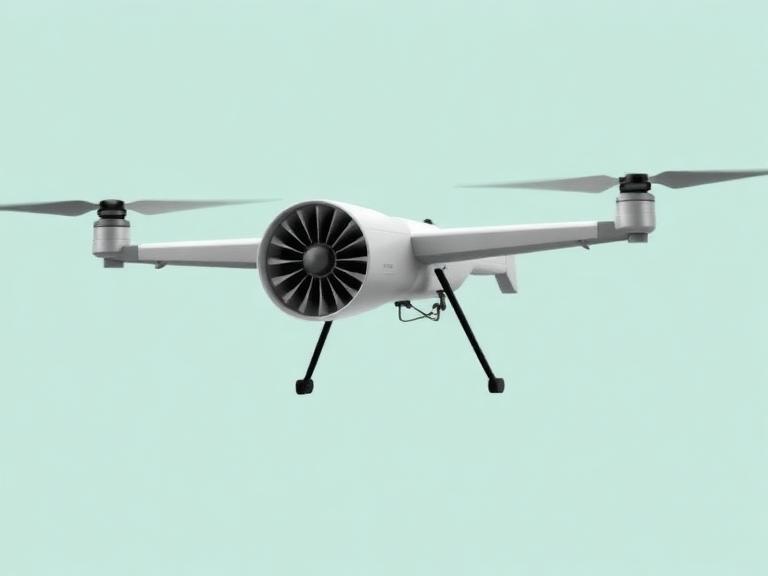
Quick Answer: What is the Average Turbine Engine Price in 2026?
In 2026, the turbine engine price for UAV applications ranges drastically based on thrust class, operational reliability, and intended application:
- Entry-Level / Hobbyist (30N – 300N thrust): Ranging from $2,000 to $4,500. Engines in this class (such as entry-level KingTech units priced around $2,250) are strictly for lightweight R&D and hobbyist use.
- Professional / Light Commercial (300N – 500N thrust): Ranging from $6,000 to $15,000. These include premium telemetry and improved TBO, comparable to a JetCat P220-RXi which retails near $6,300.
- Defense / Heavy Cargo (1000N+ thrust or Turboprops): Ranging from $30,000 to over $100,000. These are highly regulated, ITAR-compliant (or equivalent), special-grade systems designed for extreme altitudes and payloads.
Is it worth the investment? Yes, but only if your operational profile demands speeds exceeding 250 knots or payloads that make heavy lithium-ion battery packs mathematically unviable. If you require long-endurance hovering rather than high-speed transit, a hybrid-electric or rotary combustion engine offers a superior return on investment.
Table of Contents
- 1. What It Is: Understanding UAV Micro Turbine Engines
- 2. How It Works: The Mechanics Behind the Price Tag
- 3. Benefits of Upgrading to Turbine Propulsion
- 4. Limitations and Hidden Lifecycle Costs
- 5. Who Should Use It vs. Who Does Not Need It
- 6. Common Procurement Mistakes in 2026
- 7. Commercial Buying Considerations
- 8. Expert Recommendation & Industry Outlook
- 9. Frequently Asked Questions (FAQ)
- 10. Authoritative References
1. What It Is: Understanding UAV Micro Turbine Engines
A UAV micro turbine engine is a highly compact, internal combustion engine that generates thrust or mechanical power by accelerating air and fuel through a continuous combustion process. Unlike traditional two-stroke or four-stroke piston engines, a turbine operates with a continuous Brayton cycle, compressing incoming air, mixing it with atomized Jet-A1 or heavy diesel fuel, igniting it, and expelling it through a turbine wheel to generate power.
In most professional situations, you will encounter three distinct architectural variations, each carrying a different baseline turbine engine price:
- Turbojet: The simplest design, optimizing for high-speed thrust by expelling all exhaust gases directly out the nozzle. These are the cheapest to manufacture but consume the most fuel.
- Turbofan: Integrates a ducted fan at the front, bypassing a portion of the air around the combustion chamber. This dramatically increases fuel efficiency and lowers acoustic signatures, though it nearly doubles the manufacturing cost.
- Turboprop / Turboshaft: Uses the exhaust energy to drive a physical gearbox and propeller (or rotor). These are essential for heavy-lift platforms like a sophisticated vtol cargo drone, offering immense torque but commanding the highest initial purchase prices due to the complexity of the reduction gearing.
2. How It Works: The Mechanics Behind the Price Tag
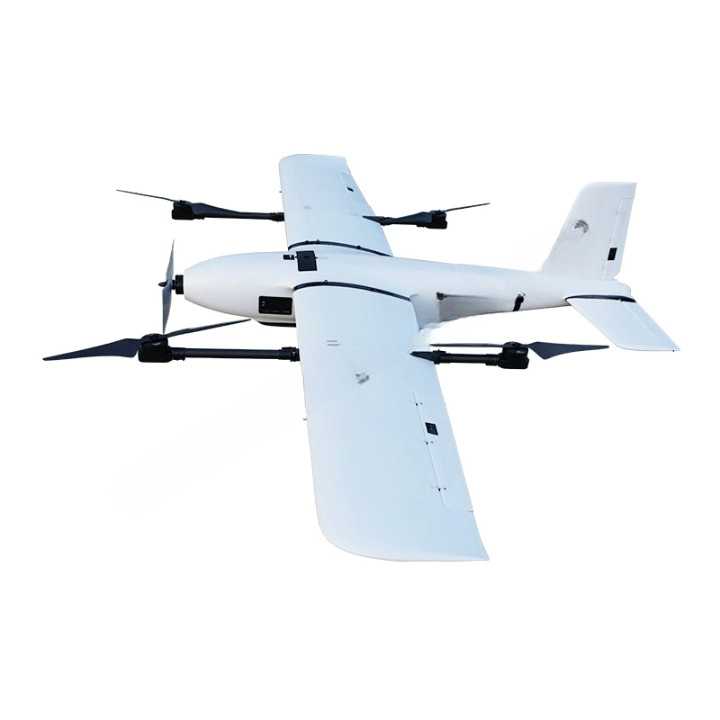
Understanding how a turbine engine operates is critical to understanding why a 400N engine can cost $5,000 from a hobby supplier and $45,000 from an aerospace defense contractor. The price discrepancy is rooted entirely in metallurgical tolerances and electronic control systems.
Inside the combustion chamber, temperatures routinely exceed 1,000°C. To survive thousands of hours of operation without catastrophic failure, commercial-grade turbines utilize single-crystal superalloys for their turbine blades, ceramic hybrid bearings capable of withstanding 120,000 RPM, and precision 5-axis CNC machining for the compressor wheels. When you pay a premium turbine engine price, you are paying for structural integrity.
Furthermore, the modern engine is useless without its brain: the ECU (Electronic Control Unit) or FADEC. A defense-grade FADEC constantly monitors barometric pressure, exhaust gas temperature (EGT), and throttle position to optimize fuel delivery in milliseconds. This integration ensures the engine does not flame out at 30,000 feet. If you are developing advanced cargo drone solutions, paying the extra $10,000 for a redundant FADEC system is the cheapest insurance policy you can buy to protect a $500,000 airframe.
3. Benefits of Upgrading to Turbine Propulsion
For commercial users, the decision to absorb a high turbine engine price must be justified by operational capability. From our experience, the benefits are absolute when deployed in the correct operational envelope:
- Unmatched Power-to-Weight Ratio: A micro turbine weighing only 3 kg can generate over 40 kg of thrust. No piston engine or electric motor currently available can match this energy density, making turbines mandatory for high-speed, high-altitude missions.
- Fuel Flexibility and Energy Density: Jet-A1 and heavy diesel fuels possess an energy density exponentially higher than the best solid-state lithium batteries of 2026. This translates to vastly superior range and loiter times.
- Reliability in Extreme Environments: Because they lack reciprocating parts (pistons, valves, crankshafts), turbines produce highly predictable, high-frequency vibrations that are much easier to isolate. This ensures that sensitive payloads, such as an advanced eo ir gimbal payload, remain perfectly stabilized during flight.
4. Limitations and Hidden Lifecycle Costs
We do not recommend turbine engines unconditionally. The most glaring limitation is the total lifecycle cost. The initial turbine engine price is merely the down payment. In 2026, a standard commercial micro turbine requires a complete factory overhaul every 50 to 100 hours of operation. This Time Between Overhaul (TBO) event often costs 25% to 40% of the original purchase price.
Additionally, turbine engines are notoriously inefficient at low altitudes and low speeds. Their specific fuel consumption (SFC) at sea level can be double that of a four-stroke piston engine. If your operational profile consists of hovering at 500 feet to inspect infrastructure, a turbine will aggressively burn through your operational budget with zero tangible benefit.
Finally, the thermal signature of a turbine exhaust is massive. If you are operating in the defense sector and assessing special drones, you must heavily invest in exhaust cooling and baffling systems to avoid immediate detection by infrared targeting systems.
5. Who Should Use It vs. Who Does Not Need It
Who Should Use It:
- Defense Contractors: Developing target drones, loitering munitions, or high-speed reconnaissance platforms where speed and altitude survivability are non-negotiable.
- Heavy Cargo Logistics: Operators moving payloads exceeding 100 kg across long distances (300+ km) where the energy density of liquid fuel is mandatory.
- High-Altitude Research: Platforms operating in thin air where piston engines suffer from severe power degradation without complex turbocharging systems.
Who Does Not Need It:
- Short-Range Delivery and Inspection: If your drone carries 5 kg over 20 km, an electric multirotor is infinitely cheaper, quieter, and more reliable.
- Long-Endurance ISR (Intelligence, Surveillance, Reconnaissance): If the goal is to loiter quietly for 24 hours at low speeds, a fuel-injected four-stroke piston engine or a hybrid-electric system is vastly superior.
6. Common Procurement Mistakes in 2026
In our testing and consulting across the aerospace sector, we see procurement teams consistently make devastating financial errors regarding turbine engines.
The most common mistake is buying hobby-grade engines for commercial applications. An engineer will see a 200N thrust engine priced at $3,500 on a hobby website and integrate it into a commercial airframe, bypassing a $15,000 professional-grade engine. Hobby engines lack the internal bearing structures, redundant ECUs, and strict quality assurance testing required for sustained, autonomous flight. The result is an engine failure in the field, leading to the total loss of an airframe equipped with expensive drone communication systems.
Another frequent error is failing to account for the electrical power draw of the UAV avionics. A turbine engine provides thrust, but your flight controller, servos, and encrypted mesh radio systems require electrical power. If the turbine you purchase does not include a robust internal starter-generator (usually adding $2,000 to $5,000 to the turbine engine price), you will be forced to carry heavy secondary batteries, destroying your payload capacity.
7. Commercial Buying Considerations
When you are ready to solicit a Request for Proposal (RFP) from the best uav manufacturers, you must evaluate the engine based on a strict matrix of commercial criteria. Do not evaluate the turbine engine price in a vacuum.
| Evaluation Criteria | What to Look For in 2026 | Commercial Impact |
|---|---|---|
| Time Between Overhaul (TBO) | Minimum 50 hours for light commercial; 150+ hours for heavy commercial/defense. | A cheap engine with a 25-hour TBO will cost you significantly more in maintenance downtime over a single year than a premium engine. |
| Telemetry & FADEC Integration | CAN bus integration, real-time EGT monitoring, and automated altitude compensation. | Ensures the flight controller can preemptively land the drone if engine parameters deviate, saving the airframe. |
| Fuel Compatibility | Must reliably burn Jet-A1, JP-8, and heavy diesel without fouling combustors. | In remote deployment zones, sourcing specialized high-purity kerosene is impossible. Multi-fuel capability is mandatory for special applications. |
| Integrated Power Generation | Brushless starter/generator outputting minimum 150W to 500W at 24V. | Eliminates the need for heavy avionics batteries, directly increasing your available payload weight for sensors. |
| Propulsion Type | Initial Capital Cost | Energy Density / Range | Maintenance Cost (Lifecycle) | Best Application |
|---|---|---|---|---|
| Micro Turbine (Turbojet) | High ($5k – $50k+) | Excellent (High range/speed) | Very High (Frequent factory overhauls) | High-speed target drones, fast logistics. |
| Turboshaft / Turboprop | Very High ($30k – $100k+) | Excellent (High payload capacity) | High (Gearbox and turbine maintenance) | Heavy VTOL cargo, large fixed-wing platforms. |
| Pure Electric (Li-Ion/Solid State) | Low ($500 – $3k) | Poor to Moderate (Heavy weight limitation) | Extremely Low (Virtually zero moving parts) | Short-range delivery, quiet ISR missions. |
| Pros (Advantages) | Cons (Limitations) |
|---|---|
| Unrivaled power-to-weight ratio for heavy payloads. | Extremely high initial turbine engine price and overhaul costs. |
| Leverages high-energy density liquid fuels for maximum range. | High Specific Fuel Consumption (SFC) at low altitudes and low speeds. |
| Multi-fuel capability simplifies special supply chain logistics. | Generates a massive acoustic and thermal (IR) signature. |
| Provides clean, high-frequency vibration profiles suitable for gimbals. | Requires highly specialized technicians for integration and tuning. |
8. Expert Recommendation & Industry Outlook
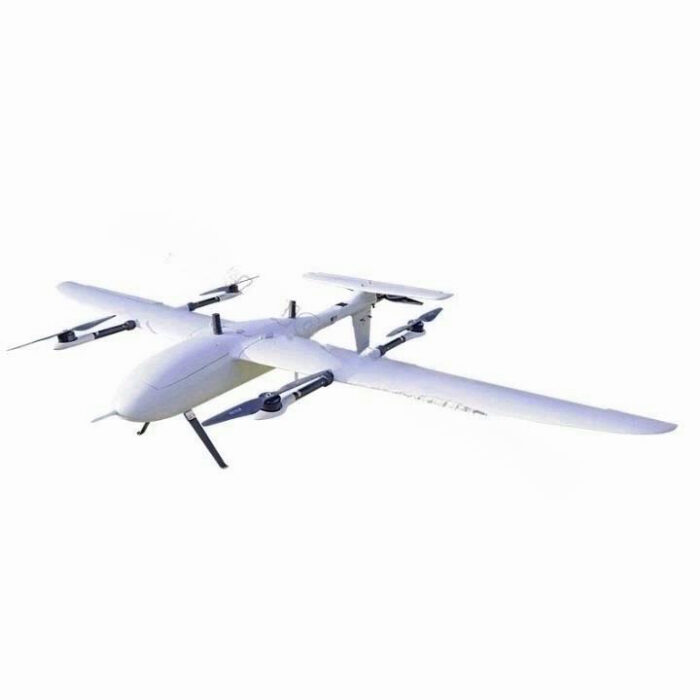
From our experience engineering advanced platforms, our stance is unequivocal: do not cut corners on your propulsion budget. If your business model or mission profile dictates the use of a turbine, you must purchase a commercial-grade engine with a redundant FADEC and an integrated generator. Trying to save $10,000 on the initial turbine engine price by sourcing unverified hobby equipment is a guaranteed path to catastrophic failure and grounded fleets.
For heavy-duty applications, we recommend turboprop or turboshaft architectures. While the initial capital outlay is steep, the dramatic increase in propeller efficiency at subsonic speeds will vastly reduce your fuel burn, yielding a positive return on investment within 24 months of heavy operational use.
The ChinaMoneypro UAV Advantage
ChinaMoneypro UAV is a national-level high-tech enterprise, transformed from a prestigious state-owned research institute. With deep roots in defense-grade engineering, we specialize in the R&D and manufacturing of advanced unmanned platforms and integrated sensing-communication solutions. headquartered in one of China’s premier innovation hubs, Moneypro is among the few full-stack providers offering complete UAV systems, engines, gimbals, radar, data links, and communication technologies.
Whether you require a custom powertrain for advanced uav manufacturers in china or require fully integrated platforms for border security, our engineering teams possess the exact commercial and technical expertise to maximize your operational capability.
9. Frequently Asked Questions (FAQ)
The high turbine engine price is driven by the extreme engineering tolerances required. The internal components, such as compressor wheels and turbine blades, must be machined from specialized superalloys (like Inconel) to withstand temperatures exceeding 1,000°C and rotational speeds up to 120,000 RPM. Furthermore, the electronic control units (ECUs) require rigorous testing to ensure aerospace-grade reliability.
A commercial UAV turbine engine does not have a definitive “end of life” if properly maintained, but it operates on a strict Time Between Overhaul (TBO) schedule. Most engines require a comprehensive factory rebuild—replacing ceramic bearings, combustion chambers, and balancing the rotating assembly—every 50 to 150 hours of flight time.
Yes, many modern commercial and special-grade micro turbines are designed to run on heavy fuels, including standard diesel, Jet-A1, and JP-8. However, running on diesel often requires adjusting the FADEC parameters and mixing in a specific percentage of turbine oil (typically 3% to 5%) to ensure proper lubrication of the internal bearings.
Absolutely. Electric motors have virtually no moving parts, require zero fuel logistics, and do not need expensive periodic overhauls. However, electric propulsion is severely limited by the low energy density of current battery technology, making them unviable for high-speed, long-range, or heavy-lift cargo applications where turbines excel.
10. Authoritative References
To ensure total accuracy and commercial validity, the data and engineering principles discussed in this article are corroborated by the following authoritative institutions and market analyses:
- American Institute of Aeronautics and Astronautics (AIAA) – Technical standards for aerospace propulsion systems, microturbine efficiency, and Brayton cycle thermodynamics.
- Federal Aviation Administration (FAA) – Unmanned Aircraft Systems – Regulatory guidance on UAV airworthiness, propulsion reliability standards, and commercial operational constraints.
- 360iResearch Market Intelligence – Financial forecasting indicating the Global Aircraft Micro Turbine Engines Market size is expected to reach USD 4.12 billion in 2026, driving down supply chain costs through mass commercialization.