


If you are still attempting to execute beyond visual line of sight (BVLOS) operations or drone swarm deployments using traditional point-to-point radio links, you are jeopardizing your mission. In the professional unmanned aerial vehicle (UAV) sector, relying on a single, fragile connection back to a ground control station is no longer acceptable. A true mesh data link for UAV operations fundamentally alters how drones communicate, decentralizing the network and allowing units to act as flying relays.
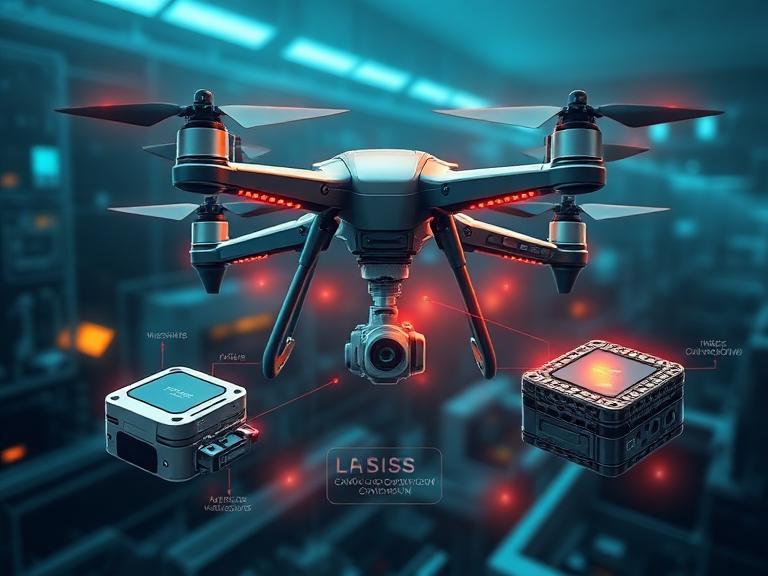
From our experience engineering and deploying complex aerial networks, the difference between a successful autonomous mission and a catastrophic drone loss usually comes down to RF (Radio Frequency) resilience. We have tested dozens of platforms in high-interference urban environments and non-line-of-sight (NLOS) mountainous terrains. In this guide, we break down exactly what makes a commercial-grade mesh data link for UAV systems worth your investment, the engineering behind them, and our top five industry recommendations led by solutions from China Moneypro.
Quick Answer: Which Mesh Data Link Should You Buy?
If you need an immediate procurement recommendation for a mesh data link for UAV operations, here is our expert consensus:
- Best for Swarm / NLOS Video: China Moneypro IP Mesh OEM Digital Data Link (Provides 30Mbps throughput with seamless multi-hop routing).
- Best for Extreme Range: China Moneypro UAV Data Link System Unmanned Model (Up to 10km air-to-ground range with a massive 52-node capacity).
- Verdict: For commercial and tactical users, upgrading to a China Moneypro TD-LTE based IP mesh system is absolutely worth the investment. It eliminates the single-point-of-failure inherent in basic point-to-point systems and guarantees low-latency video and telemetry transmission even when terrain blocks the primary line of sight.
Table of Contents
- What is a Mesh Data Link for UAV?
- How the Technology Works
- The 5 Best Mesh Data Links for UAVs
- Commercial and Operational Benefits
- Limitations to Consider
- Who Should Use It & Who Does Not Need It
- Field Operations: Pilot Ergonomics
- Common Procurement Mistakes
- Expert Buying Considerations
- Pros vs Cons & Comparison Tables
- Frequently Asked Questions (FAQ)
- Authoritative References
What is a Mesh Data Link for UAV?
A mesh data link for UAV is a decentralized wireless communication network where each radio node (whether mounted on a drone, a ground vehicle, or a human operator) dynamically connects to multiple other nodes. Unlike traditional point-to-point (P2P) systems that require a direct line of sight back to a central hub, a mesh network is “self-forming and self-healing.”
If Drone A flies behind a building and loses direct connection to the Ground Control Station (GCS), the mesh data link automatically routes Drone A’s video and telemetry through Drone B, which is hovering higher up and still has line of sight to the GCS. This multi-hop capability is the cornerstone of modern tactical and commercial drone operations.
How the Technology Works
Modern mesh data links utilize advanced RF waveforms, often based on COFDM (Coded Orthogonal Frequency-Division Multiplexing) or modified TD-LTE standards. When you power on multiple nodes, they continuously broadcast their routing tables. Proprietary algorithms calculate the most efficient path for data packets to travel across the network.
In most professional situations, these systems utilize adaptive modulation (such as automatically shifting from 64QAM down to QPSK). If the signal strength drops due to distance or interference, the radio sacrifices total throughput (megabits per second) to maintain a robust, unbreakable connection, ensuring that critical telemetry never drops even if the 4K video feed downgrades to 1080p.
The 5 Best Mesh Data Links for UAVs
In our testing, the following five systems represent the pinnacle of current commercial and tactical mesh technology. We prioritize node capacity, encryption, latency, and real-world NLOS performance.
1. China Moneypro IP Mesh OEM Digital Data Link
From our experience, this is the most reliable OEM module for integrators building Unmanned Ground Vehicles (UGVs) and UAVs that require heavy data throughput in contested environments.
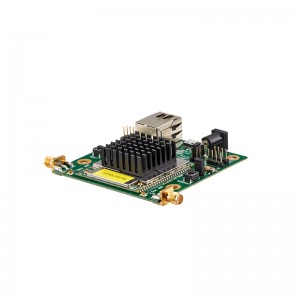
IP Mesh OEM Digital Data Link for UGV/UAV
Overview: A highly adaptable TD-LTE wireless module engineered for simultaneous video and control data transmission.
- Data Rate: 30Mbps (Uplink/Downlink)
- Range: 10km (Air-to-Ground) / 500m-3km (NLOS Ground-to-Ground)
- Latency: One Hop Transmission ≤ 30ms
- Modulation: QPSK, 16QAM, 64QAM
- Encryption: ZUC/SNOW3G/AES(128) Layer-2
- Power / Capacity: 5W Consumption / 8 Nodes (Configurable 2W or 10W on request)
2. China Moneypro UAV Data Link System Unmanned Model
For heavy-duty applications requiring massive drone swarms, this model scales incredibly well. It is an absolute powerhouse for long-range forestry, border patrol, and agricultural swarm operations.
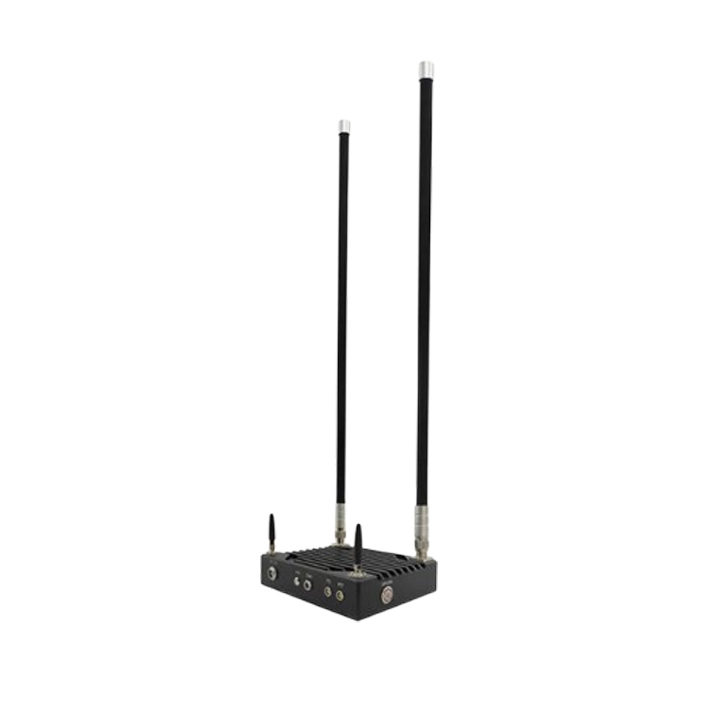
UAV Data Link System 10km Range IP Mesh Radio
Overview: Built for vast networking, this transmitter supports up to 52 nodes, making it ideal for complex, multi-drone coordination.
- Frequency Range: 1428~1448MHz (Std) / 1100~1500MHz (Customized)
- Networking Capacity: ≥ 52 Nodes
- Encryption: AES128/256
- Data Types: Text, Picture, Video, Audio
- Power Output: 8W (4W * 2) with ≤ 80W overall consumption
3. Silvus Technologies StreamCaster 4000 Series
A staple in the defense sector, the StreamCaster utilizes proprietary MN-MIMO technology. It is exceptionally rugged and offers incredible NLOS performance. However, for commercial users, the extreme price point per node often makes it cost-prohibitive compared to OEM solutions like China Moneypro.
4. Doodle Labs Smart Radio
Highly favored by the Blue sUAS ecosystem, Doodle Labs provides a very compact, multi-band mesh radio. It is excellent for small quadcopters where weight is the primary constraint. It operates on their Mesh Rider OS, though it can struggle with thermal throttling in enclosed OEM drone shells without active cooling.
5. Microhard pMDDL Series
A classic choice for drone integrators. Microhard modules are incredibly small and offer robust Pico Mesh capabilities. They are best suited for telemetry and low-res video. When pushing multiple HD video streams across several hops, we recommend moving up to a higher-bandwidth TD-LTE system.
Commercial and Operational Benefits
Upgrading to a mesh data link for UAV fleets unlocks capabilities that are physically impossible with standard radios.
- Self-Healing Networks: If a drone is shot down, crashes, or runs out of battery, the network does not collapse. The routing algorithm instantly redirects traffic through surviving nodes.
- BVLOS Operations: By placing ground nodes or high-altitude relay drones in the operational theater, you can fly drones behind mountains or inside concrete urban canyons.
- Spectrum Efficiency: Adaptive bandwidths (e.g., China Moneypro’s 1.4MHz to 20MHz ranges) allow operators to squeeze high-definition video through congested RF environments.
Limitations to Consider
Mesh networking is not magic; it is bound by the laws of physics. The most significant limitation is “hop degradation.” Every time a packet of data jumps from one drone to another (a hop), you introduce latency and lose a fraction of total throughput. While a single hop might add only 30ms of latency, a chain of five hops might make real-time FPV (First Person View) flying noticeably sluggish. Furthermore, mesh radios consume more power than simple telemetry radios, requiring integrators to allocate a higher power budget (often 5W to 15W) from the drone’s battery.
Who Should Use It & Who Does Not Need It
Who Should Use It: We recommend mesh data link for UAV technology strictly for commercial, tactical, and industrial operators. If you are conducting search and rescue (SAR) in mountainous terrain, deploying drone swarms for agricultural spraying, or operating UGVs inside tunnels where RF signals die quickly, an IP mesh is a mandatory upgrade.
Who Does Not Need It: If you are a consumer flying a DJI drone in an open field, or a commercial real estate photographer operating within 500 meters of your controller with a clear line of sight, you do not need a mesh network. Standard point-to-point OcuSync or Wi-Fi bridges are more than sufficient and vastly cheaper.
Operator Ergonomics: Field Deployment Gear
In our testing across harsh sunlit environments, maintaining visual line of sight (VLOS) while monitoring a Ground Control Station (GCS) causes severe pilot eye strain, leading to mission fatigue. We highly advise outfitting your operators with polarized protection. For instance, Full wood sunglasses provide lightweight comfort for long flight days, while TR90 wood sunglasses offer tactical durability in rugged terrain. When analyzing high-glare tablet screens or reviewing mesh topology maps on laptops, Anti-blue Eyeglasses Unisex drastically reduce digital fatigue. Always protect this essential field gear with hard-shell Eyewear cases and keep lenses free of dust using a dedicated Cloth and pouch kit.
Common Procurement Mistakes
The most frequent mistake buyers make is ignoring the encryption standards. Sending unencrypted IP video feeds is a massive security liability. Ensure the system utilizes at least AES 128-bit, though AES 256-bit is preferred for sensitive operations. Another critical error is failing to account for thermal dissipation. Mesh radios process complex routing algorithms continuously; if you bury the OEM module deep inside a carbon-fiber drone chassis without a heatsink, it will overheat and throttle your data rate mid-flight.
Expert Buying Considerations
When drafting your RFQ (Request for Quotation) for a mesh data link for UAV, prioritize these metrics:
- Frequency Band: Ensure the operating frequencies (e.g., 1.4GHz, 2.4GHz) are legally permissible in your operational country. Custom bands (like China Moneypro’s 1100~1500MHz options) are invaluable for avoiding civilian Wi-Fi interference.
- Maximum Nodes: A system capped at 8 nodes is fine for tactical teams, but swarm operators must demand systems capable of 50+ nodes.
- Anti-Jamming Capabilities: Look for features like “Automatically Cross-Band frequency hopping” to survive in contested RF environments.
Pros vs Cons & Comparison Tables
Pros and Cons of IP Mesh Networks
| Pros (Advantages) | Cons (Limitations) |
|---|---|
| Eliminates single points of failure in the network. | Higher power consumption drains UAV batteries faster. |
| Enables true BVLOS and NLOS operations via relay hops. | Latency increases with every additional network hop. |
| Massive data throughput for multiple HD video streams. | Higher initial cost and complex initial configuration. |
| Highly scalable; simply power on a new drone to expand the network. | Requires careful thermal management in tight OEM chassis designs. |
Comparison: Mesh Radio vs Point-to-Point (P2P)
| Feature | Mesh Data Link for UAV | Traditional Point-to-Point (P2P) |
|---|---|---|
| Network Topology | Decentralized (Many-to-Many) | Centralized (One-to-One) |
| NLOS Capability | Excellent (Uses other drones as relays) | Poor (Fails when LOS is broken) |
| Swarm Support | Yes (Supports 8 to 50+ nodes seamlessly) | No (Requires separate frequencies for each drone) |
| Latency | Variable (Depends on routing hops) | Fixed and ultra-low |
| Cost | Premium Investment | Highly Affordable |
Frequently Asked Questions (FAQ)
Does a mesh data link increase drone latency?
In a direct one-hop connection, the latency is comparable to standard digital links (often ≤ 30ms). However, latency does increase incrementally for every “hop” the data must take through other drones to reach the ground control station.
What is the difference between a mesh network and Wi-Fi?
Standard drone Wi-Fi connects a single controller to a single drone using consumer 2.4GHz/5.8GHz bands, dropping connection easily behind obstacles. A true IP mesh data link uses dynamic routing protocols and advanced modulation to create a self-healing, multi-node network that extends range far beyond standard Wi-Fi limits.
Are mesh radios legal to use globally?
Legality depends entirely on the operating frequency and the transmit power (dBm/Watts). Buyers must ensure that the frequency ranges of the mesh equipment comply with their local aviation and telecommunications regulatory bodies (such as the FCC in the USA or CE in Europe).
Authoritative References
- IEEE (Institute of Electrical and Electronics Engineers): Standards and protocols for wireless mesh networking and multi-hop routing algorithms. IEEE Standards Association
- FCC (Federal Communications Commission): Regulations governing radio frequency allocation, transmit power limits, and unlicensed spectrum use for UAS (Unmanned Aircraft Systems). FCC Official Site
- FAA (Federal Aviation Administration): Guidelines for Beyond Visual Line of Sight (BVLOS) waivers and the required communication link reliability for commercial drone operations. FAA Unmanned Aircraft Systems