


There is a catastrophic misunderstanding in the commercial drone industry regarding radio frequency physics. Operators purchase six-figure aerial platforms and then rely on consumer-grade 2.4 GHz or 5.8 GHz communication links to control them. This is an invitation for absolute failure. When you push beyond visual line of sight or operate in dense industrial environments, high-frequency signals degrade rapidly. If you are serious about data telemetry, long-range video transmission, and uninterrupted command and control (C2), you must abandon standard Wi-Fi bands and master the uhf and vhf frequency range.
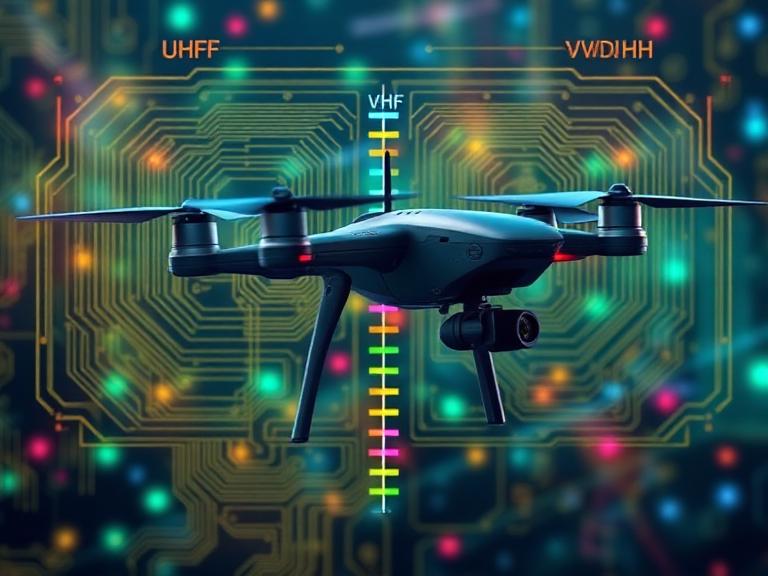
From our experience engineering industrial uav solutions at China Moneypro, we routinely rescue clients who have crashed expensive airframes because of signal multipathing or foliage attenuation. You cannot negotiate with physics. Lower frequencies travel further and penetrate obstacles better. In this definitive guide, we will strip away the marketing jargon and explain exactly how the uhf and vhf frequency range operates, when you must deploy each band, and why upgrading your ground station architecture to sub-gigahertz mesh networking is the only viable path for heavy-duty applications.
Quick Answer: The Core Differences
The uhf and vhf frequency range encompasses the two most critical spectrums for long-distance, non-line-of-sight (NLOS) communication. The VHF (Very High Frequency) range spans from 30 MHz to 300 MHz. It excels at long-range propagation and bending around geographical obstacles (hills, forests), but offers very low data bandwidth, making it suitable only for basic telemetry and voice. The UHF (Ultra High Frequency) range spans from 300 MHz to 3,000 MHz (3 GHz). It offers significantly higher data throughput—capable of carrying HD video—while still maintaining excellent penetration through urban structures and vegetation compared to 5.8 GHz systems. For commercial UAV operators, sub-GHz UHF (e.g., 800 MHz or 900 MHz) is the undisputed gold standard for robust command and video links.
Table of Contents
- What It Is: Defining the Spectrum
- How It Works: The Physics of Wavelengths
- Commercial Benefits of the Spectrum
- Limitations and Hidden Risks
- Who Should Use It
- Who Does Not Need It
- Common Engineering Mistakes
- Strict Buying Considerations
- Expert Recommendation from China Moneypro
- Summary and Comparison Tables
- Frequently Asked Questions
What It Is: Defining the Spectrum
To operate safely in commercial airspace, you must understand the radio spectrum allocated to your hardware. The uhf and vhf frequency range is defined by the International Telecommunication Union (ITU) based on electromagnetic wavelength characteristics.
VHF (Very High Frequency): Occupying the 30 MHz to 300 MHz band, these frequencies possess wavelengths ranging from 1 to 10 meters. Historically, this band is dominated by marine radio, FM broadcasting, and aviation voice communications. In the UAV sector, specific narrow slices of VHF are utilized strictly for low-baud-rate telemetry over extreme distances, often utilized in bvlos fixed wing uav operations where tracking data must survive over 50 kilometers of mountainous terrain.
UHF (Ultra High Frequency): Occupying the 300 MHz to 3 GHz band, wavelengths here shrink to between 10 centimeters and 1 meter. This is the workhorse spectrum for modern tactical and commercial drones. Within the uhf and vhf frequency range, the UHF band provides the perfect compromise: it has wavelengths long enough to punch through brick, concrete, and heavy forest canopy, yet short enough to carry the dense packet data required for 1080p video streaming.
How It Works: The Physics of Wavelengths
In most professional situations, understanding how your radio waves interact with physical matter dictates your mission’s success. The fundamental rule of radio frequency physics is inverse proportionality: as frequency increases, wavelength decreases. As wavelength decreases, data capacity increases, but obstacle penetration degrades.
When you operate a drone at 2.4 GHz, the short wavelengths bounce off tree leaves and buildings, shattering your video link. When you shift your operation into the lower end of the uhf and vhf frequency range—specifically the 800 MHz or 900 MHz UHF bands—the wavelengths are physically larger than the leaves and small obstacles in their path. Instead of bouncing, the signal diffracts around and penetrates through the matter. This phenomenon is why a long range vtol drone utilizing a 900 MHz link can fly behind a dense tree line and maintain perfect control, whereas a consumer drone will instantly trigger an emergency return-to-home protocol.
Commercial Benefits of the Spectrum
We recommend migrating to the uhf and vhf frequency range because it directly impacts your operational envelope and financial bottom line. For commercial users executing pipeline inspections or border patrols, the primary benefit is Non-Line-Of-Sight (NLOS) capability. You no longer need to maintain strict visual parity with the aircraft. This unlocks the true potential of a long endurance vtol drone, allowing you to map miles of undulating terrain without constantly moving your ground station to maintain a clear visual vector.
Furthermore, lower frequencies suffer far less from free-space path loss. This means your ground station transmitters require less battery power (lower wattage) to push a signal over the same distance compared to high-frequency systems, vastly improving the thermal efficiency and battery life of your ground control station.
Limitations and Hidden Risks
We must use commercial and practical judgment: utilizing the uhf and vhf frequency range is not without severe engineering trade-offs. The most glaring limitation is antenna size. A standard quarter-wave dipole antenna for a 5.8 GHz system is barely an inch long. A quarter-wave antenna for a 150 MHz VHF system is roughly 19 inches long. Mounting massive antennas on a small drone introduces aerodynamic drag, vibration, and weight penalties that can drastically reduce flight time.
Secondly, bandwidth is highly constrained. If you attempt to transmit uncompressed 4K video over a 433 MHz UHF link, you will fail. The available bandwidth in these lower frequency bands is mathematically insufficient for massive data pipes. You must employ heavy compression algorithms or restrict your transmission to basic telemetry and 720p/1080p thermal or EO streams.
Who Should Use It
For heavy-duty applications, adopting the uhf and vhf frequency range is non-negotiable. If you are operating cargo drone solutions in urban canyons, or flying a fixed wing drone for photogrammetry over vast forestry tracts, sub-GHz UHF is mandatory for survival. Law enforcement, search and rescue (SAR), and military integrators exclusively use these bands to ensure connection reliability when human lives are at stake.
Who Does Not Need It
For beginners flying consumer quadcopters in open parks, or cinematic professionals flying line-of-sight on open film sets, investing in specialized UHF gear is a waste of capital. Your standard 2.4 GHz OcuSync or Lightbridge systems are perfectly adequate when you have direct, unobstructed visual access to the drone at all times.
Common Engineering Mistakes
In our testing, the most catastrophic mistake operators make when transitioning to the uhf and vhf frequency range is ignoring the Fresnel zone. Even if your radio waves can penetrate obstacles, the elliptical volume of space between your transmitter and receiver (the Fresnel zone) must remain relatively clear. Flying a drone 10 feet off the ground over a lake with a 900 MHz link will result in catastrophic multipathing—the signal bounces off the water, crashes into the direct signal, and cancels it out via phase inversion.
Another profound error is antenna mismatch. Operating a high-powered 1 Watt UHF transmitter with an improperly tuned antenna will cause the radio energy to reflect back into the transmission module (known as a high Standing Wave Ratio, or SWR). This will literally fry your communication board mid-flight, resulting in total loss of the airframe.
Strict Buying Considerations
When you prepare to procure communication hardware within the uhf and vhf frequency range, you must navigate local regulatory environments. In the United States, operating high-power equipment in these bands often requires a Part 90 commercial license or an amateur radio (Ham) license from the FCC. Do not buy a 5-Watt 433MHz system assuming you can legally turn it on anywhere.
Technologically, you must prioritize IP Mesh systems. Traditional point-to-point radios are obsolete for complex missions. You need self-healing mesh architecture that automatically adjusts modulation and routes data through multiple nodes if the primary link degrades.
Expert Recommendation from China Moneypro
From our experience engineering unbreakable data links for industrial clients, we unequivocally recommend standardizing your fleet on sub-GHz, IP-based mesh networks. To overcome the limitations of standard point-to-point telemetry, you must integrate hardware that dynamically adapts to the environment. For ultimate NLOS performance and video streaming, we strongly recommend deploying the China Moneypro High Powered IP Mesh system. It leverages the exact sweet spot of the uhf and vhf frequency range to guarantee your drone comes home safely, regardless of the terrain.
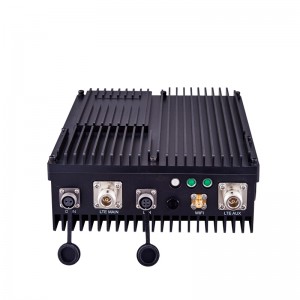
China Moneypro High Powered Ip Mesh With Vehicle Mounted Design For NLOS Long Range Video Transmitting
Engineered for uncompromising industrial and tactical applications, this communication hub leverages the optimum spectrums to deliver flawless Non-Line-Of-Sight performance.
- Multiple Frequency Bands – Choose from 800MHz, 1.4GHz, or 2.4GHz to bypass interference and match your specific environmental penetration needs.
- Superior Range & NLOS Capability – Maintains a strong, heavily encrypted signal even in severe Non-Line-of-Sight conditions where standard drones fail.
- High-Speed Performance – Up to 30Mbps throughput for smooth, uninterrupted HD video and heavy telemetry transmission.
- Scalable & Self-Healing Mesh – Expand your network to support 8, 16, or 32 nodes. Fluid, optimized performance with automatic recovery if a node drops out.
- Advanced Security – Military-grade AES128/256 encryption protects your video and data from unauthorized interception.
Summary and Comparison Tables
| Band Classification | Frequency Range | Primary UAV Application |
|---|---|---|
| VHF (Very High Frequency) | 30 MHz – 300 MHz | Extreme long-range telemetry, basic C2, Voice over IP. |
| UHF (Ultra High Frequency) | 300 MHz – 3 GHz | Robust C2, NLOS video transmission, IP Mesh networks. |
| SHF (Super High Frequency) | 3 GHz – 30 GHz | High-bandwidth 5.8 GHz video, consumer drone links, radar. |
| Performance Metric | Sub-GHz UHF (e.g., 800/900 MHz) | Standard Consumer (5.8 GHz) |
|---|---|---|
| Obstacle Penetration (NLOS) | Excellent (Punches through foliage/buildings) | Poor (Blocked by trees/walls instantly) |
| Maximum Data Throughput | Moderate (Sufficient for 1080p and telemetry) | Extreme (Capable of uncompressed 4K streaming) |
| Antenna Size Requirement | Large (Requires structural consideration on UAV) | Very Small (Easily hidden on drone chassis) |
| Signal Multipathing Risk | Moderate to High (Requires Fresnel zone awareness) | Low (Highly directional) |
| Interference Profile | Low (Usually requires licensing, less crowded) | Extreme (Crowded by urban Wi-Fi routers) |
| Pros (Advantages) | Cons (Limitations) |
|---|---|
| Massive extension of operational range without exponentially increasing transmitter power. | Antennas are physically large, creating aerodynamic drag on fixed-wing platforms. |
| Absolute necessity for reliable BVLOS (Beyond Visual Line of Sight) certifications. | Often requires commercial frequency licensing and regulatory approval to operate legally. |
| Immunity to standard urban 2.4/5.8 GHz Wi-Fi interference. | Lower data bandwidth restricts the use of multiple high-definition payload sensors simultaneously. |
Frequently Asked Questions
Why do long-range drones use 900 MHz instead of 5.8 GHz?
Long-range drones utilize 900 MHz, which falls squarely within the uhf and vhf frequency range, because lower frequencies have longer wavelengths. These longer wavelengths suffer less from free-space path loss and possess the physical ability to diffract around geographical obstacles and penetrate heavy foliage, making them vastly superior for maintaining a reliable telemetry link over extreme distances.
Do I need a license to operate a drone on UHF or VHF frequencies?
In most professional situations, yes. While there are specific ISM (Industrial, Scientific, and Medical) bands like 902-928 MHz in the US that allow unlicensed operation under strict power limits (typically under 1 Watt), utilizing high-powered transmitters on specific UHF/VHF frequencies requires commercial licensing from regulatory bodies like the FCC in the United States or equivalent local authorities to prevent interfering with emergency and aviation services.
What is an IP Mesh network in drone communications?
Unlike traditional point-to-point radios where the drone talks directly to one controller, an IP Mesh network treats every drone, vehicle, and ground station as a fluid “node.” If a mountain blocks the signal between the drone and the pilot, the mesh network will automatically bounce the signal off a secondary drone or a relay truck to maintain the connection. It provides self-healing, multi-path redundancy for critical operations.
Authoritative Industry References
To ensure engineering accuracy and regulatory compliance, the technical parameters discussed in this guide reference data from the following authoritative bodies:
- Federal Communications Commission (FCC) – Official United States government regulations and charting for radio spectrum allocation, defining licensed and unlicensed operational bands.
- International Telecommunication Union (ITU-R) – Global standards and treaty regulations governing the worldwide use of the radio-frequency spectrum and satellite orbits.
- Institute of Electrical and Electronics Engineers (IEEE) – Peer-reviewed academic and industrial standards detailing electromagnetic wave propagation, antenna design, and wireless mesh networking protocols.