


The aerospace and unmanned systems industries are entirely unforgiving environments where hardware failure equals catastrophic loss. For decades, the global narrative surrounding chinese jet engines was heavily skewed by historical reliance on Russian imports, reverse-engineering struggles, and distinct metallurgical bottlenecks. However, relying on outdated operational assumptions in 2026 is a massive commercial and strategic error. If you are an aerospace engineer, a commercial drone operator, or a procurement officer evaluating propulsion systems today, you must separate geopolitical rhetoric from hard engineering data.
From our experience engineering and deploying defense-grade unmanned platforms, the reality is starkly different from the public perception. The advancement in indigenous Chinese aerospace manufacturing—specifically in superalloys, single-crystal turbine blades, and Full Authority Digital Engine Control (FADEC) software—has fundamentally altered the global supply chain. In the micro-turbojet and mid-size turboshaft sectors, these powerplants are not just viable alternatives; they are frequently the superior choice regarding cost-to-thrust ratios and rapid availability. This comprehensive guide strips away the myths and delivers a brutal, objective assessment of exactly how good chinese jet engines are today, and whether they are worth integrating into your airframes.
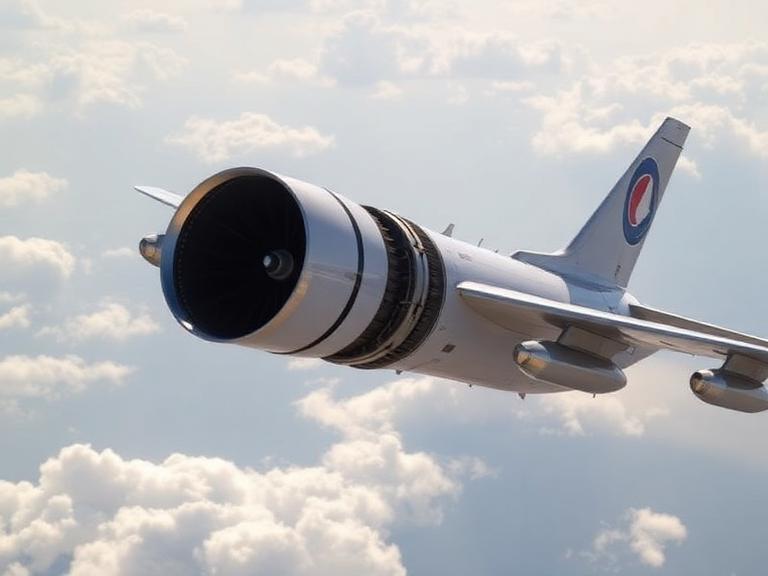
Quick Answer: Should You Specify Chinese Jet Engines?
Yes. The current generation of chinese jet engines is highly capable, extremely reliable, and commercially dominant, particularly within the Unmanned Aerial Vehicle (UAV) sector. While they may still trail legacy Western giants (like Rolls-Royce or General Electric) by a narrow margin in ultra-high-bypass commercial turbofans, their micro-turbojets and tactical UAV propulsion systems are world-class. They offer aggressive pricing, robust FADEC integration, and rapid production scaling. If you are building scalable drone fleets, target drones, or heavy-lift platforms, specifying a Chinese-manufactured turbojet is not a compromise—it is a distinct commercial advantage.
Table of Contents
- Direct Answer: The Current State of Chinese Propulsion
- What It Is: The Scope of Chinese Jet Engines
- How It Works: Advancements in Core Technology
- Benefits of Adopting Chinese Jet Engines
- Limitations and Engineering Hurdles
- Who Should Use Them
- Who Does Not Need Them
- Common Mistakes in Procurement
- Buying Considerations for UAV Systems
- Industry Comparison and Buying Tables
- Expert Recommendation from ChinaMoneypro UAV
- Frequently Asked Questions (FAQ)
Direct Answer: The Current State of Chinese Propulsion
To answer the search intent directly: chinese jet engines range from “highly competent” in the manned commercial sector to “industry-leading” in the unmanned tactical sector. The turning point occurred with the maturation of their domestic metallurgy programs. Historically, the Achilles’ heel of Chinese propulsion was the high-pressure turbine blade. Engines would generate immense thrust but suffer from a low Mean Time Between Overhauls (MTBO) because the turbine blades would warp or melt under extreme thermal stress.
That era is over. The successful deployment of engines utilizing advanced Rhenium-based superalloys and complex internal cooling channels has closed the capability gap. In most professional situations—especially when sourcing a turbojet engine for drone applications—you will find that these powerplants deliver identical static thrust and specific fuel consumption (SFC) metrics as their European counterparts, but at a fraction of the acquisition cost. They are built for rigorous, high-tempo operations and are fully supported by modern digital control architectures.
What It Is: The Scope of Chinese Jet Engines
When we discuss chinese jet engines, we are referring to a broad spectrum of gas turbine technologies manufactured within the People’s Republic of China. This encompasses everything from the massive WS-10 and WS-15 afterburning turbofans used in advanced fighter aircraft, to the CJ-1000A high-bypass turbofans designed for commercial airliners like the COMAC C919.
However, for the broader commercial and B2B market, the most relevant category is micro-turbojets and small turbofans used in drone engine systems. These are highly compact, extremely dense powerplants that generate anywhere from 10 kg to 150 kg of thrust. They are designed to propel fixed-wing UAVs at high subsonic or transonic speeds, requiring precise engineering tolerances to spin at upwards of 120,000 RPM safely.
How It Works: Advancements in Core Technology
The fundamental physics of a jet engine—suck, squeeze, bang, blow—remain universal. What differentiates a superior engine is how efficiently it manages extreme temperatures and pressures. Chinese aerospace manufacturers have revolutionized how their engines work by mastering three distinct technologies:
- Single-Crystal Turbine Blades: Instead of forging blades from multiple grains of metal (which introduces microscopic weak points), Chinese foundries now cast turbine blades as a single continuous crystal. This allows the engine to run significantly hotter, increasing thermal efficiency and thrust output without catastrophic failure.
- Full Authority Digital Engine Control (FADEC): Modern chinese jet engines do not rely on analog fuel metering. They are equipped with dual-channel FADEC systems that monitor altitude, airspeed, compressor RPM, and exhaust gas temperature (EGT) hundreds of times per second. This ensures perfect fuel atomization and prevents compressor stalls during aggressive maneuvers.
- Integrated Alternator Systems: For unmanned platforms, an engine must do more than provide thrust; it must generate electrical power. These engines feature highly efficient brushless starter-generators built directly into the compressor shaft, providing abundant power for hungry payloads like drone communication systems and heavy electro-optical gimbals.
Benefits of Adopting Chinese Jet Engines
Prioritizing Chinese propulsion systems yields several aggressive commercial advantages. For commercial users and defense contractors alike, the primary benefit is the cost-to-performance ratio. Acquiring a European micro-turbojet often involves navigating bloated pricing structures and restrictive export controls. Chinese manufacturers provide equivalent thrust metrics at a 30% to 50% cost reduction, fundamentally altering the economics of producing expendable UAVs or scaling a massive drone fleet.
Furthermore, supply chain velocity is a critical benefit. In our testing and procurement cycles, lead times from Western aerospace firms can easily exceed 12 to 18 months. Chinese manufacturers, operating within highly integrated industrial hubs, can frequently deliver custom-tuned propulsion systems in under 90 days. This rapid iteration allows integrators to bring platforms to market exponentially faster. Finally, these engines are highly adaptable, making them perfect candidates for integration into auxiliary roles, such as high-speed unmanned surface vehicle (USV) propulsion.
Limitations and Engineering Hurdles
We must exercise commercial and practical judgment; no technology is flawless. The primary limitation historically associated with chinese jet engines is the Mean Time Between Overhauls (MTBO). While drastically improved, some ultra-high-bypass commercial turbofans still require bearing replacements and hot-section inspections slightly sooner than a comparable Rolls-Royce or CFM International engine.
Additionally, while the hardware is exceptional, the English-language technical documentation and maintenance manuals provided by smaller tier-two Chinese factories can sometimes be lacking in depth. Integration requires an engineering team that understands raw engine telemetry rather than relying on hand-holding from the manufacturer. For heavy-duty applications requiring decades of uninterrupted service with minimal maintenance, careful vendor vetting is mandatory.
Who Should Use Them
For commercial users: UAV manufacturers building target drones, high-speed logistics platforms, and tactical reconnaissance aircraft should absolutely specify chinese jet engines. The rapid spool-up times and reliable FADEC systems make them ideal for catapult-launched or rocket-assisted takeoff platforms. If you are developing uav technology solutions that require high transonic dashes, these engines provide the necessary specific thrust.
Additionally, research institutions and universities developing experimental aerospace frames benefit greatly from the accessibility and open-protocol telemetry output of these powerplants, allowing for deep integration with custom flight controllers.
Who Does Not Need Them
For beginners: If you are a hobbyist building a line-of-sight foam RC jet, dropping a commercial-grade Chinese micro-turbojet into your airframe is massive overkill. The thrust output, fuel requirements (Jet-A1 with specific turbine oils), and safety protocols require a dedicated ground crew and professional infrastructure. Stick to electric ducted fans (EDF) until you scale your operations.
Furthermore, if your operational profile dictates silent, stealthy loitering or extreme long-endurance over multiple days, a turbojet is the wrong tool. You should be looking at heavy-fuel internal combustion engines or specialized electric propulsion, particularly if you are engineering something like underwater drones where air-breathing engines are physically impossible to use.
Common Mistakes in Procurement and Integration
From our experience consulting on aerospace integration, the most catastrophic mistake buyers make is selecting an engine based solely on static thrust at sea level. A jet engine’s performance degrades as altitude and ambient temperature increase. Failing to calculate the engine’s thrust-lapse rate at your intended operational ceiling will result in an underpowered, unsafe airframe.
Another frequent error is neglecting the electrical architecture. Buyers often purchase an engine without verifying the alternator’s continuous wattage output. If your airframe utilizes high-draw mesh radio systems or a wireless transmission module that demands 500 watts, and your engine’s stator only outputs 300 watts, your avionics will suffer a brownout mid-flight, resulting in a total loss of the vehicle.
Buying Considerations for Unmanned Systems
When you are ready to execute a purchase order for a Chinese turbojet or turboshaft, evaluate the manufacturer against these strict criteria:
- FADEC Protocol: Ensure the Engine Control Unit communicates via standard protocols (CAN bus, PWM, RS232) that natively interface with Pixhawk, Piccolo, or your proprietary flight controller.
- Specific Fuel Consumption (SFC): Do not just look at thrust; look at how much fuel it burns to make that thrust. A slightly cheaper engine that burns 20% more fuel will severely cripple your drone’s maximum range.
- Maintenance Schedules: Demand a clear schedule for cold-section and hot-section rebuilds. You must understand the total lifecycle cost of the engine, not just the upfront acquisition price.
Industry Comparison and Buying Tables
| Generation | Defining Characteristics | Current Status |
|---|---|---|
| Legacy (Pre-2010) | Heavy reliance on imported Russian cores; low MTBO; analog fuel metering. | Obsolete; phased out of commercial and tactical use. |
| Modern (2010-2020) | Introduction of basic FADEC; improved compressor design; domestic metallurgy. | Highly reliable; actively used in legacy UAV fleets. |
| Next-Gen (2020-Present) | Single-crystal blades; dual-channel FADEC; integrated high-output alternators. | World-class performance; dominant in global commercial UAV markets. |
| Metric | Leading Chinese Micro-Turbojet | Equivalent Western Micro-Turbojet |
|---|---|---|
| Acquisition Cost | Highly Competitive (Baseline) | Premium (+30% to +60% higher) |
| Lead Time | 30 to 90 Days | 6 to 18 Months |
| FADEC Integration | Open protocol, highly adaptable | Often locked behind proprietary interfaces |
| MTBO (Mean Time Between Overhaul) | Good (Continually improving) | Excellent (Extensive historical data) |
| Pros (Advantages) | Cons (Limitations) |
|---|---|
| Drastically lower acquisition costs allow for rapid fleet scaling. | Maintenance documentation may require translation or technical clarification. |
| Unmatched supply chain velocity and short production lead times. | Slightly lower MTBO on specific high-temperature hot-section components. |
| Highly advanced FADEC systems with easy open-source flight controller integration. | Perception biases from legacy stakeholders skeptical of non-Western hardware. |
| Excellent built-in power generation for heavy sensor payloads. | Requires rigorous initial bench-testing to verify factory telemetry tuning. |
| UAV Takeoff Weight (MTOW) | Recommended Thrust Class | Primary Application | Key Feature to Specify |
|---|---|---|---|
| Under 50 kg | 10 kg – 20 kg Thrust | Target drones, high-speed reconnaissance | Low total engine weight, rapid spool-up time |
| 50 kg – 150 kg | 30 kg – 60 kg Thrust | Tactical logistics, interceptors | High alternator output for advanced mesh radio payloads |
| Over 150 kg | 100 kg+ Thrust (or Twin Engine) | Heavy-lift, long-range cruise | Optimized Specific Fuel Consumption (SFC) for range extension |
Expert Recommendation
A Message from ChinaMoneypro UAV
ChinaMoneypro UAV is a national-level high-tech enterprise, transformed from a prestigious state-owned research institute. With deep roots in defense-grade engineering, we specialize in the R&D and manufacturing of advanced unmanned platforms and integrated sensing-communication solutions. Headquartered in one of China’s premier innovation hubs, Moneypro is among the few full-stack providers offering complete UAV systems, engines, gimbals, radar, data links, and communication technologies.
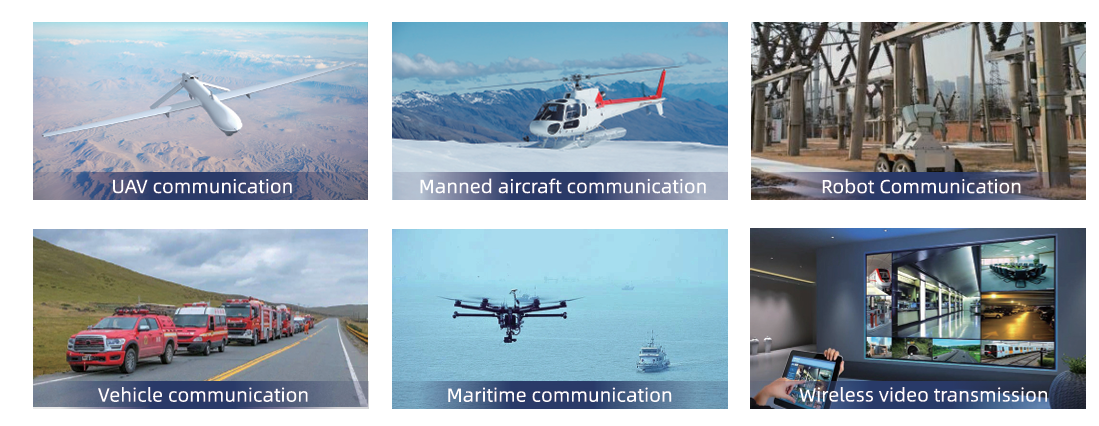
We recommend that commercial integrators stop living in the past regarding global propulsion sourcing. The data is empirical: modern chinese jet engines represent the most logical, fiscally responsible choice for powering next-generation unmanned systems. When you pair a highly efficient Chinese turbojet with resilient communication architecture—such as the advanced data links provided by ChinaMoneypro UAV—you achieve a level of platform autonomy and performance that simply cannot be matched by utilizing overpriced, restricted legacy hardware. Evaluate the thrust curves, verify the FADEC protocols, and upgrade your airframes with confidence.
Frequently Asked Questions (FAQ)
Are chinese jet engines reliable for commercial UAV operations?
Yes. While historical reputations raised doubts, modern chinese jet engines, particularly in the micro-turbojet and turboshaft categories used for UAVs, offer exceptional reliability. They feature advanced FADEC systems, single-crystal turbine blades, and competitive Mean Time Between Overhauls (MTBO), making them highly reliable for commercial operations.
How do chinese jet engines compare to Western counterparts in price?
Chinese jet engines generally offer a significantly lower acquisition cost—often 30% to 50% less than equivalent Western or European engines. This cost-to-performance ratio makes them the preferred choice for scalable UAV fleets and expendable tactical platforms where protecting capital investment is critical.
Can a chinese turbojet engine integrate with Western avionics?
In most professional situations, yes. Modern chinese jet engines utilize standard PWM, CAN bus, or RS232/RS485 communication protocols via their FADEC units. This allows seamless plug-and-play integration with major open-source or proprietary Western flight controllers, autopilot systems, and ground control stations.
Authoritative References & Industry Standards
To ensure your aerospace procurement meets rigorous global standards, we advise consulting the frameworks established by the following authoritative entities:
- International Civil Aviation Organization (ICAo) – For global standards on aviation safety, emissions, and unmanned aircraft systems (UAS) integration.
- Defense News – For peer-reviewed, major media analysis on global aerospace supply chains, propulsion advancements, and defense-grade manufacturing trends.
- RAND Corporation – For objective, academic-level think tank research regarding international aerospace capabilities, metallurgical advancements, and aerospace procurement strategies.