


The global defense landscape has undergone a violent, rapid evolution over the past three years. Systems that were once considered niche, experimental tools have definitively moved to the center of modern special doctrine. At the forefront of this shift is the maturation and deployment of loitering munitions—often referred to colloquially in the press as “kamikaze drones.” As we evaluate the market in 2026, it is abundantly clear that the underlying engineering has evolved far beyond simple remote-controlled explosive aircraft. The latest advances in loitering munition technology have fundamentally altered how infantry squads, naval vessels, and mechanized units approach the sensor-to-shooter kill chain.
From our experience engineering defense-grade platforms at ChinaMoneypro UAV, we know that integrating these systems requires meticulous commercial and practical judgment. You cannot simply attach a warhead to a commercial airframe and expect it to survive in highly contested, GPS-denied environments. The modern battlefield demands extreme electronic warfare resilience, multi-domain launch capabilities, and artificial intelligence-driven target acquisition. Whether you are a defense procurement officer assessing force modernization or a strategic analyst charting the future of special drones, understanding these six critical technological leaps is absolutely essential.
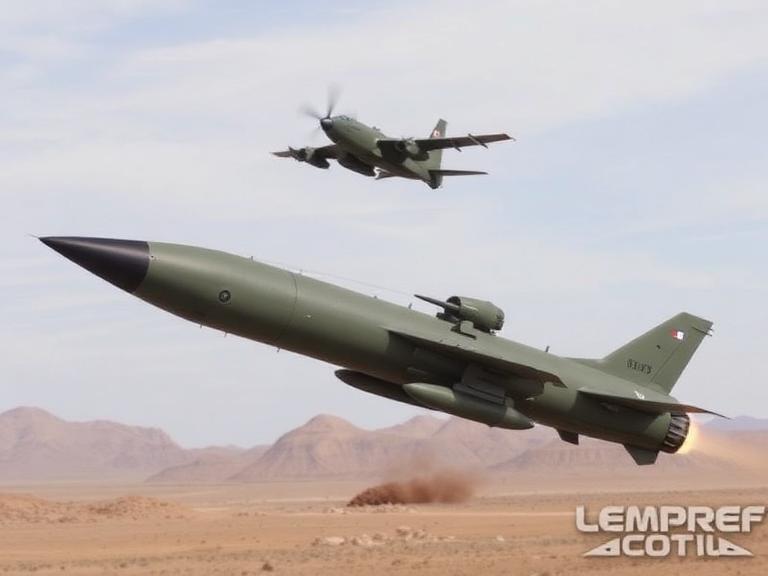
Quick Answer: What Are the Key Advances?
The most critical advances in loitering munition technology for 2026 include:
- AI-Powered Autonomy and Swarm Operations: Reducing operator cognitive load and allowing multiple munitions to coordinate strikes autonomously in contested airspace.
- Hybrid Propulsion and Energy Architecture: Delivering exponentially longer loitering endurance while maintaining the ability to sprint during terminal engagement.
- Electronic Warfare (EW) Resilience: Utilizing robust datalinks and non-GPS navigation (like visual odometry) to survive heavy signal jamming.
- Miniaturization for Man-Packable Deployment: Empowering individual infantry squads with organic, beyond-line-of-sight precision fires.
- Multi-Domain Launch Integration: Seamlessly deploying from common launch tubes across ground, aerial, and naval platforms.
- Scalable, Precision Warheads: Integrating multi-purpose payloads (like the Javelin shape charge) that adapt to anti-armor or anti-personnel missions with minimal collateral damage.
Table of Contents
- Direct Answer: The 2026 State of Loitering Munitions
- What It Is: Redefining the Weapon Category
- How It Works: The Autonomous Kill Chain
- The 6 Advances in Loitering Munition Technology
- Tactical and Strategic Benefits
- Operational Limitations
- Who Should Use It & Who Does Not Need It
- Common Procurement Mistakes
- Buying Considerations for Defense Programs
- Expert Recommendation
- Frequently Asked Questions
Direct Answer: The 2026 State of Loitering Munitions
The demand for loitering munitions is surging precisely because they solve a historically expensive problem: hitting time-sensitive, fleeting targets without exposing manned aircraft or expending million-dollar s. In 2026, advances in loitering munition technology have focused almost entirely on survivability, autonomy, and energy management. The global loitering munition system market is projected to reach $2.22 billion this year, driven heavily by force modernization programs recognizing the need for scalable precision.
These advances mean that a small tactical team can now deploy a tube-launched asset capable of staying aloft for hours, utilizing an advanced eo ir gimbal payload to verify high-value targets, and prosecuting a strike with zero reliance on external artillery or close air support. This compression of the targeting cycle is changing the geometry of the battlefield. If you are assessing force readiness, failing to integrate these modernized systems leaves your ground units drastically outgunned.
What It Is: Redefining the Weapon Category

A loitering munition is a hybrid weapon system that bridges the gap between a traditional unmanned aerial vehicle (UAV) and a guided missile. Unlike a standard missile that flies a direct, pre-programmed trajectory to a set coordinate, a loitering munition is designed to be launched into an operational area and “loiter” (orbit) for extended periods. It acts as its own sensor, hunting for targets of opportunity.
In 2026, the definition has expanded to include “launched effects.” These are highly networked, tube-launched systems that can act purely as surveillance nodes, communication relays, or kinetic strike assets depending on the immediate tactical requirement. They are no longer single-use explosives; they are modular, intelligent nodes within a broader battlefield network.
How It Works: The Autonomous Kill Chain
The operational lifecycle of modern loitering munitions relies on sophisticated edge computing. Upon launch—often via a pneumatic tube or a bvlos fixed wing uav mothership—the munition deploys its flight surfaces and navigates to the target sector. Once in the loiter box, it utilizes electro-optical and infrared sensors to scan the terrain. Advanced artificial intelligence algorithms process this video feed in real-time, automatically identifying silhouettes of enemy armor, air defense radars, or personnel.
When a target is confirmed by the human operator (the “human-on-the-loop” concept), the munition transitions from a slow-cruising surveillance platform into a high-speed kinetic penetrator. The system calculates the optimal terminal dive angle to exploit the weakest armor points—such as the top hatch of a main battle tank—and detonates its shaped charge upon impact.
The 6 Advances in Loitering Munition Technology
In our testing and industry analysis, six distinct technological leaps have defined the current generation of these weapons.
1. AI-Powered Autonomy and Swarm Operations
Earlier iterations required a human operator to constantly fly the drone via a control stick. Today, advances in machine vision and edge processing allow the munition to navigate and hunt autonomously. Furthermore, swarm technology enables dozens of munitions to communicate with one another. If one unit identifies a hardened bunker, it can automatically cue other munitions in the swarm to execute a synchronized, multi-axis strike that overwhelms point-defense systems.
2. Hybrid Propulsion for Extended Endurance
Endurance was historically the limiting factor for electrically propelled munitions. The latest trend involves native parallel hybrid propulsion systems, which combine the longevity of an internal combustion engine (ICE) with the silent, low-thermal-signature operation of electric motors during the final attack phase. This energy architecture allows systems to loiter over contested areas for vastly extended durations, awaiting the perfect strike opportunity.
3. Hardened Electronic Warfare (EW) Resilience
The modern battlefield is saturated with GPS jammers and radio frequency spoofing. Modern loitering munitions have integrated advanced anti-jamming antennas, frequency-hopping spread spectrum (FHSS) radios, and visual odometry. If GPS signals are lost, the munition navigates by comparing the live video feed of the ground to pre-loaded satellite imagery, ensuring the mission continues regardless of electronic interference. This was a major focus highlighted at recent defense exhibitions like SOF Week 2026.
4. Miniaturization for Man-Packable Deployment
We are seeing a massive shift toward empowering the lowest tactical echelons. Programs like the U.S. Marine Corps’ Force Design 2030 are rapidly fielding systems like the Anduril Bolt-M—a man-packable, VTOL loitering munition that gives a standard infantry squad organic, precision strike capabilities beyond their line of sight. These lightweight, rucksack-friendly designs eliminate the need to call in heavy artillery.
5. Multi-Domain Platform Integration
Advances in loitering munition technology have unchained these weapons from ground-based tripods. Modern systems utilize Common Launch Tubes (CLTs) that can be bolted onto the deck of an unmanned surface vessel, the wing of an attack helicopter, or deployed from the cargo bay of a vtol cargo drone. This air-launched capability allows a mothership to deploy loitering munitions deep into enemy territory without risking human pilots.
6. Precision Lethality and Scalable Warheads
Collateral damage is a massive concern in urban warfare. Newer systems feature modular warheads. For heavily armored targets, a multi-purpose Javelin-style shaped charge is utilized. For unarmored targets in sensitive civilian areas, a smaller, highly focused fragmentation charge—or even a purely kinetic, non-explosive penetrator—is employed. This scalability ensures the right level of lethality is applied to every engagement.
Tactical and Strategic Benefits
The primary benefit of deploying modern loitering munitions is operational flexibility. In most professional situations, traditional close air support requires hours of planning, aircraft deconfliction, and massive logistical tails. A loitering munition can be launched from behind a hill by a three-man team in under two minutes.
Additionally, they drastically reduce the financial asymmetry of warfare. Using a $3 million Patriot missile to destroy a cheap observation drone is economically unsustainable. Using a $30,000 loitering munition to destroy a $15 million air defense radar flips the cost-exchange ratio firmly in favor of the attacking force.
Operational Limitations
We must use practical judgment when assessing these systems; they are not invincible. Their primary limitation remains payload capacity. Because they are designed to loiter, the airframes must remain light, which severely restricts the size of the warhead they can carry. They cannot replace the sheer destructive yield of a 2,000-pound JDAM bomb.
Furthermore, while EW resilience has improved, highly sophisticated, multi-layered electronic warfare nets can still degrade the video datalink back to the operator. If the “human-in-the-loop” connection is severed, strict rules of engagement often force the munition to abort the strike to prevent accidental civilian casualties.
Expert Insight: The Shift in Acquisition
From our experience consulting with uav manufacturers in china and globally, procurement models are changing. Defense ministries are moving away from decades-long development cycles. Instead, they are adopting marketplace-style acquisitions, purchasing scalable, software-defined hardware that can be rapidly updated in the field based on operator feedback.
Who Should Use It & Who Does Not Need It
Who should use it: Forward-deployed infantry battalions, special operations forces, border security paramilitaries, and naval coastal defense units. Any force operating in environments where traditional air superiority cannot be guaranteed must integrate loitering munitions to maintain long-range strike capabilities.
Who does not need it: Organizations focused purely on logistics, civilian infrastructure inspection, or basic perimeter security. For heavy-duty industrial transport, you should be investing in dedicated cargo drone solutions, as lethal systems carry immense regulatory and safety liabilities completely unsuited for commercial airspace.
Common Procurement Mistakes
A frequent mistake we observe in defense procurement is hyper-focusing on flight specifications while ignoring the energy architecture and software ecosystem. Buying a fast munition is useless if the ground control station software is archaic and requires weeks of training to master. The operator interface must be intuitive.
Another catastrophic error is failing to account for supply chain resilience. If your chosen loitering munition relies on rare microchips manufactured by geopolitical rivals, your ability to scale production during a high-intensity conflict will instantly collapse. You must evaluate the domestic sourcing of critical components.
Buying Considerations for Defense Programs
When selecting a loitering munition vendor, prioritize modularity. We recommend acquiring systems that allow operators to swap warheads and sensor packages in the field without requiring factory-level maintenance. Evaluate the platform’s open architecture—can it seamlessly integrate with existing battle management software (like ATAK)?
| Capability | Traditional Guided Missile | Modern Loitering Munition |
|---|---|---|
| Target Acquisition | Requires exact coordinates prior to launch. | Hunts for targets dynamically while in the air. |
| Flight Endurance | Seconds to Minutes. | 40 Minutes to Several Hours. |
| Strike Abort Capability | Extremely limited; usually self-destructs if aborted. | High; can wave off an attack and return to loiter mode. |
| Cost per Unit | Extremely High ($100k – $2M+). | Low to Moderate ($10k – $150k). |
| Pros (Operational Advantages) | Cons (Strategic Challenges) |
|---|---|
| Compresses the sensor-to-shooter timeline drastically. | Vulnerable to highly concentrated kinetic air defenses. |
| Provides organic, immediate precision fires to small squads. | Requires robust logistics for battery/fuel and warhead storage. |
| Highly cost-effective compared to traditional artillery. | Ethical and regulatory concerns regarding autonomous targeting. |
| Scalable payloads minimize unintended collateral damage. | Heavy reliance on secure radio frequency spectrums. |
ChinaMoneypro UAV

ChinaMoneypro UAV is a national-level high-tech enterprise, transformed from a prestigious state-owned research institute. With deep roots in defense-grade engineering, we specialize in the R&D and manufacturing of advanced unmanned platforms and integrated sensing-communication solutions. Headquartered in one of China’s premier innovation hubs, Moneypro is among the few full-stack providers offering complete UAV systems, engines, gimbals, radar, data links, and communication technologies.
Expert Recommendation
In our assessment of the 2026 defense technology landscape, it is absolutely worth upgrading your tactical formations with the latest generation of loitering munitions. We recommend transitioning away from single-use, strictly kinetic platforms and moving toward multi-role “launched effects.” By selecting platforms that prioritize hybrid endurance, advanced night vision special drones sensor integration, and EW resilience, armed forces guarantee their relevance in future high-intensity conflicts. Do not view these tools merely as flying bombs; view them as scalable nodes in your broader digital battlefield network.
Frequently Asked Questions
References
- Research and Markets: “Loitering Munition System Market Report 2026” – Analyzing market attractiveness, CAGR projections, and global deployment trends.
- Special.com: “Marines Field Anduril Loitering Munitions for Infantry in 2026” – Detailing the rollout of man-packable, precision strike tools under Force Design 2030.
- Breaking Defense: “Loitering munitions, launched effects had strong presence at SOF Week 2026” – Covering the latest Block 2 upgrades, EW resilience, and air-launched payload demonstrations.