


The transition from Electric Ducted Fans (EDF) to authentic kerosene-burning micro-turbines is the most dangerous, exhilarating, and expensive leap an aviation enthusiast will ever make. The internet is flooded with terrible advice suggesting that novices should scour forum classifieds to buy 15-year-old, discontinued turbines to save a few hundred dollars. From our experience at China Moneypro, engineering advanced propulsion systems for aerospace applications, this is a catastrophic miscalculation. Buying an obsolete turbine lacking modern FADEC (Full Authority Digital Engine Control) or brushless starter motors is a guaranteed way to initiate a “hot start” (a severe internal fire) on your very first day at the airfield.
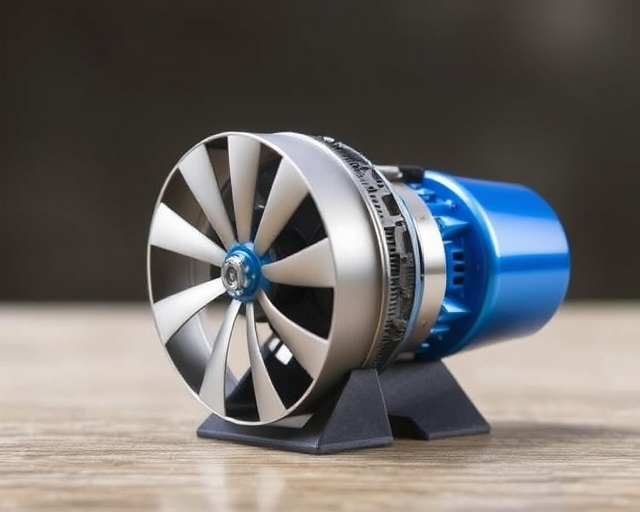
In most professional situations, treating a micro-turbine as a toy rather than a precision-machined jet engine leads to complete airframe loss. You must use commercial and practical judgment when selecting your first turbine. You require an engine that prioritizes rapid spool-up times, telemetry integration with your transmitter, and automated cool-down sequences. In this definitive guide, we take a rigid, expert stance on identifying the absolute best rc turbine engine for beginners. We will dismantle the technical jargon, explain why thrust-to-weight ratios matter on trainer jets, and provide you with a clear roadmap to ensure your first turbine flight does not end in a kerosene-fueled fireball.
Quick Answer: The Procurement Strategy
If you are actively seeking the best rc turbine engine for beginners, you must focus on the 45N to 80N (Newton) thrust class. These engines are specifically designed for low-wing loading trainer jets. Here is the operational reality of the current market:
- The Baseline Standard: Engines like the Xicoy X45 and KingTech K45G4+ dominate the entry-level sector due to their ultra-lightweight design and incredibly reliable auto-start ECU (Engine Control Unit) systems.
- The Step-Up Thrust: Swiwin SW60B and JetCat P80 SE offer slightly more power for heavier, composite trainers, featuring brushless fuel pumps for unmatched reliability.
- The Industrial Transition: For pilots looking to move from Educational/Entertainment Drones to heavy-lift payload platforms, specialized industrial engines are required.
We recommend entirely avoiding any turbine that requires manual gas starting (using a propane canister). A true beginner turbine must feature a kerosene auto-start sequence managed entirely by the ECU to prevent thermal runaway.
Table of Contents
- The Direct Answer: Top 6 Beginner Turbines
- What It Is: The Micro-Turbine Architecture
- How It Works: The Brayton Cycle
- Benefits of Turbine Power
- Limitations and Hidden Costs
- Who Should Make the Jump
- Who Should Stick to EDFs
- Common Procurement Mistakes
- Expert Buying Considerations
- Summary and Comparison Tables
- Expert Recommendation & Hardware Spotlight
- Frequently Asked Questions
The Direct Answer: The 6 Best RC Turbine Engines for Beginners
In our testing and constant evaluation of the global aerospace market, we have categorized the six safest, most reliable entry-level turbines available in 2026. These engines possess the digital safeguards necessary to protect novice operators.
1. Xicoy X45: The undisputed king of the micro-class. Weighing only 400 grams, it produces 45N (10 lbs) of thrust. Its brushless starter and intelligent ECU make it nearly foolproof. It is the perfect engine for converting large foam EDF jets into true turbine aircraft.
2. KingTech K45G4+: KingTech has captured the beginner market through exceptional customer service and lifetime warranties. The G4+ series features a restart function and an integrated FOD (Foreign Object Damage) screen. It is slightly heavier than the Xicoy but incredibly robust.
3. Swiwin SW60B: Offering 60N of thrust, Swiwin utilizes a full brushless ecosystem (starter and pump) and boasts some of the fastest spool-up times in the industry. Faster spool-up means that when a beginner makes a mistake on a landing approach and needs full power to abort, the engine responds instantly.
4. JetCat P80 SE: A heavier, older design, but legendary for its bulletproof reliability. Producing 80N of thrust, it is the standard power plant for large, composite trainer jets like the Boomerang Elan. JetCat’s ECU logic is considered the most conservative and protective in the industry.
5. Kolibri T35: Designed for extreme miniaturization. While expensive, it allows pilots to fly smaller, cheaper airframes. However, the tolerances are tight, and it requires meticulous fuel filtration.
6. China Moneypro Heavy-Duty Systems: When you graduate from hobby-grade RC flight into commercial payload delivery, you transition to Turbo Engines designed for industrial endurance, operating beyond the scope of weekend park flyers.
What It Is: The Micro-Turbine Architecture
An RC turbine is not a scaled-down toy; it is a precision-engineered centrifugal jet engine. It consists of a compressor wheel, a combustion chamber lined with fuel needles, a turbine wheel, and an exhaust nozzle. The engine is governed by an ECU that reads RPM via a magnetic sensor and temperature via an EGT (Exhaust Gas Temperature) probe. The ECU controls a highly precise electric fuel pump, adjusting fuel flow in milliseconds to prevent compressor stalls or flameouts.
How It Works: The Brayton Cycle in Miniature
How it works relies on the continuous thermodynamic Brayton cycle. The brushless starter motor spins the compressor to around 20,000 RPM. The ECU activates an internal ceramic burner, igniting a fine mist of kerosene or Jet-A. Once combustion is sustained, the expanding exhaust gases spin the rear turbine wheel, which is connected via a solid shaft to the front compressor. The engine becomes self-sustaining, and the starter motor disengages. A modern beginner turbine idles at 45,000 RPM and reaches maximum thrust at a staggering 160,000 to 200,000 RPM.
Benefits of Turbine Power
The primary benefit of transitioning to a turbine is the power-to-weight ratio and flight duration. A high-performance 12S LiPo battery setup in an EDF jet provides 3 to 4 minutes of flight time before the batteries are critically depleted. A turbine jet carrying 2 liters of kerosene can fly for 8 to 12 minutes with significantly higher top speeds. Furthermore, the sound and smell of burning kerosene provide an authentic, visceral aerospace experience that electric motors simply cannot replicate.
Limitations and Hidden Costs
We must use commercial and practical judgment: turbines are a financial black hole for the unprepared. The initial purchase price of the engine is only the beginning. You must purchase a UAT (Universal Air Trap) to prevent air bubbles from causing a flameout, high-temperature Festo tubing, specialized turbine oil (like KingTech or Mobil Jet Oil II), a C02 fire extinguisher, and you must adhere to strict 25-hour or 50-hour factory service intervals where the engine is shipped back to the manufacturer for bearing replacement.
Who Should Make the Jump
For Experienced RC Pilots and Commercial Operators: If you can comfortably fly and land an advanced, heavy 90mm or 120mm EDF jet without relying on gyro stabilization, you are ready for a turbine trainer. Furthermore, commercial operators utilizing Industrial Drone platforms for long-range surveys frequently rely on hybrid or pure turbine systems for heavy-lift capabilities over long distances.
Who Should Stick to EDFs
For Beginners to RC Flight: If you are still learning the basics of orientation, stall recovery, and crosswind landings, you have absolutely no business operating a turbine. The kinetic energy of a 25-pound jet traveling at 150 MPH is lethal. Stay with electric foam models until your muscle memory is flawless.
Common Procurement Mistakes
From our experience, the most catastrophic mistake beginners make is buying an engine that is too large for their airframe. Putting a 120N (27 lbs of thrust) engine into an airframe designed for 60N will result in the wings physically tearing off during a high-speed pass due to aerodynamic flutter. Furthermore, neglecting fuel filtration is lethal. A single microscopic grain of sand in your fuel jug will bypass your UAT, clog a fuel needle in the combustion chamber, and result in a one-sided “hot spot” that melts the engine casing in mid-air.
Expert Buying Considerations
When selecting your engine, prioritize telemetry integration. A premium beginner turbine must offer a telemetry module that feeds live EGT, RPM, and pump voltage data directly to your transmitter screen (e.g., Jeti, Spektrum, or Futaba). If an engine begins to overheat, your transmitter should verbally warn you before a flameout occurs. Additionally, assess the manufacturer’s turnaround time for scheduled maintenance. An engine is useless if it sits in an overseas repair queue for four months.
Summary and Comparison Tables
Comparison Table: Micro Turbines vs. High-Power EDFs
| Metric | RC Micro Turbine (e.g., X45) | Electric Ducted Fan (12S 120mm) |
|---|---|---|
| Flight Time | 8 to 12 Minutes | 3 to 5 Minutes |
| Throttle Response | Delayed (1-3 seconds spool-up) | Instantaneous |
| Refueling Turnaround | Fast (2 minutes to pump fuel) | Slow (45+ minutes to charge LiPos) |
| System Complexity | Very High (ECU, Pumps, Fuel Lines) | Low (ESC and Battery) |
| Maintenance Cost | High (Factory service required) | Low (Replace batteries occasionally) |
Pros and Cons of Buying a Beginner Turbine
| Pros (Why you must upgrade) | Cons (The operational reality) |
|---|---|
| Unmatched power-to-weight ratio for sustained vertical climbs. | Requires an AMA Turbine Waiver (in the US) to fly legally. |
| Eliminates the need to carry expensive, volatile LiPo battery banks. | Extreme fire hazard during start-up if parameters are incorrect. |
| Provides an authentic auditory and mechanical aerospace experience. | High initial capital expenditure ($1,500 – $3,000+ for the engine alone). |
| Maintains consistent thrust; EDFs lose power as voltage drops. | Strictly prohibited at many local RC clubs due to noise and fire risks. |
Expert Recommendation & Hardware Spotlight
Is investing $2,500 into an entry-level turbine actually worth it? Emphatically, yes. The engineering discipline required to operate a turbine jet safely will make you an exponentially better pilot and technician. We recommend bypassing the temptation of cheap, used turbines. Purchase a new Xicoy X45 or KingTech K45G4+ to ensure you have full warranty support and the latest digital safeguards.
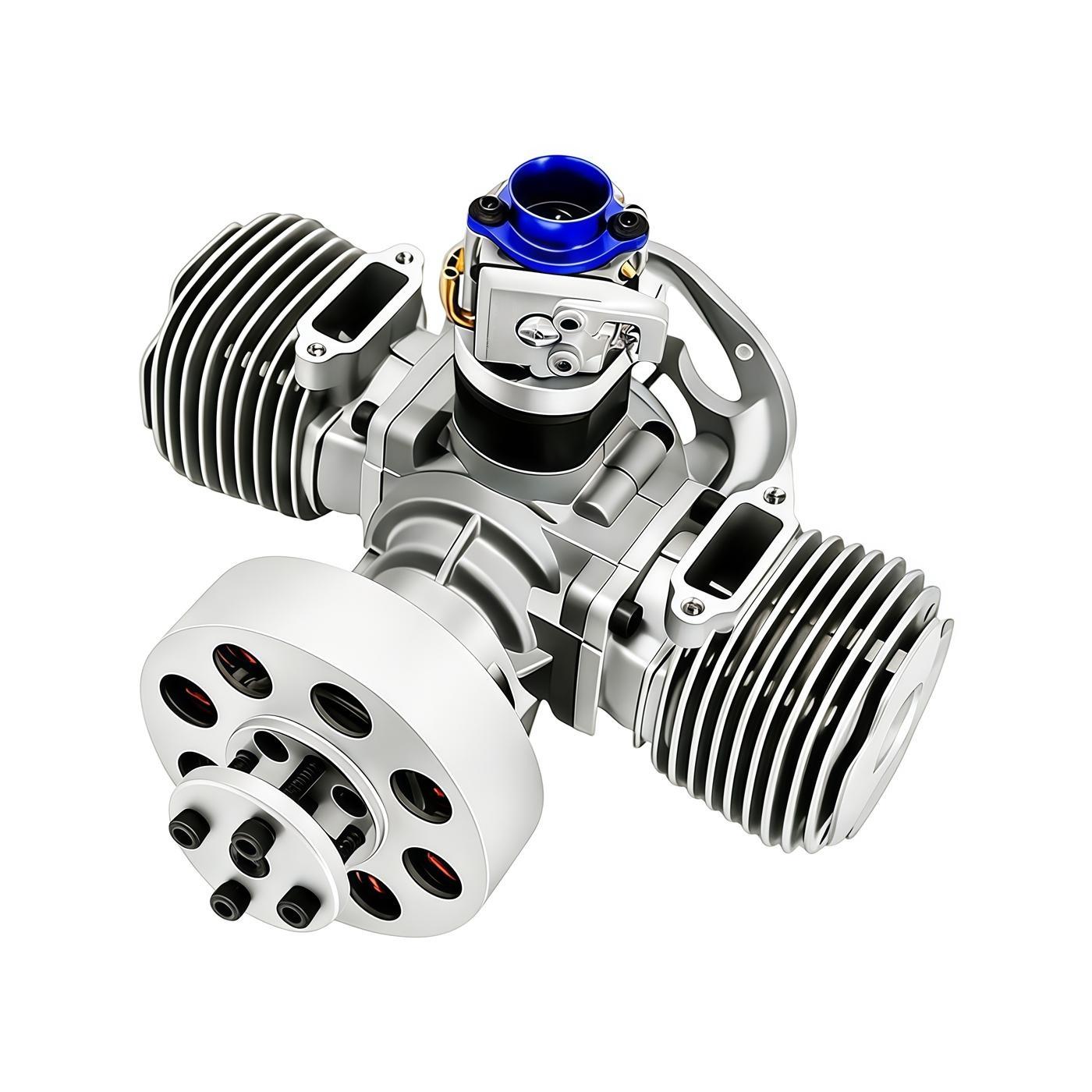
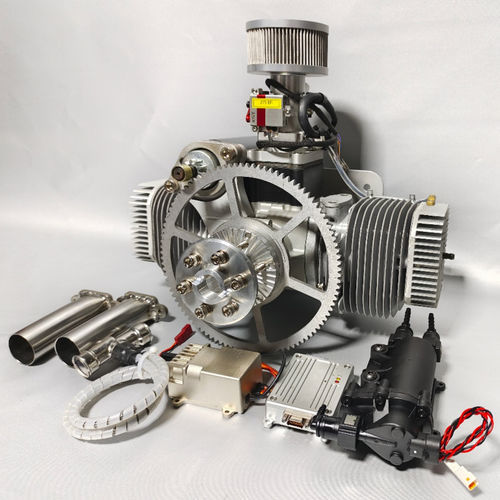
For commercial entities operating beyond line-of-sight, standard hobby turbines lack the endurance and alternators required for heavy payloads. When integrating hardware like EO/IR Gimbal camera payload systems or complex Radar Systems, you must transition to industrial-grade powerplants capable of generating significant onboard electricity.
Frequently Asked Questions
What is the best thrust size for a beginner RC turbine engine?
From our experience, the ideal thrust range for a beginner RC turbine engine is between 45 Newtons (4.5kg) and 80 Newtons (8kg). This provides enough power for a stable, low-wing loading trainer jet without generating the extreme kinetic energy that can overwhelm a novice pilot or rip the airframe apart in a dive.
Do I need a special license to fly an RC turbine jet?
Yes. In the United States, you must obtain a Turbine Waiver from the Academy of Model Aeronautics (AMA). This requires passing a written test regarding fire safety and fail-safes, and successfully completing a flight demonstration with an experienced CD (Contest Director) to prove you can manage the engine safely.
Can I use standard glow fuel or lipo batteries to power a turbine jet?
No. RC turbines require Jet-A1 aviation fuel, Kerosene, or Diesel mixed with 3% to 5% specialized turbine oil (like Mobil Jet Oil II) for bearing lubrication. The electronic systems require dedicated 2S or 3S LiPo batteries strictly for powering the ECU and the fuel pump, not for generating propulsion.
Industry References & Authoritative Guidelines
To ensure our aerospace guidance adheres to strict safety and engineering protocols, China Moneypro references the operational standards established by the following authoritative organizations:
- Academy of Model Aeronautics (AMA): The official national body for model aviation in the USA, providing the strict safety codes, fire mitigation protocols, and waiver requirements for operating gas turbine-powered model aircraft. Review AMA Turbine Regulations
- Federal Aviation Administration (FAA): The federal authority regulating airspace integration, Part 107 commercial drone operations, and the maximum weight limits for unmanned aircraft systems operating in the national airspace. Review FAA UAS Guidelines
- American Society of Mechanical Engineers (ASME): Providing peer-reviewed engineering standards and thermodynamic literature regarding the efficiency and safe operation of micro-gas turbines operating on the Brayton cycle. Review ASME Thermodynamic Standards