


Authored by the engineering team at ChinaMoneypro UAV. As a national-level high-tech enterprise transformed from a prestigious state-owned research institute, our deep roots lie in defense-grade engineering. We specialize in the R&D and manufacturing of advanced unmanned platforms and integrated sensing-communication solutions. Headquartered in one of China’s premier innovation hubs, ChinaMoneypro UAV is among the few full-stack providers offering complete UAV systems, engines, gimbals, radar, data links, and communication technologies.
In the rapidly advancing sector of unmanned aerial vehicles (UAVs), procurement officers, special strategists, and industrial surveyors consistently face a critical architectural decision: selecting the appropriate airframe. The debate surrounding the fixed wing vs quadcopter drone is not merely a matter of aesthetic preference; it is a complex engineering equation involving aerodynamics, payload capacity, operational endurance, and logistical deployment.
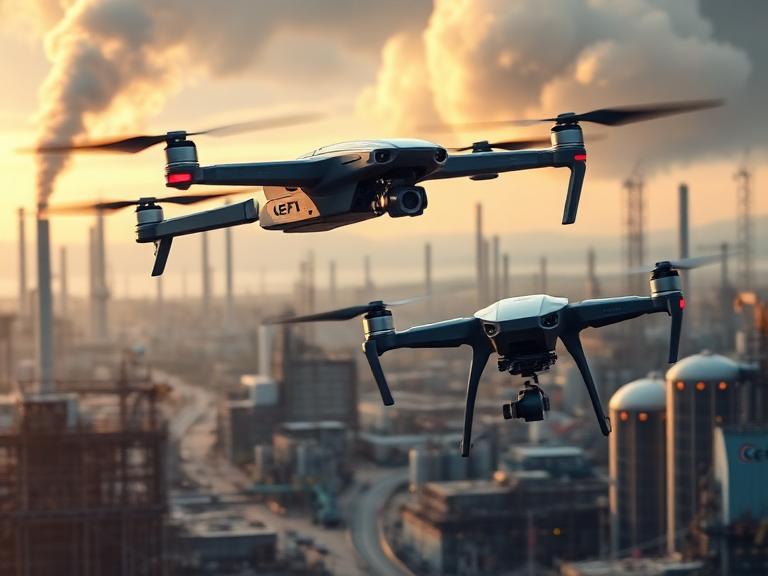
From our experience engineering defense-grade aerial platforms, choosing between a fixed wing vs quadcopter drone fundamentally dictates the success of a mission. Whether the objective is long-endurance border surveillance or meticulous close-quarters infrastructure inspection, the aerodynamic principles governing these two platforms yield vastly different operational profiles. We recommend that organizations evaluate their primary mission parameters before committing to a specific airframe. In this comprehensive technical analysis, we will dissect the mechanical distinctions, operational advantages, and ideal deployment scenarios for both platforms, drawing upon our extensive catalog of Multi-rotor UAV, Single-rotor UAV, and Airplane & VTOL systems.
Table of Contents
- 1. Aerodynamic Principles and Flight Mechanics
- 2. Endurance and Range Capabilities
- 3. Maneuverability and Spatial Constraints
- 4. Payload Capacity and Sensor Integration
- 5. The VTOL Evolution: Bridging the Gap
- 6. Defense and Security Applications
- 7. Summary Table: Fixed Wing vs Quadcopter Drone
- 8. Frequently Asked Questions (FAQs)
- 9. Academic and Industry References
1. Aerodynamic Principles and Flight Mechanics
To fully grasp the fixed wing vs quadcopter drone dynamic, one must first understand the physics of how each platform achieves lift. A fixed-wing aircraft relies on Bernoulli’s principle. As forward thrust is generated by a propeller or jet engine, air flows over the specially shaped wings (airfoils), creating lower pressure above the wing and higher pressure below it. This pressure differential generates lift. Because the wings do the heavy lifting, the motor only needs to provide enough thrust to overcome drag, making this an incredibly energy-efficient method of sustained flight.
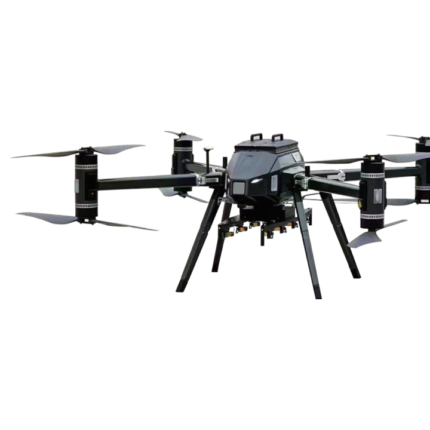
Conversely, a quadcopter (or any Multi-rotor UAV) relies strictly on raw downward thrust. The four horizontal rotors must constantly spin at high velocities to push air downward, fighting gravity entirely through motor power. To move forward, a quadcopter must alter the speed of its rotors to tilt the entire airframe, directing a portion of its thrust horizontally. While evaluating the fixed wing vs quadcopter drone from an engineering standpoint, our R&D teams constantly balance the inherent inefficiency of multi-rotor thrust against the tactical necessity of vertical lift.
2. Endurance and Range Capabilities
When operational parameters demand vast coverage, the fixed wing vs quadcopter drone comparison heavily favors the former. Due to the aerodynamic efficiency mentioned above, fixed-wing drones consume significantly less battery power or aviation fuel per kilometer traveled. A high-grade fixed-wing platform can remain airborne for several hours, covering hundreds of kilometers in a single sortie. This makes them the undisputed choice for large-scale agricultural mapping, linear pipeline inspections, and maritime border patrols.
Quadcopters, on the other hand, fight a constant battle against their own weight. Adding larger batteries to increase flight time inevitably adds mass, which requires the motors to draw more power to stay aloft. This diminishing return typically limits heavy-duty commercial quadcopters to flight times of 30 to 55 minutes. However, for localized missions, this endurance is often more than sufficient. We recommend our advanced Multi-rotor UAV systems for localized site surveys, where the objective is contained within a relatively small geographic radius.
3. Maneuverability and Spatial Constraints
The primary tactical advantage of a multi-rotor system lies in its agility. In the fixed wing vs quadcopter drone analysis, the quadcopter excels in complex, highly constrained environments. A quadcopter can take off vertically, hover perfectly in place, fly backward, and execute lateral strafing maneuvers. This is essential for structural inspections, such as examining the underside of a bridge, navigating urban canyons, or inspecting offshore oil rigs.
Furthermore, deploying a quadcopter requires virtually zero infrastructure. It can be launched from the back of a truck or integrated into a fully automated Drone Hangar for scheduled, uncrewed perimeter sweeps. Fixed-wing drones traditionally require a runway, a catapult launcher, or a skilled hand-launching technique. They also require a clear glide path for landing or a specialized parachute recovery system. If your operational environment lacks open space, the fixed wing vs quadcopter drone debate is immediately settled in favor of the multi-rotor.
4. Payload Capacity and Sensor Integration
Both architectures are highly capable of carrying advanced sensing equipment, but the integration strategies differ. At ChinaMoneypro UAV, we manufacture proprietary EO/IR Gimbal & Payload systems, as well as high-fidelity Infrared Thermal & laser Sensing equipment. When mounting these on a quadcopter, the ability to hover allows operators to keep the gimbal locked onto a stationary target indefinitely, providing sustained, jitter-free surveillance.
In contrast, a fixed-wing drone must maintain continuous forward motion to stay aloft. Therefore, payload sensors on fixed-wing platforms are typically utilized for continuous scanning, photogrammetry, or wide-area thermal imaging. While fixed-wing platforms can carry heavier payloads over longer distances, they require highly sophisticated tracking algorithms to keep a camera locked on a specific ground coordinate while the aircraft circles above. Our full-stack approach ensures that whether you choose a Multi-rotor UAV or a traditional airplane design, our UAV Accessories and gimbals are perfectly calibrated to the specific flight dynamics of the airframe.
5. The VTOL Evolution: Bridging the Gap
Modern defense-grade engineering has successfully bridged the gap in the fixed wing vs quadcopter drone debate through the development of Vertical Take-Off and Landing (VTOL) aircraft. We proudly feature a dedicated Airplane & VTOL product line that merges the best attributes of both systems.
A hybrid VTOL drone utilizes multiple dedicated vertical lifting rotors to ascend and hover precisely like a quadcopter. Once a safe altitude is reached, a rear-facing pusher motor engages, and the aircraft transitions into forward fixed-wing flight, shutting down the vertical rotors to eliminate drag. This architecture provides the runway-independent deployment of a multi-rotor with the high-speed, long-endurance mapping capabilities of a fixed-wing airplane. From our experience, for large-scale enterprise and defense clients who operate in rugged, undeveloped terrain, our Airplane & VTOL platforms are the ultimate operational asset.
6. Defense and Security Applications
In special and critical infrastructure security, the fixed wing vs quadcopter drone comparison is a matter of tactical deployment. Fixed-wing platforms are deployed for high-altitude, covert intelligence, surveillance, and reconnaissance (ISR) missions. Their quiet electric or optimized combustion engines allow them to loiter undetected for hours.
Quadcopters and Single-rotor UAVs (drone helicopters) are preferred for rapid-response tactical scenarios, explosive ordnance disposal (EOD) overwatch, and perimeter defense. Because defense environments are increasingly hostile regarding electronic warfare, we equip our platforms with proprietary Anti Jamming & GNSS Antennas. Furthermore, to combat rogue aerial threats, our Integrated Anti-Drone System can detect and neutralize unauthorized incursions. We also supply Smart Robots & Cars for ground-level perimeter patrol, creating a unified, multi-domain security mesh.
7. Summary Table: Fixed Wing vs Quadcopter Drone
To assist procurement specialists in their decision-making process, we have compiled a definitive summary matrix detailing the operational metrics of the fixed wing vs quadcopter drone comparison.
| Operational Metric | Fixed-Wing Drone | Quadcopter (Multi-Rotor) | Hybrid VTOL (Airplane & VTOL) |
|---|---|---|---|
| Flight Endurance | 2 to 8+ Hours | 30 to 55 Minutes | 1.5 to 4 Hours |
| Launch & Recovery | Requires Runway, Catapult, or Parachute | Vertical (Anywhere) | Vertical (Anywhere) |
| Hovering Capability | None (Must maintain forward flight) | Excellent (Perfect stationary holding) | Yes (During takeoff/landing/transition) |
| Primary Use Case | Large-scale mapping, border patrol, long-range ISR | Structural inspection, cinematic filming, close surveillance | Long-range mapping in constrained environments |
| Payload Integration | High weight capacity for continuous scanning | Ideal for stationary EO/IR Gimbal targeting | Versatile, supports diverse EO/IR and LiDAR |
8. Frequently Asked Questions (FAQs)
Which is easier to pilot in a fixed wing vs quadcopter drone scenario?
From our experience, quadcopters are significantly easier for novice operators to fly. Their flight controllers handle auto-stabilization, and releasing the controls simply causes the drone to hover in place. Fixed-wing drones require a deeper understanding of aerodynamics, stall speeds, and glide paths, though our advanced autopilot systems automate much of the flight plan.
How does wind affect the fixed wing vs quadcopter drone dynamic?
Fixed-wing aircraft are generally more resilient in high-wind conditions because they are actively flying through the airmass with a streamlined aerodynamic profile. Quadcopters, presenting a larger vertical surface area and relying on differential thrust, must expend massive amounts of battery power to fight strong crosswinds and maintain a hover.
Can ChinaMoneypro UAV supply customized payloads for both platforms?
Yes. As a full-stack provider, we manufacture our own EO/IR Gimbal & Payload systems and Infrared Thermal & laser Sensing modules. We calibrate these payloads specifically for the vibration profiles and flight characteristics of our Multi-rotor UAV, Single-rotor UAV, and Airplane & VTOL platforms.
What is the advantage of a Single-rotor UAV over a Quadcopter?
While discussing fixed wing vs quadcopter drone systems, the Single-rotor UAV (traditional helicopter design) offers a unique middle ground. Single-rotor systems have larger, more efficient main blades, allowing them to lift significantly heavier payloads and achieve longer flight times than multi-rotors, while still maintaining true hovering capabilities.
9. Academic and Industry References
To further explore the engineering principles, regulatory frameworks, and aerodynamic studies regarding unmanned aerial systems, we recommend consulting the following authoritative sources: