


In modern aerospace defense and tactical readiness programs, the capacity to simulate authentic adversarial threats is absolute paramount. Target drones, which are unmanned systems specifically engineered to emulate hostile aircraft, incoming missiles, and loitering munitions, have evolved drastically from simple radio-controlled tow targets into highly sophisticated, autonomous threat emulators. At ChinaMoneypro UAV, an established national-level high-tech enterprise transformed from a prestigious state-owned research institute, our deep roots in defense-grade engineering have afforded us a front-row seat to this technological evolution. We intimately understand that as asymmetric warfare and synchronized swarm attacks become standard operational realities, the applications of target drones in training and testing must rapidly scale in both complexity and electromagnetic fidelity.
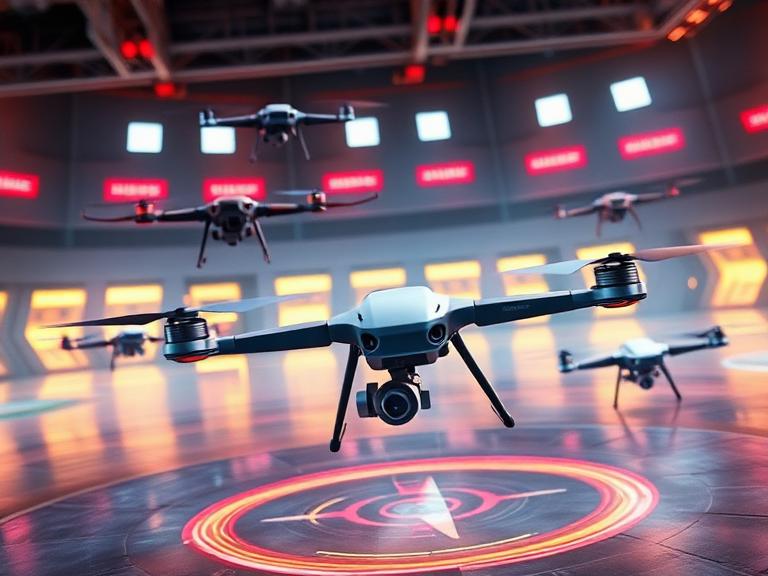
When evaluating the landscape of special drones, target variants occupy a highly specialized and vital niche. They are not designed to deliver ordnance; rather, their ultimate mission is to be intercepted, defeated, or utilized as dynamic calibrators for sensor arrays. This article provides a comprehensive and professional exploration of how target drones are shaping the future of special preparedness, the technological requirements driving their development, and actionable insights derived from our full-stack manufacturing experience.
Table of Contents
1. The Evolution of Target Drones in Modern Defense
Historically, target drones were rudimentary platforms designed primarily to provide a physical radar cross-section and a thermal signature for anti-aircraft gunnery or surface-to-air missile exercises. However, the modern battlefield does not attack with a single, predictable threat type. Today, adversaries deploy massed swarms that saturate air defense sensors, consuming operator attention and depleting ammunition reserves. To adequately prepare for these complex scenarios, training programs require target drones that can mimic the exact flight profiles, speeds, and evasion tactics of actual hostile platforms.
For defense contractors and special analysts conducting a global special drone comparison, assessing the realism of aerial targets is just as critical as evaluating the interceptors themselves. If a defense system is only tested against slow, predictable targets, it will inevitably fail against high-speed, terrain-hugging loitering munitions. Consequently, the industry has seen a massive shift toward semi-autonomous and autonomous target drones capable of simulating everything from subsonic s to multi-stage carrier platforms.
2. Key Applications in Training and Testing
2.1 Counter-UAS (C-UAS) and Air Defense Training
The proliferation of cheap, easily accessible commercial unmanned aerial vehicles has transformed the requirements of short-range air defense. Target drones are the cornerstone of C-UAS training regimens. In exercises such as the multinational Digital Shield, armed forces deploy target drones to evaluate emerging air defense technologies in contested environments that include simulated cyber disruptions and high operational stress. By deploying rotary-wing and fixed-wing target drones in synchronized attack patterns, special mission personnel can refine their detection, decision, and engagement procedures.
2.2 Directed Energy Weapons (DEWs) and Interceptor Testing
As the economic burden of firing multi-million dollar interceptor missiles at low-cost loitering munitions becomes unsustainable, militaries are rapidly accelerating the deployment of Directed Energy Weapons, including high-energy lasers and high-power microwaves. Target drones are indispensable in the live-fire testing of these systems. Testing a laser weapon requires target drones to measure the “dwell time” needed to burn through specific aerospace materials. Similarly, high-power microwave systems utilize target drones to validate their capacity to disable the internal circuitry of multiple inbound threats simultaneously. The data harvested from these engagements dictates the future procurement of layered defense architectures.
2.3 Radar and Electronic Warfare (EW) Emulation
Physical interception is only the final step of the kill chain; detection is the first. For nocturnal interception drills and multi-spectral sensor calibration, forces often train against platforms mimicking night vision special drones to validate their electro-optical and infrared targeting sensors. More importantly, advanced target drones are equipped with specialized payloads that emit authentic adversarial radio frequency (RF) signatures. This allows ground radar operators and Electronic Warfare officers to train against the exact electromagnetic profiles they will face in combat, thereby reducing false positive identification rates.
3. Design and Technological Requirements
3.1 Authentic Adversary Emissions and RF Signatures
A target drone that merely looks like an enemy aircraft is no longer sufficient. Modern testing mandates that target drones project the same communication links, telemetry emissions, and radar cross-sections as genuine threats. This requires sophisticated integration of radar reflectors, active signal emitters, and modular payload bays. Many subsonic targets utilized in these roles are built upon highly reliable bvlos fixed wing uav architectures, allowing them to remain on station for extended periods while broadcasting complex electromagnetic signatures over the horizon.
3.2 Autonomy, Swarm Behaviors, and Scalability
To accurately replicate modern saturation attacks, target drones must possess advanced autonomous capabilities. Swarm intelligence algorithms enable multiple target drones to coordinate their flight paths, automatically adjusting spacing and altitude to maximize the confusion of ground-based radar systems. Furthermore, economic scalability is critical. While the logistics sector heavily relies on a reliable vtol cargo drone for sustainable daily transport, the propulsion and stability technologies are heavily cross-pollinated into the target drone sector to create affordable, expendable platforms. An effective target drone must be cheap enough to be destroyed in large quantities, yet intelligent enough to provide a rigorous testing environment.
4. From Our Experience: The ChinaMoneypro UAV Perspective
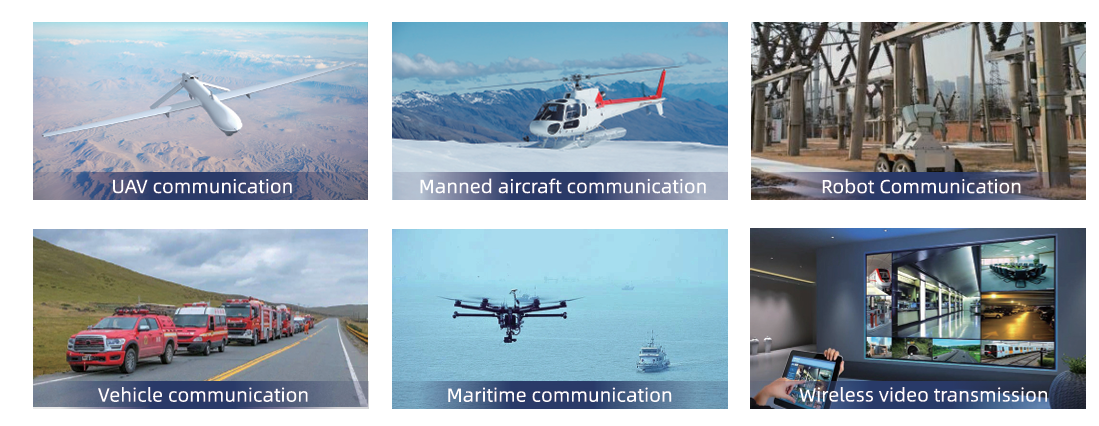
As one of the few full-stack providers offering complete UAV systems, engines, gimbals, radar, data links, and communication technologies, ChinaMoneypro UAV possesses unique insights into the engineering of target drones. From our experience, organizations that rely solely on virtual simulations or non-emitting physical targets experience a significant capability drop when confronted with authentic, chaotic battlefield spectrums. We recommend that defense procurement agencies mandate the inclusion of dynamic electromagnetic emulation in all target drone acquisitions.
Furthermore, we recommend integrating multi-sensor fusion architectures within target drone fleets. Just as modern cargo drone solutions require robust autonomous navigation to safely deliver payloads in denied environments, target drones must be capable of executing their mission profiles even when subjected to intense GPS jamming and electronic countermeasures. By leveraging our proprietary data links and defense-grade engine manufacturing, we ensure that aerial targets perform flawlessly up to the exact moment of simulated or physical interception.
5. Executive Summary Table
The following table provides a strategic overview of the primary classifications of target drones and their specific applications within special testing and training environments.
| Target Drone Classification | Speed / Flight Profile | Primary Training & Testing Application | Key Technological Requirements |
|---|---|---|---|
| Subsonic Fixed-Wing | Mach 0.4 to Mach 0.8 | Cruise missile emulation, mid-range surface-to-air missile testing. | Long endurance, active RF emission, high radar cross-section modularity. |
| Rotary & VTOL Swarm | Low Speed / Hovering | Short-Range Air Defense (SHORAD), Counter-UAS, Directed Energy Weapons. | High maneuverability, autonomous swarm algorithms, cost-effective expendability. |
| Supersonic / Jet-Powered | Mach 1.2+ | Advanced ballistic missile defense, high-altitude interception drills. | High-performance jet engines, extreme thermal shielding, precise telemetry. |
| Glider / Low-Signature | Variable (Unpowered descent) | Stealth insertion testing, minimal electronic signature detection. | Zero thermal emission, radar-absorbent materials, autonomous gliding logic. |
6. Frequently Asked Questions (FAQs)
What is the primary difference between standard special UAVs and target drones?
While standard special UAVs are designed for intelligence, surveillance, reconnaissance (ISR), or strike missions, target drones are purposefully built to simulate enemy threats. Their objective is to test radar systems, validate interceptor missiles, and train air defense personnel. They are often designed to be expendable and feature specialized payloads that mimic the signatures of specific adversary aircraft.
How do target drones aid in the testing of Directed Energy Weapons?
Directed Energy Weapons, such as lasers and microwaves, require live physical targets to validate their effectiveness. Target drones allow engineers to measure how long a laser must dwell on a moving object to cause structural failure, or how effectively a microwave burst can fry internal flight controllers. This live-fire data is impossible to fully replicate in software simulations.
Why is swarm capability important for modern target drones?
From our experience, modern adversaries utilize mass attacks to overwhelm defense systems. A single target drone cannot test the tracking limits of a phased-array radar or the engagement speed of a C-UAS system. Swarm-capable target drones force operators to prioritize threats and manage ammunition, accurately reflecting 21st-century combat conditions.
Are target drones always destroyed during exercises?
Not always. While many are destroyed in live-fire exercises, others are equipped with scoring systems that electronically register simulated “hits” without requiring physical destruction. Some target drones also deploy parachutes for recovery and reuse, significantly reducing the cost of ongoing training programs.