Optimize Your Network: The Essential Dual-Band Combiner Explained
nn
In the fast-paced world of telecommunications, signal clarity and seamless integration are non-negotiable. As networks evolve to support multiple frequency bands, the challenge of combining different signals without interference becomes critical. The solution lies in a high-performance dual-band combiner. This vital piece of equipment allows for the merging of two separate frequency ranges into a single transmission line, effectively reducing antenna clutter and simplifying infrastructure. Whether you are deploying a new base station or upgrading an existing DAS (Distributed Antenna System), understanding the specifications of a robust dual-band combiner is the first step toward ensuring network reliability and peak performance.
nn
A premium combiner is not just about merging signals; it is about doing so with minimal loss and maximum isolation. When signals from different bands interact poorly, it can lead to dropped calls, slower data speeds, and system inefficiency. The device we are about to examine is engineered to handle demanding environments, from dense urban centers to remote industrial sites. Its design focuses on preserving signal integrity across two critical frequency ranges: 138-520 MHz and 698-960 MHz. By choosing a unit with low insertion loss and high isolation, network engineers can guarantee that each frequency band operates independently and without degradation.
nn
Technical Highlights of a High-Performance Dual-Band Combiner
nn
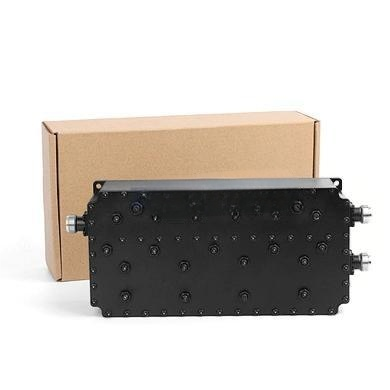
When selecting a combiner, the technical specifications dictate its performance in real-world conditions. The following dual-band combiner is built to exceed industry standards. The table below provides a comprehensive breakdown of its capabilities, from power handling to environmental durability.
nn
Key Specifications and Performance Data
nn
| Parameter | Specification |
|---|---|
| Name | Dual-Band Combiner |
| Frequency Range (MHz) | 138-520 / 698-960 |
| Insertion Loss (dB) | Optimized for minimal signal loss |
| Isolation (dB) | >45 |
| VSWR | ≤ 1.25 |
| Intermodulation Products (dBm) | ≤ -153 dBc (with 2 x 43 dBm) |
| Maximum Input Power (W) | 200 |
| Operating Temperature (°C) | -40 to +65 |
| Relative Humidity (%) | 0 ~ 95 |
| Impedance (Ω) | 50 |
| Dimensions (mm) | 250 x 105 x 55 |
| Weight (g) | 650 |
| Connector Type | N Female |
| Ingress Protection | IP65 |
| Color | Black |
nn
Understanding the Critical Parameters
nn
The table above reveals the engineering excellence of this dual-band combiner. The isolation of greater than 45 dB ensures that signals from the 138-520 MHz band do not bleed into the 698-960 MHz path, preserving the purity of each frequency. The low VSWR of ≤1.25 indicates excellent impedance matching, which reduces reflected power and maximizes signal transfer. For high-traffic applications, the intermodulation products of ≤ -153 dBc are exceptional, meaning the combiner will not generate harmful distortion even when handling powerful 43 dBm carriers. The rugged IP65 rating protects the internal components from dust and water ingress, making it suitable for both indoor and outdoor tower installations. With a maximum input of 200 watts, this unit can handle substantial transmitter power without performance loss.
nn
Practical Applications and Benefits of the Dual-Band Combiner
nn
The versatility of this dual-band combiner makes it an ideal choice for several deployment scenarios. Its design supports the merging of UHF and 700/800 MHz bands, commonly used in public safety networks, cellular upgrades, and LTE/5G rollouts. By using a single combiner to merge these frequencies, operators can reduce the number of antennas required on a tower, lowering wind load and leasing costs while maintaining signal coverage. The compact size and lightweight design (650 grams) facilitate easy integration into existing enclosures or cabinets.
nn
Furthermore, the wide operating temperature range from -40°C to +65°C ensures reliable performance in extreme climates, from freezing winters to scorching summers. The N Female connectors provide a rugged, secure interface that is standard in the industry, simplifying installation and maintenance. Whether you are a system integrator looking for a reliable component for a large-scale project or a network manager upgrading a single site, this dual-band combiner delivers the specifications required for high-quality signal combining.
nn
Why Specifications Matter in Real-World Networks
nn
In conclusion, the performance of a network is only as strong as its weakest component. A high-quality dual-band combiner is a critical junction point in your RF path. The specifications detailed here—particularly the low insertion loss, high isolation, and excellent intermodulation performance—are not just numbers; they translate directly to clearer calls, faster data, and a more efficient system. By choosing a combiner that meets these exacting standards, you invest in the longevity and reliability of your entire network infrastructure. The next time you evaluate RF components, let the technical data guide your decision, and ensure your network is built for the challenges of modern communication.