Unlocking Superior Connectivity: The 2-Port MIMO Sector Antenna Explained
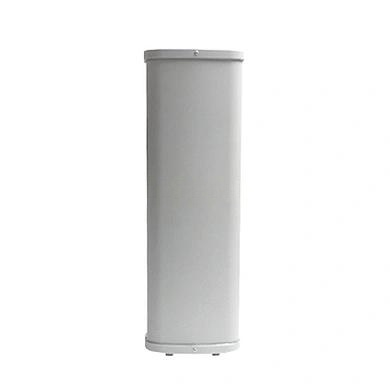
nnIn today’s fast-paced digital landscape, reliable and high-performance wireless communication is non-negotiable. Whether you are deploying a private LTE network, expanding public Wi-Fi coverage, or enhancing a point-to-multipoint system, the hardware you choose directly impacts signal quality and user experience. One of the most critical components in any outdoor wireless setup is the antenna. By optimizing signal distribution and improving spectral efficiency, a well-designed sector antenna can mean the difference between a spotty connection and a seamless network.nnThis article dives deep into the technical details of a robust single-polarized 2×2 MIMO sector antenna designed for dual-band operation, covering everything from its physical specifications to its environmental resilience. For engineers and network planners looking to make an informed purchase, understanding the nuances of this equipment is essential for achieving peak network performance.nn
Dual-Band Performance for Modern Networks
nnModern communication systems often require support for multiple frequency bands to accommodate different services and devices. This antenna is specifically engineered to operate across two distinct and crucial bands, making it a versatile tool for network expansion.nn
Band 1 (S-Band) Coverage
nThe first band covers the S-band spectrum from 2200 to 2500 MHz. This frequency range is commonly used for 3G, 4G LTE, and some Wi-Fi applications. With a minimum gain of 10 dBi across this band, the antenna provides a strong, focused signal that can penetrate obstacles and extend range effectively. This gain level is critical for ensuring that user devices at the edge of the cell can maintain a stable uplink.nn
Band 2 (C-Band) Coverage
nThe second band operates in the C-band spectrum, spanning 4400 to 5000 MHz. This higher frequency range is increasingly vital for 5G, backhaul links, and high-capacity data applications. The antenna delivers a minimum gain of 12 dBi on this band, compensating for the higher path loss typically associated with C-band frequencies. This higher gain ensures that data rates remain competitive and that the link budget allows for reliable communication even in challenging environments.nn
Technical Specifications and Parameters
nnTo fully appreciate the capabilities of this antenna, one must examine its precise electrical and mechanical characteristics. The following table provides a comprehensive overview of the key specifications.nn
| Parameter | Value / Specification |
|---|---|
| Antenna Type | 2-Port MIMO Sector Antenna |
| Antenna Pattern | 120° Horizontal Azimuth Beamwidth |
| Band 1 Frequency Range (S-Band) | 2200 – 2500 MHz |
| Band 2 Frequency Range (C-Band) | 4400 – 5000 MHz |
| Impedance | 50 Ohms |
| Maximum VSWR | 1.7:1 |
| Gain (Band 1: 2200-2500 MHz) | ≥ 10 dBi |
| Gain (Band 2: 4400-5000 MHz) | ≥ 12 dBi |
| Horizontal (AZ) Beamwidth | 120° |
| Elevation (EL) Beamwidth | 9° – 11° |
| Maximum RF Power | 50 Watts |
| Polarization | 45° Slant Left / 45° Slant Right (One Polarization Per Port) |
| Radome Material | UV Stable |
| Ingress Protection | IP-67 |
| Length | ≤ 52 inches |
| Width | ≤ 12 inches |
| Height | ≤ 7 inches |
| Weight | ≤ 15 lbs. |
| RF Connectors | Type N – Female (Jack) x 2 |
| Operational Temperature | -40°F to +140°F (-40°C to +60°C) |
| Wind Speed Rating | 150 mph |
| Mounting | Pole Mounting Kit for 1.0 – 3.0 OD Pipes |
| Elevation Angle (Downtilt) | 0° to -15° Adjustable |
nn
Understanding the Electrical Specifications
nThe low VSWR of 1.7:1 ensures minimal signal reflection, which translates to more power being transmitted to the air and less heat generated within the radio. The dual-polarized slant design (+45° and -45°) is a key feature for MIMO (Multiple Input, Multiple Output) operation. It allows the antenna to transmit and receive multiple data streams simultaneously, effectively doubling throughput without requiring additional spectrum. Furthermore, the adjustable downtilt from 0° to -15° is a crucial feature for optimizing coverage toward specific areas, minimizing interference, and controlling cell boundaries.nn
Mechanical and Environmental Durability
nOutdoor antennas face harsh conditions. The IP-67 rated radome provides complete protection against dust ingress and temporary immersion in water, ensuring long-term reliability in rain, snow, or dusty environments. The UV-stable material prevents degradation from prolonged sun exposure. With a wind speed rating of 150 mph and a lightweight design of under 15 lbs., this antenna is suitable for installation on rooftops, towers, or poles in regions prone to severe weather. The included pole mounting kit accommodates standard 1.0 to 3.0 OD pipes, simplifying installation.nn
Conclusion: The Right 2-Port MIMO Sector Antenna for Your Deployment
nnSelecting the correct antenna is a strategic decision that influences the entire network’s efficiency. The 2-port MIMO sector antenna detailed here offers a powerful blend of high gain, dual-band versatility, and rugged construction. Its 120-degree beamwidth makes it ideal for sectorized coverage in cellular or WISP deployments, while the 45-degree slant polarization is perfectly suited for modern MIMO radios. By providing a minimum gain of 10 dBi on S-band and 12 dBi on C-band, this antenna ensures that both lower-frequency and higher-frequency signals are handled with authority.nnWhether you are upgrading an existing network or building a new one, this 2-port MIMO sector antenna delivers the performance and durability needed to support today’s demanding wireless applications. Its adherence to strict ingress and wind-loading standards guarantees a long service life, while the adjustable downtilt allows for fine-tuned optimization. For network engineers seeking a reliable, high-gain solution that bridges multiple frequency bands, this antenna stands out as a top-tier choice.