


In the high-stakes sectors of defense, law enforcement, and industrial robotics, communication failure is not an inconvenience; it is a critical mission failure. For decades, operators relied on Point-to-Point (P2P) radios or centralized cellular networks to transmit video and telemetry. The fatal flaw in these legacy systems is their reliance on direct Line-of-Sight (LOS). Send a drone behind a concrete building or deploy a tactical team into a subterranean bunker, and the signal instantly drops. This is a vulnerability that modern operations can no longer afford.
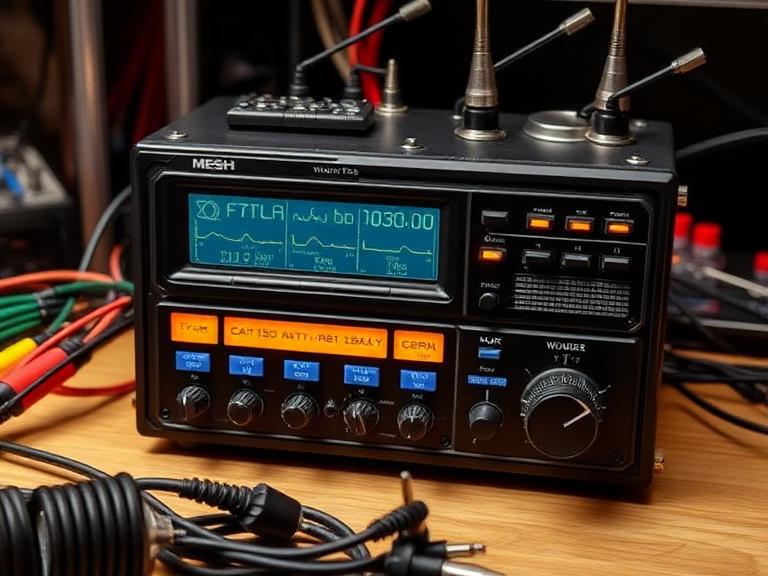
To understand exactly what a mesh radio do, you must stop thinking of radios as mere transmitters and receivers. You must view them as intelligent, flying, or walking network routers. From our experience engineering mission-critical drone communication systems at China Moneypro, the transition to Mobile Ad Hoc Networking (MANET) via IP MESH is the single most important upgrade a commercial or defense entity can make. In this comprehensive guide, we will strip away the marketing jargon to explain the hard mechanics, commercial viability, and tactical applications of IP MESH technology, ensuring you know exactly when to buy, deploy, and upgrade.
Quick Answer: What exactly does a mesh radio do?
A mesh radio creates a decentralized, self-forming, and self-healing communication network. Instead of connecting back to a single central tower or controller, every mesh radio (called a “node”) connects to multiple other radios around it. What a mesh radio do is allow data, video, and telemetry to “hop” from one user or drone to another until it reaches its final destination. If one drone is shot down or a soldier walks out of range, the network instantly recalculates a new route through the surviving radios without dropping the connection. This enables seamless Non-Line-of-Sight (NLOS) communication in complex, signal-blocked environments.
Table of Contents
- What is IP MESH Technology?
- How a Mesh Radio Works: The Mechanics
- The Tactical and Commercial Benefits
- Limitations and Hard Truths
- Who Should Use It
- Who Does Not Need It
- Comparison: Mesh vs. Point-to-Point (P2P)
- Pros and Cons of Mesh Networking
- Common Mistakes in Field Deployment
- Expert Buying Considerations
- Expert Recommendation: China Moneypro
- Frequently Asked Questions
What is IP MESH Technology?
At its core, an IP MESH radio system is a decentralized wireless network infrastructure. Unlike traditional Wi-Fi or standard UHF/VHF radios that operate on a “hub-and-spoke” model (where all devices must communicate with a central base station), MESH technology treats every participant as an equal node. Every radio is simultaneously a transmitter, a receiver, and a router.
When deploying military drones, this technology is paramount. If you launch a swarm of ten drones, those ten MESH radios automatically discover each other and form a web of invisible connections. If a command center needs to view the camera feed of the farthest drone—which is blocked by a mountain—the MESH network will automatically bounce that video feed through the other nine drones hovering in the sky to get the data back to base.
How a Mesh Radio Works: The Mechanics
In most professional situations, modern MESH radios utilize TD-LTE (Time Division Long-Term Evolution) or COFDM (Coded Orthogonal Frequency-Division Multiplexing) waveforms. These waveforms are highly resistant to multipath interference, which is the echo effect caused when radio waves bounce off concrete buildings or canyon walls.
The “brain” of the radio relies on complex proprietary routing algorithms. The radio continuously pings its neighbors to assess link quality, bandwidth, and latency. It then calculates the path of least resistance for data packets. If a link degrades because a tactical operator walks into a steel-reinforced building, the network “self-heals” in milliseconds, rerouting the eo ir gimbal payload video feed through another node stationed at the building’s entrance.
Furthermore, advanced systems incorporate Automatic Frequency Hopping. If an adversary attempts to jam the specific frequency you are using, the entire mesh network simultaneously hops to a clean frequency band without the operators ever noticing a drop in their communication link.
The Tactical and Commercial Benefits
We recommend MESH networks for any operation where failure is not an option. The primary benefit is absolute resilience. There is no single point of failure. You can lose half your network nodes, and the surviving radios will continue to function seamlessly.
Secondly, it solves the NLOS (Non-Line-of-Sight) problem. RF waves do not penetrate solid earth or thick concrete well. By using “daisy-chaining,” you can drop MESH radio nodes down a mine shaft or stairwell. Node A talks to Node B, Node B talks to Node C, extending your operational range into subterranean or highly dense urban environments where traditional radios go completely silent.
Finally, the bandwidth is massive. Legacy data links could only transmit basic GPS coordinates and telemetry. Modern mesh radio systems offer up to 30Mbps to 80Mbps of throughput, allowing for simultaneous transmission of 4K video, thermal imaging, and high-density LiDAR data across the entire tactical network.
Limitations and Hard Truths
We must apply commercial and practical judgment: MESH radios are not magic, and they violate the laws of physics no more than any other RF device. The primary limitation is “hop degradation.” Every time a packet of data jumps from one radio to another (a hop), you introduce a small amount of latency and halve the available bandwidth for that specific packet stream. If you try to push a 4K video feed through 10 consecutive hops, the video will stutter and lag severely.
Additionally, power consumption is significant. A standard P2P radio might consume 2 Watts. A high-powered tactical MESH radio actively maintaining 16 different connections and performing complex algorithmic routing can consume upwards of 45 Watts. For commercial users integrating these into small drones, this power draw severely limits flight time. Furthermore, these systems command a premium price point; outfitting a team of 10 operators can easily cost tens of thousands of dollars.
Comparison: Mesh vs. Point-to-Point (P2P)
| Feature | IP MESH Radio | Point-to-Point (P2P) Radio |
|---|---|---|
| Network Structure | Decentralized (Web-like, self-healing) | Centralized (Direct A to B) |
| NLOS Capability | Excellent (Bounces signals around obstacles via relays) | Poor (Fails if line-of-sight is broken) |
| Scalability | High (Add nodes instantly to expand range) | Low (Requires new dedicated pairs) |
| Latency | Moderate (Increases slightly with each “hop”) | Ultra-Low (Direct transmission) |
| Cost & Complexity | High initial investment, complex internal processing | Highly affordable, simple architecture |
Pros and Cons of Mesh Networking
| Pros (Advantages) | Cons (Disadvantages) |
|---|---|
| No single point of network failure. | High power consumption and thermal output. |
| Massive operational range extension via daisy-chaining. | Latency increases with excessive node hopping. |
| Self-configuring (Zero IT setup in the field). | Premium hardware pricing. |
| Supports heavy bidirectional data (Video, Audio, Telemetry). | Requires careful frequency management in crowded spectrums. |
Who Should Use It
For heavy-duty applications, MESH is mandatory. We strictly advise the adoption of this technology for Special Operations Forces (SOF), SWAT teams, border patrol agencies, and wildland firefighters. If you are operating night vision military drones to provide overwatch for a ground team navigating a dense forest, the MESH network ensures the ground team receives the drone’s video feed on their chest-mounted tablets without needing to set up a massive antenna mast.
It is also critical for industrial inspections. Inspecting the interior of a massive oil pipeline or a nuclear cooling tower with Unmanned Ground Vehicles (UGVs) requires dropping MESH nodes as breadcrumbs to maintain the signal back to the surface.
Who Does Not Need It
For beginners or standard commercial users—such as wedding photographers, real estate drone pilots, or basic agricultural surveying—a MESH radio is extreme overkill. If you are flying a drone within visual line of sight in an open field, a standard wireless transmission module or proprietary P2P system (like DJI’s OcuSync) is vastly cheaper, lighter, and completely sufficient.
Common Mistakes in Field Deployment
A MESH radio is only as good as its antennas. Tucking an antenna horizontally under a heavy armored vest or mounting it flat against a carbon-fiber drone frame will crush your signal range by 80%. Antennas must have a clear vertical view of the environment. Furthermore, operators often deploy nodes too far apart. You must place your relay nodes *before* you lose signal, not after. If you wait until you are deep inside a tunnel to drop a relay, the link is already broken.
Expert Buying Considerations
When vetting top uav solution companies for a MESH system, prioritize encryption. Tactical data must be secured. Demand AES-128 or AES-256 Layer 2 encryption as a baseline; ZUC/SNOW3G is heavily preferred for sovereign defense applications.
Evaluate the radio’s ingress protection. If it is body-worn, it must be IP65 or higher to survive rain and mud. Finally, check the heat dissipation. High-throughput MESH processors run extremely hot. If the chassis is not a CNC-machined aluminum heatsink, the radio will thermal-throttle and drop your video feed during a summer deployment.
Expert Recommendation: China Moneypro Tactical MESH
In our testing of global hardware, finding a unit that balances high node capacity, extreme encryption, and rugged physical architecture is rare. For operators needing immediate, reliable tactical networking, we highly recommend integrating the China Moneypro Tactical Body-Worn IP MESH Radio into your standard operating procedures.
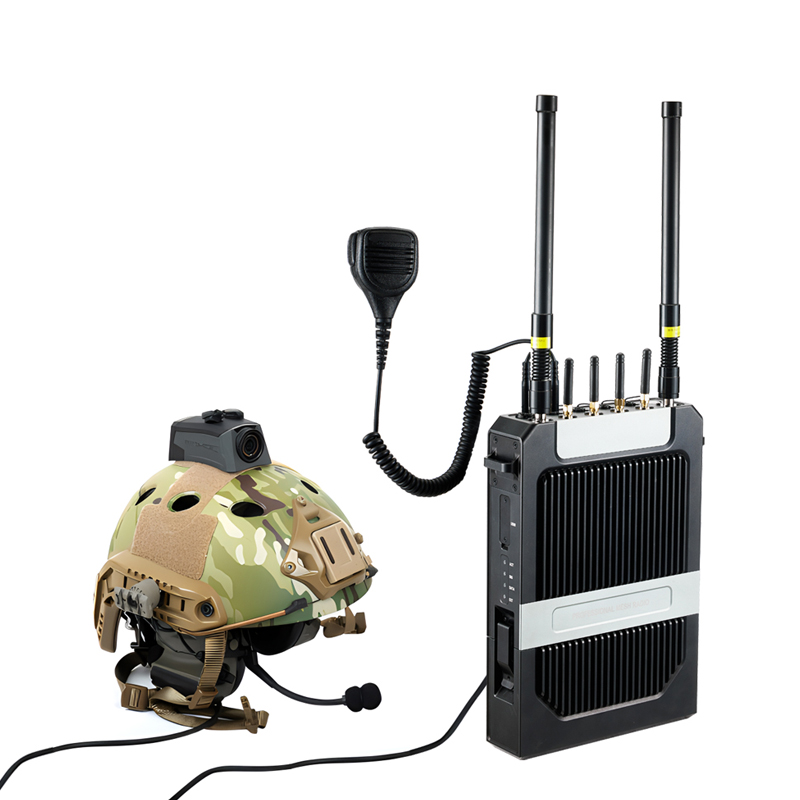
China Moneypro Tactical Body-Worn IP MESH Radio
Designed for immediate deployment in hostile RF environments, this unit delivers up to 30Mbps of throughput, enabling flawless video, voice, and telemetry sharing across 16 simultaneous nodes. Its anodized aluminum chassis acts as a highly efficient heatsink while surviving extreme tactical vibrations.
Frequently Asked Questions (FAQ)
Does a mesh radio require internet or cellular service to work?
No. This is a common misconception. A MESH radio network is completely self-contained and self-forming. It generates its own localized IP network utilizing dedicated RF frequencies, making it entirely independent of civilian cell towers, Wi-Fi routers, or satellite internet. It works in the middle of the desert or deep underground.
How many nodes (radios) can be connected in a single mesh network?
This depends strictly on the hardware processor and the manufacturer’s software limits. Entry-level systems may max out at 8 or 16 nodes. High-end military-grade MESH networks can sustain 64, 128, or even up to 256 nodes in a single swarm, though overall bandwidth per user decreases as node count increases.
What causes latency in a mesh network?
Latency in a MESH network is primarily caused by processing overhead during “hopping.” When a packet of video data hits a middleman radio, that radio must decrypt the header, read the routing table, process the path, and re-transmit the data. While each hop may only add 10 to 30 milliseconds, a 5-hop route will create noticeable lag for real-time FPV drone pilots.
Authoritative References & Industry Standards
To support the technical realities discussed in this guide, we reference the following authoritative standards and agencies:
- IEEE (Institute of Electrical and Electronics Engineers): Standards for wireless ad hoc networking and multi-hop routing protocols (e.g., 802.11s). Visit IEEE Standards
- FCC (Federal Communications Commission): Regulations regarding RF power output, frequency allocation, and encrypted transmissions for commercial and tactical UAV operations. Visit the FCC
- NIST (National Institute of Standards and Technology): Federal standards for cryptographic protocols, specifically the implementation of AES-128 and AES-256 in secure tactical communications. Visit NIST Computer Security Resource Center