


Navigating the aerospace propulsion sector requires more than a basic understanding of thrust; it requires commercial and practical judgment to pair the right powerplant with the right airframe. From our experience at China Moneypro, clients frequently misjudge the propulsion needs of their unmanned aerial vehicles (UAVs), assuming that turbine power is universally superior to piston-driven alternatives. When you are engineering Military and Police Drones or high-speed target drones, understanding the exact types of jet engines available dictates your payload, loiter time, and thermal signature.
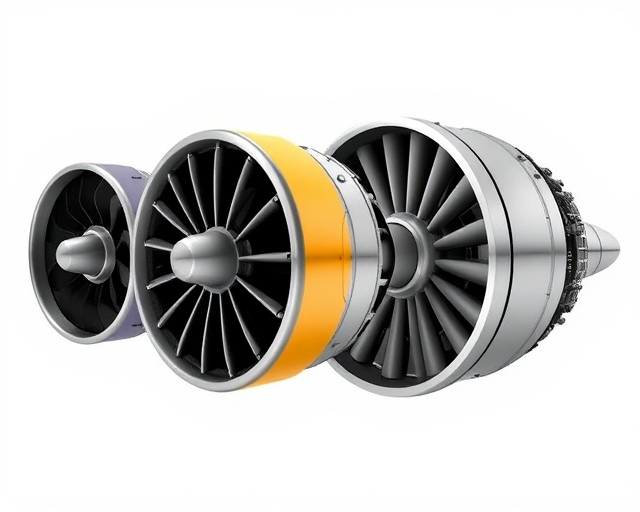
We are going to bypass the encyclopedia-style writing and give you the actionable data you need. The aerospace industry classifies turbine propulsion into four distinct architectures. Explain not only WHAT something is, but WHETHER it is actually worth using, buying, or upgrading for your specific commercial or tactical operations. In this guide, we will break down the mechanics, the commercial viability, and the critical decision-making matrices you need when evaluating the different types of jet engines.
Quick Answer: What are the Types of Jet Engines?
There are four primary types of jet engines utilized in modern aviation and advanced UAVs:
- Turbojet: The original jet engine. Air is fully compressed, combusted, and exhausted as a high-speed jet. Best for supersonic flight but highly fuel-inefficient at lower speeds.
- Turbofan: Features a large fan at the front. Most air bypasses the core combustion chamber, providing massive thrust and excellent fuel efficiency. The standard for commercial airliners and high-altitude UAVs.
- Turboprop: A jet engine core that drives a traditional external propeller through a reduction gearbox. Highly efficient for low-speed, low-altitude flights and heavy cargo lifting.
- Turboshaft: Similar to a turboprop, but the turbine drives a rotor shaft instead of a propeller. Used almost exclusively in helicopters and rotary-wing drones.
Table of Contents
- How Jet Engines Work: The Fundamentals
- The 4 Types of Jet Engines Explained
- Jet Engines vs. High-Displacement Piston Engines in UAVs
- Product Highlight: China Moneypro MOPWGT275
- Comparison Table: Engine Architectures
- Benefits and Limitations
- Who Should Use Jet Engines (And Who Does Not Need Them)
- Common Mistakes in Engine Selection
- Buying Considerations
- Expert Recommendation
- Frequently Asked Questions
How Jet Engines Work: The Fundamentals
Regardless of the specific types of jet engines, they all operate on the Brayton cycle, summarized by four distinct phases: Suck, Squeeze, Bang, Blow. Air is drawn into the engine (intake), compressed by rotating fan blades (compression), mixed with aviation fuel and ignited (combustion), and finally expelled through a turbine that extracts energy to keep the compressor spinning before exiting as high-velocity exhaust (exhaust).
In most professional situations, the difference between the engine types simply comes down to how they utilize that final exhaust energy. Do they use it purely for reactive thrust out the back, or do they use it to spin a shaft that powers a larger fan, a propeller, or a helicopter rotor?
The 4 Types of Jet Engines Explained
1. The Turbojet
The turbojet is the simplest and oldest of the types of jet engines. 100% of the air entering the intake goes through the compressor and combustion chamber. Because all the thrust is generated by the high-velocity exhaust gas, these engines are optimized for supersonic speeds. However, they are incredibly loud and burn fuel at an alarming rate. For beginners looking into drone propulsion, turbojets are almost entirely obsolete except for specialized high-speed military target drones.
2. The Turbofan
The turbofan revolutionized aviation. It features a massive fan at the front, and a large percentage of the air bypasses the engine core entirely. This “bypass air” generates the majority of the thrust while cooling the engine and dampening noise. High-bypass turbofans are used on commercial airliners and high-altitude surveillance drones, while low-bypass turbofans are used in fighter jets. If you are exploring Turbo Engines for a long-endurance fixed-wing UAV, a micro-turbofan provides an unparalleled mix of speed and efficiency.
3. The Turboprop
A turboprop uses a jet engine core purely as a gas generator to turn a reduction gearbox, which in turn spins a large external propeller. Because propellers are vastly more efficient at moving large volumes of air at low speeds, the turboprop dominates the sub-400 mph market. They offer excellent short-takeoff capabilities and are highly favored for heavy cargo operations.
4. The Turboshaft
Functionally identical to a turboprop, but the output shaft drives a helicopter rotor or industrial machinery rather than an airplane propeller. In the UAV sector, turboshafts power large, heavy-lift unmanned helicopters designed for logistics or carrying massive Radar Systems where conventional battery power would fail within minutes.
Jet Engines vs. High-Displacement Piston Engines in UAVs
While micro-turbines are fascinating, deploying them is not always the correct commercial decision. For commercial users building a massive Industrial Drone, the fuel consumption of a jet engine can drastically reduce loiter time. Jet engines demand specialized Jet-A fuel and extremely high maintenance intervals.
For heavy-duty applications where you need raw lifting power—such as crop spraying or carrying heavy communication relays like Wireless Broadband Mesh Network Radio systems—a high-displacement, multi-cylinder gasoline engine is frequently superior to a micro-turbine. Piston engines provide massive torque, run on standard gasoline, and offer exceptional fuel economy, allowing a UAV to stay airborne for hours rather than minutes.
Product Highlight: China Moneypro MOPWGT275
In our testing, when clients realize that the various types of jet engines are too fuel-thirsty for their specific industrial requirements, we transition them to our highest-grade piston powerplants. The MOPWGT275 is engineered to deliver turbine-like reliability with the operational economy of a piston engine.
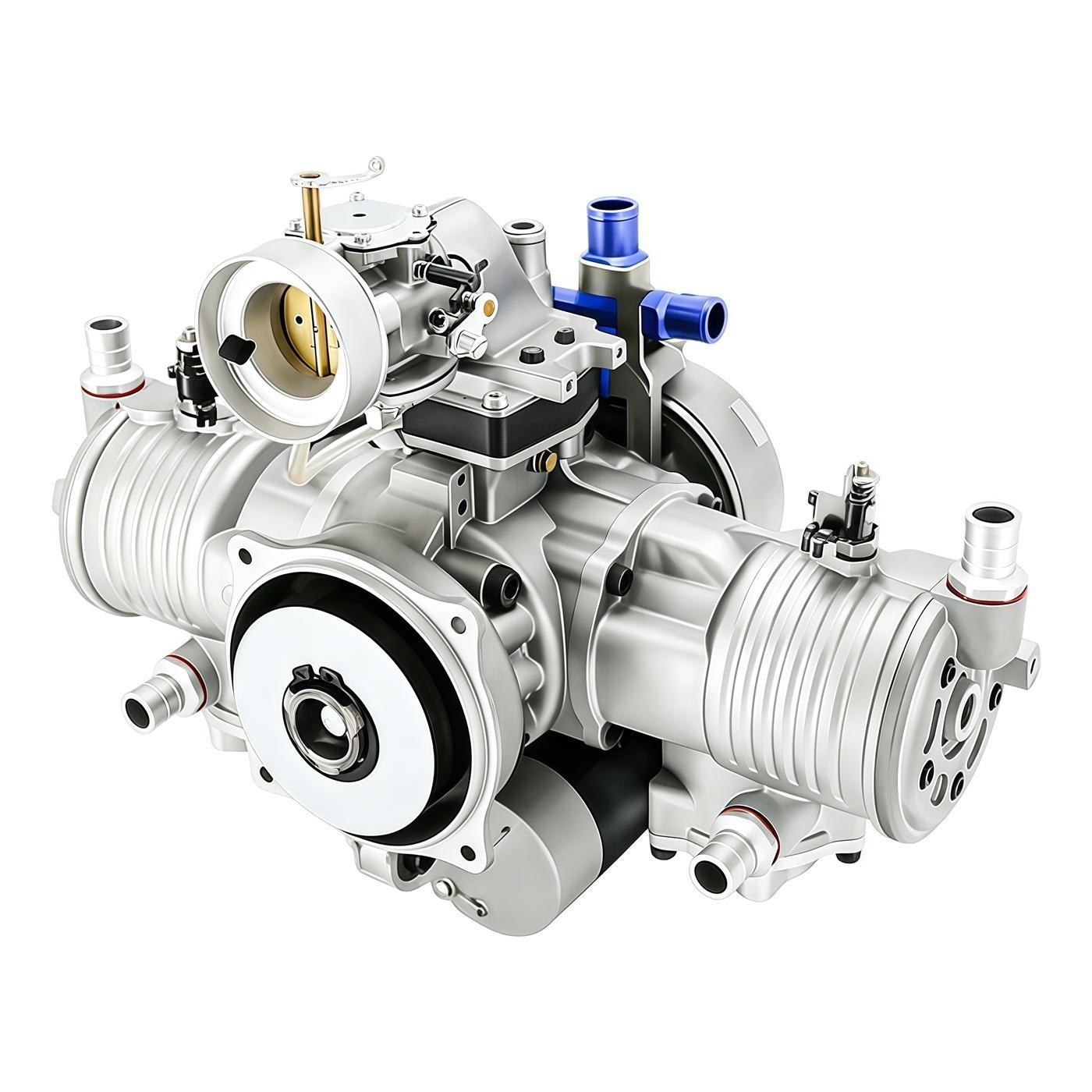
China Moneypro MOPWGT275
A horizontally opposed twin-cylinder engine designed for heavy-lift UAVs. Delivering 100 kg of thrust at a fraction of the operating cost of a micro-turbine, it is the definitive choice for long-endurance commercial operations.
- Displacement: 137.5 cc x 2
- Output Power: 14.5 kW @ 7000 rpm
- Rally (Thrust/Power): 100 kg
- Engine Weight: 14 kg
- Fuel Type: 95# Gasoline + 2T Lubricant (50:1 Ratio)
Quick Summary Table: Types of Jet Engines
| Engine Type | How It Generates Thrust | Optimal Speed Range | Primary Application |
|---|---|---|---|
| Turbojet | 100% High-velocity exhaust gas | Mach 1 to Mach 3 | Supersonic military target drones |
| Turbofan | Bypass air from front fan + exhaust core | Mach 0.6 to Mach 0.9 | Commercial airliners, HALE UAVs |
| Turboprop | Jet core spins external propeller | Subsonic (under 450 mph) | Cargo planes, MALE UAVs |
| Turboshaft | Jet core spins a transmission/rotor shaft | Subsonic (Hovering) | Helicopters, Rotary-wing UAVs |
Pros and Cons of Jet Propulsion in UAVs
| Pros of Jet Engines | Cons of Jet Engines |
|---|---|
| Unmatched thrust-to-weight ratios compared to piston engines. | Extremely high fuel consumption at low altitudes and low speeds. |
| Fewer moving parts than a piston engine, reducing vibration. | Massive thermal signature, making them vulnerable to infrared tracking. |
| Capable of sustaining operations at extremely high altitudes (40,000+ ft). | Exorbitant acquisition and maintenance costs. |
Who Should Use Jet Engines (And Who Does Not Need Them)
Who Should Use Them: We recommend micro-turbofans or turbojets strictly for defense contractors building high-speed interceptors, long-range reconnaissance UAVs, or systems designed to rapidly deploy EO/IR Gimbal camera payloads over hostile airspace at high altitudes.
Who Does Not Need Them: Do not buy a jet engine if you are building an Agriculture Drone or conducting low-altitude industrial inspections. The speed is unnecessary, the fuel costs will bankrupt your operation, and the extreme exhaust heat will damage crops. Stick to high-efficiency electric motors or heavy-duty piston engines like the MOPWGT275.
Common Mistakes in Engine Selection
The most devastating mistake we see in UAV design is ignoring the thermal payload. Jet engines produce immense exhaust heat. If your UAV utilizes Infrared Thermal & Laser Sensing systems for surveying, placing those sensors anywhere near a turbine exhaust will blind the optics with thermal blooming. You must extend the airframe or utilize a piston engine with a managed exhaust manifold to protect sensitive optical payloads.
Buying Considerations
When evaluating the types of jet engines for commercial or specialized acquisition, consider the fuel logistics. Jet-A fuel is not available at the local gas station. If you are deploying Specialized Drones to remote off-grid locations, a gasoline-powered twin-cylinder engine provides immense logistical superiority, as standard 95-octane fuel can be sourced globally without specialized aviation infrastructure.
Expert Recommendation
From our experience, while the various types of jet engines represent the pinnacle of aerospace engineering, they are frequently over-specced for commercial UAV operations. If your mission requires breaking Mach 0.8 at 30,000 feet, you must buy a turbofan. However, if your goal is lifting a 50kg payload and loitering over a geographical zone for six hours, a jet engine is a financial and operational liability. We recommend utilizing large-displacement, horizontally opposed twin-cylinder engines for 90% of heavy-duty industrial drone applications, reserving turbine tech strictly for high-altitude, high-speed defense contracts.
Frequently Asked Questions
The high-bypass turbofan is the most fuel-efficient type of jet engine at high subsonic speeds. By bypassing the majority of the air around the combustion core, it generates massive thrust while keeping fuel consumption relatively low, which is why it is standard on commercial airliners.
Yes. Micro-turbines (scaled-down turbojets and turbofans) are widely used in military target drones and high-speed reconnaissance UAVs. However, for commercial heavy-lift drones, high-displacement piston engines are often preferred due to lower fuel consumption and easier maintenance.
Both utilize a jet turbine core to spin a mechanical shaft rather than relying on exhaust thrust. The difference is the application: a turboprop is connected to an airplane propeller for forward flight, while a turboshaft is connected to a transmission to drive helicopter rotors or heavy machinery.
References & Authoritative Sources
Our engineering insights and definitions regarding the types of jet engines are corroborated by the following authoritative aerospace organizations:
- NASA: Comprehensive aerodynamics and propulsion thermodynamics databases. Review NASA Aeronautics Research
- Federal Aviation Administration (FAA): Regulatory guidelines and certification standards for turbine and piston aircraft engines. Review FAA Engine Certification
- Aviation Week: Leading industry intelligence on commercial aerospace and defense propulsion developments. Review Aviation Week Propulsion Intelligence