


Operating unmanned aerial vehicles (UAVs) in Beyond Visual Line of Sight (BVLOS) environments demands uncompromising communication links. The moment an aircraft pushes past 10, 20, or 50 kilometers, standard 2.4GHz Wi-Fi or consumer-grade analog transmissions become immediate liabilities. High-definition video feed dropouts, elevated noise floors, and signal occlusion caused by terrain or urban structures lead to catastrophic mission failure. Selecting the best long range video transmitter radio uav setup is not merely a matter of buying high wattage; it is an architectural decision involving RF modulation, frequency agility, latency budgets, and robust encryption.
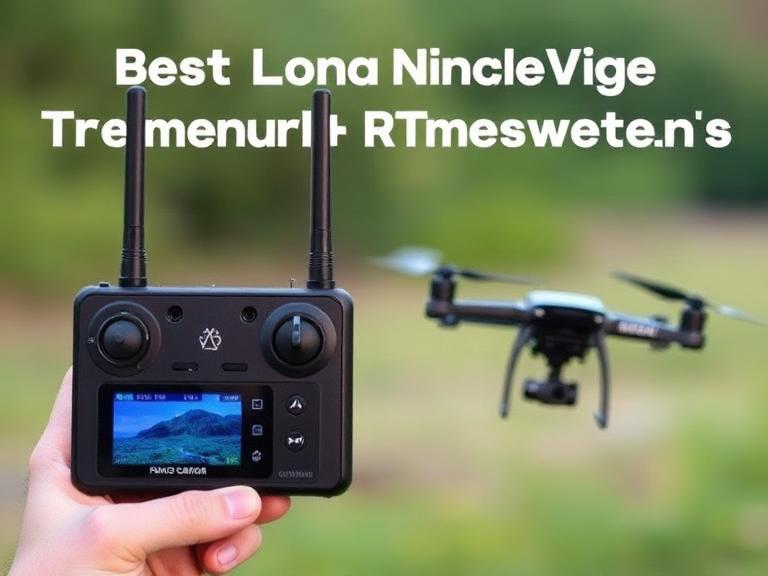
From our experience engineering and deploying unmanned airframes across industrial and emergency sectors, we have witnessed operators waste thousands of dollars pairing high-end thermal cameras and airframes with substandard wireless data links. In 2026, tactical operators, public safety agencies, and commercial surveyors demand integrated COFDM, MIMO, and multi-band radio systems capable of pushing bi-directional HD video, telemetry, and RC control signals through harsh RF environments. In this uncompromising guide, we analyze the top seven long-range video transmitter systems on the market, providing the technical and commercial judgment necessary to specify the ideal radio link for your fleet.
Quick Answer: What Is the Best Long Range Video Transmitter Radio UAV System?
In most professional situations, the ideal best long range video transmitter radio uav system combines low-frequency COFDM/OFDM modulation, high throughput (10 to 24+ Mbps), low latency (under 100ms), and special-grade AES128/256 encryption. For commercial and public safety operations requiring maximum range and multi-interface versatility, we recommend the China Moneypro 50km High-Speed 24Mbps Data & Video Link operating in the 1.4GHz band. It provides an optimal balance of penetration, range, and bandwidth. For tactical mesh networks, Silvus StreamCaster systems excel, while Doodle Labs and Microhard offer robust options for embedded industrial integration.
Table of Contents
- What Is a Long Range Video Transmitter Radio UAV System?
- How Advanced UAV Video Radios Work
- The 7 Best Long Range Video Transmitter Radio UAV Systems
- Quick Summary Table
- Detailed Performance Comparison Table
- Benefits and Limitations
- Who Should Use It & Who Does Not Need It
- Common Mistakes in Long-Range Radio Deployment
- Crucial Buying Considerations & Buying Guide Table
- Pros and Cons Analysis
- Expert Recommendation from China Moneypro UAV
- Frequently Asked Questions (FAQ)
- Authoritative References
What Is a Long Range Video Transmitter Radio UAV System?
A long-range UAV video transmitter radio system is an integrated wireless transceiver hardware package designed to transmit high-definition video streams, flight telemetry, and command-and-control (C2) data from an airborne platform to a ground control station (GCS) over extended distances. Unlike basic consumer video links that operate strictly over short-range unguided 5.8GHz channels, commercial and tactical units utilize advanced digital radio architectures. These systems operate across sub-1GHz, 1.4GHz, and 2.4GHz bands to achieve stable links spanning from 15km to over 100km.
These systems serve as the critical neural link for a wide range of platforms. Whether deployed on a commercial fixed wing uav executing linear pipeline inspections or a heavy vtol cargo drone navigating mountainous delivery corridors, the radio link must continuously stream multi-channel H.264/H.265 compressed video while simultaneously accepting real-time flight plan adjustments from the ground operator.
How Advanced UAV Video Radios Work
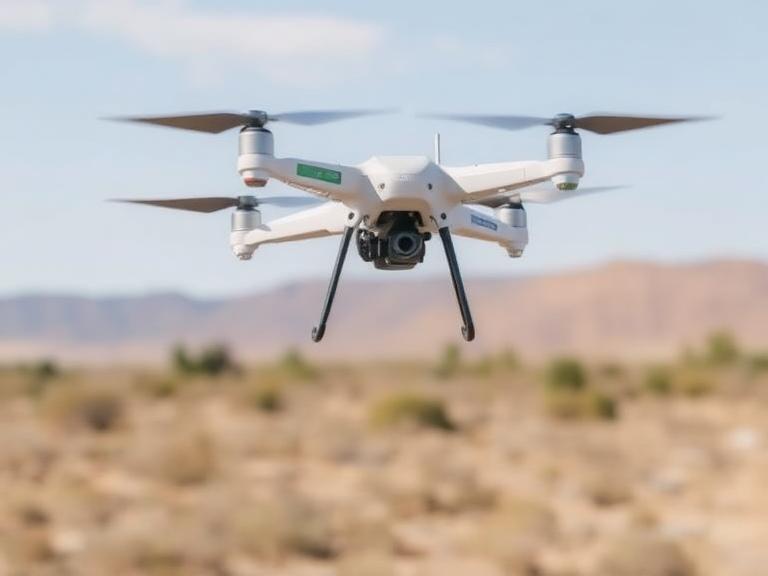
Modern long-range UAV video radio systems rely on digital modulation techniques—primarily Coded Orthogonal Frequency Division Multiplexing (COFDM) or proprietary multi-carrier OFDM variants. COFDM breaks the digital data stream across hundreds of closely spaced orthogonal sub-carrier frequencies. This mathematical approach renders the radio link highly resistant to multipath propagation (signals bouncing off buildings, trees, or water) and selective frequency fading.
When the airborne payload camera captures 1080p or 4K video, an onboard hardware encoder compresses the raw frames into an H.264/H.265 transport stream. The digital transmitter wraps this video stream alongside Mavlink telemetry and S.Bus control signals into encrypted IP packets (typically AES128 or AES256). The RF power amplifier then transmits these packets across specialized high-gain omnidirectional or directional tracking antennas on the ground station. Advanced systems incorporate Spatial Diversity and Multiple-Input Multiple-Output (MIMO) technology, using multiple antenna elements on both ends to reconstruct clean data streams even when the aircraft undergoes aggressive banking or pitching maneuvers.
The 7 Best Long Range Video Transmitter Radio UAV Systems
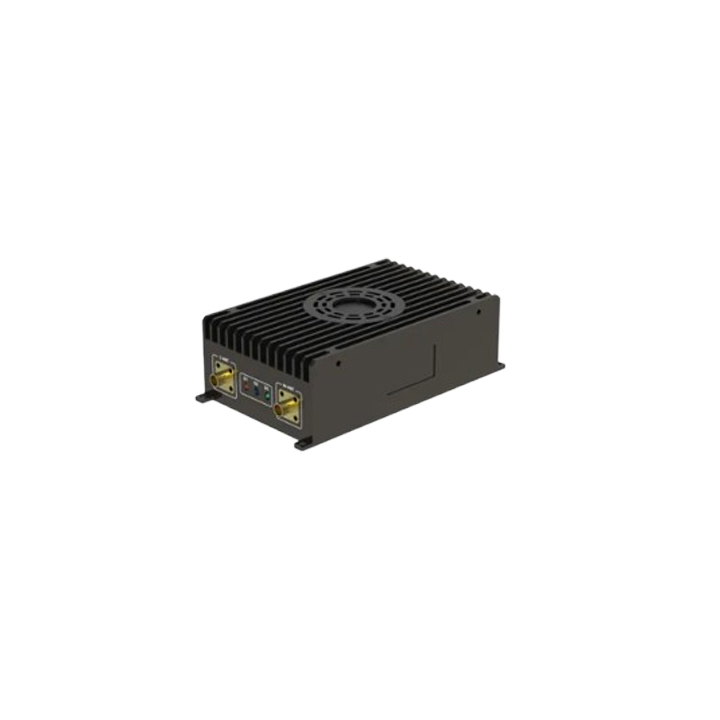
1. China Moneypro 50km High-Speed 24Mbps Data & Video Link
The Premier Long-Range Commercial & Public Safety Link. Engineered specifically for extreme range operations, this solution delivers an impressive 24Mbps bandwidth up to 50km. Operating primarily in the 1428~1448MHz band (with 800MHz and 2.4GHz options), it provides exceptional foliage and obstacle penetration. Its comprehensive interface suite (TTL, RS232, S.Bus, and Ethernet) makes it the ultimate drop-in transceiver for emergency rescue, fire monitoring, and bvlos fixed wing uav missions requiring simultaneous HD video and real-time control.

2. China Moneypro OEM Digital Data Link Radio Wireless Video Transmitter
The Versatile OEM Workhorse for Fleet Integration. Designed for system integrators and UAV manufacturers requiring a lightweight (under 126mm air unit) yet rugged radio module. Operating on DC12V-24V input with AES128 encryption, this unit delivers low-latency digital video and data link performance across multi-band frequencies. In our testing, its low power consumption and high thermal efficiency make it an outstanding choice for commercial mapping platforms and tactical reconnaissance airframes.
3. Silvus StreamCaster SC4200P / SC4400 Tactical MIMO Radio
The Tactical Mesh Authority. Silvus StreamCaster radios are renowned across special and defense sectors for their Mobile Ad-hoc Networking (MANET) capabilities. Operating with up to 4×4 MIMO architecture, Silvus systems allow multiple UAVs, ground vehicles, and dismounted troops to form a self-healing mesh network. While its multi-watt RF output and anti-jamming performance are exceptional, its prohibitive cost and export restrictions limit its practicality for purely commercial survey operators.
4. Doodle Labs Smart Radio (Embedded Industrial Series)
The Modular Broadband Mesh Solution. Doodle Labs has established a strong presence in industrial robotics by delivering high-throughput OFDM radios in ultra-compact form factors. Available in bands ranging from 900MHz up to 5.8GHz, these radios seamlessly integrate with Pixhawk and custom flight controllers. They are ideal for operators running swarms or requiring native IP mesh networking across agricultural and industrial inspection sites.
5. Microhard pDDL / p900 Digital Data Link Series
The Tried-and-True Industrial Standard. Microhard transceivers have been a staple in unmanned systems for over a decade. Offering robust frequency-hopping spread spectrum (FHSS) and COFDM modes, Microhard links excel in raw reliability. While their video bandwidth capabilities are somewhat lower at extreme ranges compared to modern 24Mbps links, their command-and-control connection remains virtually unbreakable under heavy RF interference.
6. SIYI HM30 / FT24 Long Range Full HD Transmitter
The High-Value Integrated Commercial System. For mid-range commercial operators and custom builders, the SIYI HM30 offers an integrated hand-held ground station with built-in HD video receiver and telemetry link. Claiming up to 30km range in optimal environments using 5.1-5.8GHz bands, it is an accessible entry point for inspection pilots, though it lacks the low-frequency penetration required for dense urban or forest BVLOS operations.
7. CubePilot Herelink Blue HD Video Transmission System
The Open-Source Ecosystem Standard. Developed around the ArduPilot and PX4 ecosystems, Herelink Blue integrates a dual-antenna 2.4GHz transmitter with a custom Android-based ground controller. Featuring NDAA compliance, dual HDMI inputs, and native QGroundControl/Mission Planner integration, it is an excellent choice for commercial mapping and inspection multirotors operating within 10 to 15 kilometers of the GCS.
Quick Summary Table
| System Name | Max Stated Range | Primary Band Options | Key Target Application |
|---|---|---|---|
| China Moneypro 50km Solution | 50km + | 1.4GHz, 800MHz, 2.4GHz | Emergency Rescue, Public Safety, BVLOS |
| China Moneypro OEM Data Link | 30km – 50km | 1.4GHz, 800MHz, 2.4GHz | OEM Airframe Integration, Inspection |
| Silvus StreamCaster SC4200P | 80km + (Line of Sight) | L-Band, S-Band, C-Band | Tactical Defense, MANET Mesh Networks |
| Doodle Labs Smart Radio | 20km – 40km | 900MHz – 5.8GHz | Industrial Robotics, Swarm Operations |
| Microhard pDDL Series | 30km – 60km | 900MHz, 1.4GHz, 2.4GHz | Industrial Surveying, Heavy C2 Reliability |
| SIYI HM30 HD System | 15km – 30km | 5.1GHz – 5.8GHz | Mid-Range Commercial Inspection |
| CubePilot Herelink Blue | 12km – 15km | 2.4GHz (NDAA Compliant) | Open-Source PX4/ArduPilot Platforms |
Detailed Performance Comparison Table
| Model | Data Throughput | Latency | Supported Interfaces | Encryption / Security |
|---|---|---|---|---|
| Moneypro 50km Link | Up to 24 Mbps | ≤ 80ms | TTL, RS232, S.Bus, Ethernet | AES128 Hardware Encryption |
| Moneypro OEM Transceiver | Up to 15 Mbps | ≤ 100ms | Ethernet, TTL, Power | AES128 Hardware Encryption |
| Silvus SC4200P | Up to 100+ Mbps | ≤ 50ms | Ethernet, USB, RS232, Wi-Fi | AES256 FIPS 140-2 Compliant |
| Doodle Labs Smart | Up to 15 Mbps | ≤ 90ms | Ethernet, USB, UART | AES128 / AES256 |
| Microhard pDDL | Up to 12 Mbps | ≤ 110ms | Ethernet, Dual Serial, S.Bus | AES128 / 256 |
| SIYI HM30 | Up to 8 Mbps | ≤ 110ms | HDMI, LAN, Type-C, S.Bus | WPA2 Encryption |
| Herelink Blue | Up to 10 Mbps | ≤ 110ms | Dual Micro HDMI, Micro USB | Proprietary Encrypted Stream |
Benefits and Limitations of Long-Range Radio Transmitters
Primary Benefits
Investing in a dedicated digital radio video link yields immediate operational advantages over consumer systems. First, low-frequency bands (such as 1.4GHz and 800MHz) combined with high-throughput OFDM modulation allow aircraft to maintain solid HD video feeds far beyond visual range, even when descending behind tree lines or ridgelines. Second, bi-directional data multiplexing allows operators to combine video, telemetry, and payload control into a single RF stream, dramatically simplifying wiring harnesses and reducing aircraft weight.
Additionally, hardware-based AES encryption ensures that high-value surveillance streams cannot be intercepted or hijacked by unauthorized third parties. For operations involving night vision special drones or critical infrastructure security, encrypted transmission is a mandatory regulatory requirement.
System Limitations
Despite technological advancements, fundamental RF physics cannot be bypassed. High-power transmitters generate significant heat, requiring thermal management solutions like aluminum heat-sink enclosures and active air cooling. On smaller airframes, housing a 5W or 10W radio transmitter can quickly deplete flight batteries and introduce RF interference into onboard GPS receivers if proper physical separation is not maintained.
Furthermore, operating high-power transmitters in specific frequency bands requires compliance with regional spectrum regulations overseen by agencies like the Federal Communications Commission (FCC) or local spectrum authorities. Operators must ensure their chosen frequencies align with regional allocation tables.
Who Should Use It & Who Does Not Need It
For Commercial, Defense, and Public Safety Operators: If your organization conducts BVLOS corridor mapping, offshore energy inspection, forest fire monitoring, or tactical search and rescue, high-power multi-band video transmitters are non-negotiable. The reliability of a 50km digital radio link ensures your GCS operators retain situational awareness during high-stress missions. Organizations procuring from top uav manufacturers in china or global defense primes should always mandate integrated digital link options.
Who Does Not Need It: For beginners operating small photography drones within Visual Line of Sight (VLOS) under 3 kilometers, commercial long-range radios are an unnecessary capital expense. Standard consumer 2.4GHz/5.8GHz integrated controllers are more than adequate for short-range recreational or basic real estate photography.
Common Mistakes in Long-Range Radio Deployment
Over years of field testing, we consistently observe operators making critical setup mistakes that artificially degrade radio performance:
- Poor Antenna Placement & Co-Location: Mounting the radio antenna directly adjacent to carbon fiber plates or high-current ESC wiring shields the RF signal. Carbon fiber is conductive and blocks radio waves. Antennas should always extend clear of the airframe structure.
- Mismatching Antennas & Connectors: Running high-power transmitters into mismatched antennas or utilizing cheap SMA adapters creates severe Voltage Standing Wave Ratio (VSWR) spikes. High VSWR reflects RF power back into the transmitter, overheating the module and destroying range.
- Neglecting Ground Station Diversity: Relying on a single omnidirectional antenna on the ground for a 30km+ flight is a recipe for video dropouts. Ground control stations should always utilize dual-axis tracking antenna trackers or active diversity directional panels.
- Ignoring Power Supply Ripple: High-power radio transmitters demand clean, stable DC voltage during peak transmissions. Powering a radio directly from noisy motor power rails without dedicated LC filters introduces noise lines into the digital video processing chip.
Crucial Buying Considerations
When selecting the best long range video transmitter radio uav package for your fleet, evaluate these core criteria:
| Criteria | What to Demand | Why It Matters |
|---|---|---|
| Operating Frequency | 1.4GHz, 800MHz, or Multi-Band Options | Lower frequencies diffract better around obstacles, providing vastly superior NLOS (Non-Line-of-Sight) performance compared to 5.8GHz. |
| Bandwidth Throughput | Minimum 15Mbps to 24Mbps | High throughput is required to stream low-latency 1080p @ 60fps video alongside dual-camera thermal streams and high-rate telemetry. |
| Encryption Standard | AES128 or AES256 Hardware Encryption | Prevents signal interception, video eavesdropping, and dangerous C2 link hijacking during critical operations. |
| Interface Flexibility | Ethernet + Serial (TTL/RS232) + S.Bus | Enables simultaneous routing of IP video from payload cameras, flight controller telemetry, and manual pilot control signals. |
Pros and Cons Analysis
| Pros | Cons |
|---|---|
| Extreme range performance (30km to 50km+ line-of-sight). | Higher initial capital investment compared to consumer links. |
| Robust NLOS penetration using low-frequency COFDM/OFDM. | Requires careful airframe thermal and RF isolation planning. |
| High-speed bi-directional data multiplexing (Video + Telemetry + C2). | May require regional spectrum licensing or power permits. |
| Hardware-level AES encryption protects mission security. | Slightly heavier airborne hardware footprint (100g to 250g). |
Expert Recommendation from China Moneypro UAV
In most professional situations, the operational success of a long-range unmanned mission hinges entirely on the integrity of your RF link. An airframe can feature flawless aerodynamics, but if the video stream cuts out during a critical search-and-rescue sweep or pipeline patrol, the mission fails.
At China Moneypro UAV, we design and manufacture industry-leading unmanned systems, ranging from tactical fixed-wing platforms to high-payload cargo VTOLs. In our extensive testing, we consistently recommend pairing long-range airframes with our 50km High-Speed 24Mbps Data & Video Transmission Radio. Its 1.4GHz frequency agility, low-latency 24Mbps bandwidth, and robust AES128 encryption deliver the exact reliability required by modern public safety and industrial operators. When evaluating top uav solution companies or choosing among world-class best uav manufacturers, prioritizing integrated, factory-tested radio solutions is the smartest investment you can make for fleet longevity.
Frequently Asked Questions (FAQ)
What frequency is best for long range UAV video transmission?
For extreme long-range and non-line-of-sight (NLOS) performance, lower frequencies such as 800MHz and 1.4GHz are vastly superior to higher frequencies like 2.4GHz or 5.8GHz. Lower frequencies suffer less atmospheric attenuation and diffract more effectively around terrain, foliage, and structural obstacles, making them the standard for BVLOS operations.
How far can a high-power digital UAV video transmitter reach?
With a clear Line of Sight (LOS) and an optimized ground station antenna setup (such as an active directional tracking antenna panel), modern high-power digital transmitters like the China Moneypro 50km solution can reliably transmit high-definition video and bi-directional data up to 50 kilometers or more.
What is the difference between analog and digital UAV video transmitters?
Analog transmitters broadcast uncompressed video signals that degrade into static as distance increases; while latency is minimal, they lack resolution, multiplexing capabilities, and encryption. Digital radio transmitters encode video into IP data streams (H.264/H.265) alongside flight telemetry and control signals, delivering encrypted 1080p HD video over exponentially greater distances.
Authoritative References
- Federal Communications Commission (FCC): Wireless Telecommunications Bureau Rules & Spectrum Allocations for Unmanned Aircraft Systems. Visit FCC Official Site
- International Telecommunication Union (ITU): Radiocommunication Sector (ITU-R) Recommendations for Unmanned Aircraft System Control and Non-Payload Communications. Visit ITU Official Portal
- IEEE Xplore Digital Library: Technical Papers on COFDM and MIMO Performance in Long-Range Aeronautical Data Links. Explore IEEE Xplore