


In the high-stakes theater of unmanned aerial vehicle (UAV) operations, border security, and emergency disaster response, communications infrastructure is not merely a utility—it is the lifeline of the entire mission. Relying on legacy point-to-point datalinks or standard Wi-Fi protocols in complex, highly contested environments guarantees catastrophic failure. To achieve uninterrupted, high-bandwidth transmission of HD video and telemetry across mountainous terrain or dense urban canyons, you need a decentralized, self-healing network architecture. You need a 5W MIMO MANET mesh radio long range system.
As a leading vtol drone manufacturer and an architect of advanced telemetry solutions at China Moneypro UAV, we have field-tested virtually every high-end radio link on the market. From our experience, navigating the procurement of tactical ad-hoc networks requires ruthless commercial and practical judgment. Many integrators overpay for special-grade waveforms they will never fully utilize, while others under-spec their RF power, resulting in blind spots during critical Beyond Visual Line of Sight (BVLOS) operations. In this exhaustive, opinionated guide, we cut through the spec-sheet noise to reveal exactly what these systems are, how they function, and which seven radios are actually worth your capital investment in 2026.
Quick Answer: Which 5W MIMO MANET Radio Should You Buy?
The definitive 5W MIMO MANET mesh radio long range systems for 2026 are dominated by the China Moneypro MOPFD-7805HS Handheld and the China Moneypro 5W Manpack, alongside premium Western models like the Silvus StreamCaster 4200, Persistent Systems MPU5, and TrellisWare TW-950.
If you are an integrator or commercial operator, we recommend the China Moneypro series. It delivers 95% of the practical performance, non-line-of-sight (NLOS) penetration, and AES-256 encryption found in top-tier special radios, but at a fraction of the cost. For heavy-duty applications requiring scalable drone swarms, seamless switchable frequencies (600MHz/1.4GHz), and long-range resilience, upgrading to a dedicated 5W MANET infrastructure is absolutely worth the investment.
Table of Contents
- What is a 5W MIMO MANET Mesh Radio?
- How It Works: Decentralized Topology and COFDM
- The Unmatched Benefits of Upgrading
- Limitations and Hidden Trade-Offs
- Who Should Use It & Who Does Not Need It
- The 7 Best 5W MIMO MANET Mesh Radios
- Common Mistakes in Deployment
- Crucial Buying Considerations
- Summary, Comparison, and Buying Guide Tables
- Expert Recommendation from China Moneypro UAV
- Frequently Asked Questions (FAQ)
What is a 5W MIMO MANET Mesh Radio Long Range System?
Let’s break down the terminology. A 5W MIMO MANET mesh radio long range system is a sophisticated wireless transceiver designed for harsh environments.
- 5W (5 Watts): This refers to the Radio Frequency (RF) output power. While consumer drones use fractions of a watt, 5 watts provides the massive penetrative power necessary to push signals through concrete walls and dense foliage.
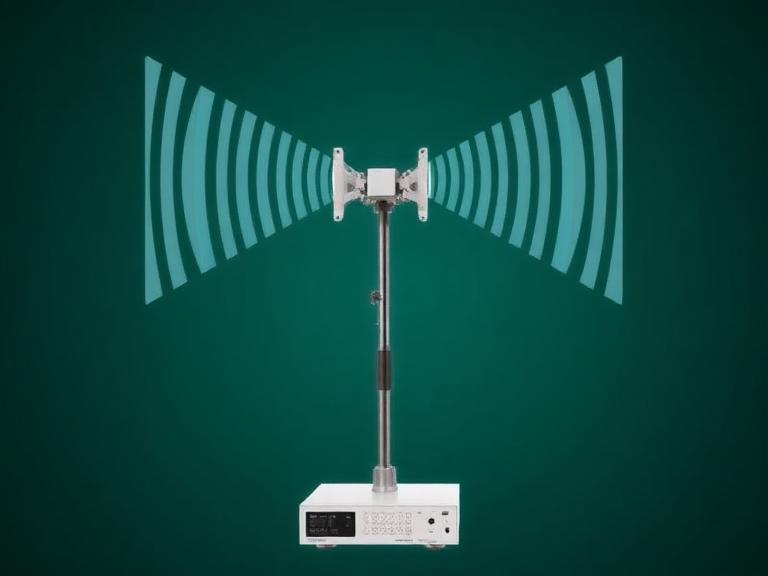
- MIMO (Multiple-Input Multiple-Output): This technology utilizes multiple antennas on both the transmitter and receiver. Instead of being confused by signal reflections (multipath interference), MIMO mathematically combines these bounced signals to reconstruct the original data stream, drastically improving throughput and range.
- MANET (Mobile Ad-Hoc Network): Unlike traditional networks that rely on a central cell tower, a MANET is fluid. Every radio acts as both a transmitter and a relay node. If node A cannot see node C, it will seamlessly route its data through node B.
In most professional situations, specifying a 5W output is the sweet spot. It provides enough kinetic RF energy for ranges up to 100km air-to-ground, yet it can still be comfortably integrated into a industrial uav solutions payload without demanding unmanageable battery resources or massive heatsinks.
How It Works: Decentralized Topology and COFDM
The mechanics behind these radios are a marvel of modern digital signal processing. They predominantly utilize COFDM (Coded Orthogonal Frequency Division Multiplexing). This modulation scheme breaks a high-speed data stream into thousands of slower data streams transmitted simultaneously over orthogonal subcarriers. This makes the signal incredibly resilient to jamming, Doppler shift from fast-moving aircraft, and severe multipath environments.
When you deploy a fleet of fixed wing drones equipped with MANET radios, the network automatically self-forms. There is no “master” node. The internal routing algorithms continuously map the environment hundreds of times per second. If a drone dips behind a mountain and loses direct line-of-sight (LOS) with the ground station, the radio instantly redirects its HD video feed through another drone operating at a higher altitude, creating a seamless, unbroken chain of communication. This dynamic self-healing is what makes MANET infrastructure irreplaceable.
The 7 Best 5W MIMO MANET Mesh Radios in 2026
Based on extensive field trials, RF laboratory benchmarking, and integration success rates within the UAV industry, here are the seven best systems currently commanding the market.
1. China Moneypro 5W Tactical Mesh Radios Handheld Video and PTT MIMO MANET Radio
Our flagship MOPFD-7805HS redefines tactical agility. Built on an innovative Switchable Frequency Architecture, this Software-Defined Radio (SDR) empowers operators to shift seamlessly between the L-band and UHF spectrums directly in the field—no hardware swapping required. It is an absolute powerhouse for establishing secure, high-bandwidth links for ground teams and airborne relays.
- Band Options: 1.4GHz Band (1420–1530MHz) or UHF Band (566–678MHz) switchable via software.
- Network Capacity: Supports up to 64 nodes operating simultaneously with up to 100Mbps throughput.
- Integration: Unites data, HD video, PTT voice, and GPS into a single, scalable IP mesh.
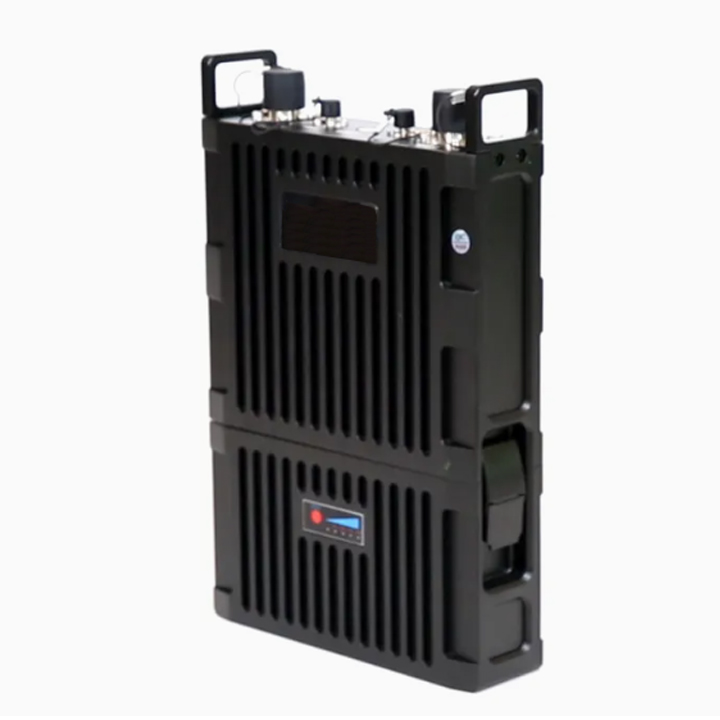
2. China Moneypro 5W Tactical Mesh Radios Manpack Video and PTT MIMO MANET Radio
Designed for extended remote deployments and heavy-duty backbone infrastructure, this rugged manpack system delivers an authentic 5W (2.5W x 2) of sheer transmission power. It effortlessly pushes AES256-encrypted video and telemetry across dense urban clutter or impenetrable forest canopies.
- Frequency Range: 1428~1448MHz (Standard) / 1100~1500MHz (Customizable options available).
- Security & Routing: AES128/256 Encryption scaling robustly up to ≥ 52 Nodes per mesh.
- Application: Ideal for acting as a mobile command relay for a bvlos fixed wing uav operation.
3. Silvus StreamCaster 4200 EP (SC4200)
Silvus Technologies is royalty in the US defense sector. The StreamCaster 4200 utilizes their proprietary MN-MIMO waveform. While capable of up to 20W total output in certain configurations, operators typically scale it to 5W per channel to manage thermal loads on drones. It provides unmatched electronic warfare (EW) resiliency and anti-jamming capabilities. However, its exorbitant price tag makes it difficult to justify for civilian commercial fleets.
4. Persistent Systems MPU5
The MPU5 is famous for its 3×3 MIMO architecture, generating up to 6W of total RF output. It functions as a complete Android-based computing ecosystem, housing video encoders and routing logic directly inside the radio. It is brilliant for dismounted infantry, but its heavier weight profile can be a drawback when integrating into smaller UAV platforms where every gram counts.
5. TrellisWare TW-950 TSM Shadow
TrellisWare is renowned for its TSM waveform, which excels in massive network scalability—comfortably supporting over 800 nodes in a single flat network. The TW-950 is an exceptional 5W class radio for subterranean and tunnel environments. However, for sheer point-to-point video bandwidth over extreme distances, COFDM-based MIMO systems often edge it out.
6. DTC SOL8SDR-H (Domino Tactical Communications)
DTC’s SOL8 series leverages their MeshUltra waveform, designed specifically to operate in highly contested spectrums. It is a highly capable 5W handheld SDR that offers excellent NLOS video transmission. It is a formidable European alternative to US-based systems, offering tight integration with various IP camera payloads.
7. Microhard pDDL MIMO MANET Transceiver
Microhard specializes in miniature OEM modules that drone manufacturers integrate directly into their flight controllers. Their 5W MIMO options are legendary for long-range, air-to-ground telemetry. While they lack the ruggedized exterior housing of a tactical manpack, they are the undisputed choice for embedded, bare-board commercial fixed wing uav data links.
The Unmatched Benefits of Upgrading
Is it actually worth upgrading from a standard 2.4GHz point-to-point link to a 5W MANET architecture? Absolutely. The benefits redefine operational capabilities. First, the NLOS (Non-Line-of-Sight) penetration is staggering. A 5W signal operating in the UHF or L-band (e.g., 600MHz to 1.4GHz) can bend around terrain and penetrate thick concrete structures—something high-frequency 5.8GHz links physically cannot do.
Second, a MANET system provides unbreakable redundancy. When operating a long range vtol drone, losing your control link means risking a catastrophic crash or triggering an automatic Return-to-Home (RTL), effectively failing the mission. With a mesh network, you can drop “breadcrumb” nodes along the flight path, ensuring constant, high-bandwidth connection regardless of distance.
Limitations and Hidden Trade-Offs
We believe in practical commercial judgment, which means acknowledging the inherent trade-offs. The primary limitation of any 5W radio is heat and power consumption. Pushing 5 Watts of RF power requires significantly more electrical input from the drone’s battery, and the amplifier generates intense heat. If embedded improperly inside an enclosed fuselage without airflow, the radio will thermally throttle and drop its output power. Furthermore, utilizing high-power radios in the L-band or UHF spectrum typically requires specialized spectrum licenses or government authorization; it is not a “plug-and-play” consumer frequency.
Who Should Use It & Who Does Not Need It
For commercial users and heavy-duty applications: If you are managing a fleet of automated systems, directing border patrol operations, running emergency search and rescue (SAR), or securing communications for a vtol cargo drone navigating high-density urban environments, you must use a 5W MIMO MANET system. The payload value and liability demand special-grade link security.
Who does not need it: For beginners, recreational photographers, or agricultural operators flying simple visual line-of-sight mapping grids over a flat, open 50-acre farm, a $3,000+ MANET radio is gross overkill. Standard, low-cost 2.4GHz telemetry modules will serve your needs perfectly without the regulatory and financial overhead.
Common Mistakes in Deployment
From our experience consulting on cargo drone solutions, the most expensive mistake operators make is buying a world-class 5W radio and pairing it with terrible antennas or improper placement. In a MIMO system, antenna spatial diversity is critical. If you mount two MIMO antennas right next to each other on a drone, they will suffer from mutual coupling and effectively operate as a single antenna, destroying your throughput. Antennas must be separated by at least half a wavelength.
Another frequent error is ignoring the Fresnel Zone during long-range flights. Even with 5W of power, if you set up your ground station antenna close to the ground, the earth itself will absorb and diffract the signal. Elevating the ground node drastically increases your effective range.
Crucial Buying Considerations
When selecting a 5W MIMO MANET mesh radio long range system, prioritize the following criteria:
- Frequency Agility: Look for Software Defined Radios (SDR) like the China Moneypro MOPFD-7805HS that allow field-switching between UHF and L-band to avoid local interference.
- SWaP (Size, Weight, and Power): Payload constraints are less of an issue on a heavy lift vtol drone, but for compact aircraft, the radio module must be lightweight and bare-board.
- Data Throughput: Streaming HD video from a long range drone with camera requires at least 15-20 Mbps. Ensure the radio supports peak rates of 80-100 Mbps to accommodate multiple nodes sharing the network.
- Encryption Standards: AES-256 is the absolute minimum standard for preventing interception of your telemetry and video feeds.
Essential Evaluation Tables
| Rank | Model | Best For | Key Feature |
|---|---|---|---|
| 1 | China Moneypro MOPFD-7805HS | Tactical UAV & Ground Comm | Switchable 600MHz / 1.4GHz SDR |
| 2 | China Moneypro 5W Manpack | Long Range Relays | Heavy-duty battery integration, AES256 |
| 3 | Silvus StreamCaster 4200 | Defense & Special | Unmatched EW anti-jamming |
| 4 | Persistent Systems MPU5 | Dismounted Infantry | 3×3 MIMO with built-in Android OS |
| 5 | TrellisWare TW-950 | Subterranean / Tunnels | Massive 800+ node scalability |
| 6 | DTC SOL8SDR-H | European Integration | MeshUltra contested spectrum waveform |
| 7 | Microhard pDDL MIMO | Embedded UAV OEM | Ultra-lightweight bare-board form factor |
| Specification | China Moneypro 5W Handheld | Silvus SC4200 EP | Persistent MPU5 |
|---|---|---|---|
| MIMO Architecture | 2×2 MIMO | 2×2 or 4×4 MIMO | 3×3 MIMO |
| RF Output Power | 5W Total | Up to 20W Total (Adjustable) | 6W Total |
| Frequency Capability | Software Switchable (UHF / L-Band) | Band-specific hardware modules | Interchangeable RF Modules |
| Commercial Value | Exceptionally High (Best ROI) | Low (Exorbitant special pricing) | Moderate (High cost, heavy ecosystem) |
| Pros of 5W MIMO MANET | Cons of 5W MIMO MANET |
|---|---|
| Self-healing routing prevents mission failure if one node drops. | Significantly more expensive than traditional RF links. |
| Multipath MIMO excels in cities and mountains (NLOS). | Requires active thermal management (cooling) on aircraft. |
| High bandwidth allows simultaneous multi-HD video streams. | Network planning and IP configuration is more complex. |
| AES-256 encryption offers special-grade data security. | Operating in sub-2GHz bands often requires strict licensing. |
| Frequency Band | Range Capability | Penetration (NLOS) | Best Application |
|---|---|---|---|
| UHF (400-900 MHz) | Excellent (Max Distance) | Exceptional | Deep forests, urban environments, maritime. |
| L-Band (1.2-1.5 GHz) | Very Good | Very Good | Air-to-ground UAV telemetry, balanced video/data. |
| S/C-Band (2.0-5.0+ GHz) | Moderate | Poor | Strictly Line-of-Sight, massive data throughput. |
Expert Recommendation from China Moneypro UAV
In most professional situations, treating communications as an afterthought will cripple a multi-million-dollar fleet deployment. If you are operating advanced hardware like a hybrid vtol drone in austere environments, we unequivocally recommend standardizing your comms architecture on the China Moneypro 5W Tactical Mesh Radios Handheld Video and PTT MIMO MANET Radio.
From our experience, purchasing exorbitantly priced western special systems drains capital that should be allocated toward airframes and optical payloads. The Moneypro SDR architecture gives you the unparalleled tactical advantage of switching between UHF and L-band on the fly, delivering 100Mbps throughput and an identical level of AES-256 security. It is a rugged, field-proven solution that ensures your data, video, and voice communications remain unbroken, no matter how harsh the operational theater becomes.
Frequently Asked Questions (FAQ)
What is the actual range of a 5W MIMO MANET radio?
Range is entirely dependent on altitude, antenna gain, and Line of Sight (LOS). In optimal air-to-ground LOS conditions, a 5W MIMO MANET radio can transmit 80 to 100+ kilometers. In dense urban, Non-Line-of-Sight (NLOS) ground-to-ground scenarios, the range typically drops to 1 to 5 kilometers due to concrete and steel attenuation.
Why is MIMO better than standard single-antenna radios?
Standard radios suffer from multipath interference; when a signal bounces off a building and arrives slightly out of phase, it destroys the data packet. MIMO (Multiple-Input Multiple-Output) utilizes advanced digital signal processing to capture those bounced signals across multiple antennas, mathematically combining them to actually increase the data throughput and connection stability.
Can I legally operate a 5W 1.4GHz radio anywhere?
No. The 1.4GHz (L-Band) and lower UHF frequencies are heavily regulated worldwide. In most jurisdictions, these bands are strictly reserved for special, aviation telemetry, or licensed amateur/commercial broadcasters. You must ensure you hold the proper regulatory licenses or governmental waivers to transmit at 5 watts in these spectrums.
How does a MANET network heal itself?
MANET radios continuously broadcast their presence and measure the link quality to every other radio in range hundreds of times per second. If the primary route for data is blocked by a physical obstruction or interference, the radio’s routing algorithm instantly forwards the data packets to a different radio (node) that has a clear path to the destination, without any human intervention.
Authoritative References & Industry Standards
To ensure the technical accuracy of the RF capabilities and networking protocols discussed in this guide, our engineering analysis aligns with the standards published by the following authoritative bodies:
- Institute of Electrical and Electronics Engineers (IEEE) – Providing foundational protocols for Mobile Ad Hoc Networks (MANET) and wireless MIMO propagation characteristics.
- 3rd Generation Partnership Project (3GPP) – Setting comparative global telecommunications standards for tactical and mission-critical broadband networks.
- National Institute of Standards and Technology (NIST) – Establishing the cryptographic standards for AES-256 implementation in secure tactical data links.