Exploring the Q Band: A Comprehensive Look at 33–50 GHz Technology
nnThe q band sspa operates within an often-overlooked but vitally important slice of the electromagnetic spectrum: the Q band, which spans from 33 GHz to 50 GHz. Positioned between the Ka band (26.5–40 GHz) and the V band (40–75 GHz), this frequency range offers a unique blend of wide bandwidth and compact hardware. Because of its short wavelength, a q band sspa enables antenna designs that are far more miniature than those required for lower frequencies, making it an ideal choice for modern satellite communications, radar systems, and scientific research. Despite challenges like signal attenuation and elevated implementation costs, the Q band’s potential for high-speed data transfer and precision communication is unmatched. As innovations continue to emerge, the demand for reliable q band sspa solutions is set to skyrocket.nn
The Electromagnetic Niche of the Q Band
nnThe Q band occupies a strategic position in the millimeter-wave spectrum. Its broad bandwidth—spanning 17 GHz—allows for high-capacity data transmission that is critical for point-to-point links, satellite uplinks and downlinks, and advanced radar applications. The short wavelength not only reduces component size but also enables tighter beam focusing, which is essential for secure military communications and high-resolution imaging. However, these advantages come with trade-offs: atmospheric absorption and rain fade are more pronounced at these frequencies, requiring robust amplifier designs to maintain signal integrity.nn
Key Applications Driving Q Band Adoption
nn
Satellite Communications and Links
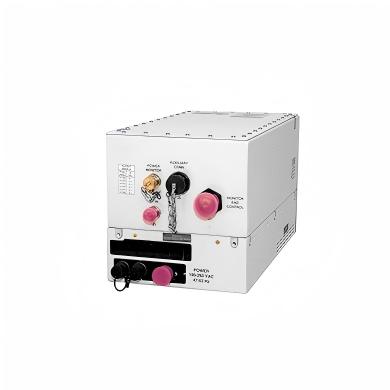
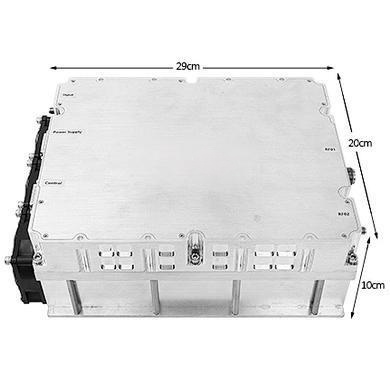
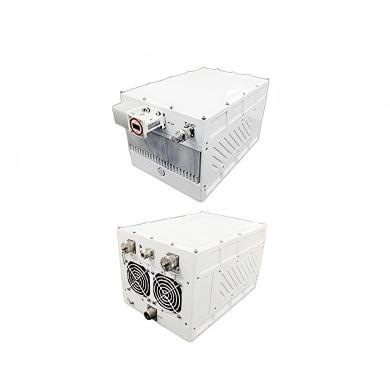
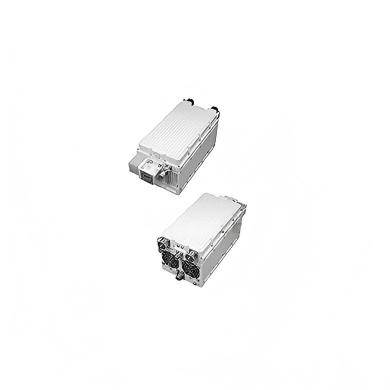
nnSatellite operators increasingly rely on the Q band for high-throughput links between ground stations and orbiting spacecraft. The wide bandwidth supports multiple channels simultaneously, reducing latency and boosting data rates. A q band sspa is particularly valuable here because its small form factor fits within the tight weight and volume constraints of satellite payloads. For example, our 80W Q band radar amplifier, operating in the 43–46 GHz sub-band, delivers 80W of power with excellent linearity and gain stability, ensuring reliable connectivity even in adverse weather.nn
Radar Technology
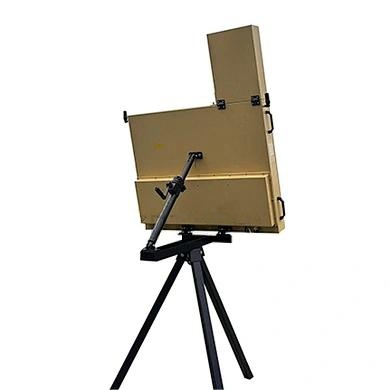
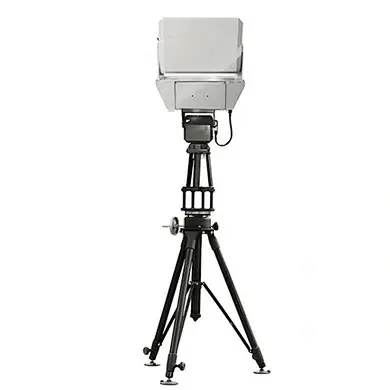
nnRadar systems operating in the Q band benefit from high resolution and fine target discrimination. The 43–46 GHz frequency range is ideal for tracking fast-moving objects, whether in defense, aerospace, or automotive applications. Our amplifier’s superior gain characteristics—≥65 dB linear gain—and low noise power density (≤−135 dBW/4 kHz) make it a top choice for demanding radar installations.nn
Millimeter-Wave Communication Systems
nnEmerging 5G and beyond-5G networks are exploring the Q band for backhaul and fronthaul links. The wide bandwidth allows for aggregated data rates exceeding 10 Gbps, while the compact q band sspa reduces equipment footprint and power consumption. With features like step-adjustable gain control (0–25 dB in 0.1 dB steps) and multiple communication interfaces (LAN, RS485, RS422, RS232), our amplifier integrates seamlessly into diverse network architectures.nn
Technical Specifications for the 80W Q Band SSPA
nnTo ensure reliable performance across all operational environments, our q band sspa is built with precision components and advanced thermal management. Below are the comprehensive specifications presented in an HTML table.nn
| Parameter | Specification |
|---|---|
| Frequency Range | 43–46 GHz |
| Rated Power | +49 dBm / 80W |
| Gain Adjustment | 0–25 dB (step 0.1 dB) |
| Linear Gain | ≥65 dB |
| Gain Flatness | 0.5 dB p-p |
| Gain Stability | ±0.5 dB / 24 h |
| IM3 | −23 dBc |
| Spurious | ≤−60 dBc |
| AM/PM | ≤3°/dB |
| Group Delay | ≤0.5 nS (p-p) |
| Noise Power Density | ≤−135 dBW/4 kHz |
| Power Supply | 180–264 VAC @ 47–63 Hz |
| Power Consumption | 650 W |
| Dimensions | 422 × 212 × 175 mm |
| Weight | 17.5 kg |
| RF Connectors | Input: 2.4mm-F, Output: WR22/BJ400 |
| Communication Interface | LAN / RS485 / RS422 / RS232 (optional) |
| Cooling | Forced air cooling |
nn
Advantages of Our Q Band Amplifier
nnThe q band sspa is more than just a power booster; it is a complete communication subsystem. Here are the key benefits:nn- Miniaturized Design: The short wavelength allows for a compact package (422×212×175 mm) that saves space in racks and satellite platforms.n- Robust Power Output: At 80W (+49 dBm), it drives long-distance links and overcomes atmospheric losses.n- Superior Gain and Linearity: With ≥65 dB linear gain and flatness within 0.5 dB, signal integrity is maintained even under high modulation.n- Advanced Thermal Management: Forced air cooling ensures stable operation in environments ranging from arctic cold to desert heat.n- Versatile Integration: Multiple communication interfaces (LAN, RS485, RS422, RS232) allow remote monitoring and configuration.n- Exceptional Reliability: Gain stability of ±0.5 dB per 24 hours and low noise ensure consistent performance in critical missions.nn
Overcoming Challenges with Q Band Technology
nnWhile the Q band offers remarkable bandwidth and antenna miniaturization, it also presents hurdles that require careful engineering:nn- Atmospheric Attenuation: Oxygen absorption near 60 GHz is a concern, but the 43–46 GHz sub-band experiences lower attenuation, making it a sweet spot for terrestrial and space links.n- Rain Fade: At 45 GHz, heavy rain can cause signal loss of 10–20 dB/km. Our amplifier’s high power output (80W) compensates for these losses, maintaining link availability.n- Cost: Premium components like GaN transistors and precision connectors increase upfront costs, but the long-term reliability and performance often justify the investment.nn
Applications in Action
nn
Satellite Earth Stations
nnA global satellite operator deployed our q band sspa in a gateway terminal for high-throughput data relay. The amplifier’s 0.1 dB step gain adjustment allowed fine-tuning of the uplink power, achieving 99.99% link uptime even during tropical rainstorms.nn
Military Radar Systems
nnDefense contractors use the 80W amplifier in ground-based surveillance radars. The low spurious output (≤−60 dBc) and exceptional IM3 (−23 dBc) prevent false targets, while the compact size enables installation in vehicles and fixed installations alike.nn
Research and Scientific Exploration
nnAstronomers employ Q band amplifiers for radio telescope arrays, where the low noise power density is critical for detecting weak cosmic signals. The amplifier’s forced air cooling ensures stable operation during long observation runs.nn
Future Trends in Q Band Communications
nnAs the world demands more bandwidth for AI data centers, autonomous vehicles, and space-based internet constellations, the Q band will become even more central. Future developments include:nn- Higher Power GaN Devices: New gallium nitride transistors push output beyond 100W while reducing size.n- Integrated Digital Interfaces: Smart SSPAs with built-in Ethernet switches and AI-based gain optimization.n- Multi-Band Hybrid Systems: Combining Q band with E band (60–90 GHz) for terabit-per-second links.n- Space-Grade Packaging: Radiation-hardened designs for deep-space probes and lunar bases.nn
Conclusion
nnThe Q band from 33 to 50 GHz represents a critical frontier in millimeter-wave communications. By embracing a q band sspa, engineers and system integrators can unlock the full potential of this spectrum—achieving high data rates, compact footprints, and reliable performance in the most demanding environments. Our 80W amplifier, with its extensive feature set and proven specifications, stands as a testament to the possibilities of modern high-frequency design. Whether for satellite links, radar arrays, or next-generation 6G networks, investing in a q band sspa today positions you for the bandwidth-hungry world of tomorrow.