Understanding the Balanced Mixer: The Foundation of High-Frequency Signal Processing
nn
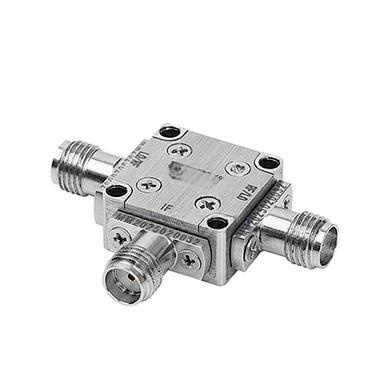
At the core of countless radar systems, satellite communication links, and advanced test equipment lies a seemingly small but immensely capable component: the balanced mixer. A balanced mixer is not just a simple frequency converter; it is a critical RF/microwave component engineered to transform signals from one frequency to another with exceptional precision. Unlike standard mixers, the balanced architecture actively suppresses unwanted intermodulation products while dramatically improving isolation between ports. This inherent capability makes it indispensable in environments where signal integrity is paramount.
nn
Its enhanced performance stems from the ability to cancel out noise and spurious signals. By effectively isolating the local oscillator (LO), the RF port, and the IF port, the balanced mixer ensures that the desired signal is transferred with minimal corruption. This is particularly vital in modern communications, where the spectrum is crowded, and even small amounts of interference can degrade performance. For military and aerospace applications, where reliability and low noise are non-negotiable, the balanced mixer provides the stable, accurate frequency conversion needed for mission-critical operations.
nn
Why a Balanced Mixer is Essential for Modern Systems
n
The demand for higher data rates and more sensitive receivers in 5G infrastructure, satellite communications, and advanced radar has driven the need for components that deliver both high linearity and low conversion loss. The balanced mixer excels in these areas. It not only ensures reliable signal processing in harsh environments, including extreme temperatures and high vibration, but also supports wideband RF mixing for microwave links and signal analyzers. Whether in a spectrum analyzer for lab testing or a phased array radar for defense, the balanced mixer is the workhorse that provides the precision required for accurate measurements and clear transmission.
nn
Key Specifications of Our Ultra-Wideband Balanced Mixer
n
We have engineered a superior performance wideband RF mixer that operates seamlessly across an impressive range of 2.5 GHz to 18 GHz. This makes it one of the most versatile microwave mixers available today. To provide clarity on its capabilities, all critical technical data is presented in the table below. This ensures that engineers and system designers have immediate access to the exact parameters needed for integration.
nn
| Parameter | Value/Specification |
|---|---|
| Frequency Range (RF & LO) | 2.5 – 18 GHz |
| Conversion Loss (Typical) | As low as -5.4 dB |
| LO-RF Isolation | Up to 55 dB |
| LO-IF Isolation | Up to 40 dB |
| Average Power Handling | 30 Watts |
| Operating Temperature | -55°C to +85°C |
| Non-operating Temperature | -55°C to +100°C |
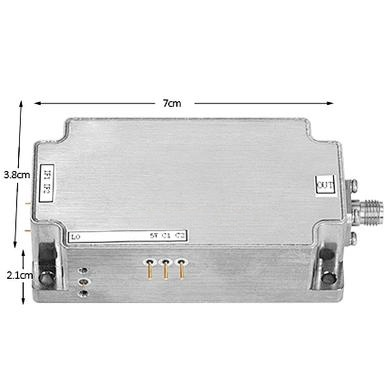
| Mechanical Size (L x W x H) | 111.8 x 17.8 x 12.7 mm |
| Connector Type | SMA Female |
| Mounting Configuration | 2-Φ2.4 mm through-hole |
nn
Benefits of Choosing This Balanced Mixer
n
The specifications above translate directly into real-world advantages. With ultra-wideband operation covering 2.5 to 18 GHz, this mixer supports both up-conversion and down-conversion across a vast frequency range, making it ideal for multi-band systems. The high LO-RF isolation of up to 55 dB and LO-IF isolation of up to 40 dB minimize signal leakage, preserving the integrity of the entire signal chain. Furthermore, the low conversion loss of -5.4 dB optimizes signal strength, while the robust ability to handle 30W average power makes it suitable for high-power radar and SATCOM applications.
nn
Primary Applications for This Wideband Mixer
n
The versatility of this balanced mixer makes it a top choice for a wide array of demanding sectors. It serves as a critical component in:
n
- n
- Phased Array Radar Systems: For military, defense, and weather radar, where precise frequency conversion is vital.
- Satellite & VSAT Communications: Ensuring reliable links in space and ground-based stations.
- Electronic Warfare (EW) and SIGINT: Where high-performance, wide-band mixing is required for signal detection and analysis.
- Broadband Wireless Infrastructure: Supporting the backbone of 5G and other advanced networks.
- Vector Network Analyzers (VNA) & Test Equipment: Delivering the accuracy needed for signal characterization.
n
n
n
n
n
nn
Conclusion: The Ultimate Choice for Uncompromising Performance
n
In summary, the balanced mixer remains the gold standard for high-performance frequency conversion in the most challenging RF environments. Its ultra-wideband coverage from 2.5 to 18 GHz, combined with exceptional isolation and rugged mechanical design featuring military-grade durability, positions it as the ideal solution for engineers designing phased array radar, military communication systems, or advanced test platforms. If your project demands a reliable microwave mixer that can operate flawlessly across wide temperatures and high power, this balanced mixer is the perfect choice. Contact us today to learn more or request a quote for your specific application.