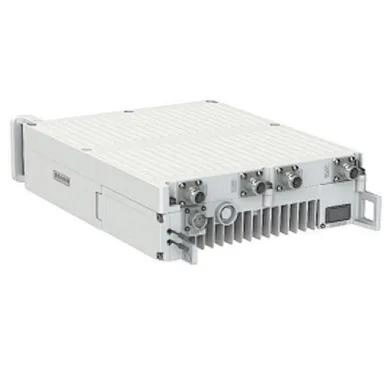
Understanding the 4-Port MIMO Sector Antenna: A Technical Deep Dive
nn
In the rapidly evolving landscape of wireless communication, the demand for high-performance antennas capable of supporting multiple frequency bands has never been greater. The 4-port MIMO sector antenna stands at the forefront of this technological wave, offering robust solutions for 4G LTE, 5G, and advanced wireless backhaul applications. This article will explore the critical specifications, design features, and operational benefits of this essential network component, with a particular focus on the 4 Port MIMO Sector Antenna and its role in modern infrastructure.
nn
At its core, the 4 Port MIMO Sector Antenna is engineered to deliver enhanced data throughput, improved signal quality, and reliable connectivity in dense urban environments or challenging rural deployments. By leveraging multiple-input multiple-output (MIMO) technology, this antenna type can transmit and receive multiple data streams simultaneously, effectively doubling or quadrupling capacity without requiring additional spectrum. But what makes this specific model stand out? Let us break down the key performance parameters and design choices that define its capability.
nn
Frequency Bands and Coverage
n
One of the most distinguishing features of this antenna is its dual-band operation. It covers two critical frequency ranges: the S-Band from 2200 to 2500 MHz and the C-Band from 4400 to 5000 MHz. This dual-band support makes the 4 Port MIMO Sector Antenna extremely versatile, capable of serving both legacy LTE networks and newer 5G deployments that often utilize C-Band spectrum for mid-band coverage. The antenna’s 120-degree horizontal beamwidth provides wide sector coverage, ideal for cellular base stations where three or more antennas are used to cover a full 360-degree area.
nn
Electrical Performance and Gain
n
Gain is a critical metric for any antenna, as it directly influences the range and signal strength. The 4 Port MIMO Sector Antenna delivers impressive gain figures across both bands. In the 2200-2500 MHz band, each of the two ±45° polarized ports achieves a minimum gain of 11 dBi. For the 4400-5000 MHz band, the minimum gain increases to 13 dBi per port. This higher gain at C-Band is particularly valuable for overcoming the greater path loss typically experienced at higher frequencies. Additionally, the vertical beamwidth ranges from 9 to 11 degrees, ensuring a focused but adequate elevation pattern for typical base station heights.
nn
Key Specifications of the 4 Port MIMO Sector Antenna
n
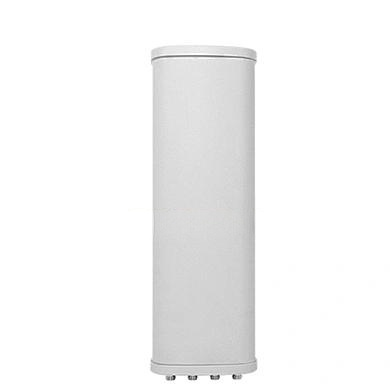
To fully appreciate the engineering behind this antenna, it is essential to examine the complete set of technical specifications. The following table provides a comprehensive overview of the 4 Port MIMO Sector Antenna, including electrical, mechanical, and environmental parameters.
nn
| Parameter | Specification / Value |
|---|---|
| Antenna Type | 4 Port MIMO Sector Antenna |
| Antenna Pattern | 120 degree Azimuth Beamwidth |
| Band 1 (S-Band) Frequency Range | 2200 – 2500 MHz |
| Band 2 (C-Band) Frequency Range | 4400 – 5000 MHz |
| Impedance | 50 Ohms |
| VSWR | Maximum (per specification) |
| Gain (2200-2500 MHz, 2 ports ±45°) | 11 dBi minimum |
| Gain (4400-5000 MHz, 2 ports ±45°) | 13 dBi minimum |
| Horizontal (AZ) Beamwidth | 120 degrees |
| Elevation (EL) Beamwidth | 9 – 11 degrees |
| Maximum RF Power | 50 Watts |
| Polarization | 45° slant left / 45° slant right (one polarization per port) |
| Radome Material | UV Stable |
| Ingress Protection | IP-67 |
| Dimensions (cm) | 500 x 165 x 90 mm |
| Weight | Approx. 3.5 kg |
| RF Connectors | Type N-Female (Jack) x 4 |
| Operational Temperature | -40 to +140°F (-40 to +60°C) |
| Wind Speed Rating | 150 mph |
| Mounting Requirements | Pole Mounting Kit for 1.0–3.0 OD Pipes, 0° to -15° adjustable elevation angle (downtilt) |
nn
Physical Design and Durability
n
The mechanical construction of this 4 Port MIMO Sector Antenna is built for rugged outdoor environments. The UV-stable radome protects internal components from prolonged sun exposure and harsh weather conditions. With an IP-67 ingress protection rating, the antenna is fully sealed against dust and capable of withstanding temporary submersion in water, making it suitable for rooftop, tower, or pole-mounted installations. The compact dimensions of 500 x 165 x 90 mm and a weight of only 3.5 kg simplify handling and structural load calculations.
nn
Installation and Adjustability
n
Mounting flexibility is another strong point. The antenna includes a pole mounting kit compatible with pipes ranging from 1.0 to 3.0 inches in outer diameter. Additionally, the elevation angle can be adjusted from 0 to -15 degrees, allowing for precise downtilt optimization. This adjustability is crucial for fine-tuning coverage patterns, reducing interference, and ensuring that the 4 Port MIMO Sector Antenna directs its signal exactly where it is needed, whether in a dense city block or along a highway corridor.
nn
Conclusion: Why the 4 Port MIMO Sector Antenna Matters
n
As network operators continue to densify their infrastructure and push toward higher data rates, components like the 4 Port MIMO Sector Antenna become indispensable. Its dual-band capability, robust gain figures, and MIMO architecture allow for efficient spectrum reuse and improved user experience. Whether you are deploying a small cell solution, upgrading a macro site, or building a private wireless network, this antenna provides the performance and reliability required. By carefully considering the specifications outlined above—from frequency coverage to mechanical durability—you can confidently select the right 4 Port MIMO Sector Antenna for your specific application, ensuring long-term success in a competitive wireless landscape.