Introducing the Advanced O-RAN Radio Unit: A New Standard in Connectivity
n
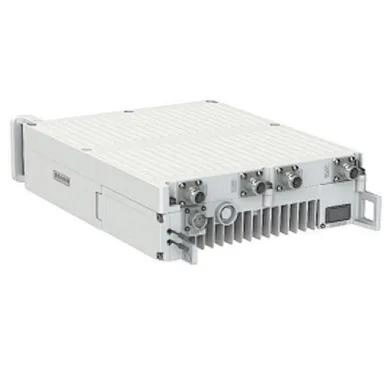
In the rapidly evolving landscape of telecommunications, the demand for high-performance, reliable, and flexible radio units has never been greater. The latest O-RAN compliant radio unit offers a powerful solution for mobile network operators seeking to enhance coverage, capacity, and efficiency. This article provides a detailed examination of its technical capabilities, environmental resilience, and mechanical design, highlighting how its advanced radio specifications drive superior network performance. From its dual-mode operation to its robust power supply and fronthaul connectivity, this unit is engineered to meet the rigorous demands of 4G and 5G deployments.
nn
Core Radio Specifications: Uplink and Downlink Performance
n
At the heart of this radio unit is its ability to operate across key frequency bands with exceptional bandwidth and power output. The advanced radio specifications ensure seamless support for both LTE and NR (5G New Radio) technologies, making it a versatile choice for network upgrades and expansions. The unit covers Band 1/N1, offering uplink frequencies from 1920 to 1980 MHz and downlink frequencies from 2110 to 2170 MHz, providing a solid foundation for wide-area coverage. With an instantaneous bandwidth of 60 MHz and an operation bandwidth of 40 MHz for both uplink and downlink, the radio handles high data throughput efficiently.
n
The RF output power of 4x40W ensures strong signal propagation, which is critical for maintaining consistent service quality in dense urban environments and rural areas alike. The unit operates on a -48V DC power supply (range -36V to -57V), a standard in telecommunications infrastructure that allows for integration with existing power systems. This combination of frequency agility, bandwidth capacity, and output power makes the radio unit a cornerstone of modern network architecture.
nn
Fronthaul Connectivity and Data Rate Capabilities
n
To fully leverage the advanced radio specifications, the unit incorporates an O-RAN Split Option 7-2x interface, which optimizes the balance between centralized and distributed processing. This split reduces fronthaul bandwidth requirements while maintaining low latency. The unit is equipped with two SFP ports for fronthaul connections, supporting a maximum data rate of 10.137 Gbps. This ensures that the radio can handle the high-speed data streams generated by 5G services, including enhanced mobile broadband and ultra-reliable low-latency communications. Compliance with 3GPP standards (TS36.104, TS36.141, TS38.104, TS38.141) guarantees interoperability and performance consistency across multi-vendor networks.
nn
Environmental and Physical Resilience
n
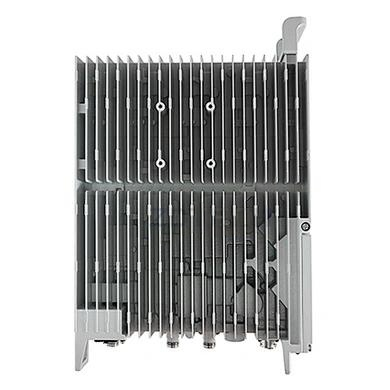
Deployed in challenging outdoor environments, this radio unit is built to withstand extreme conditions. Its operating temperature ranges from –40°C to +55°C without solar radiation and –40°C to +50°C with solar radiation, making it suitable for harsh climates from arctic cold to desert heat. The unit maintains functionality within a relative humidity range of 5% to 100% RH and an absolute humidity of 1 g/m³ to 30 g/m³, ensuring reliable operation in high-moisture areas. Atmospheric pressure tolerance from 70 kPa to 106 kPa allows deployment at various altitudes, while shockproof protection meets NEBS GR63 zone4 requirements for seismic and vibration resistance. With an IP65 ingress protection rating, the radio is completely protected against dust and low-pressure water jets, ideal for outdoor pole or tower mounting.
nn
Detailed Technical Specifications
n
The following table summarizes the complete set of advanced radio specifications, covering electrical, environmental, and mechanical parameters for easy reference.
nn
| Parameter Category | Parameter | Value |
|---|---|---|
| Electrical Data | Uplink Frequency (B1/N1) | 1920-1980 MHz |
| Downlink Frequency (B1/N1) | 2110-2170 MHz | |
| Instantaneous Bandwidth (Uplink) | 60 MHz | |
| Instantaneous Bandwidth (Downlink) | 60 MHz | |
| Operation Bandwidth (Uplink) | 40 MHz | |
| Operation Bandwidth (Downlink) | 40 MHz | |
| Mode | LTE & NR | |
| RF Output Power | 4x40W | |
| Power Supply | -48V DC (-36V~-57V) | |
| O-RAN Split Option | 7-2x | |
| Fronthaul | Quantity of SFP Ports | 2 |
| Data Rate (Front Haul) | Max. 10.137 Gbps | |
| Environmental Data | Operating Temperature (without solar radiation) | –40°C to +55°C |
| Operating Temperature (with solar radiation) | –40°C to +50°C | |
| Relative Humidity | 5% RH to 100% RH | |
| Absolute Humidity | 1 g/m³ to 30 g/m³ | |
| Atmospheric Pressure | 70 kPa to 106 kPa | |
| Shockproof Protection | NEBS GR63 zone4 | |
| Ingress Protection (IP) Rating | IP65 | |
| Mechanical Data | Size | 400x330x100 (mm) |
| Volume | 13.2 L | |
| Weight | 15 kg | |
| RF Connectors | 4x 4.3-10 Female |
nn
Conclusion: Harnessing Advanced Radio Specifications for Future Networks
n
This O-RAN radio unit exemplifies the convergence of high-performance radio engineering with robust environmental design. Its advanced radio specifications, including dual-band LTE/NR support, substantial power output, and high-speed fronthaul capability, make it a critical component for building scalable and future-proof mobile networks. The comprehensive specifications detailed above underscore its ability to deliver consistent performance under extreme conditions while adhering to international standards. For network operators aiming to enhance their infrastructure with reliable and efficient radio equipment, this unit offers a compelling blend of innovation and practicality, ensuring readiness for the evolving demands of 5G and beyond.