Revolutionizing RF Testing: The Power of Integrating a DDS Signal Generator with a Power Amplifier
nn
In today’s rapidly evolving technological landscape, the demand for precise, reliable, and powerful RF testing equipment is at an all-time high. As communication systems grow more complex, from 5G networks to IoT devices, engineers and technicians require tools that can deliver both flexibility and raw performance. This is where the integration of a DDS signal generator with a power amplifier becomes a game-changer. By combining the fine frequency resolution of Direct Digital Synthesis (DDS) with the high output power of a dedicated amplifier, these modules eliminate the need for separate, bulky instruments, streamlining the testing process.
nn
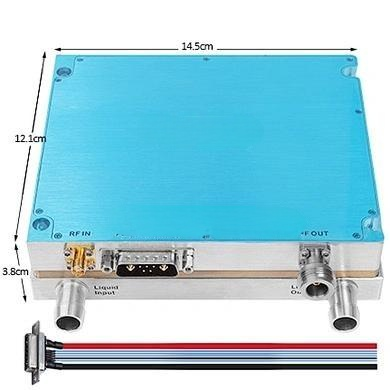
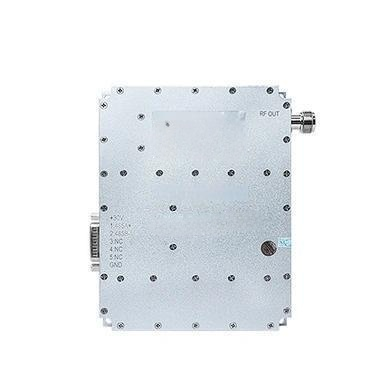
MOPTECH is excited to announce the launch of a new 50W power amplifier module specifically designed to meet these stringent demands. This innovative product merges a DDS signal generator with a robust power amplifier into a single, efficient unit. It is engineered to provide a powerful, clean, and adjustable RF output across a wide array of frequency bands, making it an ideal solution for EMC testing, component characterization, and wireless communication system validation. The module simplifies complex setups, reduces signal path losses, and ensures that your testing environment is both compact and highly capable.
nn
Key Technical Specifications of the DDS Signal Generator with Power Amplifier
nn
To fully appreciate the capabilities of this integrated module, it is essential to examine its core specifications. The device is designed to operate across multiple critical frequency bands, offering substantial output power with high efficiency and excellent signal purity.
nn
Frequency Ranges and Power Output
nn
The module supports a diverse set of working frequencies, covering everything from VHF/UHF to microwave S-band and C-band applications. This broad coverage ensures compatibility with a wide range of standards and protocols.
nn
| Parameter | Value | Remark |
|---|---|---|
| Working Frequency | 20-100 / 120-200 / 200-300 / 300-400 / 400-470 / 851-894 / 925-960 / 1570-1620 / 1805-1880 / 2110-2170 / 2400-2483 / 5200-5850 MHz | Multiple selectable bands |
| RF Output Power | 50W (CW) | Maximum rated power |
| Adjustable Output Power | 10W ~ 50W | Software controlled via ALC |
| Operating Voltage | 28V DC (24-36V range) | Flexible power supply |
| Conversion Efficiency | ≥42% @ 50W | High efficiency design |
nn
Signal Purity and Linearity
nn
Maintaining signal integrity is critical for accurate measurements. The DDS signal generator with power amplifier boasts impressive linearity and low spurious emissions, ensuring that the output signal is a faithful representation of the intended waveform.
nn
| Parameter | Value | Condition |
|---|---|---|
| ALC Power Adjustment Range | ≥20 dB | Precise power level control |
| Gain | 46 ± 1.0 dB | Small signal gain |
| In-band Fluctuation | ≤ 2.5 dB | Over operating band |
| Spurious Emissions (In-band) | ≤ -15 dBm / 1 MHz | Measured at maximum output power with CW signal |
| Spurious Emissions (Out-of-band 9KHz-1GHz) | No higher than normal noise floor | Clean spectral output |
| Spurious Emissions (Out-of-band 1G-12.75GHz) | No higher than normal noise floor | Clean spectral output |
| Maximum Allowable Input Power | ≥ +10 dBm | Lasts 1 min without damage |
nn
Impedance Matching and Environmental Stability
nn
Reliable performance is dependent on good impedance matching and stable operation across temperature variations. The module is designed to withstand harsh conditions while maintaining its output characteristics.
nn
| Parameter | Value | Condition |
|---|---|---|
| Input VSWR | ≤ 1.35 | Standard network output -10dBm at +28V |
| Output VSWR | ≤ 1.35 | Power On, Dual Directional Coupler Test |
| Working Environment Temperature | -10°C to +65°C | Low temperature start-up, monitoring functional |
| Gain Stability | ± 1.5 dB | @ -40°C to +65°C |
| Power Stability | ± 1 dB | @ -40°C to +65°C |
| Power Requirements | ≥ 4.1A @ +28Vdc | CW output 50W |
nn
Physical and Interface Specifications
nn
This DDS signal generator with power amplifier is designed for practical integration into larger systems. Its compact form factor and comprehensive interface options make it easy to install and control.
nn
| Feature | Specification |
|---|---|
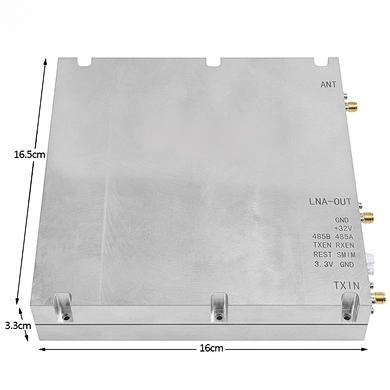
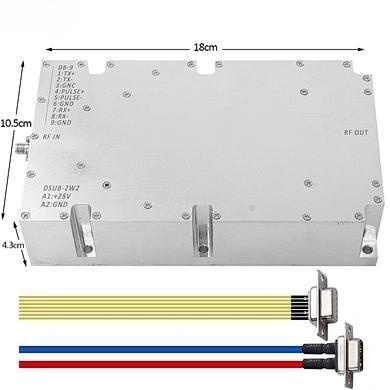
| Physical Dimensions (700M-6G) | 155 x 125 x 26 mm |
| Physical Dimensions (20M-500M) | 155 x 125 x 35 mm |
| Weight | As per model |
| Power Supply Interface / Communication | RS485 7W2 Male (Pin 1: 485A; Pin 2: 485B) |
| RF Output Connector | N-Female |
| LED Indicators | POWER (Green), RUN (Green), ALARM (Red) |
| Installation | Fixed on a radiator / heat sink |
nn
Comprehensive Monitoring and Control Features
nn
The integrated intelligence of the module allows for sophisticated monitoring and protection, making this DDS signal generator with power amplifier a smart component in any test setup. All parameters are accessible and controllable via the RS485 serial interface.
nn
Amplifier Setting Parameters
nn
Users have granular control over the amplifier’s operational state and protection thresholds, ensuring safe and flexible operation.
nn
| Function | Description |
|---|---|
| Amplifier Switch | Turn the amplifier on or off remotely. |
| Alarm Switch | Enable or disable the alarm function. |
| Downlink Power Control | Set maximum output power (range ≥20dB) and select high, medium, or low power level. |
| Amplifier Over Temperature Alarm | Set the shutdown threshold. Power amplifier automatically shuts down at >85°C and restores at 65°C. |
| Amplifier Overpower Alarm | Triggers when actual power is 2dB higher than the ALC start control threshold. |
| Power Amplifier Standing Wave Alarm | Automatically turns off the power amplifier when the VSWR detection is greater than 4. |
| Amplifier Overcurrent Alarm | Automatically turns off the power amplifier when the current exceeds 12A. |
| Amplifier Under-power Alarm | Displays an alarm when the detection power is less than 33dBm. |
| Amplifier Overvoltage Alarm | Automatically shuts down the power amplifier when the voltage exceeds 32V. |
| Amplifier Undervoltage Alarm | Triggers based on the amplifier voltage being below a set threshold. |
nn
Amplifier Query Parameters
nn
Real-time status information is available for remote diagnostics and monitoring.
nn
| Function | Description |
|---|---|
| Amplifier Switch Status | Queries the on/off state of the power amplifier. |
| Downstream Output Power Level | Detects output power value (Range: Pomax+2 to Pomax-20). Accuracy: Pout ±1dB. |
| Downward Standing Wave Ratio | Queries the VSWR. Normal is 1.2; mismatch is 4.0. |
| Temperature Query | Detects internal module temperature (Range: -40°C to +100°C). Error: ±3°C. |
| ALC Value Query | Displays the actual set ALC value. |
| Voltage Detection | Measures the module’s operating voltage. |
| Current Detection | Measures the module’s operating current. |
nn
Conclusion: The Future of Integrated RF Testing
nn
In conclusion, the introduction of MOPTECH’s 50W integrated power amplifier represents a significant leap forward for RF testing and measurement. By combining the precision of a DDS signal generator with the raw power of a high-performance amplifier, this module addresses the core challenges of modern system validation—space, complexity, and reliability. Whether you are working on cellular infrastructure, satellite communications, or military radar systems, having a single, software-configurable device that offers wideband coverage, high output power, and advanced protection features is invaluable.
nn
The detailed specifications, from its exceptional conversion efficiency to its comprehensive monitoring functions, demonstrate that this is more than just a simple component; it is a complete, smart subsystem. The ability to set power levels, receive alarms for temperature or standing wave issues, and query operational parameters through a simple RS485 interface brings a new level of control to the test bench. Ultimately, this DDS signal generator with power amplifier module is poised to become an essential tool, simplifying complex testing scenarios and driving forward the development of next-generation wireless technologies.