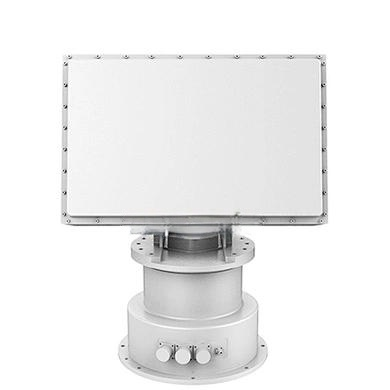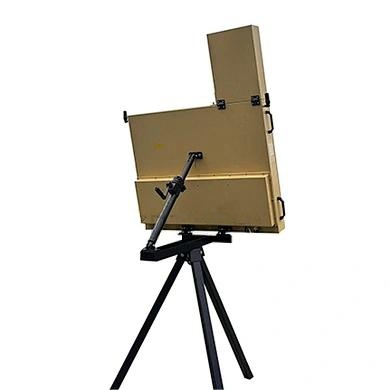
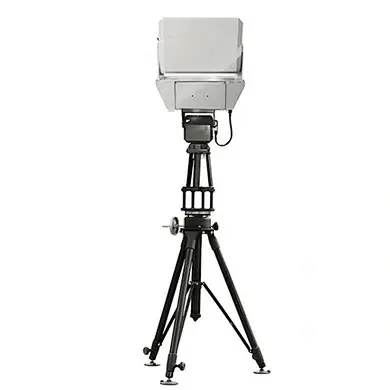
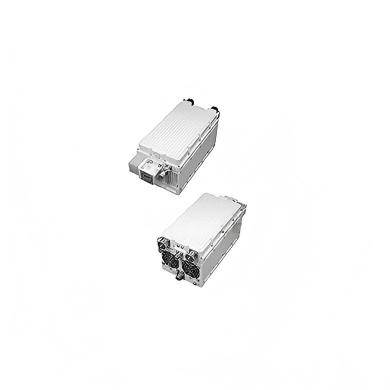
Advanced Ku-Band Phased Array Antenna for High-Performance Radar Systems
nn
This Ku-band phased array antenna is engineered to operate within the 15–17 GHz frequency range, supporting single-beam, time-division duplex transmission and reception in pulse mode. It boasts a maximum duty cycle of 25% and a pulse width of 50 μs, making it exceptionally suited for demanding radar applications. This advanced Ku antenna is a state-of-the-art array antenna designed for modern radar systems, offering unmatched precision and reliability.
nn
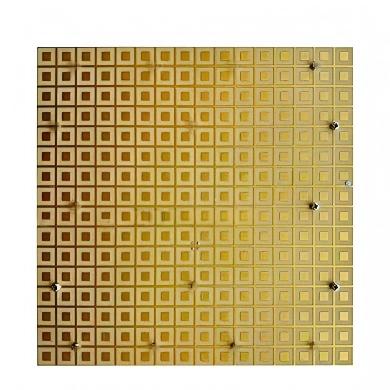
The antenna employs a pioneering surface-mount architecture with vertical polarization, integrating 256 tightly arranged radiating elements in a 16×16 orientation and pitch configuration. All this is packed within a remarkably compact 10 mm × 10 mm form factor, demonstrating a high level of miniaturization. Each channel within the array features independently programmable phase shift and attenuation, facilitating flexible beamforming capabilities and single-channel on/off control. This granular control ensures precise beam steering and pattern shaping.
nn
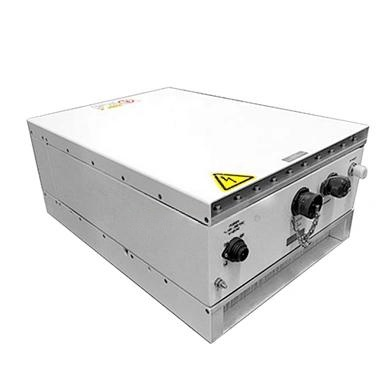
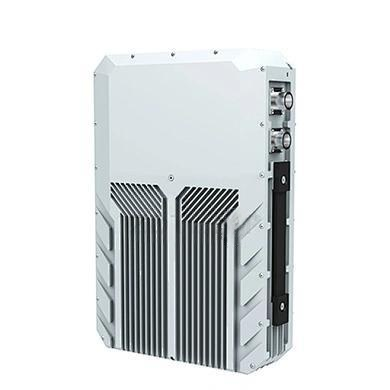
Safety and robustness are key attributes, with built-in overvoltage, overcurrent, and timing disorder protection. These features ensure fail-safe operation even in the event of abnormal control sequences, making this Ku antenna a reliable choice for critical radar missions. Equipped with intelligent beam control and telemetry, the antenna provides real-time feedback on the operating temperature of the T/R components. It also supports a low-power standby mode, which keeps the RF control chip powered while disabling the RF signal path, thereby conserving energy when the system is idle.
nn
Versatile Beam Steering and Wide Coverage with the Ku Antenna
nn
The beam scanning coverage of this Ku antenna reaches ±45° in both azimuth and elevation, delivering consistent radiation pattern performance across wide angles. At broadside, the typical beamwidth is 5.91°±0.6° for transmission and 7.2°±0.8° for reception, with pointing accuracy better than 0.2°. Such precision ensures that radar systems maintain lock on targets with minimal deviation.
nn
Designed for high-performance satellite communication and radar applications, the subarray delivers impressive figures of merit. It achieves an EIRP of ≥77 dBm (15.5–16.5 GHz) and ≥74 dBm (full band), combined with a G/T of ≥–1.5 dB/K and ≥–4.5 dB/K over the respective ranges. Sidelobe suppression is greater than 27.5 dB, and the axial ratio is ≤3.5 dB at ±45° scan. These specifications ensure clean beam patterns and effective signal-to-noise performance, even in challenging environments.
nn
Key Technical Specifications of the Ku Antenna Subarray
nn
| Parameter | Specification |
|---|---|
| Frequency Range | 15 GHz – 17 GHz |
| Subarray Count (Orientation x Pitch) | 16 x 16 (256 elements) |
| Polarization Method | Vertical Polarization (Design Guarantee) |
| Subarray Type | Surface Mount Antenna |
| Cell Spacing | 10 mm x 10 mm |
| Scanning Scope (Aspect) | -45° to +45° |
| Scanning Scope (Head-up) | -45° to +45° (Design Guarantee) |
| EIRP (15.5 – 16.5 GHz) | ≥ 77 dBm (Normal) |
| EIRP (15 – 17 GHz) | ≥ 74 dBm (Normal) |
| G/T (15.5 – 16.5 GHz) | ≥ -1.5 dB/K (Normal) |
| G/T (15 – 17 GHz) | ≥ -4.5 dB/K (Normal) |
| Antenna Gain | ≥ 27.5 dB (Normal, Design Guarantee) |
| Scan Beam Gain Reduction | ≤ 3.5 dB @ ±45° @ 16 GHz |
| Beam Width (Emission @ 16 GHz) | 5.91° ± 0.6° (Normal) |
| Beam Width (Receiving @ 16 GHz) | 7.2° ± 0.8° (Normal) |
| Beam Saltus | ≤ 0.2° (Normal) |
| Channel Output Power | ≥ 27 dBm (Design Guarantee) |
| Power Consumption | ≤ 55W |
nn
Integration and Environmental Resilience of the Ku Antenna
nn
With its high integration density, lightweight surface-mount packaging, and comprehensive environmental protection features, this subarray provides a scalable, high-reliability building block for radar antenna systems. The compact design reduces overall system weight and footprint, making it easier to integrate into existing platforms. The telemetry and self-protection mechanisms ensure long operational life, even under thermal or electrical stress.
nn
In conclusion, this Ku antenna represents a significant leap forward in phased array technology for radar systems. Its combination of wide bandwidth, precise beam steering, and robust protection features makes it an ideal choice for defense, aerospace, and telecommunications applications. Whether used in ground-based or airborne radar systems, this Ku antenna delivers the performance, reliability, and scalability that modern missions demand.