
Unmatched Performance: Exploring the RF Technical Parameters
nnIn the world of telecommunications and signal amplification, precision and reliability are non-negotiable. Whether you are deploying a system for 5G networks, wireless infrastructure, or specialized communication links, the performance of your RF amplifier hinges on its technical specifications. Understanding these RF technical parameters is crucial for engineers and system integrators who demand efficiency, low distortion, and consistent output. This article dives deep into the core metrics that define a high-performance amplifier, ensuring your network operates at its peak potential.nn
Frequency Range and Power Output
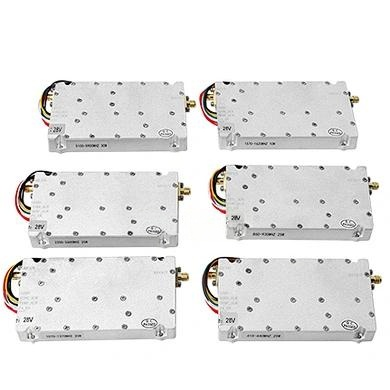
nnThe foundation of any RF amplifier is its operating bandwidth and signal strength. The amplifier is engineered to cover the 2300-2600MHz frequency band, which is critical for modern wireless standards. With a saturated power output of 40±1dBm, this device delivers robust signal amplification while maintaining strict gain control. The gain specification is equally precise at 40±1dBm, ensuring that the input signal is boosted without introducing excessive variation. This level of consistency is vital for applications where signal integrity is paramount, such as in distributed antenna systems (DAS) or small cell backhaul.nn
Linearity and Signal Integrity
nnIn-band flatness is a key indicator of an amplifier’s ability to handle complex modulation schemes. With a flatness of only 2dB across the entire operating band, this amplifier minimizes distortion and preserves the shape of the modulated signal. This is essential for high-order QAM (Quadrature Amplitude Modulation) signals used in 4G and 5G networks, where even minor deviations can lead to data errors. The input and output VSWR (Voltage Standing Wave Ratio) is ≤1.5, which demonstrates excellent impedance matching. A low VSWR reduces reflected power, protects the amplifier from damage, and maximizes the transfer of energy from the source to the load.nn
Spurious Emissions and Power Management
nnTo ensure compliance with regulatory standards and avoid interference with adjacent channels, the amplifier features stringent out-of-band spur suppression. The spurious emissions are kept remarkably low: for frequencies between 9kHz and 1GHz, the output is ≤-36dBm/30kHz, and for the range of 1GHz to 12.75GHz, it is ≤-30dBm/30kHz. This aggressive filtering guarantees that the amplifier does not radiate unwanted energy into other bands. Additionally, the maximum lossless input is +10dBm, meaning the amplifier can accept strong input signals without entering compression or distortion. This dynamic range is crucial for handling real-world signal variations.nn
Key RF Technical Parameters at a Glance
nnTo assist with system design and integration, all critical specifications are organized in the table below. This structured format allows for quick reference and ensures no detail is overlooked.nn
| Parameter | Technical Specification |
|---|---|
| Working Frequency | 2300-2600MHz |
| Saturated Power Output | 40±1dBm |
| Gain | 40±1dBm |
| In-Band Flatness | 2dB |
| Working Current | ≤1.5A |
| Input and Output VSWR | ≤1.5 |
| Out-of-Band Spurs (9kHz~1GHz) | ≤-36dBm/30kHz |
| Out-of-Band Spurs (1GHz~12.75GHz) | ≤-30dBm/30kHz |
| Maximum Lossless Input | +10dBm |
| Operating Voltage | DC +28V |
| Power Supply Interface | Feed-through Capacitor |
| RF Port | SMA-KFD |
| Monitoring Interface | Feed-through Capacitor |
| Amplifier Size | 1195016mm |
| Operating Temperature | -10~+55℃ |
| Relative Humidity | 5%~95%, No Condensation |
| Storage Temperature | -25~+65℃ |
nn
Power, Interface, and Environmental Durability
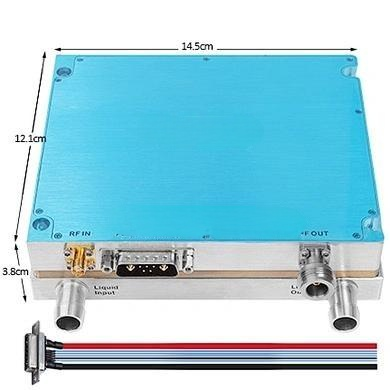
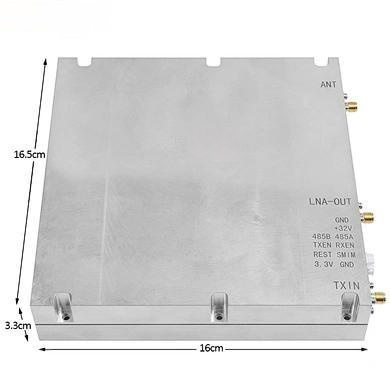
nnThe amplifier operates on a DC voltage of +28V, with a working current limited to ≤1.5A, making it energy-efficient for continuous operation. The power supply and monitoring interfaces both utilize feed-through capacitors, which provide effective filtering and decoupling to prevent noise from entering the amplification chain. The RF port is a standard SMA-KFD connector, ensuring compatibility with common coaxial cables and test equipment. Physically, the amplifier is compact at just 1195016mm, allowing for easy integration into crowded enclosures or remote radio units.nn
Environmental Resilience
nnReliability in the field depends on the amplifier’s ability to withstand harsh conditions. The operating temperature range spans from -10°C to +55°C, while the storage temperature extends from -25°C to +65°C, accommodating both indoor and outdoor deployments. The device can operate in relative humidity levels from 5% to 95% without condensation, confirming its suitability for diverse climates, from arid environments to humid coastal regions. This robust environmental performance ensures that the amplifier maintains its stringent RF technical parameters over its operational lifespan.nn
Conclusion: The Importance of Understanding RF Technical Parameters
nnSelecting the right RF amplifier requires a deep understanding of its technical specifications. From frequency coverage and output power to spurious suppression and environmental tolerance, each parameter plays a vital role in system performance. The data presented here highlights that this amplifier delivers a balanced combination of high gain, linearity, and ruggedness. By carefully evaluating these RF technical parameters, engineers can confidently design networks that achieve maximum throughput, minimal interference, and long-term reliability. Whether upgrading existing infrastructure or building new systems, this amplifier stands as a robust foundation for any demanding RF application.