Revolutionizing Satellite Uplinks: The Power of High-Frequency RF Signal Conversion
nnIn the complex world of modern communications, the ability to flawlessly move data across the electromagnetic spectrum is paramount. At the heart of this capability lies specialized high-frequency RF signal conversion equipment. These sophisticated devices are the unsung heroes of critical infrastructure, enabling everything from secure military communications to global satellite television. Their primary mission is to take an input signal and transform its frequency, power, or modulation type—a process essential for bridging the gap between baseband processing and the airwaves.nnThe applications are vast. In high-frequency RF signal conversion equipment, we see the linchpin for radar systems that detect aircraft, satellite terminals that connect remote outposts, and electronic warfare suites that protect naval vessels. The core technology relies on mixing, amplification, and filtering to translate signals into the desired target band while meticulously preserving signal integrity. These converters are categorized by function—upconverters and downconverters—and by technique, including analog, digital, and hybrid methods. Power levels also define them, ranging from delicate small-signal units to formidable high-power amplifiers.nn
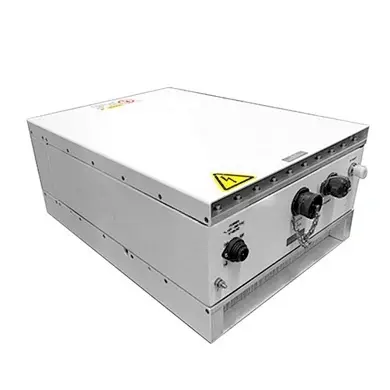
High Power 400W X-Band GaN Satellite Communication Upconverter
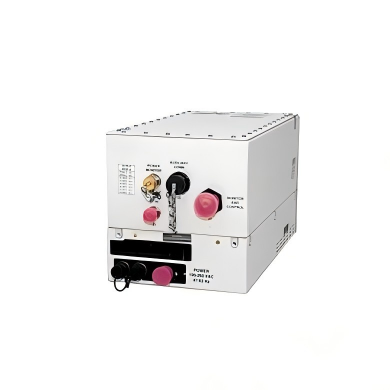
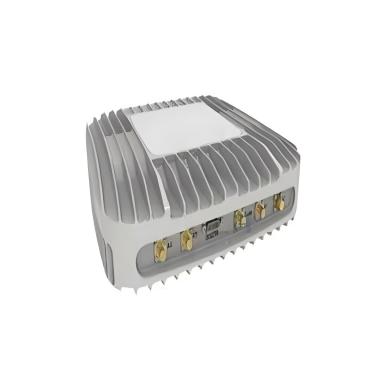
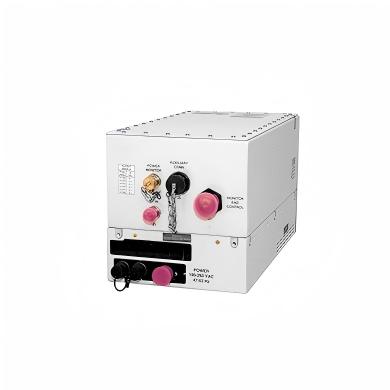
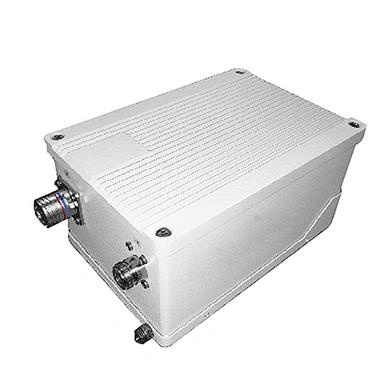
nnA prime example of cutting-edge high-frequency RF signal conversion equipment is the 400W X-Band GaN Satellite Communication Upconverter. This unit is engineered for the demanding world of satellite uplinks, where reliability and power are non-negotiable. Its core function is to take a stable intermediate frequency (IF) signal from a ground station, typically in the 950-1450 MHz range, and upconvert it to a high-power X-band signal (7.9-8.4 GHz). This amplified signal is then directed toward a satellite antenna to complete a data, voice, or video upload.nnThis converter leverages advanced Gallium Nitride (GaN) semiconductor technology. GaN offers superior efficiency and power density compared to traditional silicon or GaAs counterparts, allowing the unit to deliver a saturated power of 400W in a relatively compact form factor. The device integrates up-conversion, high-power amplification, and signal conditioning into a single, ruggedized package. Designed for the harshest environments, it operates reliably from -40°C to +60°C, making it suitable for remote desert outposts or arctic monitoring stations. Its intelligent monitoring capabilities, including remote control via Ethernet or RS-232 with optional SNMP support, ensure that the equipment is always performing at its peak.nn
Technical Specifications and Performance Metrics
nnThe following table details the critical parameters that define the performance and capability of this high-power upconverter.nn
| Parameter | Value / Condition |
|---|---|
| RF Output Frequency | 7.9 – 8.4 GHz |
| Input Level, No Damage | +10 dBm max |
| IF/REF Input Impedance | 50 ohms |
| IF Input Frequency | 950 – 1450 MHz (other options available) |
| LO Reference Frequency | External 10 MHz |
| LO Reference Level | 0 dBm ± 5 dB |
| Saturated Power (PSAT) | 56 dBm (400W) |
| Maximum CW Power (PMAX) | 54.8 dBm (300W) |
| Linear Power (PLIN, min) | 53 dBm (200W) |
| Spectral Regrowth @ PLIN (QPSK, OQPSK @ 1SR offset) | -30 dBc max |
| Intermodulation Products @ PLIN (sum of 2 equal carriers) | -25 dBc max |
| AM to PM Conversion @ PLIN | 2.0°/dB max |
| Small Signal Gain | 70 dB ± 5 dB (typical) |
| Gain Variation (over 40 MHz) | 1.0 dB p-p max |
| Gain Variation (over full band) | 3.0 dB p-p max |
| Gain Stability (over 24 hours) | 0.5 dB p-p max |
| Gain Variation over Temperature | 4.0 dB p-p max |
| Noise Power (Transmit Band) | -75 dBW / 4 kHz |
| Noise Power (Receive Band) | -80 dBW / 4 kHz |
| Sum of All Spurious | -30 dBc |
| Single Sideband Sum | -36 dBc |
| Harmonics | -60 dBc |
| Output Spurious @ PLIN (Excludes 1 MHz Band) | -60 dBc |
| Phase Noise (max) | 100 Hz: -63 dBc/Hz 1 kHz: -73 dBc/Hz 10 kHz: -83 dBc/Hz 100 kHz: -93 dBc/Hz 1 MHz: -103 dBc/Hz |
| Reference Phase Noise (max) | 10 Hz: -125 dBc/Hz 100 Hz: -155 dBc/Hz 1 kHz: -165 dBc/Hz |
| Transmit Phase Linearity (up to PLIN) | over any 2 MHz: ±0.2 radian over any 36 MHz: ±0.4 radian over any 72 MHz: ±0.5 radian over any 90 MHz: ±0.6 radian over any 120 MHz: ±0.7 radian |
| Input VSWR | 1.5:1 |
| Output VSWR | 1.3:1 |
| Prime Power (at PLIN) | 875 W (90-264 VAC) |
| Operating Temperature Range | -40° to +60°C |
| Non-Operating Temperature Range | -50° to +70°C |
| Altitude (max) | 12,000 ft. MSL |
| Humidity | 100% condensing |
| Shock/Vibration | Normal transportation |
| M&C Interface | Ethernet / RS-232 / RS-485 (Optional SNMP) |
| Weight | 26.3 kg |
| Dimensions | 20.3 cm x 36.6 cm x 48.3 cm |
nn
The Indispensable Role of High-Frequency RF Signal Conversion Equipment
nnIn conclusion, the evolution and performance of high-frequency RF signal conversion equipment like the 400W X-Band GaN upconverter are foundational to the reliability of modern communications. The ability to efficiently convert and amplify signals with such precision, while withstanding extreme environmental conditions, ensures that critical data links remain open. For defense contractors, government agencies, and commercial satellite operators, investing in this class of technology is not just about power; it is about ensuring the integrity, stability, and security of the entire communication chain. As satellite networks expand and demand for higher throughput grows, these advanced RF solutions will remain the vital link between the ground and the sky.