Unlocking Precision in RF Testing: The 6-8GHz C-Band Signal Generator
nnIn the demanding world of radio frequency engineering, the accuracy and stability of your test equipment dictate the success of your measurements. At the heart of this domain lies the radio frequency signal generator, a fundamental tool for simulating conditions, calibrating receivers, and pushing the boundaries of communication systems. Our 6-8GHz C-band signal generator is engineered to deliver exceptional performance, ensuring that every signal you generate mirrors the real-world conditions essential for rigorous testing. This device operates seamlessly in the C-band spectrum from 6000 to 8000 MHz, providing stable outputs with ASK and BPSK modulation. Whether you are developing next-generation radar systems or debugging sensitive communication hardware, this signal generator offers the precision and durability required for critical tasks.nn
What is a Signal Generator in Modern RF Work?
nnA signal generator, fundamentally, is a device that produces electrical signals with controlled characteristics like frequency, amplitude, and modulation. For RF engineers, it acts as a synthetic source of signals that can emulate real-world transmissions, enabling comprehensive testing of components such as amplifiers, filters, and antennas. Unlike basic oscillators, advanced signal generators incorporate modulation capabilities—like ASK and BPSK—that mimic digital communication protocols. This allows engineers to verify system performance under dynamic conditions, ensuring reliable operation in field deployments. The 6-8GHz C-band signal generator elevates this concept by combining high output power with precise control, making it an indispensable asset for laboratory and production environments alike.nn
Core Specifications and Performance Metrics
nnTo fully appreciate the capabilities of this device, it is crucial to examine the technical parameters that define its operation. The table below consolidates all key specifications, highlighting the rigorous engineering behind its design. All data points are verified under standard test conditions, ensuring reliable, repeatable output for consistent results.nn
| Parameter | Specification / Value |
|---|---|
| Working Frequency | 6000 – 8000 MHz |
| Modulation System | ASK, BPSK |
| Output Power | ≥ +15 dBm (at 25℃ Test) |
| Function | RS422 serial communication with current detection and open circuit protection |
| Power Supply | DC +40V |
| Interface Configuration | 1 RF interface (internal DC isolation), 2 power and control interfaces |
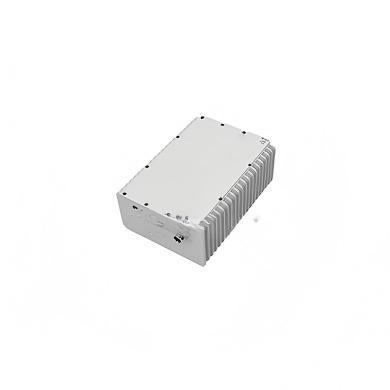
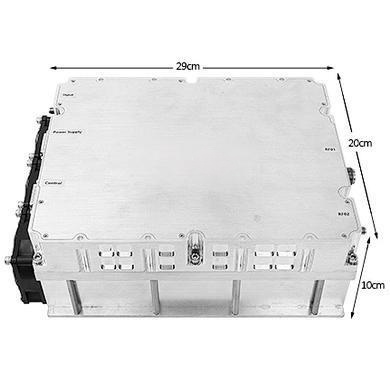
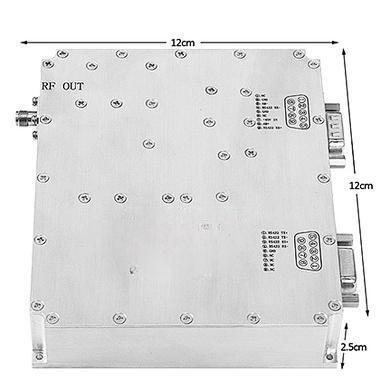
| Dimensions | 120 mm × 100 mm × 25 mm |
| Surface Requirements (Bottom) | Roughness < 3.2 μm; mounting surface flatness < 0.15 mm |
| Labeling Method | Laser Inscription |
| Storage Temperature | -20℃ to +60℃ |
| Operating Temperature | Low: -10℃ ±2℃ ; High: +50℃ ±2℃ |
| Packaging | Anti-vibration box; movable parts fixed before packaging |
| Transport Conditions | Road/rail; temperature -20℃ to +60℃; relative humidity ≤90% |
| Storage Conditions (Packed) | Indoor; temperature -20℃ to +60℃; relative humidity ≤80%; no corrosive/flammable/explosive substances |
nn
Design Features for Reliable Operation
nnThis radio frequency signal generator is more than a collection of numbers; it embodies thoughtful engineering for practicality and safety. The RS422 serial communication interface allows for seamless integration into automated test systems, while the built-in current detection and open circuit protection safeguard both the device and the equipment under test. The compact form factor—just 120×100×25 mm—enables easy installation into rack-mount setups or portable test kits. Despite its small size, the bottom heat dissipation surface is machined to exacting standards (roughness under 3.2 μm and flatness under 0.15 mm), ensuring efficient thermal management even during extended operation. This thermal design is critical for maintaining output stability across the full operating temperature range of -10℃ to +50℃.nn
Robust Environmental Adaptation
nnReliability in the field often hinges on how well equipment handles environmental extremes. The generator’s storage temperature range spans -20℃ to +60℃, with packaging and transport protocols designed to withstand humidity levels up to 90%. The product must be fixed in an anti-vibration box before shipping, and storage conditions require relative humidity below 80% in a non-corrosive atmosphere. This attention to environmental resilience means that whether your lab is in a controlled cleanroom or a rugged field station, the radio frequency signal generator will deliver consistent results without failure.nn
Conclusion: Elevate Your RF Testing with Precision
nnThe 6-8GHz C-band signal generator represents a powerful combination of high-fidelity output, robust construction, and intelligent safety features. As a sophisticated radio frequency signal generator, it excels in applications ranging from communication equipment testing and radar system debugging to advanced scientific research. Its stable performance in ASK and BPSK modulation, coupled with reliable output power ≥15 dBm, ensures that your measurements are accurate and repeatable. By integrating features like RS422 communication and comprehensive protection mechanisms, this generator not only simplifies complex test setups but also protects your valuable investments. For engineers who demand precision without compromise, this signal generator is the definitive tool to navigate the challenges of modern RF engineering.