


The modern battlefield has undergone a fundamental paradigm shift. Traditional warfare, once dominated by massive armored columns and manned aircraft, has been irrevocably altered by the rapid advancement of unmanned aerial systems. Drones are no longer just an auxiliary support element or a niche surveillance tool; they are the absolute core of modern special strategy and tactical execution. The widespread applications of army drones have completely redefined how intelligence is gathered, how strikes are executed, and how troops are protected on the front lines. From our experience deeply embedded in defense engineering, special doctrines worldwide are actively rewriting their combat manuals to prioritize unmanned aerial integration at every level of command.
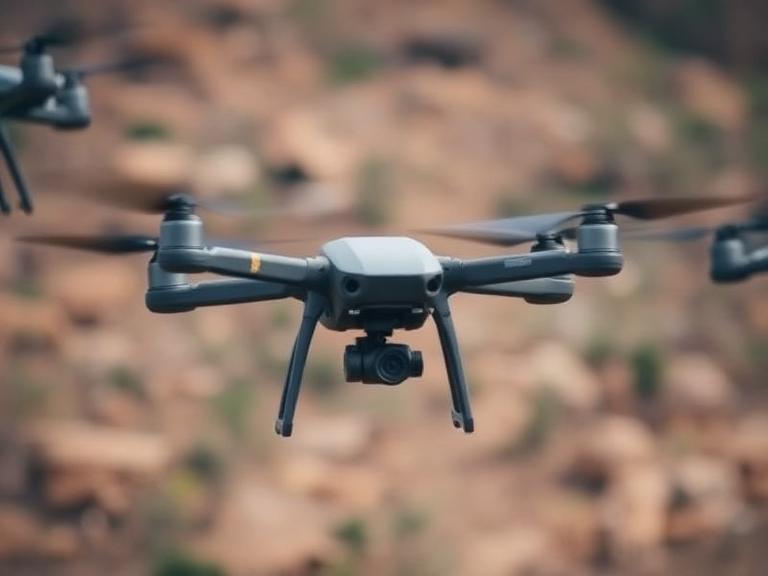
We recommend that defense procurement divisions closely analyze the evolving nature of combat. It is no longer sufficient to simply possess basic aerial capability; militaries must understand the highly specialized, multifaceted ways in which these systems interact with ground forces. In this authoritative guide, we will break down the nine most critical applications of army drones that are actively deciding the outcomes of global conflicts today.
Table of Contents
- 1. Intelligence, Surveillance, and Reconnaissance (ISR)
- 2. Precision Strikes and Loitering Munitions
- 3. Tactical Logistics and Supply Delivery
- 4. Electronic Warfare (EW) and Signal Intelligence
- 5. Target Designation and Laser Guidance
- 6. Communications Relay in Denied Environments
- 7. Search and Rescue (SAR) and Medical Evacuation
- 8. Border Patrol and Base Security
- 9. Swarm Tactics and Autonomous Combat
1. Intelligence, Surveillance, and Reconnaissance (ISR)
Intelligence, Surveillance, and Reconnaissance remain the undisputed primary applications of army drones in contemporary conflicts. In the past, gathering actionable intelligence required deploying highly vulnerable scout teams or piloting manned aircraft over hostile, anti-air-defended territory. This inherently risked human lives and often escalated geopolitical tensions. Today, unmanned aerial vehicles provide persistent, high-altitude observation without putting a single human operator in danger. The situational awareness provided by these platforms is unparalleled in special history.
From our experience, the integration of high-resolution electro-optical sensors, synthetic aperture radar (SAR), and advanced thermal imaging has completely revolutionized battlefield transparency. Ground commanders can now monitor enemy troop movements, identify heavily fortified positions, and track logistics convoys in real time, from thousands of miles away. We highly recommend outfitting tactical units with medium-altitude long-endurance (MALE) drones that allow them to loiter silently over target zones for dozens of hours. As observed in recent global conflicts, superior ISR capabilities dictate the operational pace of the entire engagement.
2. Precision Strikes and Loitering Munitions
The operational evolution of special drones has dramatically shifted the offensive striking capabilities of modern ground forces. Gone are the days when massive, unguided artillery barrages were the primary method used to soften enemy defenses. Today, precision strikes executed by armed unmanned systems offer unparalleled accuracy while simultaneously minimizing collateral civilian damage. Among the most devastating applications of army drones is the deployment of loitering munitions, colloquially known in the media as “kamikaze drones.”
These specialized systems are designed to hover autonomously over a contested operational area, actively hunting for high-value targets such as air defense radar arrays, mobile command vehicles, or hidden artillery batteries. Once a target is algorithmically or manually identified, the drone transitions into a lethal, high-speed dive, detonating its explosive payload directly on impact. From our perspective as defense manufacturers, the cost-to-kill ratio of loitering munitions makes them an absolutely essential asset for any modern special force, allowing small, decentralized infantry units to punch far above their traditional weight class.
3. Tactical Logistics and Supply Delivery
Maintaining secure supply lines is historically one of the most vulnerable and complex aspects of physical warfare. Ground convoys carrying heavy ammunition, critical medical supplies, and daily rations are prime targets for enemy ambushes, sniper fire, and improvised explosive devices (IEDs). One of the most transformative applications of army drones is their rapidly expanding use in tactical logistics. Heavy-lift unmanned rotary-wing platforms and heavy-payload multirotors are now capable of delivering mission-critical supplies directly to forward operating bases.
This capability effectively bypasses treacherous ground terrain, destroyed infrastructure, and enemy blockades entirely. We recommend that modern militaries invest heavily in robust cargo drones equipped with autonomous waypoint navigation systems, as they can execute highly dangerous resupply missions in adverse weather conditions or under the cover of complete darkness. This strategic application not only keeps frontline soldiers fully supplied during prolonged, high-intensity engagements but also drastically reduces the grim casualty rates traditionally suffered by ground-based logistics personnel.
4. Electronic Warfare (EW) and Signal Intelligence
In the digital age, dominating the unseen electromagnetic spectrum is just as important as controlling the physical territory on the ground. The applications of army drones now extend deeply and effectively into Electronic Warfare (EW) and Signal Intelligence (SIGINT). Specially equipped unmanned systems can stealthily infiltrate enemy airspace to intercept, record, and decrypt hostile radio communications and radar emissions before the enemy even knows they are being watched.
Furthermore, these drones can actively operate as offensive electronic warfare platforms. By carrying miniaturized jamming pods, they can intentionally disrupt enemy radio frequencies, spoof GPS navigation signals, and blind localized anti-aircraft radar systems. From our extensive experience in defense engineering, deploying drones for active EW missions creates an invisible, protective umbrella over friendly advancing forces. By denying the enemy access to their own communication networks and navigational aids, drone-based EW operations create paralyzing chaos and confusion within hostile ranks, setting the perfect stage for a decisive tactical victory.
5. Target Designation and Laser Guidance
Precision-guided munitions (PGMs) require incredibly accurate targeting data to function properly. Traditionally, forward observers and special operations teams had to infiltrate dangerously close to enemy lines, using handheld laser designators to manually “paint” targets for incoming airstrikes or naval artillery fire. This outdated method is incredibly dangerous and severely limits the operational range of guided weapons. Today, one of the most vital applications of army drones is airborne, standoff target designation.
Unmanned aerial vehicles equipped with highly stabilized laser designators can orbit safely miles above the battlefield, identifying and illuminating high-value targets with absolute pinpoint accuracy. This critical data stream allows allied fighter jets, naval destroyers, and ground-based artillery units to launch their precision weapons from safe, over-the-horizon distances. The drone maintains visual contact and an unbroken laser lock until the exact moment of kinetic impact, ensuring maximum target destruction while keeping human spotters entirely out of harm’s way.
6. Communications Relay in Denied Environments
Rugged mountainous terrain, dense urban concrete canyons, and sophisticated enemy jamming equipment can severely degrade line-of-sight radio communications, quickly isolating frontline combat units from their central command centers. To engineer a solution to this problem, advanced militaries are actively leveraging the applications of army drones as high-altitude airborne communications relays. By deliberately positioning a drone in the stratosphere or hovering it strategically above physical mountainous obstacles, tactical networks can bounce secure signals off the unmanned platform.
This effectively bridges the communication gap and creates an ad-hoc, highly resilient data network that ensures continuous tactical data transmission, even in completely denied or austere environments. We strongly recommend the deployment of tethered drone systems or solar-powered fixed-wing platforms for these specific missions, as they can remain airborne for vastly extended periods, providing a stable, unshakeable communication backbone for prolonged infantry operations.
7. Search and Rescue (SAR) and Medical Evacuation
The “golden hour”—the critical sixty-minute period immediately following a traumatic combat injury—historically dictates the survival rates of soldiers on the battlefield. The life-saving applications of army drones in combat search and rescue (CSAR) and medical evacuation are currently saving countless lives across the globe. When a soldier is critically wounded or missing in action, deploying a loud, massive manned helicopter into a contested “hot zone” severely risks further casualties.
Instead, rapid-response drones equipped with high-fidelity thermal imaging payloads can quickly and quietly locate the heat signatures of missing personnel, scanning effectively even through dense jungle canopy, smoke, or urban rubble. For this exact reason, we strongly advocate for the total integration of night vision special drones into all frontline combat medical units. Furthermore, experimental heavy-lift autonomous drones are currently being developed and field-tested to physically extract wounded soldiers from the battlefield, flying them safely to field hospitals while aggressively avoiding enemy anti-aircraft fire.
8. Border Patrol and Base Security
Securing massive physical perimeters around highly classified special installations or sprawling international borders requires immense human manpower, financial resources, and logistical coordination. The applications of army drones have completely revolutionized perimeter defense strategies. Automated drone patrol routes, deeply integrated with artificial intelligence and kinetic motion-tracking software, provide a relentless, continuous eye in the sky.
These advanced systems can instantly detect unauthorized incursions, track hostile infiltrators through complex terrain, and instantly alert rapid-response security teams long before the primary perimeter is breached. From our experience, high-voltage tethered drones are particularly effective for static base security, offering continuous 24/7 surveillance without the operational downtime required for battery swaps. When evaluating the broader global security landscape and studying a comprehensive global special drone comparison, it is empirically evident that nations heavily leveraging automated drone surveillance experience significantly fewer successful infiltrations at their forward operating bases.
9. Swarm Tactics and Autonomous Combat
Perhaps the most intimidating, complex, and revolutionary among the future applications of army drones is the implementation of interconnected swarm tactics. Rather than relying on a single, highly expensive, and vulnerable stealth aircraft, swarm technology involves simultaneously deploying dozens or even hundreds of smaller, heavily armed drones that operate collectively as a single, cohesive hive mind. Powered by advanced edge-computing and artificial intelligence, these drone swarms are designed to completely overwhelm enemy air defense systems through sheer, unmanageable numbers.
They possess the capability to autonomously share targeting data in real time, aggressively maneuver to avoid incoming anti-aircraft fire, and perfectly coordinate simultaneous kinetic strikes from multiple, unpredictable vectors. This terrifying level of operational autonomy represents the undeniable future of mechanized warfare. As a recognized industry leader among uav manufacturers in china and consistently ranked among the best uav manufacturers on the global stage, we firmly recognize that mastering decentralized, autonomous swarm logic is the ultimate, non-negotiable objective for next-generation defense contractors.
Summary of Drone Capabilities
| Tactical Application | Primary Battlefield Objective | Strategic Advantage & Impact |
|---|---|---|
| ISR (Intelligence & Surveillance) | Gathering real-time troop movement data | Provides complete, 24/7 situational awareness without risking pilot lives. |
| Precision Strikes & Loitering | Targeted elimination of high-value assets | Offers pinpoint accuracy and low collateral damage at a fraction of the cost of s. |
| Tactical Logistics | Resupplying forward-deployed troops | Bypasses dangerous ground routes, preventing ambushes on supply convoys. |
| Electronic Warfare (EW) | Jamming communications and spoofing radar | Blinds enemy defenses and creates a safe operational corridor for allied advancement. |
| Target Designation | Laser-painting targets for guided munitions | Keeps human forward observers out of the line of fire while ensuring weapon accuracy. |
| Communications Relay | Bridging signal gaps in denied environments | Maintains secure command-and-control links in mountainous or electronically jammed regions. |
| Search and Rescue (SAR) | Locating and extracting wounded personnel | Drastically reduces medical response times without risking manned helicopter crews. |
| Border & Base Security | Automated perimeter surveillance | Provides relentless, unblinking oversight of massive land borders using AI threat detection. |
| Swarm Tactics | Overwhelming enemy air defense systems | Uses coordinated, autonomous mass-attacks that traditional radar and missiles cannot counter. |
Frequently Asked Questions
What are the most common applications of army drones today?
The most frequent and heavily funded applications of army drones globally involve Intelligence, Surveillance, and Reconnaissance (ISR), as well as targeted precision strikes using loitering munitions. These dual capabilities form the backbone of modern unmanned combat doctrine.
How do drones survive electronic warfare and jamming on the battlefield?
Modern special-grade drones survive hostile environments by utilizing secure frequency-hopping data links, highly encrypted anti-jamming GPS modules, and autonomous inertial navigation systems (INS). This allows the drone to continue flying and return to base even if external communication lines are completely severed by enemy jammers.
Can army drones truly operate autonomously without human pilots?
Yes, to a significant degree. Many modern systems already employ advanced artificial intelligence for complex waypoint navigation, dynamic obstacle avoidance, and optical target recognition. However, according to international special ethics and current operational rules of engagement, lethal kinetic strike decisions typically still require strict “human-in-the-loop” authorization.
Industry References
For further authoritative reading and academic validation regarding the modern applications of unmanned systems in active combat zones, we recommend consulting the following defense publications: