


Procuring a commercial unmanned aerial vehicle (UAV) is no longer a matter of simply buying the largest machine with the most aggressive marketing brochure. In the modern industrial landscape, enterprise drone programs demand rigorous, engineering-driven evaluations of technical specifications that align perfectly with the intended mission profile. Whether you are mapping critical infrastructure, delivering medical supplies to remote outposts, or conducting extensive agricultural surveys, the physics of flight remain brutally immutable.
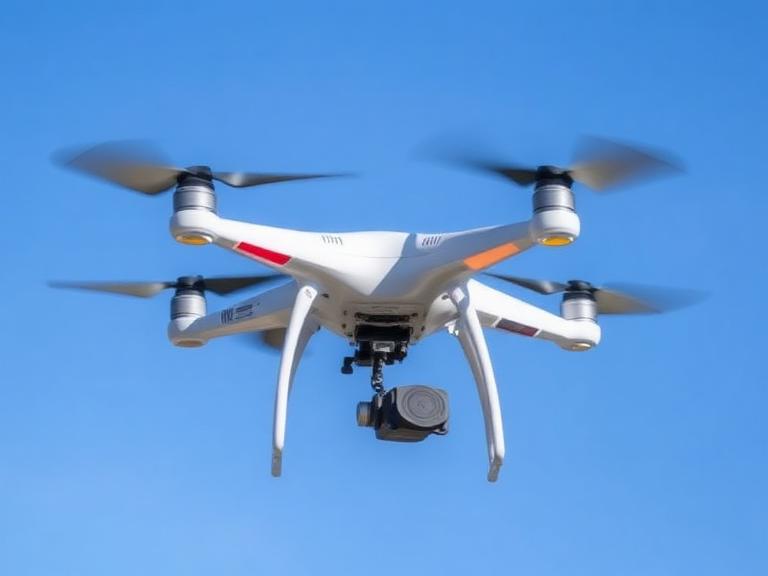
From our experience engineering defense-grade aerial platforms, the entire acquisition process hinges on a delicate, uncompromising balancing act between three primary variables. If you push one parameter to its absolute limit, you inevitably sacrifice the other two. We recommend that every enterprise buyer centers their evaluation strictly around the Key metrics for B2B drone procurement: payload capacity, endurance, and range. Failure to understand how these elements interact leads directly to operational bottlenecks, compromised safety standards, and ultimately, shattered return on investment (ROI).
Table of Contents
- The Immutable Physics of the Triad
- Payload Capacity: The Business End of the Aircraft
- Endurance: Staying Airborne and Productive
- Range: Pushing the Horizons with BVLOS
- Evaluating Airframe Architectures Against Your Metrics
- Expert Recommendations for the Procurement Process
- About ChinaMoneypro UAV
- Summary Table: Airframe Capability Comparison
- Frequently Asked Questions (FAQs)
- Industry References
The Immutable Physics of the Triad
To truly master the Key metrics for B2B drone procurement, one must first respect the Size, Weight, and Power (SWaP) constraints that govern all aerospace engineering. An aircraft generates a finite amount of lift, which translates directly to a finite amount of energy it can carry and a finite amount of weight it can hoist into the sky.
When you add a heavier optical sensor or physical cargo to the aircraft, you immediately reduce its flight time because the propulsion system must work significantly harder to maintain altitude. If you attempt to solve this endurance problem by bolting on larger, heavier batteries, you consume your valuable payload capacity and increase the overall mass, which in turn drastically reduces the aerodynamic efficiency and limits the aircraft’s operational range. This zero-sum game is why we firmly state that there is no single perfect drone on the market; there is only the perfect drone specifically tailored for your precise mission profile.
Payload Capacity: The Business End of the Aircraft
Payload capacity is typically the very first specification procurement officers scrutinize, and rightfully so. The payload is the entire reason the drone is in the air in the first place. However, enterprise buyers frequently misunderstand what payload capacity actually means in a commercial context, confusing Maximum Takeoff Weight (MTOW) with useful payload.
The useful payload is the actual mass available for your mission-specific hardware after accounting for the structural weight of the airframe, the batteries, the avionics, and the propulsion systems. For top-tier surveying companies, the payload might consist of a high-resolution photogrammetry camera paired with a heavy, spinning LiDAR sensor. For these applications, integrating a highly stable fixed wing drone for photogrammetry allows operators to carry sophisticated, heavy surveying payloads while maintaining the aerodynamic lift required to cover thousands of acres.
Conversely, for logistics and middle-mile operations, the payload is literal physical freight. Moving commercial goods requires an entirely different structural architecture. Heavy-lift platforms designed for delivery must balance shifting centers of gravity as packages are dropped, lowered via winch, or picked up in the field. When evaluating cargo drone solutions, we recommend scrutinizing the internal dimensions of the payload bay and the modularity of the mounting rails, rather than just the raw weight limit. A UAV that boasts a ten-kilogram lift capacity is entirely useless if the internal bay cannot accommodate the physical bulk of your standard medical coolers or shipping containers.
Endurance: Staying Airborne and Productive
Endurance represents the maximum total time an aircraft can remain airborne on a single charge or a single tank of fuel. In the commercial and defense sectors, time is money. A drone that requires a battery swap every twenty minutes incurs massive operational downtime, drastically increasing human labor costs and extending project timelines unacceptably.
From our experience in the field, endurance is the most heavily marketed and frequently exaggerated specification in the UAV industry. Manufacturers typically list the endurance of their aircraft under ideal, laboratory-like conditions: hovering at sea level, in perfectly still air, with absolutely zero payload attached. The moment you attach a five-kilogram electro-optical/infrared (EO/IR) gimbal and command the aircraft to fly against twenty-knot headwinds at high altitude, that advertised sixty-minute flight time can easily plummet to thirty minutes.
To combat the limitations of traditional lithium-polymer (LiPo) batteries, the industry is witnessing a massive shift toward advanced propulsion architectures. Gasoline-electric hybrid systems and hydrogen fuel cells are pushing endurance boundaries far beyond what was previously thought possible. For long-haul logistics over difficult, mountainous terrain, deploying a vtol cargo drone equipped with a hybrid power plant allows operators to achieve hours of continuous flight time while retaining the critical agility to land vertically in confined, unprepared spaces. We advise procurement teams to demand endurance charts that display flight times at Maximum Takeoff Weight, rather than relying on unladen, best-case-scenario marketing figures.
Range: Pushing the Horizons with BVLOS
Range is frequently confused with endurance, but they are fundamentally distinct Key metrics for B2B drone procurement. While endurance measures time spent in the air, range measures the maximum horizontal distance the aircraft can safely travel away from its ground control station. Operational range is governed by two primary factors: the aerodynamic cruising speed of the airframe and the robustness of the communication datalink.
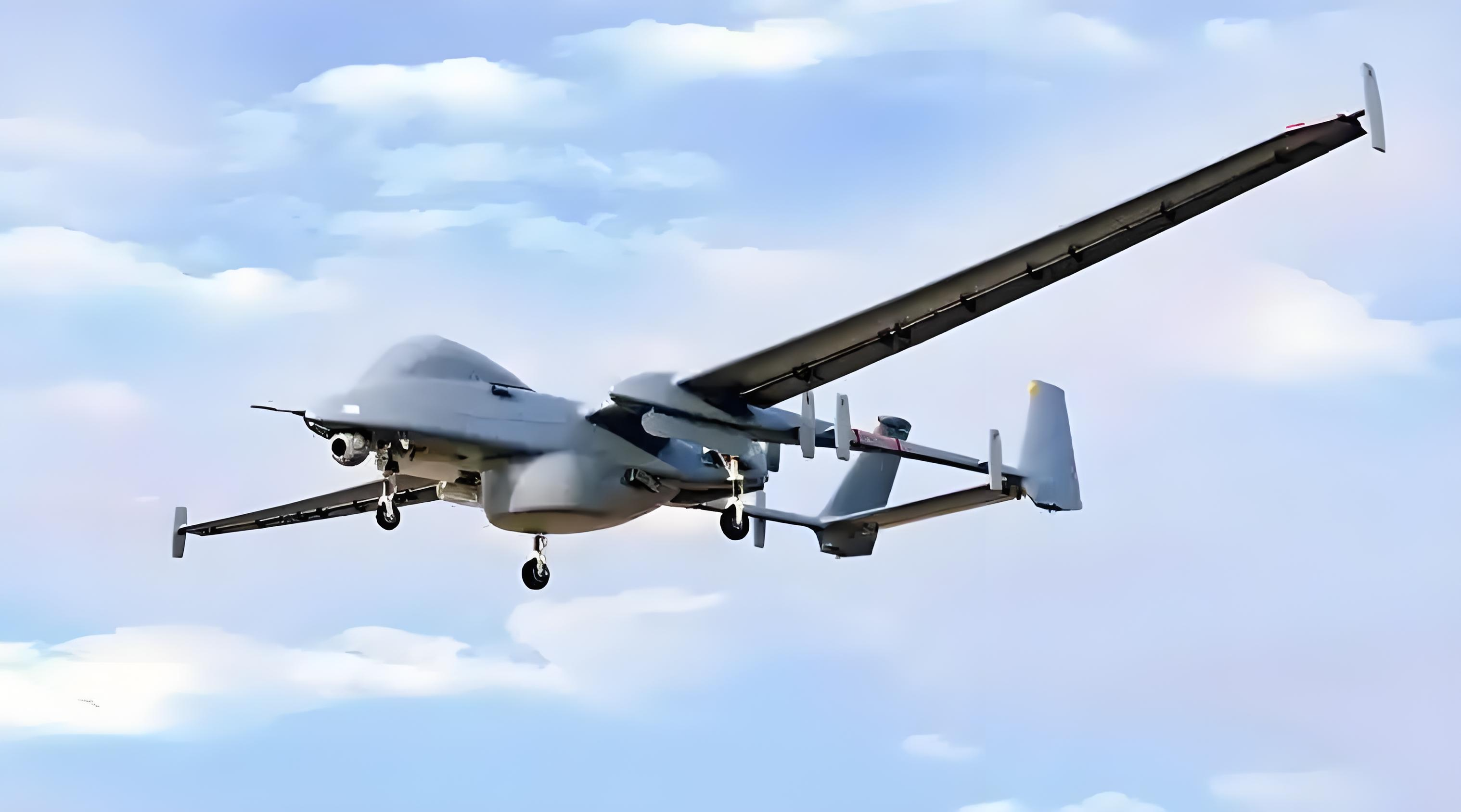
If your mission involves inspecting hundreds of miles of oil pipelines or cross-country high-voltage power grids, a standard multirotor platform is woefully inadequate. Multirotors expend a vast amount of energy simply fighting gravity to stay aloft. In stark contrast, a commercial fixed wing uav generates lift entirely from its wings, allowing it to cruise at high speeds with minimal energy expenditure. This aerodynamic efficiency translates directly into superior operational range.
However, physical aerodynamic range is utterly useless without a reliable, persistent command and control (C2) link. Operating at long distances requires Beyond Visual Line of Sight (BVLOS) certifications and technologies. A true bvlos fixed wing uav must be equipped with redundant communication architectures, including encrypted radio frequencies, mesh networking, 4G/5G LTE cellular modules, and in some advanced cases, satellite communications (SATCOM). We strongly advocate that buyers audit the telemetry link specifications just as heavily as the physical airframe. If the aircraft possesses the battery capacity to fly fifty kilometers but loses radio contact at five kilometers, your functional range is effectively capped at five kilometers.
Evaluating Airframe Architectures Against Your Metrics
Understanding these three Key metrics for B2B drone procurement individually is only the first step. The true art of enterprise procurement lies in understanding their interplay and mapping them against your precise operational requirements. We routinely observe organizations purchasing heavily over-engineered platforms that vastly exceed their needs, resulting in wasted capital, overly complex maintenance schedules, and difficult pilot training programs.
For instance, if your organization conducts localized security patrols within a one-kilometer radius of an industrial facility, you do not need a long-range fixed-wing aircraft. You need a highly agile multirotor that prioritizes payload capacity for heavy thermal cameras and spotlights over extreme endurance. Multirotors excel at precise hovering and vertical maneuvers, making them perfect for close-quarters inspections.
Conversely, if you are mapping vast agricultural estates or conducting geological surveys over open terrain, payload capacity can take a back seat. You need a lightweight, aerodynamic fixed-wing airframe that maximizes endurance and range to cover thousands of acres in a single, uninterrupted deployment.
Expert Recommendations for the Procurement Process
We recommend drafting a highly specific Concept of Operations (CONOPS) document before ever initiating contact with a vendor. Define your absolute minimum, non-negotiable requirements for payload mass, required flight time, and operational radius. Once you have established your baseline Key metrics for B2B drone procurement, you can begin evaluating the market objectively.
Do not accept vague specifications. Ask manufacturers for SWaP breakdowns. Inquire about the degradation of battery life in freezing temperatures. Demand to know the exact frequency bands used for the datalinks and whether the system supports encrypted FHSS (Frequency-Hopping Spread Spectrum) to prevent signal jamming. By rigorously questioning how payload capacity, endurance, and range interact on their specific platforms, you will quickly separate the hobbyist-grade toys from the true industrial workhorses.
ChinaMoneypro UAV is a national-level high-tech enterprise, transformed from a prestigious state-owned research institute. With deep roots in defense-grade engineering, we specialize in the R&D and manufacturing of advanced unmanned platforms and integrated sensing-communication solutions. headquartered in one of China’s premier innovation hubs, Moneypro is among the few full-stack providers offering complete UAV systems, engines, gimbals, radar, data links, and communication technologies.
Summary Table: Airframe Capability Comparison
To assist in your evaluation of the Key metrics for B2B drone procurement, we have compiled a summary of how different airframe architectures traditionally balance payload, endurance, and range.
| Airframe Architecture | Payload Capacity | Flight Endurance | Operational Range | Primary Commercial Use Case |
|---|---|---|---|---|
| Multirotor (Quad/Hexacopter) | High (Excellent heavy-lift capabilities for short durations) | Low (Typically 20 – 45 minutes depending on battery) | Short (Visual Line of Sight, typically under 5 km) | Close-quarter inspections, heavy sensor deployment, localized security. |
| Fixed-Wing (Standard) | Low to Medium (Requires careful center of gravity balancing) | Very High (2 to 8+ hours due to aerodynamic lift) | Very Long (Excellent for BVLOS operations) | Large scale corridor mapping, pipeline inspection, agricultural surveying. |
| Hybrid VTOL (Vertical Take-Off & Landing) | Medium (Balances the weight of dual propulsion systems) | High (1.5 to 4 hours, bridging the gap between multirotor and fixed-wing) | Long (Capable of BVLOS with appropriate datalinks) | Middle-mile cargo delivery, offshore platform supply, versatile surveying. |
Frequently Asked Questions (FAQs)
How does weather impact endurance and range?
Weather is a massive variable. High wind speeds force the drone’s propulsion system to consume more energy to maintain stability and course, directly reducing endurance and range. Furthermore, extreme cold temperatures severely degrade the discharge rates of lithium-based batteries, sometimes cutting flight times by up to 40%.
Why is BVLOS certification so critical for long-range operations?
Beyond Visual Line of Sight (BVLOS) is a regulatory framework. Even if your drone has the technical range to fly 50 kilometers, aviation authorities generally prohibit flying a drone where the pilot cannot see it with the naked eye. Securing BVLOS waivers requires proving that your drone has advanced detect-and-avoid sensors and redundant communication links, which are vital Key metrics for B2B drone procurement.
Can I increase my payload capacity by simply upgrading the motors?
From our engineering experience, no. Upgrading to larger motors will draw more current, rapidly draining your battery and reducing endurance. It may also compromise the structural integrity of the airframe if the chassis was not designed to handle the increased torque and vibration. Drone design is a holistic process; altering one component affects the entire SWaP profile.
What is a tethered drone, and does it bypass endurance metrics?
A tethered drone is physically connected to a ground power station via a micro-tether cable. This completely bypasses traditional battery endurance limits, allowing the drone to stay airborne for days or weeks at a time. However, it entirely sacrifices range, as the drone can only fly as high and as far as the physical cable permits. It is excellent for persistent surveillance but useless for mapping or delivery.
Industry References
- Federal Aviation Administration (FAA). “Integration of Civil Unmanned Aircraft Systems (UAS) in the National Airspace System (NAS) Roadmap.” FAA UAS Overview
- IDTechEx. “Drones Market 2026-2036: Technologies, Markets, and Opportunities.” Analysis on BVLOS regulations, payload thresholds, and sensor integration limits in the B2B sector.
- Department of Defense (DoD). “Unmanned Systems Integrated Roadmap.” Examining the SWaP (Size, Weight, and Power) constraints in advanced aerial platform procurement.