


ChinaMoneypro UAV is a national-level high-tech enterprise, transformed from a prestigious state-owned research institute. With deep roots in defense-grade engineering, we specialize in the R&D and manufacturing of advanced unmanned platforms and integrated sensing-communication solutions. Headquartered in one of China’s premier innovation hubs, Moneypro is among the few full-stack providers offering complete UAV systems, engines, gimbals, radar, data links, and communication technologies.
For enterprise procurement officers, special contractors, and industrial surveyors, the decision on how to choose a fixed wing drone manufacturer is not merely a vendor selection—it is a critical aerospace infrastructure investment. From our experience engineering defense-grade aerial platforms, buying a consumer-grade toy and expecting it to perform in extreme Beyond Visual Line of Sight (BVLOS) conditions is a recipe for catastrophic mission failure. You are not just buying an aircraft; you are buying into an aerodynamic ecosystem, an avionics architecture, and a long-term support network.
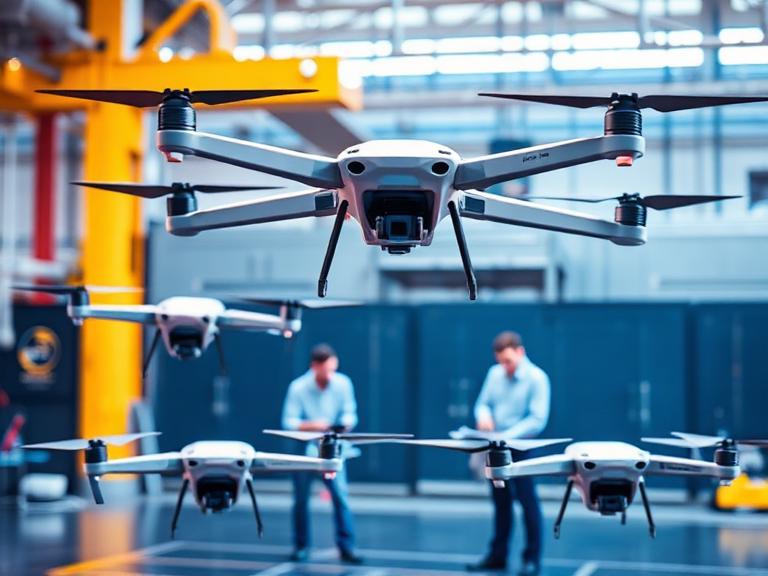
The industrial drone market is currently flooded with opportunistic integrators who merely assemble off-the-shelf hobbyist parts, wrap them in a foam airframe, and slap a corporate logo on the side. We recommend avoiding these “assemblers” at all costs. To execute serious operations—whether that means monitoring vast interstate pipelines, conducting border patrol, or managing high-stakes surveying missions—you need a partner with deep, vertically integrated Research and Development capabilities. The aerospace manufacturer you partner with directly dictates your operational ceiling, your payload flexibility, and your absolute data security.
In this authoritative technical guide, we will dissect the exact engineering metrics, hardware standards, and operational criteria you must evaluate to choose a fixed wing drone manufacturer capable of meeting rigorous 2026 industrial requirements.
Summary: Assemblers vs. Defense-Grade Manufacturers
| Evaluation Criteria | Consumer/Prosumer Assemblers | Defense-Grade Manufacturers (e.g., ChinaMoneypro UAV) |
|---|---|---|
| Airframe Material | EPO foam, injection-molded plastics | Aviation-grade carbon fiber, Kevlar, composite monocoque |
| R&D Integration | Outsourced components, white-labeling | Full-stack in-house R&D, proprietary avionics & engines |
| Takeoff Mechanics | Catapult launcher, hand-toss, belly landing | Advanced Vertical Takeoff and Landing (VTOL), runway-independent |
| Flight Endurance | 60 to 90 minutes maximum | Up to 10+ hours using Hybrid EFI systems |
| Data Security | Standard 2.4/5.8GHz (highly vulnerable) | AES-256 encrypted special-grade links, anti-jamming radar |
Table of Contents
- 1. Assess Airframe Architecture and Material Science
- 2. Why VTOL Capability is the Uncompromising Modern Standard
- 3. Evaluate the Propulsion and Power Systems
- 4. Payload Flexibility and Heavy Lift Integration
- 5. Avionics, BVLOS Readiness, and Data Link Security
- 6. The Importance of Full-Stack Vertical Integration
- 7. Frequently Asked Questions (FAQs)
- 8. Industry References
1. Assess Airframe Architecture and Material Science
The foundation of any reliable aircraft is its structural integrity. A serious manufacturer does not build heavy-duty industrial platforms out of dense styrofoam. When evaluating a prospective vendor, interrogate their material science department. EPO (Expanded Polyolefin) foam is perfectly acceptable for weekend hobbyists, but it lacks the torsional rigidity required to withstand high wind shear, extreme thermal fluctuations, and the aggressive aerodynamic stresses of continuous industrial deployment.
From our experience, if you are looking at professional-grade fixed wing drones, you must demand composite monocoque designs. Look for airframes constructed from aviation-grade carbon fiber infused with Kevlar reinforcements. Carbon fiber provides an unparalleled strength-to-weight ratio, ensuring that the maximum amount of the aircraft’s gross takeoff weight can be allocated to the payload and the battery/fuel system, rather than the dead weight of a heavy chassis. Furthermore, a rigid carbon airframe completely eliminates the micro-vibrations that plague foam drones, ensuring that your optical gimbals and LiDAR sensors capture crystal-clear data without mechanical distortion.
2. Why VTOL Capability is the Uncompromising Modern Standard
We are of the strong opinion that traditional fixed-wing launch methods—such as bulky pneumatic catapults, dangerous bungee cords, and destructive belly landings—are entirely obsolete for 90% of industrial applications. Belly landings routinely destroy expensive electro-optical gimbals and require massive, flat, debris-free clearings that are rarely available in rugged deployment zones.
When you choose a fixed wing drone manufacturer today, you must prioritize Vertical Takeoff and Landing (VTOL) technology. You need an aircraft that can ascend vertically in a confined space like a multirotor, and then seamlessly transition into highly efficient forward aerodynamic flight. We highly recommend partnering with a manufacturer that has perfected this transition mechanic. For instance, an architecture like our long range vtol drone combines the hovering precision necessary for tight jungle clearings or urban rooftops with the sheer aerodynamic glide efficiency required to map thousands of acres in a single deployment.
3. Evaluate the Propulsion and Power Systems
Propulsion dictates endurance, and endurance dictates your operational return on investment. A premier manufacturer must offer versatile, reliable powerplants tailored to your specific mission profile. Do not settle for a manufacturer that only offers a single type of motor.
If your mission requires 3 to 4 hours of completely silent, vibration-free flight—ideal for stealth surveillance or localized topographical mapping—an electric vtol drone utilizing high-density solid-state lithium batteries is the gold standard. Electric propulsion requires virtually zero maintenance and offers instant torque response during critical VTOL transition phases.
However, for extreme endurance applications, such as vast offshore maritime surveillance, interstate pipeline monitoring, or extended search and rescue operations, lithium batteries simply cannot hold enough energy density. For these scenarios, we strongly recommend a hybrid vtol drone equipped with an Electronic Fuel Injection (EFI) internal combustion engine. Advanced EFI systems dynamically adjust the air-fuel mixture based on altitude and atmospheric pressure, allowing a heavy aircraft to achieve upwards of 10 hours of uninterrupted flight time. This is a level of performance that fundamentally changes how you plan logistics.
4. Payload Flexibility and Heavy Lift Integration
A fixed wing platform is essentially a flying truck; its ultimate value is determined entirely by what it can successfully carry and power in the sky. Avoid manufacturers that artificially lock you into a proprietary camera ecosystem. You need open architecture and modular payload bays.
If you are deploying dense, power-hungry sensors like bathymetric LiDAR, heavy dual-sensor optical gimbals, or multispectral agricultural cameras, you require a heavy lift vtol drone capable of handling 10kg or more without compromising its center of gravity or its flight dynamics. Furthermore, when selecting a long range drone with camera, ensure that the manufacturer provides integrated power distribution boards that can route clean, regulated voltage directly from the aircraft’s main generator to the payload, eliminating the need for heavy, redundant secondary batteries.
5. Avionics, BVLOS Readiness, and Data Link Security
The aerodynamic shell is useless without an intelligent brain to fly it. As you choose a fixed wing drone manufacturer, you must aggressively interrogate their avionics and flight control software. Do they rely on basic, open-source hobbyist flight controllers that are easily hacked and highly susceptible to magnetic interference? Or do they develop proprietary, triple-redundant flight control systems that can automatically reroute commands if a primary sensor fails mid-flight?
Data link stability is paramount for Beyond Visual Line of Sight (BVLOS) operations. Your manufacturer should provide AES-256 encryption, dynamic frequency hopping, and robust anti-jamming capabilities. If you lose communication with the aircraft 50 kilometers away due to standard radio interference, you need absolute certainty that the autopilot possesses the algorithmic intelligence to autonomously navigate back to the launch point safely.
6. The Importance of Full-Stack Vertical Integration
Why does it matter if a company manufactures its own engines, its own electro-optical gimbals, and its own radar systems? Because when an unexpected issue arises in the field during a critical mission, you cannot afford for the airframe builder to pass the blame to the gimbal supplier, who in turn blames the flight controller software developer.
Partnering with a full-stack provider like ChinaMoneypro UAV guarantees absolute hardware compatibility and single-point accountability. When every line of code, every carbon fiber strut, and every EFI engine component is designed by the same cohesive engineering team, the resulting system operates with flawless synergy. For high-stakes, uncompromising missions, consider a long endurance vtol drone where this level of vertical integration guarantees that you are never left waiting on third-party firmware updates to resolve mission-critical bugs.
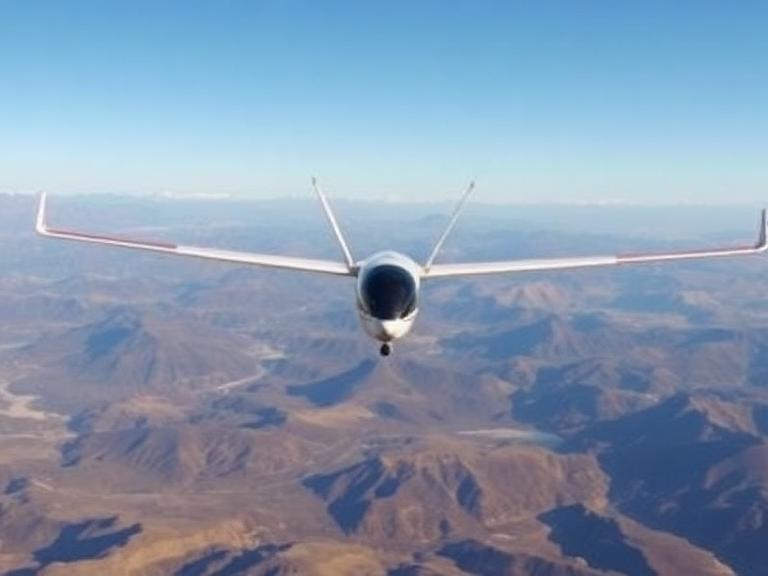
This level of reliability is exactly what is required when operating in complex spaces like rural drone delivery logistics, or when your personnel are undergoing advanced fixed wing deployment courses. You need equipment that functions as a professional tool, not an experimental hobby project.
7. Frequently Asked Questions (FAQs)
Traditional fixed-wing drones require runway space, catapults, or dangerous hand-launches to take off, and they often rely on belly landings that severely damage expensive payloads. A VTOL (Vertical Takeoff and Landing) fixed wing eliminates this entirely. It can take off from a 3×3 meter clearing, hover safely, and transition into fast, efficient forward flight, completely protecting your camera gimbals from ground impact.
It depends entirely on your required flight endurance. From our experience, electric VTOL systems are excellent for missions up to 4 hours, offering silent operation and low maintenance. However, if your mission requires 5 to 10 hours of continuous flight—such as border patrol or offshore monitoring—you absolutely must choose a hybrid EFI (Electronic Fuel Injection) engine system. Batteries simply cannot match the energy density of liquid fuel over extreme durations.
EPO foam is lightweight and cheap to manufacture, but it is fragile, deforms under high thermal loads, and flexes during flight, which distorts mapping data. Carbon fiber provides immense structural rigidity, allowing the aircraft to fly smoothly in high winds and survive harsh industrial environments without micro-vibrations affecting the sensors.
A full-stack manufacturer designs, engineers, and builds the entire ecosystem in-house—including the airframe, the flight controller, the data links, the engines, and the software. This contrasts with “assemblers” who buy generic parts from various vendors and bolt them together. Full-stack engineering guarantees superior reliability, secure encryption, and single-point customer support when you need troubleshooting in the field.
8. Industry References
To further understand the regulatory environment, architectural standards, and safety compliance required for deploying industrial fixed wing UAVs, we recommend consulting the following authoritative resources:
- Federal Aviation Administration (FAA) UAS Guidelines – The official U.S. government regulatory framework governing commercial drone integration, BVLOS waivers, and airspace safety compliance.
- Professional Fixed Wing Drone Architecture – A comprehensive technical breakdown of aerodynamic designs, payload integrations, and mapping applications for fixed-wing platforms.
- Managing Safety in the Drone Industry – An academic and practical guide dedicated to developing safety structures and operational risk management for critical UAV deployments.