


Let us confront a brutal reality regarding modern warfare in 2026: traditional air superiority and multimillion-dollar guided missiles are rapidly losing their tactical monopoly. The battlefield has permanently evolved. When multi-million dollar main battle tanks are being routinely decimated by disposable unmanned systems costing a fraction of a percent of their target’s value, special doctrines must be aggressively rewritten. You cannot fight tomorrow’s wars using yesterday’s economic constraints. This radical shift in strategic asset deployment is entirely driven by advanced Loitering munition applications.
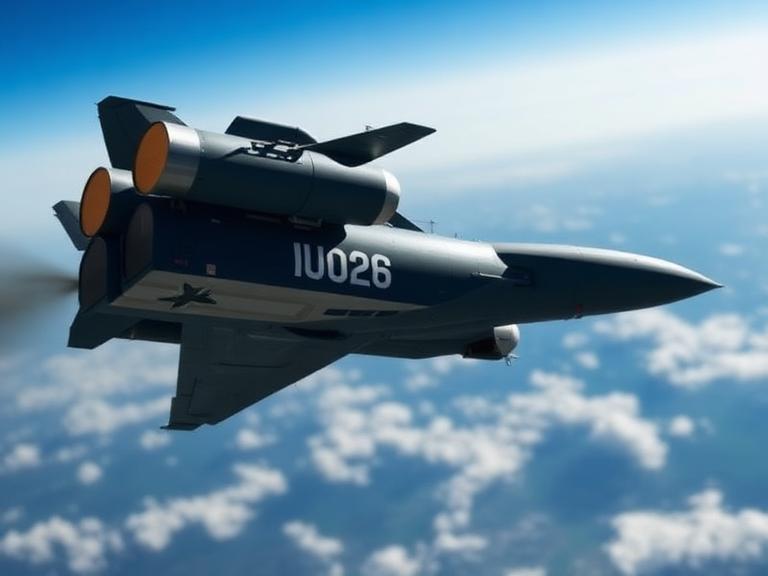
We refuse to sugarcoat this operational reality. Relying exclusively on expensive, manned fast-jets for close air support or long-range artillery for precise interdiction is financially and tactically unsustainable. Loitering munitions, frequently referred to in the mainstream as “kamikaze drones,” bridge the critical gap between s and unmanned aerial vehicles. They are designed to circle a target area for hours, autonomously search for specific high-value objectives, and execute a highly precise, lethal dive when a target is acquired. They represent the ultimate combination of intelligence, surveillance, target acquisition, and reconnaissance (ISTAR) with immediate kinetic strike capability.
ChinaMoneypro UAV is a national-level high-tech enterprise, transformed from a prestigious state-owned research institute. With deep roots in defense-grade engineering, we specialize in the R&D and manufacturing of advanced unmanned platforms and integrated sensing-communication solutions. Headquartered in one of China’s premier innovation hubs, Moneypro is among the few full-stack providers offering complete UAV systems, engines, gimbals, radar, data links, and communication technologies.
From our experience engineering defense-grade aerial platforms, integrating Loitering munition applications requires an uncompromising approach to sensor fusion, Edge AI, and electronic warfare hardening. In this definitive guide, we will brutally dissect the five most critical Loitering munition applications defining current and future defense operations. We will explain exactly why procurement officers are aggressively shifting their budgets toward these systems, and how tactical flexibility is fundamentally altering global power dynamics.
Table of Contents
- 1. Precision Anti-Armor and High-Value Target Elimination
- 2. Suppression of Enemy Air Defenses (SEAD) and Radar Hunting
- 3. Maritime Domain Awareness and Coastal Strike
- 4. Tactical Infantry Beyond Line-of-Sight (BLOS) Support
- 5. Autonomous Swarm Saturation and Network-Centric Warfare
- 6. The Engineering Crossover: From Strike to Logistics
- 7. Summary Matrix: Loitering Munition Applications
- 8. Frequently Asked Questions (FAQs)
- 9. Authoritative References
1. Precision Anti-Armor and High-Value Target Elimination
The most devastatingly effective of all Loitering munition applications is the systematic destruction of heavy armor and mechanized infantry units. Historically, neutralizing a main battle tank required specialized anti-tank guided missiles (ATGMs) fired from close range or heavy artillery barrages requiring massive logistical trains. Loitering munitions exploit the fundamental design flaw of almost all modern armored vehicles: their top-down vulnerability. While the frontal glacis of a tank features immensely thick composite armor, the turret roof and engine deck are notoriously thin.
When executing these specific Loitering munition applications, the drone is launched miles away from the frontline and directed to loiter above a suspected enemy staging area. Utilizing high-definition electro-optical (EO) and infrared (IR) sensors, the human-in-the-loop operator—or increasingly, the onboard autonomous AI—identifies the exact thermal signature of an active tank engine or an armored personnel carrier. Upon target confirmation, the munition executes a near-vertical terminal dive, driving a shaped-charge armor-piercing warhead directly through the weakest point of the vehicle’s defense. The cost asymmetry here is staggering. Expending a $30,000 loitering munition to utterly annihilate a $6,000,000 tank is an economic exchange that no conventional special can sustain indefinitely. This brutal economic efficiency is driving the massive demand across the global special drones market.
2. Suppression of Enemy Air Defenses (SEAD) and Radar Hunting
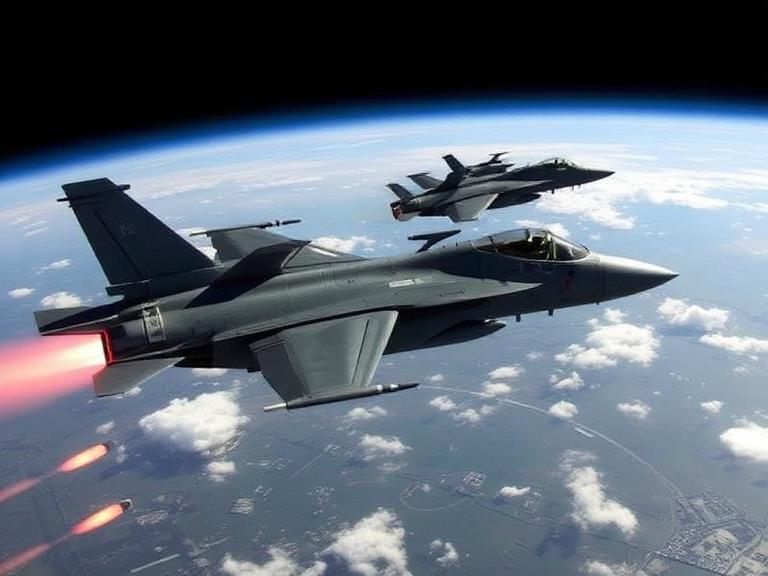
Before any conventional air campaign can commence, the airspace must be sanitized of enemy anti-aircraft systems. Traditionally, Suppression of Enemy Air Defenses (SEAD) missions required highly specialized, manned electronic warfare aircraft flying dangerously close to active surface-to-air missile (SAM) sites to fire anti-radiation missiles. Today, one of the most sophisticated Loitering munition applications completely assumes this high-risk role.
Anti-radiation loitering munitions are explicitly engineered to hunt electromagnetic emissions. When deployed into a contested airspace, they enter a holding pattern. If an enemy radar installation powers on to scan the sky, the loitering munition immediately detects the specific radio frequency (RF) emission, locks onto the source, and initiates a kinetic strike. We recommend viewing this tactic as a psychological weapon as much as a kinetic one. It creates a horrific dilemma for air defense commanders: if they turn their radar on, they invite immediate destruction from a loitering killer; if they keep their radar off to hide, they render their entire airspace defenseless against conventional airstrikes. This operational paralysis is precisely why defense programs are prioritizing these specific Loitering munition applications over legacy SEAD tactics.
3. Maritime Domain Awareness and Coastal Strike
Naval warfare in 2026 is no longer defined strictly by massive aircraft carriers and guided-missile destroyers. The proliferation of fast attack craft (FAC), unmanned surface vessels (USVs), and cheap coastal radar installations presents a severe asymmetric threat to blue-water navies operating in congested littoral waters. Expanding Loitering munition applications into the maritime domain has become a strategic imperative for coastal defense forces.
Specialized maritime loitering munitions feature diamond-shaped or highly efficient aerodynamic profiles designed to endure the harsh, corrosive, high-wind environments of the open ocean. They can be launched directly from modular canister systems mounted on the decks of frigates or even small patrol boats. Their primary mission is to provide independent, over-the-horizon intelligence and immediate strike capability against small, highly maneuverable threats that traditional heavy anti-ship missiles struggle to track. By deploying a swarm of these munitions, a naval vessel can cast a massive sensor net across the ocean surface, identifying and engaging hostile drone boats or pirate skiffs long before they reach effective engagement range.
4. Tactical Infantry Beyond Line-of-Sight (BLOS) Support
We firmly believe that tactical independence is the key to infantry survival. For decades, a pinned-down infantry squad had to rely on a complex, time-consuming chain of command to call in close air support or artillery fire against an entrenched sniper or hidden mortar team. By the time the support arrived, the tactical window had often closed, resulting in unnecessary casualties. The integration of man-portable Loitering munition applications fundamentally decentralizes air support, placing immediate, lethal capability directly into the backpacks of frontline troops.
These lightweight, tube-launched systems can be deployed by a single operator in under two minutes. Once airborne, they provide the squad leader with a real-time, bird’s-eye video feed of the battlefield. If an enemy position is located behind a hill, inside a trench, or deep within an urban structure, the operator can fly the munition directly into the fortified position, bypassing standard cover entirely. This Beyond Line-of-Sight (BLOS) engagement capability ensures that infantry units are no longer blind to threats lurking just out of view. In low-light environments, integrating these platforms with advanced thermal optics ensures lethality 24/7, a critical factor frequently discussed in our analysis of night vision special drones.
5. Autonomous Swarm Saturation and Network-Centric Warfare
The most terrifying and rapidly advancing of all Loitering munition applications is the implementation of autonomous swarm logic. Modern air defense systems, such as the Patriot or Iron Dome, are engineering marvels designed to intercept sophisticated, high-speed ballistic and s. However, they are mathematically limited by their magazine depth. An air defense battery can only track and intercept a finite number of targets simultaneously before it must physically reload.
Swarm operations exploit this mechanical limitation. By networking dozens—or even hundreds—of expandable loitering munitions together using secure, encrypted data links, a special force can launch a synchronized, multi-directional attack. The swarm communicates internally using Edge AI; if one drone is jammed or shot down, the others immediately reallocate targets to ensure mission success. The goal is not just to destroy the target, but to purposefully exhaust the enemy’s stockpile of multimillion-dollar interceptor missiles using highly expendable, low-cost drones. When assessing the global special drone comparison, superpowers are aggressively rushing to perfect these localized swarm networks to ensure strategic dominance in contested airspace.
6. The Engineering Crossover: From Strike to Logistics
It is vital to recognize that the core technological advancements driving these aggressive Loitering munition applications—such as resilient GPS-denied navigation, secure anti-jamming communication datalinks, and highly efficient electric propulsion systems—do not exist in a vacuum. The exact same engineering principles required to ensure a kamikaze drone survives heavy electronic warfare to reach its target are actively being adapted to revolutionize battlefield resupply.
At ChinaMoneypro UAV, we understand that scaling defense technologies requires a holistic approach. The proprietary flight controllers and gimbaled sensor payloads utilized in our strike platforms share deep architectural DNA with our heavy-lift platforms. If you are exploring how special advancements are shifting commercial capabilities, you must evaluate the rapid rise of the vtol cargo drone sector. Furthermore, the ability to rapidly deploy autonomous systems without runways is driving intense innovation across all cargo drone solutions, proving that robust defense engineering has profound multi-domain utility.
7. Summary Matrix: Loitering Munition Applications
To assist defense planners and strategic analysts in navigating this complex ecosystem, we have synthesized the core tactical variables into an uncompromising operational matrix.
| Application Profile | Primary Target Type | Key Technology Required | Strategic Value |
|---|---|---|---|
| Precision Anti-Armor | Main Battle Tanks, APCs | Shaped-Charge Warheads, Top-Attack AI | Extreme cost asymmetry; negates heavy vehicle advantages. |
| SEAD / Radar Hunting | SAM Sites, Early Warning Radar | RF-Seeking Sensors, Long Endurance | Forces enemy air defenses offline, enabling conventional strikes. |
| Maritime / Littoral Strike | Fast Attack Craft, Coastal Defenses | Corrosion Resistance, Waterborne Launch | Secures congested waterways against asymmetric swarm threats. |
| Tactical Infantry BLOS | Snipers, Trenches, Light Vehicles | Tube-Launch Portability, EO/IR Cameras | Decentralizes air support directly to the frontline squad level. |
| Swarm Saturation | Strategic Air Defense Batteries | Edge AI, Network-Centric Datalinks | Exhausts high-value interceptor stockpiles via mass deployment. |
8. Frequently Asked Questions (FAQs)
What is the difference between a recoverable and an expendable loitering munition?
From our experience, this is a critical operational distinction. Expendable systems (kamikaze drones) are built strictly for one-way attack missions; once launched, they will detonate either on a target or self-destruct if their battery depletes, as they have no landing gear. Recoverable systems feature the same loitering capabilities and optical payloads for surveillance, but if a target is not engaged, they can autonomously return to base and deploy a parachute or net-capture system, saving the cost of the airframe for future missions.
How do Loitering munition applications function in GPS-denied environments?
Modern electronic warfare heavily relies on GPS jamming and spoofing to blind inbound drones. To counter this, advanced loitering munitions utilize Inertial Navigation Systems (INS) as a baseline backup. More importantly, top-tier platforms developed by elite uav manufacturers in china and globally now incorporate visual odometry and terrain-matching AI. The drone uses its optical camera to scan the ground below, matching physical landmarks against pre-loaded satellite maps to navigate entirely without external radio signals.
Why are loitering munitions preferred over traditional s for certain targets?
A is a highly expensive, pre-programmed weapon. If you fire a at a mobile rocket launcher, and the launcher drives away while the missile is in flight, the missile hits empty dirt. Loitering munitions solve this through endurance. They arrive at the suspected location, circle the area for hours, actively hunt for the relocated target using thermal optics, and only strike when absolute visual confirmation is achieved by the operator.
9. Authoritative References
To ensure your strategic understanding of these systems aligns with verified global defense doctrines, we strongly advise reviewing the following independent special and security analyses:
- Center for Strategic and International Studies (CSIS) – Loitering Munitions in Modern Warfare: A rigorous academic analysis detailing the tactical deployment of one-way attack drones and their measurable impact on the attrition rates of heavy armor in recent global conflicts.
- Defense News – Unmanned Systems and Strike Capabilities: Authoritative reporting on Pentagon procurement strategies, analyzing the urgent shift in defense spending away from legacy platforms toward scalable, AI-driven loitering munition swarms.