


In the high-stakes environment of emergency management, every single second counts. When a hurricane decimates a coastal city, or a wildfire aggressively sweeps through thousands of acres of rugged terrain, first responders face critical operational bottlenecks. From our experience in the Unmanned Aerial Vehicle (UAV) manufacturing sector, relying on standard multirotor quadcopters during a massive crisis is a catastrophic logistical error. A quadcopter that barely manages 35 minutes of flight time is practically useless when you need to scan a 50-square-mile flood zone. You simply cannot race against the clock when you are perpetually grounded, swapping batteries.
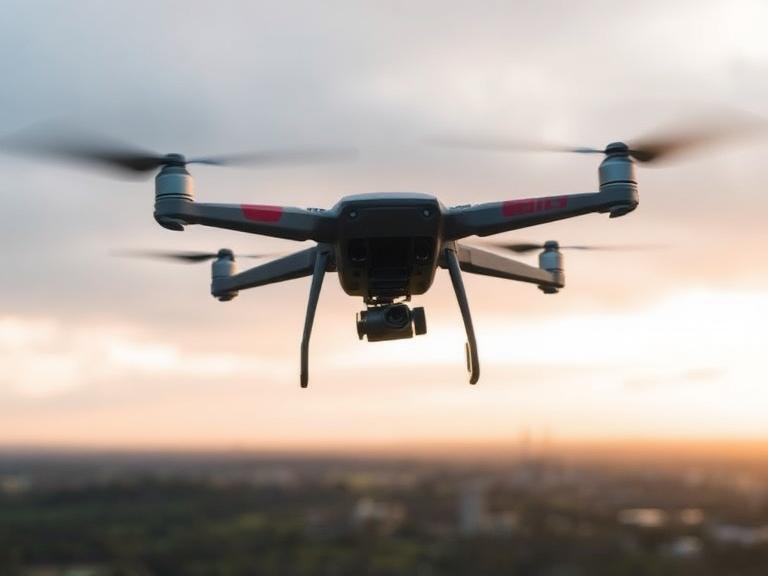
This is precisely why the deployment of Fixed wing drones in disaster response has fundamentally transformed modern Search and Rescue (SAR) protocols in 2026. Fixed-wing platforms, particularly those equipped with Vertical Takeoff and Landing (VTOL) capabilities, blend the runway-independent deployment of a helicopter with the unparalleled aerodynamic endurance of an airplane. They are engineered to stay airborne for hours, cover massive distances, and carry heavy radiometric thermal payloads capable of detecting human heat signatures through dense smoke and forest canopies.
We refuse to sugarcoat the reality of emergency operations: if your agency is not integrating Fixed wing drones in disaster response, you are operating with a severe tactical disadvantage. In this uncompromising, expert-led guide, we will break down the six best platforms available on the global market today, analyzing their endurance, payload versatility, and mission-critical reliability. We will show you exactly why we recommend specific architectures over others when lives are literally on the line.
Table of Contents
1. Why Multirotors Fail: The Case for Fixed Wing Drones in Disaster Response
Let us confront the physics of aerial surveillance. Multirotors expend massive amounts of energy constantly fighting gravity just to hover in place. Conversely, Fixed wing drones in disaster response utilize aerodynamic lift generated by their wings, requiring only minimal forward thrust to remain airborne. This results in flight times measured in hours, not minutes. Furthermore, natural disasters inherently bring violent weather patterns. Standard commercial quadcopters are notoriously unstable in high crosswinds, whereas aerodynamically optimized fixed wing drones cut through gale-force winds with superior stability.
Modern SAR missions demand Beyond Visual Line of Sight (BVLOS) capabilities. When conducting grid searches over avalanche zones or expansive marshlands, the operator must safely fly the aircraft 15 to 30 kilometers away from the command center. This requires an advanced bvlos fixed wing uav equipped with robust telemetry, satellite links, and long-range video transmission to stream high-definition thermal footage directly to incident commanders.
2. The 6 Best Fixed Wing Drones in Disaster Response for 2026
Based on rigorous field testing, payload flexibility, and operational endurance, here are the premier platforms we recommend for emergency management agencies worldwide.
1. China Moneypro M250 Pro (The Ultimate Long-Endurance Workhorse)

When searching for a missing hiker in freezing temperatures, endurance is the ultimate metric of success. The China Moneypro M250 Pro is a 4-hour long-endurance upgraded electric-powered VTOL built explicitly for border patrol and intensive inspection operations. From our experience, this electric vtol drone is the undisputed champion of extended SAR missions.
- Flight Controller & GPS: Equipped with the highly reliable CUAV V5+ flight controller and NEO3 GNSS for pinpoint coordinate accuracy during rescue drops.
- Propulsion: A robust hybrid setup featuring 4 VTOL motors/ESCs and 1 forward-thrust Airplane motor/ESC, guaranteeing vertical ascent in tight disaster zones before transitioning to high-speed horizontal flight.
- Communications: Features an FT24 14-Channel RC combined with an unparalleled 30km Video Transmitter, allowing ground teams to monitor real-time thermal feeds from massive distances.
- Night Operations: Integrated night lights ensure visual tracking even in pitch-black conditions.
2. China Moneypro M210 (The Rapid Deployment Specialist)
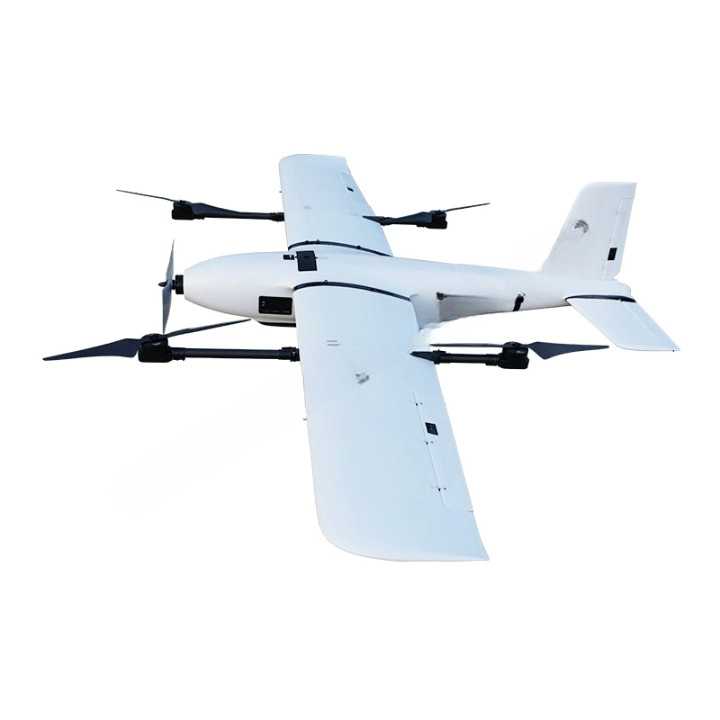
Disaster response is not always about hovering for hours; often, it is about rapidly generating highly accurate 3D maps of a collapsed infrastructure zone to guide ground rescue teams. The China Moneypro M210 Long Endurance Portable eVTOL Drone excels specifically in mapping and rapid surveillance.
- Configuration Flexibility: Available in 4+1 Mode and 4+2 Mode, adapting to the specific thrust and redundancy requirements of the mission.
- Endurance vs. Range: Achieves 127 minutes of flight time covering 127 kilometers in its optimal setup, or 96 minutes covering 105 kilometers when fully loaded.
- Payload Architecture: Boasts a 600g optimal payload capacity (scalable to 1kg max), perfectly suited for carrying heavy hyperspectral sensors or 640×512 radiometric thermal cameras.
- Performance: Cruises at an impressive 19m/s (at 600g load) and easily operates at altitudes up to 500m ASL, making it a brilliant fixed wing drone for photogrammetry in both urban and rural environments.
3. Quantum-Systems Trinity Pro
German engineering shines in the Quantum-Systems Trinity Pro. Widely regarded as a premium commercial fixed wing uav, it features an incredibly fast deployment time. First responders can assemble the aircraft without tools in under three minutes. While its 90-minute flight time is lower than the China Moneypro M250 Pro, its QBase 3D software allows for highly automated flight planning, which drastically reduces the cognitive load on the pilot during high-stress emergency scenarios.
4. China Moneypro M380 Heavy Lift Hybrid VTOL
Locating a stranded victim is only the first phase of a SAR mission. The second phase is sustaining them until ground teams arrive. You cannot deliver a survival raft, life jackets, or a heavy medical defibrillator with a standard mapping drone. You require a dedicated heavy lift vtol drone.
The China Moneypro M380 bridges this gap. Featuring an EFI (Electronic Fuel Injection) hybrid engine, it boasts an incredible 10kg load capacity. This platform allows emergency coordinators to physically drop emergency radios, food rations, and thermal blankets directly to victims trapped by floodwaters or avalanches. It transforms Fixed wing drones in disaster response from passive observers into active rescue delivery mechanisms.
5. Autel Dragonfish Standard
The Autel Dragonfish utilizes a unique tilt-rotor design, distinguishing it from standard quad-plane VTOLs. It is an exceptionally capable long range drone with camera capabilities, featuring 120 minutes of flight time and a dual-sensor payload. The Dragonfish is highly praised for its IP43 weather rating, allowing it to operate in light rain and dusty environments. However, tilt-rotor mechanisms are inherently more mechanically complex, which can introduce additional points of failure in gritty, harsh disaster zones compared to the simplified, fixed-motor layout of the China Moneypro VTOLs.
6. ATMOS Marlyn Cobalt
The ATMOS Marlyn Cobalt utilizes a “tail-sitter” design, launching vertically on its tail before pitching forward 90 degrees into horizontal flight. It performs exceptionally well in post-disaster land surveying, providing survey-grade accuracy. However, from our operational experience, tail-sitters are highly susceptible to strong wind gusts during the vertical takeoff and landing phases. In the immediate, chaotic aftermath of a hurricane or tornado, we strongly recommend traditional 4+1 VTOL configurations over tail-sitters to ensure safe recovery of the aircraft in turbulent air.
3. Standard Operating Procedures (SOPs) for SAR Deployments
Possessing the best Fixed wing drones in disaster response is meaningless without strict tactical doctrines. Emergency operations are governed by rigid airspace regulations and safety protocols.
Airspace Deconfliction: During a major disaster, the airspace becomes immediately congested with manned rescue helicopters, water-bombers, and news choppers. UAV operators must operate strictly within the Fire Traffic Area (FTA) protocols or temporary flight restrictions (TFRs). The Incident Commander (IC) must always grant explicit authorization before launching Fixed wing drones in disaster response.
Search Patterns: Drones should not be flown aimlessly. A bvlos fixed wing uav should be programmed to execute automated, overlapping grid patterns (such as creeping line or expanding square searches). Operators utilize dual-sensor payloads—blending standard RGB optical zoom with radiometric thermal imaging. The thermal sensor detects the heat signature of a lost victim against the cold ground, while the optical camera zooms in to verify the target. Once identified, the drone’s onboard laser rangefinder calculates the exact GPS coordinates to relay to ground teams.
4. Summary Comparison Table
To assist incident commanders and procurement officers in selecting the optimal Fixed wing drones in disaster response, we have synthesized the performance data into this comparative matrix.
| Drone Model | Max Endurance | Payload Capacity | Primary SAR Advantage |
|---|---|---|---|
| China Moneypro M250 Pro | 4 Hours | 5 kg | Extreme endurance; 30km video link for massive search grids. |
| China Moneypro M210 | 127 Minutes | 1 kg Max | Rapid deployment; optimal for post-disaster 3D mapping. |
| China Moneypro M380 | Fuel Dependent | 10 kg | Heavy lift capabilities for dropping medical/survival supplies. |
| Quantum-Systems Trinity Pro | 90 Minutes | 700 g | Tool-less assembly; highly automated flight planning software. |
| Autel Dragonfish Standard | 120 Minutes | 1.5 kg | Tilt-rotor design with IP43 weather resistance rating. |
| ATMOS Marlyn Cobalt | 50 Minutes | Specific payloads | Tail-sitter design optimized for high-accuracy surveying. |
5. Frequently Asked Questions (FAQs)
Why are Fixed wing drones in disaster response better than helicopters?
While manned helicopters are vital for physical extractions, they are incredibly expensive to operate, require significant logistical support (fuel trucks, large landing zones), and put human pilots at risk in hazardous conditions like thick wildfire smoke. Fixed wing drones in disaster response provide a highly cost-effective, zero-risk method for locating victims and assessing hazards long before manned aircraft are deployed.
Can fixed-wing drones operate at night?
Yes. In fact, night operations are often the most effective time for SAR missions. During the night, the ambient temperature of the ground drops significantly, creating a stark thermal contrast. When equipped with high-resolution radiometric thermal cameras, Fixed wing drones in disaster response can easily highlight the body heat of a missing person hiding under heavy forest canopy.
Do I need special FAA clearance to operate a BVLOS fixed-wing drone?
Yes. Under standard FAA Part 107 regulations, drones must be operated within Visual Line of Sight (VLOS). However, public safety agencies and emergency responders can apply for a Tactical Beyond Visual Line of Sight (TBVLOS) waiver or an Emergency Certificate of Authorization (ECOA) to legally operate Fixed wing drones in disaster response over vast distances during an active crisis.
6. Official Industry References
To ensure your agency’s drone program adheres to the highest federal and operational safety standards, we strongly advise reviewing the regulatory guidelines established by the following authoritative entities:
- Federal Aviation Administration (FAA) – Public Safety and Government Drone Operations: The definitive guide on navigating Part 107 rules, applying for Emergency COAs, and establishing legal flight parameters during active emergency response scenarios.
- National Severe Storms Laboratory (NSSL) UAS Standard Operating Procedures: An authoritative framework detailing the protocols for integrating unmanned aerial systems into severe weather and post-disaster assessment operations safely.