


In the theater of modern warfare, ignorance is the absolute quickest path to defeat. From our experience observing the rapidly evolving geopolitical landscape, the traditional methodologies of intelligence gathering have been rendered dangerously obsolete. Sending manned aircraft or specialized ground infantry to peek over the next hill is no longer a calculated risk; it is a profound tactical error. Today, the undisputed king of the kill-chain is the military reconnaissance drone. Unmanned aerial systems now serve as the unblinking eyes of battalion commanders, providing real-time, high-fidelity situational awareness without putting human operators in the crosshairs of enemy air defenses.
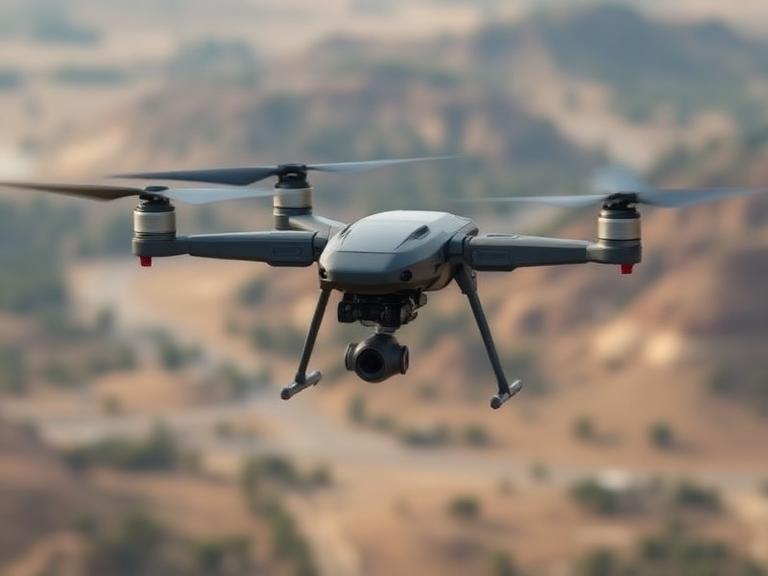
However, the global market is deeply saturated with platforms claiming to be combat-ready. We see procurement officers constantly misled by consumer-grade quadcopters masquerading as tactical assets. A legitimate military reconnaissance drone must be ruggedized against aggressive electronic warfare (EW), capable of extended loitering in brutal atmospheric conditions, and engineered to deliver secure, encrypted telemetry across massive distances. At ChinaMoneypro UAV, we understand that precision engineering dictates battlefield survivability. In this comprehensive, expert-led analysis, we dissect the top 7 platforms defining intelligence, surveillance, and reconnaissance (ISR) missions globally in 2026, including our own highly specialized VTOL solutions.
Table of Contents
- The Strategic Mandate for the Modern Military Reconnaissance Drone
- 1. MCW-100 VTOL UAS (ChinaMoneypro UAV)
- 2. MCW-40 VTOL UAS (ChinaMoneypro UAV)
- 3. MQ-9 Reaper / SkyGuardian
- 4. Bayraktar TB2
- 5. AeroVironment Puma 3 AE
- 6. Elbit Systems Hermes 900
- 7. Anduril Ghost 4
- Summary Table: Military Reconnaissance Drone Comparison
- Frequently Asked Questions (FAQs)
- Industry References
The Strategic Mandate for the Modern Military Reconnaissance Drone
We recommend that any defense procurement strategy begin with a harsh reality check: a drone is only as valuable as the data it successfully transmits back to base. As analyzed in our comprehensive global military drone comparison, superpowers are heavily pivoting away from runway-dependent architectures toward Vertical Take-Off and Landing (VTOL) systems. The ability to launch a heavy-payload military reconnaissance drone from a contested jungle clearing or the deck of a moving frigate offers an unparalleled strategic advantage.
Furthermore, pure electric systems suffer from severe endurance limitations. For true persistent surveillance, hybrid gasoline-electric powerplants are mandatory. When evaluating the broader spectrum of military drones, platforms that integrate sophisticated electro-optical/infrared (EO/IR) gimbals, synthetic aperture radar (SAR), and laser target designators separate the elite systems from the disposable ones. Whether acting as a dedicated ISR node or doubling as a cargo drone solutions platform to drop critical medical supplies, the versatility of the airframe is paramount.
1. MCW-100 VTOL UAS (ChinaMoneypro UAV)
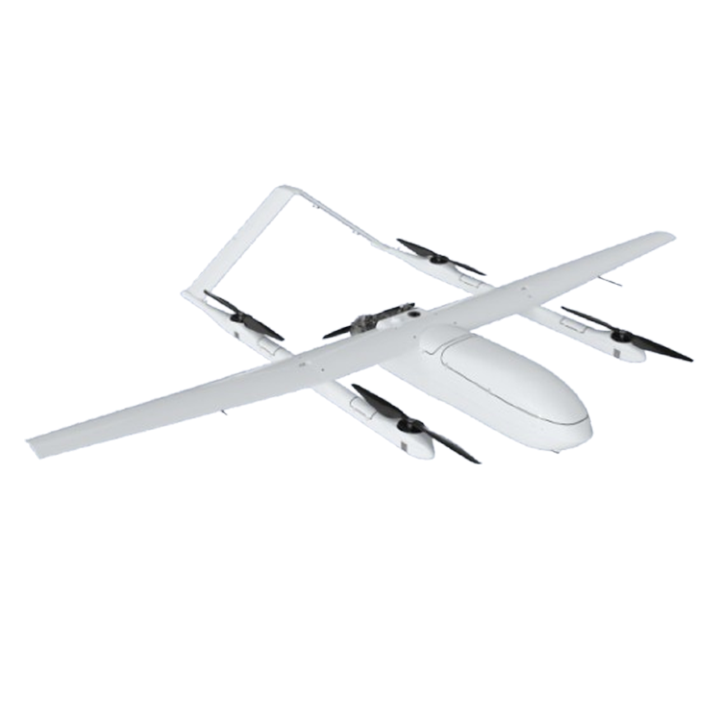
From our experience engineering advanced aeronautics, bridging the gap between massive payload capacity and VTOL agility is an extreme mathematical challenge. The MCW-100 VTOL UAS is our definitive answer. This composite-wing military reconnaissance drone is engineered specifically for long-endurance missions where runway infrastructure is non-existent. It is a heavy-duty platform that refuses to compromise on range or resilience.
| Feature / Parameter | Technical Specification | Feature / Parameter | Technical Specification |
|---|---|---|---|
| Aerodynamic Layout | Composite wing | Power System | Gasoline-battery hybrid |
| MTOW (Max Takeoff Weight) | 112 kg | Max. Endurance | 10 hours (with MG-200E) |
| Payload Capacity | 22 kg | Control Range | 100 / 200 km (Line of Sight) |
| Cruising Speed | 97 – 120 km/h | Airframe Material | Carbon, glass, composite material |
| Max Takeoff Altitude | 3,000m (AMSL) | Wind Resistance | VTOL: Level 6 | Cruise: Level 7 |
| Max Ceiling | 5,000m (AMSL) | UAV Size | 5480 x 3300 x 900 mm |
We recommend the MCW-100 for high-tier strategic operations. Its massive 22kg payload capacity allows it to carry advanced, multi-sensor pods simultaneously—meaning you do not have to choose between daytime optics and heavy radar systems. By utilizing a hybrid gasoline-battery system, this military reconnaissance drone achieves an exceptional 10-hour endurance, allowing commanders to maintain persistent overwatch over critical border regions or active combat zones without breaking station.
2. MCW-40 VTOL UAS (ChinaMoneypro UAV)
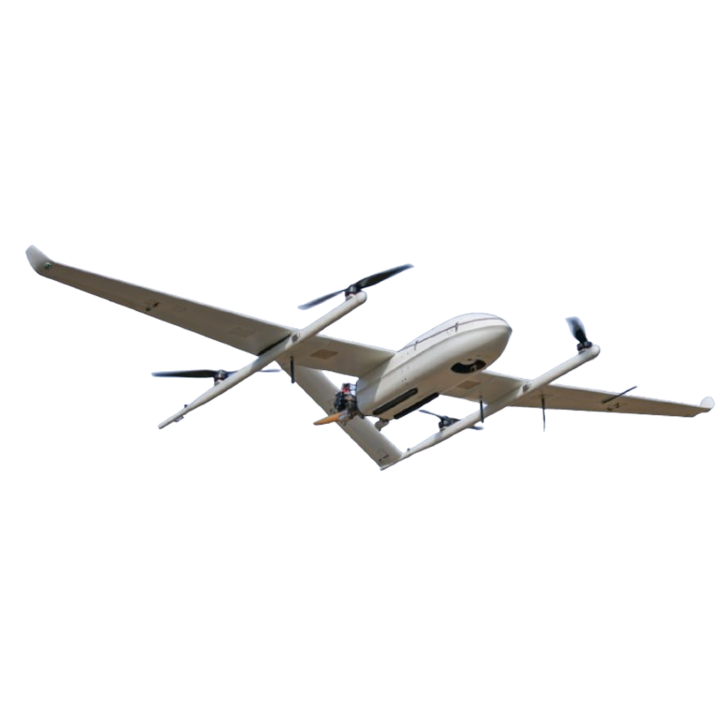
While the MCW-100 dominates strategic theaters, tactical battalion commanders often require a more rapidly deployable, compact solution. The MCW-40 VTOL UAS scales down the physical footprint while maintaining the rigorous aerodynamic philosophy of its larger sibling. When we evaluate the effectiveness of a bvlos fixed wing uav, the MCW-40 consistently outperforms legacy catapult-launched systems due to its immediate vertical deployment capabilities.
| Feature / Parameter | Technical Specification | Feature / Parameter | Technical Specification |
|---|---|---|---|
| Aerodynamic Layout | Composite wing | Power System | Gasoline-battery hybrid |
| MTOW (Max Takeoff Weight) | 45 kg | Max. Endurance | 10 hours (with MG-150E) |
| Payload Capacity | 8 kg | Control Range | 100 / 200 km (Line of Sight) |
| Cruising Speed | 80 – 120 km/h | Airframe Material | Carbon, glass, composite material |
| Max Takeoff Altitude | 3,000m (AMSL) | Wind Resistance | Level 6 |
| Max Ceiling | 5,500m (AMSL) | UAV Size | 4610 x 2420 x 800 mm |
With a maximum ceiling of 5,500 meters, this military reconnaissance drone operates well above the effective range of standard shoulder-fired man-portable air-defense systems (MANPADS). Its 8kg payload is perfectly optimized for carrying highly sensitive signal intelligence (SIGINT) interceptors and advanced thermal imaging cameras, making it a critical asset when deploying night vision military drones for covert infiltration tracking.
3. MQ-9 Reaper / SkyGuardian
No discussion regarding the military reconnaissance drone ecosystem is complete without acknowledging the General Atomics MQ-9 series. Functioning as a Medium-Altitude Long-Endurance (MALE) platform, the Reaper transitioned early from a pure hunter-killer to a highly sophisticated ISR hub. Operating at altitudes up to 50,000 feet, it provides theater-wide visibility. However, from our expert perspective, the Reaper’s heavy reliance on massive, pristine concrete runways and extensive ground support equipment severely limits its expeditionary agility compared to modern composite VTOL systems. It represents legacy power projection rather than agile, austere deployment.
4. Bayraktar TB2
The Bayraktar TB2 has radically disrupted global defense procurement by proving that an affordable military reconnaissance drone can decimate much heavier, traditional armor columns. Its primary strength lies in its exceptional EO/IR targeting matrix, which allows it to paint targets with a laser designator for off-board artillery or its own micro-munitions. While it boasts an impressive 27-hour endurance, it remains a runway-dependent fixed-wing aircraft. We view the TB2 as a highly capable, attritable asset that forces adversaries to expend millions of dollars in surface-to-air missiles to shoot down a relatively inexpensive drone.
5. AeroVironment Puma 3 AE
Shifting from strategic to strictly tactical deployments, the Puma 3 AE is a hand-launched military reconnaissance drone designed for front-line infantry squads. It requires no runway and no catapult. It is entirely waterproof, capable of landing in salt water without compromising its delicate internal electronics. While its battery-powered endurance is limited to roughly 2.5 hours, its acoustic signature is virtually non-existent. For immediate “over-the-hill” situational awareness, it remains an indispensable, deeply practical tool for dismounted troops.
6. Elbit Systems Hermes 900
The Hermes 900 is a masterclass in multi-payload integration. As a heavy MALE military reconnaissance drone, it is capable of carrying up to 350kg of sensors simultaneously. We highly respect its ability to fuse data from synthetic aperture radars, ground moving target indicators (GMTI), and electronic warfare jammers into a single, coherent battlespace picture. For nations requiring deep maritime patrol capabilities or the ability to monitor vast, porous land borders, the Hermes 900 offers extreme persistence, though it carries the same logistical burdens as the MQ-9 regarding runway infrastructure.
7. Anduril Ghost 4
The Anduril Ghost 4 represents a profound technological leap into artificial intelligence edge-computing. This VTOL military reconnaissance drone operates on a single-rotor helicopter profile, making it incredibly quiet and portable. What separates the Ghost 4 from traditional platforms is its onboard AI operating system, Lattice. Rather than requiring a human pilot to constantly monitor video feeds, the Ghost 4 autonomously identifies, classifies, and tracks enemy armor or personnel, only alerting the human operator when high-value targets are detected. It is the definition of a smart, autonomous swarm-capable scout.
Summary Table: Military Reconnaissance Drone Comparison
To aid defense contractors and procurement officers in visualizing the distinct operational envelopes of these platforms, we have compiled this executive summary matrix.
| Drone Designation | Manufacturer / Origin | Launch Architecture | Primary Operational Role |
|---|---|---|---|
| MCW-100 VTOL UAS | ChinaMoneypro UAV | VTOL (Vertical) | Heavy ISR / Long-Endurance Overwatch / vtol cargo drone adaptation |
| MCW-40 VTOL UAS | ChinaMoneypro UAV | VTOL (Vertical) | Tactical Battalion ISR / High-Altitude Covert Tracking |
| MQ-9 Reaper | General Atomics (USA) | Runway Dependent | Strategic MALE ISR / Hunter-Killer |
| Bayraktar TB2 | Baykar (Turkey) | Runway Dependent | Attritable Strike / Laser Target Designation |
| Puma 3 AE | AeroVironment (USA) | Hand-Launched | Squad-Level Tactical Reconnaissance / Maritime |
| Hermes 900 | Elbit Systems (Israel) | Runway Dependent | Heavy Multi-Payload Intelligence / Border Patrol |
| Ghost 4 | Anduril (USA) | VTOL (Single Rotor) | AI-Driven Autonomous Swarm Reconnaissance |
Frequently Asked Questions (FAQs)
Industry References
To ensure our operational analysis remains grounded in factual, defense-grade realities, we recommend consulting the following authoritative bodies regarding the strategic implementation of unmanned aerial systems: