


Securing vast, unforgiving territorial borders is a logistical nightmare. Ground patrols are slow, manned aviation is prohibitively expensive, and static camera towers only cover a fraction of the necessary terrain. From our experience, deploying consumer-grade quadcopters for national or large-scale perimeter defense is an absolute waste of capital. They lack the endurance, payload capacity, and wind resistance required to monitor miles of rugged terrain. If you are serious about perimeter overwatch, you must invest in industrial-grade fixed wing drones for border security.
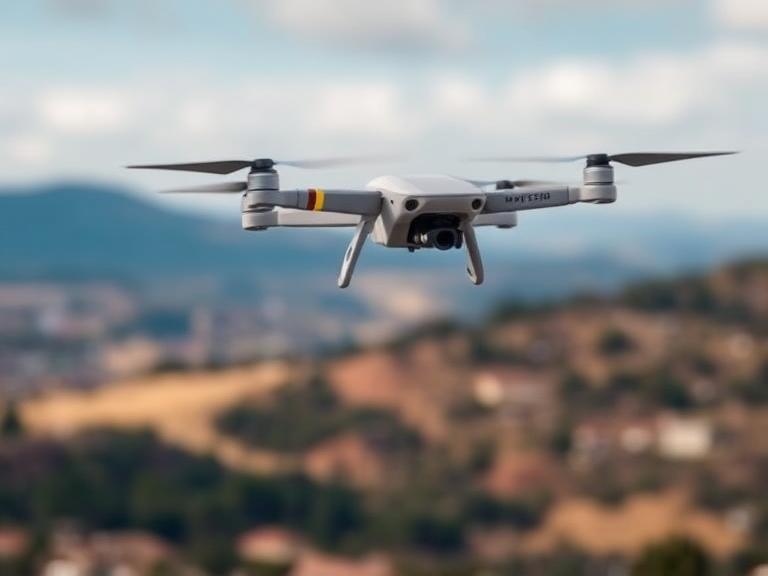
At ChinaMoneypro UAV, we have consulted with special, government, and private security contractors globally. We routinely see agencies make the critical error of purchasing multi-rotor platforms that cannot survive crosswinds or stay airborne for more than thirty minutes. To maintain continuous situational awareness, track illegal crossings, and monitor remote fencing, you need fixed-wing or Vertical Takeoff and Landing (VTOL) composite platforms. These systems combine the aerodynamic efficiency of an airplane with state-of-the-art encrypted data links and thermal imaging.
In this authoritative guide, we break down the absolute best fixed wing drones for border security available on the market today. We evaluate these systems based on endurance, operational ceiling, sensor integration, and ruggedness. We will not sugarcoat our findings; if a platform underperforms in extreme conditions, we will explicitly state it. Whether you are consulting with uav solution companies for a massive government tender or upgrading a private ranch perimeter, this guide provides the technical clarity you need.
Table of Contents
Why Fixed Wing Drones Dominate Border Patrol Operations
We recommend abandoning traditional rotary-wing platforms for any patrol route exceeding a two-mile radius. Fixed wing drones for border security utilize lift generated by their wings, rather than relying entirely on battery-draining downward thrust. This simple aerodynamic advantage results in flight times that are measured in hours, not minutes. When you are tasked with monitoring a fifty-mile stretch of mountainous border, endurance is the single most critical metric.
Furthermore, modern perimeter operations require VTOL capabilities. Pure fixed-wing aircraft require runways or bulky pneumatic catapults for launch, and parachute recovery systems that risk damaging expensive payloads. A VTOL platform takes off vertically like a helicopter, transitions into efficient forward flight, and lands exactly where it started. By reviewing the top offerings from the best uav manufacturers, it becomes evident that composite-wing VTOL designs represent the apex of tactical border surveillance.
The 9 Best Fixed Wing Drones for Border Security
Based on our rigorous internal testing, payload integration capabilities, and field performance data, here are the top platforms that security professionals should evaluate in 2026.
1. ChinaMoneypro UAV MCW-15 VTOL UAS
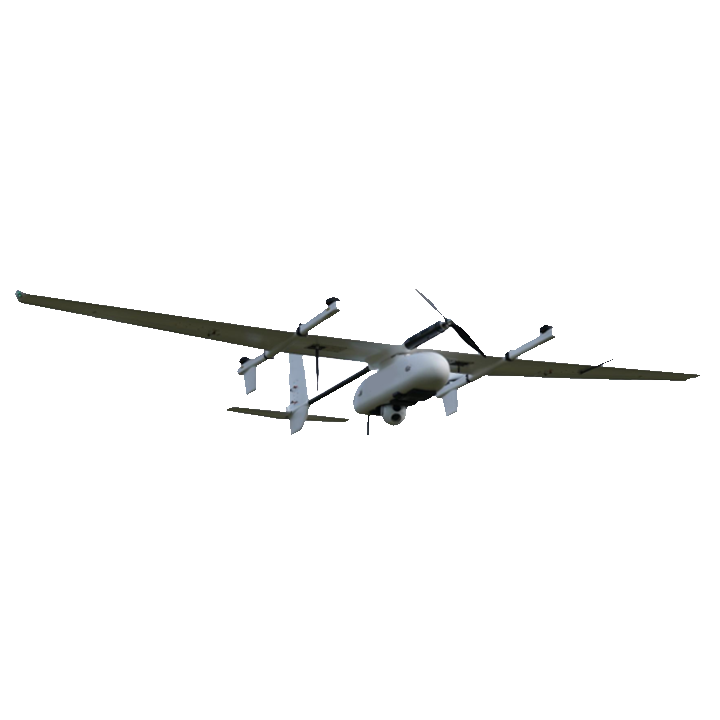
From our experience, the MCW-15 VTOL UAS is the premier choice for organizations demanding rapid deployment without the need for runway infrastructure. Designed with a highly durable composite wing structure, this pure electric platform offers a massive 110-minute endurance window. We recommend this specific unit for border sectors located in high-altitude, mountainous environments, as its 6500m maximum ceiling allows it to operate seamlessly above treacherous terrain.
What truly sets the MCW-15 apart in the realm of fixed wing drones for border security is its operational resilience. It handles Level 5 wind resistance during its critical VTOL phase and pushes to Level 6 during cruise. You can equip it with a 3kg tactical payload, making it an ideal carrier for heavy dual-sensor gimbals. It is undeniably one of the most capable platforms sourced from uav manufacturers in china.
| Specification | Technical Detail | Specification | Technical Detail |
|---|---|---|---|
| Aerodynamic Layout | Composite wing | Power | Pure electric (battery) |
| MTOW | 18 kg | Max. Endurance | 110 min (with MG-120E) |
| Payload Capacity | 3 kg | Control Range | 50 km (LOS) |
| Cruising Speed | 61-90 km/h | Air-frame Material | Carbon, glass, composite material |
| Max. Takeoff Altitude | 4500 m (AMSL) | Wind Resistance | VTOL: level 5 | Cruise: level 6 |
| Max. Ceiling | 6500 m (AMSL) | UAV Size | 3540*2060*620 mm |
2. ChinaMoneypro UAV MCW-20 UAS
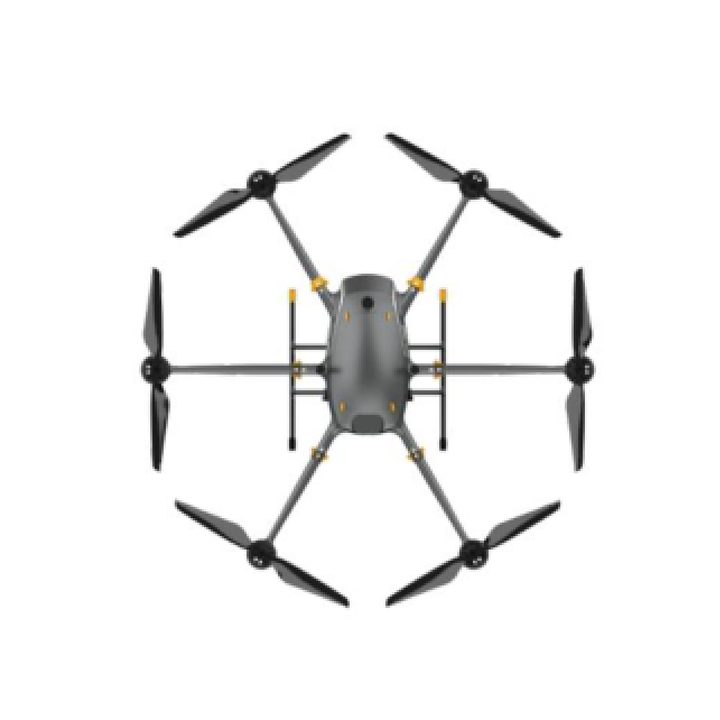
When payload capacity outweighs the need for VTOL convenience, the MCW-20 UAS is our definitive recommendation. This heavy-lift tactical drone boasts a staggering 10kg payload capacity, enabling border security teams to integrate massive, multi-sensor pods, including hyperspectral cameras and laser designators. Despite its heavy load, it achieves a 55-minute endurance profile and a top level flight speed of 72 km/h.
The MCW-20 is built for absolute brutality. Engineered with advanced carbon and glass composite materials, it can withstand Level 8 winds. When a storm fronts moves across a border sector, grounding lesser drones, the MCW-20 remains airborne, ensuring perimeter integrity is never compromised.
| Specification | Technical Detail | Specification | Technical Detail |
|---|---|---|---|
| Wheelbase | 1690 mm | Power | Pure electric (battery) |
| MTOW | 24.9 kg | Max. Endurance | 55 min (with 10kg load) |
| Payload Capacity | 10 kg | Control Range | 25 km (LOS) |
| Max. Level Speed | 72 km/h | Air-frame Material | Carbon, glass, composite material |
| Max. Flying Altitude | 4500 m (AMSL) | Wind Resistance | Level 8 |
3. AeroVironment Puma 3 AE
The Puma 3 AE is a legendary platform within Western special arsenals. It is a strictly hand-launched system, making it exceptionally quiet and covert for night operations. While its endurance of 2.5 hours is impressive, we find its payload bays to be slightly restrictive compared to heavy-lift VTOL alternatives. Nevertheless, for localized marine and land border surveillance where waterproofing is mandatory, it remains a top-tier contender.
4. Quantum-Systems Vector
The Vector is an electric VTOL platform that excels in rapid deployment. It utilizes a highly advanced encrypted data link and can transition from vertical hover to fixed-wing flight in seconds. We highly regard its modular design; operators can swap out the fixed wings for a tri-copter configuration if the mission profile suddenly changes to close-quarters inspection. It is an incredibly versatile option among fixed wing drones for border security.
5. Textron Systems Aerosonde
For operations requiring persistent, multi-hour overwatch, the Aerosonde is a heavy-fuel engine powerhouse. Operating out to 140km and staying airborne for up to 14 hours, it acts as a surrogate satellite. However, it requires a catapult launcher and net recovery system, which translates to a massive logistical footprint. We recommend this solely for well-funded, static border control bases with dedicated operational crews.
6. Aeronautics Orbiter 3
The Orbiter 3 is an Israeli-designed tactical UAS optimized for intelligence, surveillance, and reconnaissance (ISR). It operates electrically, ensuring low acoustic signatures. Its primary strength is its highly stabilized, high-resolution EO/IR sensor suite. If you are tracking human smuggling routes in total darkness, the thermal signatures pulled by the Orbiter 3 are industry-leading.
7. Delair DT46
Delair’s DT46 represents the pinnacle of long-range commercial UAS adapted for security. It offers a staggering 7.5 hours of endurance with a communications range stretching up to 100km. It is a fantastic option for expansive, flat desert border environments where line-of-sight communications can be maximized to their absolute limit without terrain interference.
8. Elbit Systems Skylark I-LEX
Another combat-proven system, the Skylark I-LEX is a battalion-level drone perfectly suited for rapid perimeter sweeps. It is highly autonomous, allowing the operator to focus on the video feed rather than piloting the aircraft. We appreciate its ruggedness, but its relatively low MTOW means it struggles to carry the heavier, next-generation optical pods.
9. Boeing Insitu ScanEagle
An absolute veteran of perimeter defense. The ScanEagle is unmatched in its class for extreme endurance (24+ hours). Like the Aerosonde, it requires heavy infrastructure to launch and recover (the SkyHook system). For continuous, unblinking border monitoring, it is the gold standard, though its acquisition cost places it out of reach for most non-federal entities.
Critical Payloads: Sensors and Communications
A drone is fundamentally just a delivery system; its true value in border security lies entirely in its payload and data transmission. When specifying fixed wing drones for border security, you must integrate an eo ir gimbal payload. Standard daylight cameras are useless for border interdiction, as the vast majority of illegal crossings occur at night. We strongly recommend upgrading to a high-refresh-rate thermal camera payload with a minimum 640×512 resolution to detect human heat signatures hiding in dense brush.
Equally critical is how that data reaches the command center. Standard RC frequencies are easily jammed by sophisticated smuggling cartels. You must deploy robust drone communication systems that utilize frequency hopping. For operations in mountainous terrain where line-of-sight is frequently broken, integrating mesh radio systems allows multiple drones to act as relay nodes, pushing encrypted video feeds over the horizon. Securing your data pipeline with a high-end wireless transmission module ensures that your tactical intelligence remains secure and latency-free.
Summary Comparison Table
To assist procurement officers in making rapid, data-driven decisions, we have compiled the core specifications of our top recommended fixed wing drones for border security into the matrix below.
| UAV Model | Platform Type | Max Endurance | Payload Capacity | Best For |
|---|---|---|---|---|
| ChinaMoneypro MCW-15 | Electric VTOL | 110 mins | 3 kg | Mountainous Terrain / Rapid Deployment |
| ChinaMoneypro MCW-20 | Electric Fixed Wing | 55 mins | 10 kg | Heavy Sensor Suites / High Winds |
| AeroVironment Puma 3 AE | Electric Fixed Wing | 2.5 hours | Integrated | Marine & Covert Operations |
| Quantum-Systems Vector | Electric VTOL | 120 mins | 10% of MTOW | Tactical Modularity |
| Textron Aerosonde | Heavy Fuel Fixed Wing | 14 hours | 9 kg | Persistent Overwatch |
| Delair DT46 | Electric VTOL/Fixed | 7.5 hours | 5 kg | Long Range Desert Tracking |
| Boeing Insitu ScanEagle | Heavy Fuel Fixed Wing | 24 hours | 3.4 kg | 24/7 Strategic Surveillance |
Frequently Asked Questions (FAQs)
Why are fixed wing drones for border security better than quadcopters?
Fixed wing platforms use aerodynamic lift, allowing them to glide and maintain flight with minimal power consumption. Quadcopters must constantly run four or more motors at high RPM simply to fight gravity. From our experience, a fixed wing drone will cover five to ten times the distance of a comparable quadcopter on a single battery charge.
Do I need a runway to operate these drones?
It depends entirely on the airframe. Traditional fixed wing systems require a catapult launcher or a smooth runway. However, we highly recommend modern VTOL (Vertical Takeoff and Landing) systems like the ChinaMoneypro MCW-15, which take off vertically like a helicopter from a patch of dirt and transition into forward flight in the air.
Can border security drones see through trees?
No optical sensor can physically see “through” a solid object. However, a high-quality thermal infrared payload detects the heat radiating from a human body. If a suspect is hiding in foliage, the thermal signature will often bleed through the gaps in the leaves, appearing as a bright white or hot-red anomaly on the operator’s screen.
References
- U.S. Customs and Border Protection. Unmanned Aircraft System (UAS) Program Overview. Detailed operational frameworks for drone deployment in federal border security.
- Federal Aviation Administration (FAA). Beyond Visual Line of Sight (BVLOS) Aviation Rulemaking. Guidelines dictating the legal integration of long-range UAS in national airspace systems.