


Procuring unmanned aerial vehicles for defense and tactical applications is a high-stakes endeavor. The global market is currently flooded with commercial off-the-shelf platforms masquerading as defense-grade systems. In most professional situations, purchasing a drone with inadequate electronic warfare shielding or unencrypted data links is not just a financial loss; it is a critical operational failure. If you want to successfully source military drones from reliable manufacturers, you must move past glossy brochures and execute rigorous technical and institutional audits.
From our experience engineering advanced unmanned platforms for state-level operations, the divide between a true defense contractor and a consumer drone company is absolute. A legitimate manufacturer controls its supply chain, develops its own propulsion and sensing payloads, and possesses the engineering heritage to support complex combat requirements. In this comprehensive industry guide, we break down exactly how procurement officers and defense contractors can identify, vet, and secure mission-critical UAVs without falling victim to middleman markups or inferior technology.
Quick Answer: How to Source Military Drones Safely
To safely source military drones from reliable manufacturers, procurement teams must bypass third-party brokers and engage directly with original equipment manufacturers (OEMs) that possess defense-sector heritage. The 5 proven ways are: 1) Auditing the manufacturer’s institutional research and development background, 2) Verifying full-stack vertical integration of payloads and data links, 3) Conducting rigorous live-environment field testing, 4) Evaluating their proprietary communication and anti-jamming architectures, and 5) Utilizing international defense channels to verify global deployment history.
Table of Contents
- What It Is: The Reality of Military Drone Procurement
- Quick Summary Table: Procurement Pathways
- The 5 Ways to Source Military Drones from Reliable Manufacturers
- Benefits of Direct OEM Sourcing
- Limitations and Procurement Hurdles
- Who Should Source Direct (And Who Does Not Need To)
- Common Mistakes in Defense Procurement
- Comparison Table: Direct OEM vs. Third-Party Brokers
- Buying Considerations: The Technical Audit
- Pros and Cons of International Procurement
- Expert Recommendation: The Full-Stack Advantage
- The Bottom Line
- Frequently Asked Questions
What It Is: The Reality of Military Drone Procurement
Sourcing a military drone involves navigating international export controls, technical validations, and lifecycle support contracts to acquire unmanned systems designed specifically for tactical, reconnaissance, or combat operations. Unlike commercial drones used for photography or basic mapping, military UAVs require hardened communication architectures, high-endurance propulsion, and military-standard (MIL-STD) environmental tolerances.
How it works in the real world requires a highly structured acquisition process. Procurement teams issue a Request for Proposal based on strict operational requirements. They must then identify vendors capable of meeting these specifications. This is where the market gets dangerous. Many entities claiming to be manufacturers are simply integrators—they buy airframes from one source, sensors from another, and stitch them together with open-source software. True reliability comes from partnering with original manufacturers who engineer the airframe, the eo ir gimbal payload, and the software ecosystem under one roof.
Quick Summary Table: Procurement Pathways
| Sourcing Method | Effectiveness | Time Investment | Best Application |
|---|---|---|---|
| Direct OEM Engagement | Very High | Extensive | State militaries, border patrol, tier-1 contractors. |
| Defense Expos / Trade Delegations | High | Moderate | Initial vendor shortlisting and physical inspection. |
| Third-Party Defense Brokers | Low to Moderate | Low | Emergency stop-gap procurement (High cost risk). |
| Component Ecosystem Audits | High | Extensive | Ensuring long-term supply chain security and interoperability. |
The 5 Ways to Source Military Drones from Reliable Manufacturers
1. Audit the Institutional and Research Heritage
Do not buy tactical equipment from a company that was making consumer electronics three years ago. The first and most critical way to source military drones from reliable manufacturers is to investigate their institutional background. Defense engineering requires a deep understanding of aerodynamics, material science, and electronic warfare. You should actively look for companies that evolved from state-owned research institutes or have a documented history of national-level high-tech enterprise classification. This pedigree ensures they have the foundational R&D capabilities to solve complex aeronautical challenges, rather than just assembling parts.
2. Demand Full-Stack Vertical Integration
In our testing and operational deployments, fragmented systems fail first. If a manufacturer builds the airframe but outsources the radar, engines, and gimbals to five different foreign suppliers, your supply chain is incredibly fragile. You must seek out full-stack providers. A reliable manufacturer develops its own integrated sensing-communication solutions. When you evaluate the best uav manufacturers globally, the defining trait of the top tier is their ability to control the entire manufacturing process, from the carbon fiber layup to the proprietary flight controller algorithms.
3. Evaluate the Proprietary Communication Architecture
A military drone is only as viable as its data link. In contested airspace, standard 2.4GHz or 5.8GHz commercial frequencies will be jammed within seconds. To source reliably, you must demand deep technical briefings on the manufacturer’s drone communication systems. Are they utilizing frequency-hopping spread spectrum (FHSS) technology? Do they offer advanced mesh radio systems that allow multiple drones to form a self-healing network if one node is jammed? If the manufacturer cannot explain their anti-jamming architecture, walk away.
4. Conduct Rigorous Night and Adverse Weather Testing
Paper specifications are meaningless in tactical environments. A reliable manufacturer will welcome a live pilot program. You must test the equipment in the exact conditions your operators will face. Because the majority of tactical operations occur after dusk, evaluating night vision military drones is an absolute necessity. You must assess the clarity, zoom capability, and thermal sensitivity of the integrated thermal camera payload in absolute darkness and adverse weather.
5. Leverage Geopolitical and Global Market Analysis
Procurement does not exist in a vacuum. You must understand the shifting global landscape to secure a reliable supply chain. Analyzing a global military drone comparison will reveal which regions are currently leading in specific technologies like swarm AI or heavy-lift logistics. For example, understanding the capabilities of uav manufacturers in china is critical, as the region hosts some of the most advanced, vertically integrated aviation research institutes in the world, capable of scaling production rapidly to meet urgent defense needs.
Benefits of Direct OEM Sourcing
When you source military drones from reliable manufacturers directly, the primary benefit is operational security. You gain direct access to the engineering teams that designed the aircraft, ensuring that custom modifications, payload integrations, and software updates are handled smoothly. Furthermore, direct sourcing eliminates the exorbitant 30% to 50% margins charged by defense brokers. You secure long-term lifecycle support, ensuring your fleet remains operational and technologically relevant for its projected 5 to 10-year lifespan.
Limitations and Procurement Hurdles
Direct procurement is not without friction. Navigating End-User Certificates (EUC) and international export controls can delay acquisitions by several months. Furthermore, elite manufacturers generally impose minimum order quantities (MOQs) or require significant capital deposits to initiate custom production runs. This is not an Amazon checkout process; it is a complex legal and engineering negotiation.
Who Should Source Direct (And Who Does Not Need To)
For heavy-duty applications: State militaries, border protection agencies, maritime patrol forces, and tier-1 private military contractors must source directly from the OEM. The stakes regarding data security, encryption, and lethal reliability are too high to trust intermediaries.
For beginners and basic commercial users: If you are a small domestic security firm needing a drone to monitor a construction site, you do not need to navigate the complexities of sourcing defense-grade hardware. Standard commercial drones from retail distributors are perfectly adequate for non-tactical, undisputed airspace environments.
Common Mistakes in Defense Procurement
The most catastrophic mistake is treating drones as a disposable commodity rather than an integrated aviation system. Procurement teams frequently buy a highly capable airframe, only to realize the manufacturer offers zero support for integrating third-party sensors or weapons systems. Another fatal error is neglecting to audit the data security protocols. Buying a drone that transmits unencrypted telemetry data back to foreign servers is a severe breach of operational security. You must ensure the manufacturer provides localized, offline command and control software.
Comparison Table: Direct OEM vs. Third-Party Brokers
| Factor | Direct from Reliable Manufacturer | Third-Party Defense Broker |
|---|---|---|
| Cost Efficiency | Maximum (Zero middleman markup) | Poor (High commission fees applied) |
| Technical Support | Direct line to original aerospace engineers | Filtered through sales reps; slow resolution |
| Customization | Extensive (Airframe, payloads, frequencies) | Limited to off-the-shelf stock |
| Supply Chain Security | High visibility into component sourcing | Opaque; risk of counterfeit components |
Buying Considerations: The Technical Audit
| System Component | What to Demand from the Manufacturer |
|---|---|
| Command & Control (C2) | AES-256 encryption, anti-spoofing GPS modules, and offline operation capability. |
| Propulsion & Power | Heavy-fuel engine options for logistical commonality, or high-density solid-state batteries. |
| Payload Agnosticism | Standardized mounting rails and open-architecture software API for future sensor upgrades. |
| Training & Maintenance | Comprehensive operator training programs and a guaranteed 10-year spare parts availability. |
Pros and Cons of International Drone Procurement
| Pros of Global Sourcing | Cons of Global Sourcing |
|---|---|
| Access to highly advanced, cost-effective technologies. | Complex international shipping and export compliance laws. |
| Diversification of defense supply chains away from single regions. | Potential language barriers during complex technical integration. |
| Ability to leverage high-volume production capabilities. | Requirement for rigorous on-site factory audits and inspections. |
Expert Recommendation: The Full-Stack Advantage
We recommend that any entity engaged in defense procurement focus exclusively on manufacturers that own their entire technological ecosystem. Relying on assemblers who simply bolt parts together introduces catastrophic points of failure in combat environments.
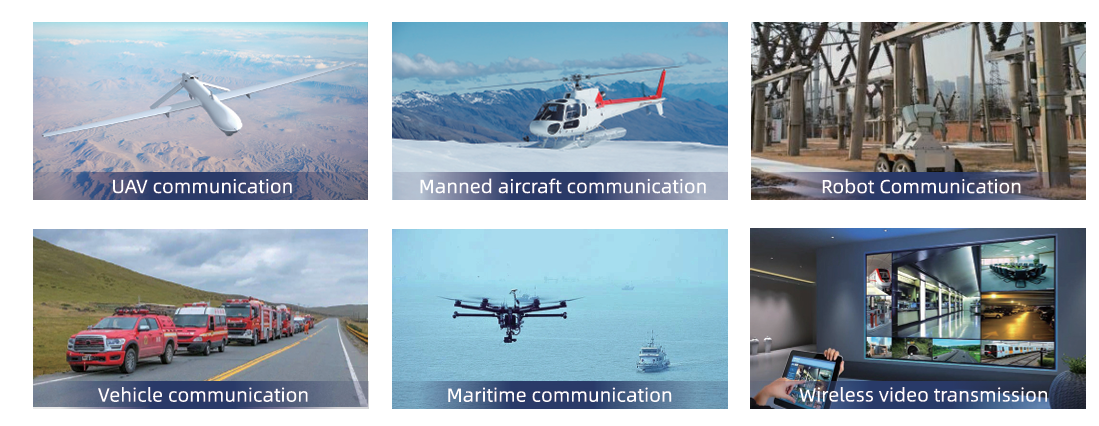
ChinaMoneypro UAV is a national-level high-tech enterprise, transformed from a prestigious state-owned research institute. With deep roots in defense-grade engineering, we specialize in the R&D and manufacturing of advanced unmanned platforms and integrated sensing-communication solutions. Headquartered in one of China’s premier innovation hubs, Moneypro is among the few full-stack providers offering complete UAV systems, engines, gimbals, radar, data links, and communication technologies. When you partner with elite uav solution companies like ChinaMoneypro, you eliminate supply chain vulnerabilities. We guarantee that the airframe, the thermal targeting optics, and the encrypted mesh network are engineered to function flawlessly as a unified combat system.
The Bottom Line
Learning to source military drones from reliable manufacturers is a mandate for modern defense procurement. You must look beyond marketing and demand institutional heritage, full-stack vertical integration, and impenetrable communication architectures. By conducting rigorous field tests and engaging directly with original equipment manufacturers, you secure not just an aircraft, but a sustainable, secure, and lethal tactical advantage for your operators. Discard the brokers, audit the engineering, and invest in fully integrated platforms.
Frequently Asked Questions
How do I verify if a drone manufacturer is truly defense-grade?
A true defense-grade manufacturer will hold specific military quality certifications (such as MIL-STD-810G for environmental ruggedness) and will be able to demonstrate AES-256 encryption, anti-jamming datalinks, and a history of state-level or defense contractor procurement contracts. They build systems, not toys.
Why is vertical integration important in military drones?
Vertical integration means the manufacturer builds the airframe, the camera gimbals, the engines, and the software. This ensures flawless interoperability. If a drone is assembled from disparate third-party components, software conflicts and hardware incompatibilities frequently cause critical failures during tactical operations.
What are End-User Certificates (EUC) in drone procurement?
An End-User Certificate is a legal document required during international arms and dual-use technology transfers. It certifies that the buyer is the final recipient of the military drone and legally binds them not to transfer or sell the technology to unauthorized embargoed nations or hostile non-state actors.