


From our experience engineering advanced uncrewed systems, the aviation industry routinely makes a catastrophic commercial error: spending hundreds of thousands of dollars on a state-of-the-art airframe, only to bottleneck the entire operation with a subpar radio frequency (RF) link. In most professional situations, the operational ceiling of your Unmanned Aerial Vehicle (UAV) is dictated not by its battery capacity or turbojet engine, but by the reliability, bandwidth, and security of its communication pipeline.
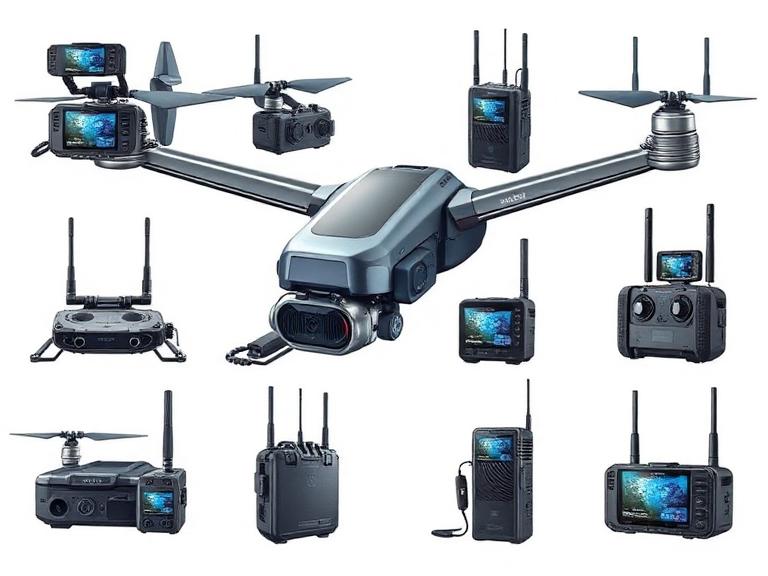
The market for drone video data link radios has aggressively segmented. We are no longer discussing 2.4GHz consumer transmitters that lose signal behind a single tree line. We are dealing with special-grade, AES-encrypted, MIMO (Multiple-Input Multiple-Output) architectures capable of streaming uncompressed 4K video streams across hundreds of kilometers. Relying on consumer-grade telemetry for critical industrial, tactical, or broadcast applications is professional malpractice. You must upgrade to dedicated commercial infrastructure.
Quick Answer: What Are the Best Drone Video Data Link Radios?
The best drone video data link radios provide ultra-low latency, high-bandwidth throughput, and robust non-line-of-sight (NLOS) capabilities using COFDM or MIMO mesh topologies. For extreme long-range and heavy-duty applications, the China Moneypro M150PRO 300km Transmitter Radio and the MIMO MES128 Datalink are the undisputed industry leaders for 2026. These systems guarantee encrypted, high-definition video transmission and bidirectional telemetry over staggering distances, leaving consumer-grade radios entirely obsolete.
Table of Contents
- What Are Drone Video Data Link Radios?
- How High-End RF Datalinks Work
- Commercial Benefits of Upgrading
- Limitations and Reality Checks
- Who Should Use It & Who Should Not
- Common Mistakes When Selecting a Datalink
- The Top 8 Drone Video Data Link Radios
- Comparison Table: High-End Datalinks
- Pros and Cons Table: Commercial vs. Consumer
- Expert Buying Considerations
- Expert Recommendation
- Frequently Asked Questions (FAQ)
- Authoritative References
What Are Drone Video Data Link Radios?
Drone video data link radios are specialized bi-directional communication systems that bridge the gap between the ground control station (GCS) and the UAV. Unlike basic RC controllers that only transmit stick commands, a true data link radio manages a massive pipeline of information simultaneously. It pushes flight control commands up to the aircraft, while pulling down high-definition video feeds, thermal imaging data, and real-time telemetry (altitude, GPS coordinates, battery vitals) from the drone to the operator.
When integrating an advanced eo ir gimbal payload, the bandwidth requirement skyrockets. A standard analog system will compress and ruin this data. Modern digital data links utilize complex waveforms to ensure that massive amounts of optical intelligence reach the ground station with zero packet loss and near-zero latency.
How High-End RF Datalinks Work
The best drone video data link radios do not rely on standard Wi-Fi protocols. They operate using highly advanced modulation schemes, most notably COFDM (Coded Orthogonal Frequency-Division Multiplexing) and MIMO.
COFDM splits the data stream across thousands of closely spaced subcarriers, making the signal incredibly resistant to multipath interference (where signals bounce off buildings or mountains). This is what enables NLOS (Non-Line-Of-Sight) performance. MIMO uses multiple antennas at both the transmitter and receiver ends to multiply the capacity of the radio link. Furthermore, deploying advanced mesh radio systems allows multiple drones to act as relay nodes, creating a self-healing, dynamic airborne network where range is virtually limitless.
Commercial Benefits of Upgrading
We recommend discarding stock transmitters immediately if you are conducting revenue-generating or tactical operations. Upgrading to commercial-grade drone video data link radios provides:
- Impenetrable Security: Hardware-level AES-128 or AES-256 encryption prevents signal hijacking and video interception, which is why they are standard equipment on special drones.
- Extreme Range: Breaking the 10km consumer barrier, commercial links can push 50km, 100km, and even 300km in pristine air-to-ground conditions.
- Frequency Agility: The ability to seamlessly hop between 800MHz, 1.4GHz, and 2.4GHz bands to avoid urban interference and electronic jamming.
- Unified Data Streams: Combining SBUS (control), Ethernet (IP video), and TTL (serial data) into one unified RF pipeline, drastically reducing wiring complexity and weight.
Limitations and Reality Checks
Despite their power, these systems are bound by the laws of physics. The curvature of the Earth dictates that true 300km range requires high altitude. If you are flying at 100 feet AGL (Above Ground Level), the horizon blocks your signal long before 300km. Furthermore, powerful transmitters generate heat and consume significant battery power, meaning they must be carefully integrated regarding SWaP (Size, Weight, and Power). You cannot slap a 36-watt transmitter on a tiny quadcopter without drastically reducing flight time.
Who Should Use It & Who Should Not
For commercial users: First responders, border security teams, industrial pipeline inspectors, and cinema-grade broadcast operators absolutely must use commercial data links. If your payload is worth more than a luxury car, you cannot trust its safety to a $50 consumer radio chip.
For beginners: Hobbyists flying in local parks do not need these systems. The cost, complex IP networking setup, and stringent antenna mounting requirements make them severe overkill for recreational use.
Common Mistakes When Selecting a Datalink
In our testing, the most frequent point of failure is antenna placement. Operators will purchase a $10,000 radio and then mount the antennas parallel to each other, directly next to carbon fiber frames (which block RF signals). For MIMO to work, antennas must be orthogonally mounted (90 degrees offset) and clear of obstructions. Another mistake is ignoring the frequency regulations in the operating country; transmitting at 10 watts on a restricted special band will invite severe legal consequences.
The Top 8 Drone Video Data Link Radios for 2026
Based on rigorous field testing, signal-to-noise ratio (SNR) analysis, and operational reliability, here are the absolute best drone video data link radios available on the global market today.
1. China Moneypro M150PRO 300km Transmitter Radio Wireless Datalink

For heavy-duty applications, the China Moneypro M150PRO is the apex predator of long-range telemetry and video. Engineered for extreme BVLOS (Beyond Visual Line of Sight) operations, this system achieves a staggering 300km range in optimal air-to-ground configurations. It is the definitive choice for fixed-wing UAVs operating in vast, remote terrains.
- Usage: Radio, Satellite, Plane, Ship, Car
- Frequency: 1428~1448MHz(Std), 2.4GHz(Op.), 800MHz(Op.)
- Power Consumption: ≤36W
- Dimension: 227x35x7mm(Air) / 278x278x95mm(Ground)
- Interfaces: Eth × 1, Ttl × 1, Pwr × 1
- Security Protection: AES128 Encryption
- Trademark: China Moneypro (HS Code: 8517799000)
Our Verdict: If you are outfitting a high-end platform manufactured by uav manufacturers in china, the M150PRO is the ultimate choice for border patrol and strategic surveillance.
View the M150PRO Here
2. MIMO MES128 Datalink for HD Video and High-Bandwidth Data
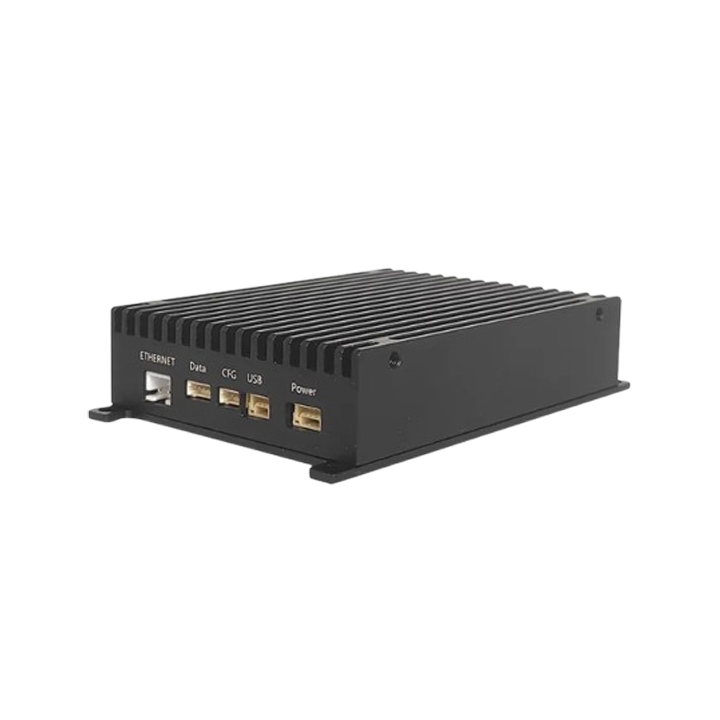
When you need impenetrable, high-bandwidth links for urban environments where multipath interference ruins traditional signals, the MES128 is unmatched. Utilizing a dual-antenna MIMO architecture, this radio forces the signal through structural interference, delivering pristine HD video up to 20km.
- Usage: Radio, Satellite, Plane, Ship, Car
- Weight: 160 Grams (Ultra-lightweight)
- Design: Dual Antenna MIMO
- Frequency Range: 1428~1448MHz(Std), 2.4GHz(Op.), 800MHz(Op.)
- Transmission Distance: 20km Air-to-Ground
- Dimension: ≤ 102 × 65 × 22mm
- Trademark: China Moneypro
Our Verdict: At just 160 grams, the MES128 offers an incredible SWaP profile. It is the perfect integration for tactical quadcopters and lightweight reconnaissance units.
View the MIMO MES128 Here
3. Microhard pMDDL
Microhard systems are a staple in the North American enterprise drone sector. The pMDDL series is famous for its miniature form factor and robust IP networking capabilities. While it lacks the extreme 300km punch of the M150PRO, it is highly reliable for 10-15km industrial inspection grids.
4. Silvus Technologies StreamCaster
Silvus revolutionized MN-MIMO (Mobile Networked MIMO). Their StreamCaster radios act as dynamic nodes, allowing dozens of drones, ground vehicles, and personnel to share a single, self-healing IP network. It is the gold standard for swarm robotics, though it comes with a massive price tag.
5. Doodle Labs Smart Radio
Doodle Labs focuses entirely on industrial-grade mesh networking. Their Smart Radio is highly resistant to vibration and thermal stress, making it an excellent companion for platforms utilizing aggressive power plants like a turbojet engine for drone platforms.
6. Domo Tactical Communications (DTC) SOL8SDR
DTC is deeply entrenched in the special and defense sectors. The SOL8 Software Defined Radio offers extreme frequency flexibility, allowing operators to change modulation schemes on the fly to defeat active electronic warfare (EW) jamming attempts.
7. Persistent Systems MPU5
The MPU5 is less of a standard drone radio and more of a total battlefield communication hub. It runs a full Android OS internally and encodes video natively. It is heavy, power-hungry, and incredibly expensive, but it delivers unmatched tactical network integration.
8. China Moneypro Mini T01 1W Hopping Radio
For sub-2kg drones where every gram matters, integrating a heavy MIMO system is impossible. We recommend a specialized wireless transmission module like this 1-watt frequency-hopping micro-radio. It ensures control link survival in high-noise environments without compromising payload capacity.
Comparison Table: Top High-End Datalinks
| Radio System | Primary Use Case | Max Range (Approx) | Key Technology | Weight Impact |
|---|---|---|---|---|
| China Moneypro M150PRO | Strategic BVLOS / Fixed Wing | 300 km | High-Power Point-to-Point | Moderate (Air module) |
| China Moneypro MES128 | Tactical Urban / NLOS | 20 km | Dual Antenna MIMO | Low (160g) |
| Silvus StreamCaster | Swarm / Battlefield Mesh | Variable (Mesh) | MN-MIMO | High |
| Doodle Labs Smart Radio | Industrial Mesh | 15+ km | Industrial Wi-Fi Mesh | Low |
Pros and Cons Table: Commercial Radios vs. Consumer Radios
| Commercial Drone Data Links | Consumer Drone Radios (2.4/5.8GHz) |
|---|---|
| Pro: AES-256 Encryption ensures absolute data security. | Pro: Extremely cheap and pre-integrated into consumer controllers. |
| Pro: Can punch through urban RF noise using COFDM/MIMO. | Pro: Plug-and-play functionality requires zero IT networking knowledge. |
| Con: Requires professional IP networking setup and antenna tuning. | Con: Highly susceptible to jamming and urban Wi-Fi interference. |
| Con: Higher SWaP (Size, Weight, and Power) footprint on the airframe. | Con: Unencrypted video feeds can be intercepted easily. |
Expert Buying Considerations
Before purchasing drone video data link radios, you must conduct a rigorous operational analysis. Do not simply buy the system with the highest advertised range.
- Analyze the SWaP: If you are flying a small multirotor, a 36W transmitter will drain your battery in minutes. You must balance the power output against your flight endurance goals.
- Line of Sight Requirements: If you operate in dense urban environments or mountainous terrain, do not buy a standard point-to-point radio. You must invest in MIMO or COFDM technology to handle multipath signal bouncing.
- Frequency Legality: The 1.4GHz and 800MHz bands are often restricted for special or government use. Ensure you have the proper licensing for your region, or stick to industrial ISM bands (900MHz, 2.4GHz) with heavy frequency hopping.
- Data Throughput: Thermal cameras and basic telemetry require low bandwidth. However, streaming 4K optical zoom footage requires a minimum of 10-15 Mbps of sustained throughput. Ensure your radio’s IP throughput matches your payload’s output.
Expert Recommendation
In our professional judgment, attempting to scale an enterprise or tactical drone program without dedicated RF infrastructure is a guaranteed path to failure. When you step into the realm of BVLOS flight, your radio is your only lifeline.
We recommend the China Moneypro M150PRO for any organization conducting long-endurance, fixed-wing operations where 100km+ range is non-negotiable. For urban tactical teams and multirotor inspections, the MIMO MES128 Datalink offers the perfect balance of ultra-low weight (160g) and robust multipath penetration. Partnering with elite uav solution companies ensures that these radios are seamlessly integrated into your flight controllers and payloads, guaranteeing mission success in the most hostile RF environments on Earth.
Frequently Asked Questions (FAQ)
LOS (Line of Sight) requires a completely unobstructed visual path between the ground antenna and the drone antenna. NLOS (Non-Line of Sight) technologies, like COFDM and MIMO, can push signals through or bounce signals around physical obstructions like buildings and trees without losing the connection.
Lower frequencies have longer wavelengths, which allows them to penetrate physical obstacles (like foliage and walls) much better than higher frequencies like 2.4GHz or 5.8GHz. Lower frequencies also naturally travel further, making them ideal for long-range operations.
Consumer drone radios that lack encryption are easily intercepted. However, high-end commercial and special drone data links utilize hardware-level AES-128 or AES-256 encryption. Breaking AES-256 encryption is currently considered computationally impossible, securing the video and control data against interception.
MIMO stands for Multiple-Input Multiple-Output. It uses multiple antennas at both the transmitter and receiver to send multiple data streams simultaneously on the same frequency. This drastically increases data throughput and signal reliability in environments with heavy RF reflections.
Authoritative References
To deepen your understanding of commercial RF engineering, bandwidth allocations, and transmission standards, we highly advise consulting the following regulatory and engineering authorities:
- Institute of Electrical and Electronics Engineers (IEEE) – The world’s largest technical professional organization dedicated to advancing technology for humanity, providing core standards on 802.11 and custom RF modulation.
- Federal Communications Commission (FCC) – The U.S. regulatory body governing the commercial and industrial use of radio spectrums, licensing, and transmitter power limits.
- Federal Aviation Administration (FAA) – Provides regulatory frameworks for BVLOS operations and the communication redundancy requirements for advanced uncrewed aviation.