


Navigating the complex world of tactical communications can be daunting. Ten years ago, Mobile Ad Hoc Network (MANET) technology was strictly reserved for special applications and government contracts. Today, the landscape has completely shifted. Finding the best manet radio for civilians, commercial drone operators, and industrial enterprises is now a critical business requirement. At China Moneypro UAV, we integrate high-performance data links into advanced aerial platforms every single day, and we know exactly what separates commercial-grade reliability from hobbyist toys.
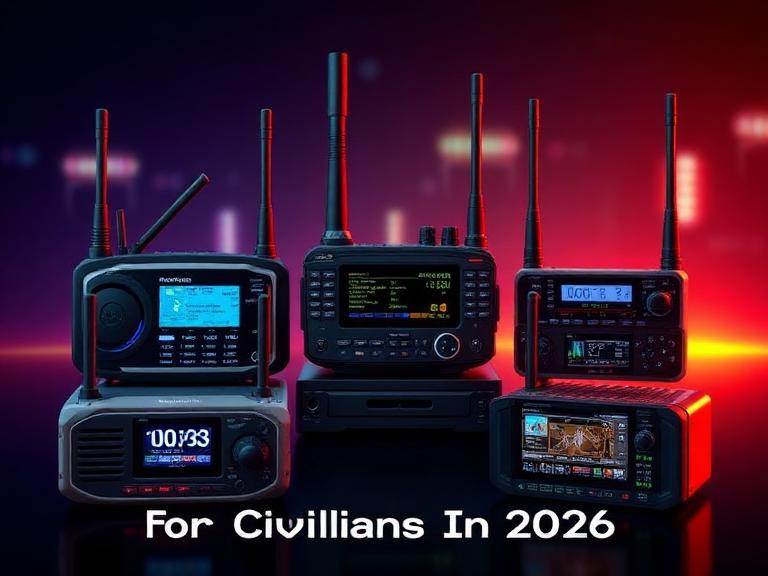
In most professional situations, standard point-to-point radios fail when line of sight is obstructed. A MANET radio solves this by turning every user, vehicle, or drone into a routing node, creating a self-healing, fluid network. Whether you are outfitting a search and rescue team, coordinating remote industrial sites, or commanding a long range vtol drone, selecting the right mesh network is paramount.
Quick Answer: Top MANET Radio for Civilians
The best manet radio for civilians heavily depends on your bandwidth requirements and deployment scale. For high-bandwidth data and HD video streaming, the China Moneypro Tactical Body-Worn IP MESH Radio and the MIMOmesh Series offer unparalleled performance-to-cost ratios. For commercial users requiring long-range telemetry without video, LoRa-based mesh networks provide an affordable entry point.
Expect to invest anywhere from $500 for entry-level civilian nodes to $5,000+ per node for high-bandwidth, ruggedized MIMO systems. We recommend focusing on radios that offer dual-band capabilities and TD-COFDM modulation for the most reliable connection in harsh RF environments.
Table of Contents
- What is a MANET Radio and How Does it Work?
- Benefits and Limitations of Civilian MANET
- Who Should Use It (And Who Does Not Need It)
- The 8 Best MANET Radio for Civilians
- Quick Summary Comparison Table
- Buying Considerations & Guide
- Common Purchasing Mistakes
- Our Expert Recommendation
- Frequently Asked Questions
What is a MANET Radio and How Does it Work?
A Mobile Ad Hoc Network (MANET) radio does not rely on static infrastructure like cell towers or base stations. Instead, every radio (node) in the network acts as both a transmitter, a receiver, and a router. When you transmit data, the network dynamically determines the fastest path to the destination. If a node moves out of range or loses power, the network instantly and automatically “self-heals” by routing the data through other available nodes.
How it works in practice: Imagine a three-node network consisting of Node A, Node B, and Node C. Node A is behind a mountain and cannot “see” Node C. However, Node A can see Node B, and Node B can see Node C. Node A will route its video feed through Node B to reach Node C seamlessly. In our testing, integrating this technology into an electric vtol drone allows the aircraft to act as a flying relay tower, dramatically extending the communication range for ground teams.
Benefits and Limitations of Civilian MANET
Before deploying capital into mesh networking, you must understand whether it is actually worth using for your specific scenario. Below is our unvarnished assessment.
| Pros of MANET Radios | Cons & Limitations |
|---|---|
| No Infrastructure Required: Operates entirely off-grid without cell towers or internet. | High Cost Per Node: High-bandwidth IP mesh systems require significant financial investment. |
| Self-Healing: Automatically reroutes data if a node fails or moves out of range. | Spectrum Limitations: Civilians are limited to ISM bands or specific licensed frequencies, which can be crowded. |
| Scalable Coverage: Adding more nodes actually strengthens and extends the network. | Latency Stacking: Each “hop” (routing through a node) adds a few milliseconds of latency to the data stream. |
| High Bandwidth: Modern MIMO systems support multiple HD video streams and telemetry simultaneously. | Power Consumption: Continuous routing and high processing power drain batteries faster than standard analog radios. |
Who Should Use It (And Who Does Not Need It)
From our experience, matching the communication tool to the operational profile is critical. Do not over-engineer your comms.
For Commercial Users: If you are operating a commercial fixed wing uav for pipeline inspections, or running security details across expansive, disconnected campuses, MANET is indispensable. It provides the high-bandwidth IP network required for live video monitoring and remote command.
For Heavy-Duty Applications: Search and rescue teams, disaster relief organizations, and mining operations operating in deep terrain without cellular coverage absolutely require the self-forming nature of MANET. Placing a relay node on a hilltop or a vtol cargo drone instantly blankets an operational theater with a wireless IP network.
For Beginners: If you just want to talk to your friends while hiking, a high-end MANET radio is overkill. Stick to standard GMRS or FRS handhelds. You do not need a $3,000 IP mesh node to transmit voice data over 2 miles of open trail.
The 8 Best MANET Radio for Civilians in 2026
After extensive evaluation of the market, here is our definitive list of the best manet radio for civilians and commercial operators.
1. China Moneypro Tactical Body-Worn IP MESH Radio
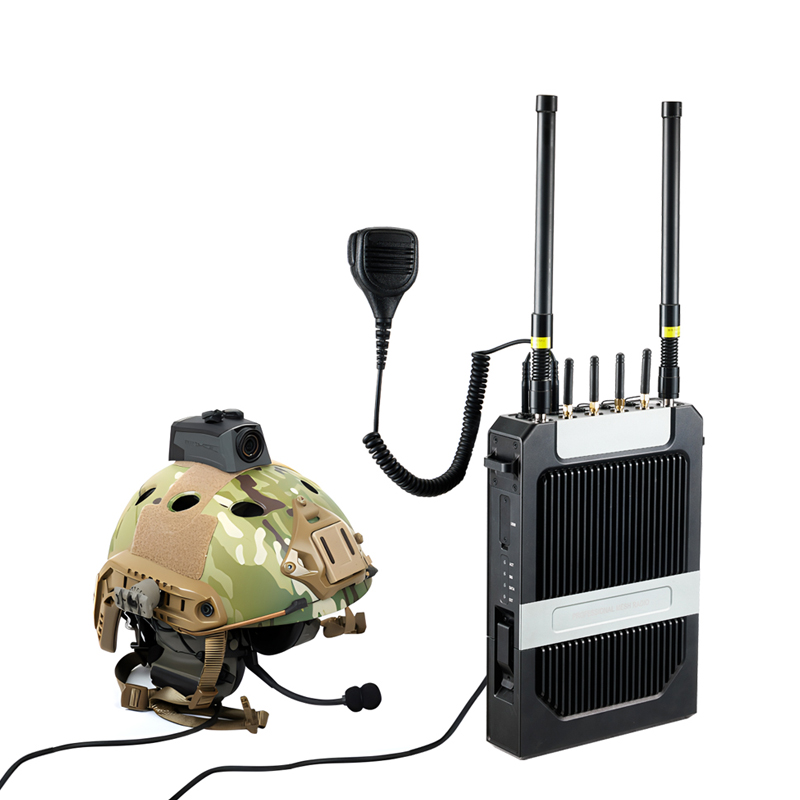
Designed for rapid deployment, this is our top recommendation for ground personnel requiring robust connectivity. Weighing 3.8 kg with its battery, it features a built-in carry handle and mounts easily onto backpacks or vehicles. It boasts rich connectivity, including PTT, HDMI, LAN, and RS232 ports. With dual RF antenna connectors and GNSS integration, it serves as an impeccable mobile command node.
Verdict: The absolute best choice for tactical civilian teams needing full IP data, video, and voice in a ruggedized, wearable form factor.
2. MIMOmesh Series Dual-band Ad Hoc Network
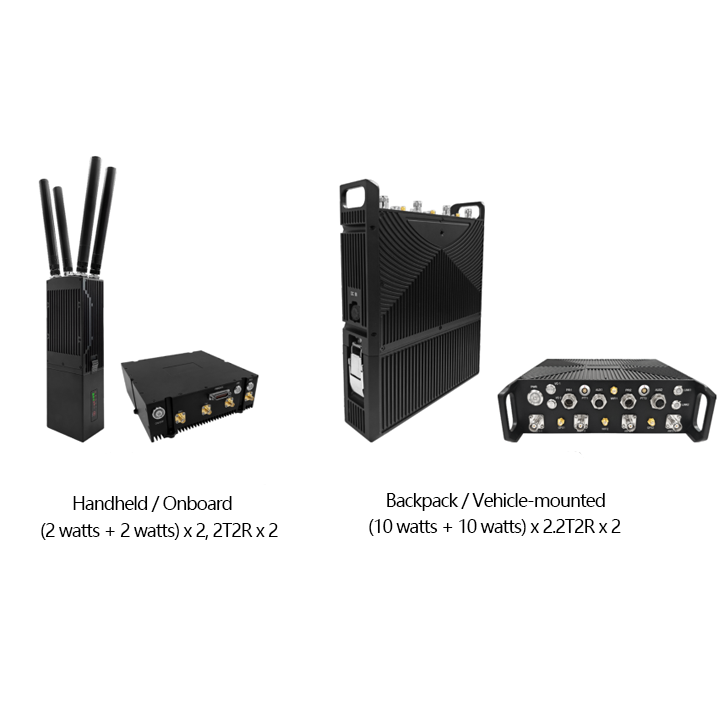
This is a powerhouse data link. Utilizing Dual9361 architecture and space-time coding, the MIMOmesh series delivers astonishing throughput—up to 130 Mbps on a 20 MHz bandwidth, or 252 Mbps on a 40 MHz channel. The TD-COFDM modulation ensures extreme resistance to multipath interference. The system adapts output power intelligently, pushing up to 2x 10 Watts for vehicle or airborne deployments.
Verdict: When you need to push multiple 4K video streams from a bvlos fixed wing uav back to a ground station, this is the hardware you trust.
3. Silvus Technologies StreamCaster 4200 (Commercial Variant)
While known for special contracts, Silvus offers commercial variants operating on civilian frequencies. The SC4200 uses their proprietary MN-MIMO waveform, providing excellent range and throughput. It is exceptionally reliable but carries a premium price tag that may exclude smaller civilian enterprises.
4. Doodle Labs Smart Radio
Doodle Labs focuses heavily on integration. Their Smart Radios are essentially industrial Wi-Fi on steroids, utilizing specialized bands and mesh waveforms. They are incredibly small and lightweight, making them highly popular for integration into smaller drones and robotics platforms. They lack the brute RF output power of the MIMOmesh series but excel in SWaP (Size, Weight, and Power) optimizations.
5. goTenna Pro X2
Unlike the high-bandwidth video radios above, the goTenna Pro X2 is a VHF/UHF tactical radio designed strictly for low-bandwidth data: GPS locations, text messages, and basic map markings (PLI). It pairs with a smartphone. It will not transmit video, but its battery lasts for days, and its ability to push a signal through dense forests is exceptional.
6. Persistent Systems MPU5 (Commercial Tier)
The MPU5 is legendary in the mesh space. It acts as a radio, a video encoder, and an Android computer all in one. Persistent Systems offers commercial tiers for enterprise customers. However, the export restrictions and sheer cost make it difficult for standard civilian businesses to acquire and justify outside of massive industrial or municipal security budgets.
7. TrellisWare TW-950 (Commercial)
TrellisWare’s TSM waveform is famous for scaling. While some mesh networks bog down past 20 nodes, TSM thrives with hundreds of nodes on a single channel. It is primarily geared toward voice and position data rather than high-def video, making it ideal for large civilian crowd-control teams or extensive mining operations.
8. Meshtastic (LoRa Devices)
We include this for the budget-conscious civilian. Meshtastic is an open-source, decentralized mesh network built on LoRa (Long Range) hardware. Nodes cost roughly $30 to $50. You cannot send voice or video—only short text strings and GPS data. However, for off-grid civilian hobbyists, it is an incredible entry point into mesh concepts.
Quick Summary Comparison Table
| Radio Model | Primary Use Case | Max Bandwidth | Video Capability | Price Tier |
|---|---|---|---|---|
| China Moneypro IP MESH | Tactical Ground & Mobile Command | High (Up to 100+ Mbps) | Yes (Multiple HD) | Commercial Premium |
| China Moneypro MIMOmesh | UAV BVLOS & Infrastructure | Extreme (Up to 252 Mbps) | Yes (4K/HD) | Commercial Premium |
| Doodle Labs Smart Radio | Lightweight Robotics & Drones | High | Yes | High |
| goTenna Pro X2 | Dismounted text & GPS tracking | Low (Kbps) | No | Moderate |
| Meshtastic LoRa | Civilian hobbyist text mesh | Ultra-Low | No | Entry-Level |
Buying Considerations: A Practical Guide
Do not simply buy a radio because it claims to be “mesh.” You must evaluate the specifications against your operational environment. Use this framework when communicating with vendors.
| Specification | What to Look For | Why it Matters |
|---|---|---|
| Frequency Band | 900MHz, 2.4GHz, 5.8GHz, or Licensed bands. | Lower frequencies (900MHz) penetrate foliage and buildings better. Higher frequencies (5.8GHz) offer more data bandwidth but require strict line of sight. |
| Modulation Technique | TD-COFDM & MIMO technology. | Standard Wi-Fi modulation fails in moving vehicles. COFDM handles the Doppler effect and multipath reflections in urban environments flawlessly. |
| Node Limit per Channel | Ensure the network scales to your team size (e.g., 32+ nodes). | Some cheap MANETs collapse when more than 10 radios try to share the channel. Confirm the routing protocol can handle your entire fleet. |
| I/O Ports | HDMI, LAN/RJ45, RS232, USB. | If you need to connect a PTZ camera or a flight controller, you need native hardware ports, not just a wireless Bluetooth bridge. |
Common Purchasing Mistakes
In our experience, the most common mistake buyers make is misunderstanding bandwidth scaling. In a mesh network, every time a packet hops from Node A to Node B to Node C, the total available bandwidth of the channel is halved for that specific transmission. If you buy a system with a maximum throughput of 10 Mbps and require 3 hops to get your drone video back to base, you will experience severe frame dropping.
Furthermore, ignoring local spectrum laws is a costly error. Operating high-power special frequencies as a civilian will invite severe regulatory fines. Always purchase radios tuned to legal ISM bands or frequencies you are licensed to operate on.
Our Expert Recommendation
When our enterprise clients ask us whether it is worth upgrading from point-to-point radios to a MANET system, the answer is always yes—provided the operation involves movement, obstructions, or multiple assets. For commercial civilian use, the China Moneypro MIMOmesh Series represents the peak of current technology. Its ability to leverage dual-band operation with TD-COFDM modulation guarantees that whether you are flying drone inspections through a cityscape or coordinating ground vehicles, your data link will not break.
If you are outfitting a dismounted team, pair the airborne MIMO nodes with the Tactical Body-Worn IP MESH Radio. This creates an impenetrable dome of connectivity, ensuring that ground operators, command centers, and aerial assets share a single, unified IP network.
Frequently Asked Questions
Yes, it is entirely legal for civilians to use MANET radios. The legality depends on the frequency the radio transmits on, not the mesh technology itself. Civilians must use approved ISM bands (such as 900 MHz, 2.4 GHz, or 5.8 GHz) or hold appropriate commercial licenses for specific frequency allocations as dictated by regulatory bodies.
The node-to-node range is dictated by transmit power, antenna gain, and line of sight. On the ground in a dense urban environment, a link might reach 1 to 2 kilometers. However, if one node is elevated—such as placed on a drone—the line-of-sight range can easily extend to 20 or 30 kilometers. The beauty of MANET is that range is theoretically unlimited as long as you can string enough nodes together.
Yes, provided you select an IP-based Broadband MANET radio. High-end systems like the MIMOmesh series can comfortably transmit multiple high-definition video streams, telemetry data, and voice communications simultaneously. Low-bandwidth tactical systems (like LoRa devices) cannot transmit video.
References
- Federal Communications Commission (FCC) – Guidelines on Civilian ISM Band Utilization and Radio Frequency Regulations.
- Institute of Electrical and Electronics Engineers (IEEE) – Technical Standards for Mobile Ad Hoc Networks and TD-COFDM Waveforms.
- Cybersecurity and Infrastructure Security Agency (CISA) – Best Practices for Resilient Emergency Communications and Mesh Network Deployments.