


The aerospace industry is unforgiving to those who ignore mechanical upkeep. When enterprise organizations deploy advanced unmanned aerial vehicles (UAVs) for mapping, surveillance, or logistics, the success of the entire operation hinges on hardware reliability. It is an objective fact that learning how to precisely maintain fixed wing drones is the single most critical factor in extending the operational lifespan of your fleet and protecting your financial investment.
At China Moneypro UAV, our engineering teams have analyzed thousands of hours of flight logs, crash reports, and hardware stress tests. From our experience, the vast majority of catastrophic failures in the field are not caused by pilot error or sudden acts of nature, but by systemic neglect of routine service protocols. If you do not actively maintain fixed wing drones with special-grade precision, micro-fractures in the airframe, degraded battery chemistry, and avionics drift will inevitably ground your aircraft.
This comprehensive guide delivers an opinionated, unvarnished look at what it truly takes to keep these machines in the sky. We are stripping away the generic advice to provide you with actionable, expert-level maintenance frameworks. Whether you are operating a standard platform or a highly specialized fixed wing drones fleet, these protocols are non-negotiable for long-term mission success.
Table of Contents
- 1. The Financial Reality of Drone Upkeep
- 2. Summary Table: Core Maintenance Schedules
- 3. The Non-Negotiable Pre-Flight and Post-Flight Basics
- 4. Deep Dive: Component-Level Maintenance Strategies
- 5. Environmental Storage and Handling Protocols
- 6. Spotlight: Maintaining the 15KG Spring Knife
- 7. Advanced Diagnostic and Log Analysis
- 8. Frequently Asked Questions (FAQs)
- 9. Authoritative References
1. The Financial Reality of Drone Upkeep
Let us address the business reality immediately: aerial platforms are significant capital expenditures. When an organization integrates a sophisticated commercial fixed wing uav into its workflow, it expects a return on investment that spans hundreds, if not thousands, of flight hours. However, CFOs and operations managers often underestimate the operational expenditure required to maintain fixed wing drones to factory specifications.
A reactive approach to maintenance—fixing parts only when they break—is a guaranteed path to financial loss. An in-flight failure of a propulsion motor does not just cost you a new motor; it potentially costs you an airframe, the payload, and massive liability if the aircraft descends into a populated area. We recommend treating drone maintenance identical to manned aviation maintenance. Establishing a rigid schedule of preventative replacements is far cheaper than replacing a completely destroyed aircraft.
2. Summary Table: Core Maintenance Schedules
To successfully maintain fixed wing drones, operators must adhere to strict chronological and flight-hour benchmarks. Below is our recommended baseline schedule.
| Maintenance Interval | Required Actions and Inspections | Critical Component Focus |
|---|---|---|
| Pre-Flight (Every Flight) | Visual inspection, control surface test, CG check, telemetry link verification. | Airframe integrity, linkages, pitot tube clearance. |
| Post-Flight (Every Flight) | Battery discharge to storage voltage, motor heat check, log offloading. | LiPo batteries, ESCs (Electronic Speed Controllers). |
| Every 25 Flight Hours | Propeller balancing, bearing lubrication check, firmware integrity check. | Propulsion system, avionics suite. |
| Every 100 Flight Hours | Full teardown inspection, servo replacement, wiring harness continuity test. | Actuators, internal power distribution. |
| Annually | Complete airframe stress analysis, battery fleet purge and replacement. | Carbon fiber spars, power systems. |
3. The Non-Negotiable Pre-Flight and Post-Flight Basics
If you fail to maintain fixed wing drones during the critical windows immediately before and after a flight, you are inviting disaster. The pre-flight check is your last line of defense against hardware failure.
Pre-Flight Inspections
From our experience, over 40% of crashes are preventable on the tarmac. Begin by inspecting the physical airframe. Run your hands over the leading edges of the wings. You are feeling for delamination in the composite materials or micro-cracks in the EPO foam. Next, verify the integrity of the control linkages (pushrods and clevises). A loose clevis on an elevator or aileron will result in complete loss of pitch or roll control. When operating a heavy-lift cargo drone solutions platform, a center-of-gravity (CG) check is mandatory before every single takeoff. Cargo shifts; do not assume the CG is identical to your last flight.
Post-Flight Procedures
Your job does not end when the aircraft touches down. Immediately inspect the motors for excessive heat. While some heat is normal, a motor that burns your finger is experiencing severe internal friction or is over-propped. Clean the airframe thoroughly; insect residue and dirt can degrade the aerodynamic efficiency over time, particularly on the leading edges and the pitot tube. Most importantly, offload your flight logs immediately. We recommend establishing a strict data hygiene protocol to monitor for voltage sags and vibration anomalies.
4. Deep Dive: Component-Level Maintenance Strategies
To professionally maintain fixed wing drones, you must transition from looking at the aircraft as a single object to viewing it as a complex system of interdependent components.
Propeller and Motor Care
The propulsion system is the beating heart of your UAV. Propellers must be perfectly balanced. An unbalanced propeller introduces high-frequency micro-vibrations into the airframe, which confuses the inertial measurement unit (IMU) and causes the flight controller to overcompensate, draining the battery rapidly. We recommend discarding propellers at the first sign of a nick or stress line. Never attempt to glue or repair a damaged propeller. For the motors, listen closely as you manually spin the bell housing. If you hear a grinding noise, the ceramic or steel bearings are failing. When operating a long range drone with camera, vibration from failing bearings will introduce rolling shutter effects that ruin your photogrammetry data.
Avionics, Sensors, and Firmware
Avionics do not rust, but they do suffer from digital decay and sensor drift. You must routinely calibrate the magnetometer (compass) and the accelerometer. If you are operating near large metallic structures or high-voltage power lines, the compass will become magnetized over time. Furthermore, keeping your flight controller firmware updated is critical, but we strongly advise against updating firmware the night before a major operation. From our experience, you should always test new firmware on a testbed aircraft before pushing it to your primary production fleet.
Battery Lifecycle Management
Lithium-ion and Lithium-Polymer (LiPo) batteries are the most volatile and rapidly degrading components in any UAV system. To maintain fixed wing drones correctly, you must treat your batteries with extreme care. Never store a battery fully charged for more than 48 hours. Doing so severely degrades the internal chemistry and increases internal resistance, which leads to voltage sag during flight. Store your batteries at roughly 3.8V to 3.85V per cell in a cool, fireproof environment. Keep a meticulous log of charge cycles. We recommend retiring batteries after 150 to 200 cycles, depending on the chemical composition, to prevent sudden in-flight power failures.
Payload and Camera Gimbal Upkeep
If you are flying a fixed wing drone for photogrammetry, your payload is often more expensive than the airframe itself. The gimbal mechanisms are highly susceptible to dust and sand ingress. Use compressed air to clean the brushless gimbal motors after operations in arid environments. Regularly inspect the dampening balls that isolate the payload from airframe vibrations; these rubber components dry rot over time and must be replaced bi-annually.
5. Environmental Storage and Handling Protocols
How you store your drone is just as important as how you fly it. Carbon fiber and composite plastics are highly susceptible to prolonged UV exposure, which breaks down the epoxy resins, causing the material to become brittle. Always store your aircraft in custom-fit hard cases away from direct sunlight.
Temperature and humidity are also silent killers of drone electronics. Storing a drone in a damp environment will inevitably lead to oxidation on the PCB boards and wiring harnesses. For large-scale logistics operations utilizing a vtol cargo drone, climate-controlled hangar space is an absolute requirement. Furthermore, sudden temperature changes can cause condensation to form inside the avionics bay. Allow the aircraft to acclimate to ambient temperatures before powering on the flight controller to prevent short circuits.
6. Spotlight: Maintaining the 15KG Spring Knife Fixed Wing Drone
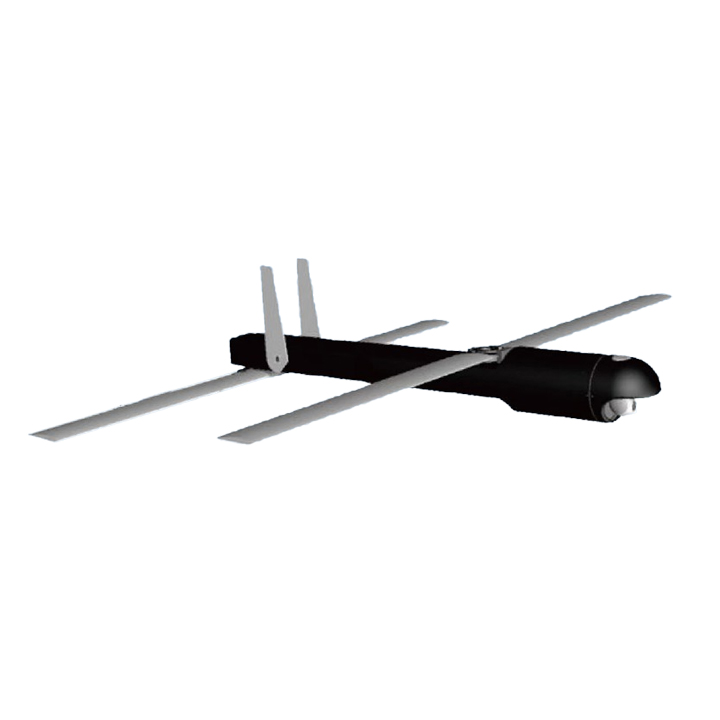
At China Moneypro UAV, we engineer platforms designed for extreme endurance and harsh environments. However, top-tier engineering still requires operator diligence. A prime example is our tactical-grade platform, the 15KG Spring Knife fixed wing drone. When dealing with systems that intersect with special drones capabilities, the margin for error is zero.
| China Moneypro UAV: 15KG Spring Knife Specifications | |
|---|---|
| Link | View 15KG Spring Knife Official Page |
| Maximum Takeoff Weight | 15.5 kg |
| Maximum Flight Speed | 140 – 160 km/h |
| Maximum Range | >120 km |
| Operating Altitude | 100 m – 3000 m |
| Flight Endurance | ≥60 min |
| Communication Distance | ≥30 km |
| Pendulum Capacity (Payload) | 4.5 kg |
| Fuselage Length & Wingspan | Length: ≥1300 mm (excluding motor) | Wingspan: ≥1800 mm |
| Folded Dimensions | Diameter: ≤180 mm | Length: ≤1800 mm |
| Environmental Tolerances | Operating Temp: -20°C to +50°C | Storage Temp: -10°C to +70°C | Humidity: ≤70% |
Because the Spring Knife operates at high speeds (up to 160 km/h) and carries a substantial payload (4.5 kg) over vast distances (>120 km), the mechanical stress on the folding mechanisms is immense. To properly maintain fixed wing drones of this caliber, operators must rigorously inspect the locking hinges of the folding wings (maximum folded diameter ≤180mm). Any play in these joints at 160 km/h will result in a catastrophic aerodynamic flutter. Furthermore, given its wide operating temperature range (-20°C to +50°C), you must ensure that thermal expansion and contraction have not loosened the motor mount screws.
7. Advanced Diagnostic and Log Analysis
The days of flying by feel are over. Modern unmanned systems generate gigabytes of telemetry data. To maintain fixed wing drones effectively, you must become proficient in reading flight logs. When operating a bvlos fixed wing uav (Beyond Visual Line of Sight), the aircraft is miles away; the data is your only insight into its health.
We recommend using software tools like Mission Planner or QGroundControl to analyze the `.bin` or `.tlog` files after every major mission. Look specifically for the VIBE (vibration) charts. If the Z-axis vibrations exceed the acceptable thresholds defined by your flight controller manufacturer, you have an impending mechanical failure—usually an unbalanced prop, a loose motor mount, or a failing bearing. Additionally, monitor the power module logs. If the aircraft requires significantly more amperage to maintain the same cruise speed compared to previous flights, aerodynamic drag has increased (perhaps due to airframe damage) or motor efficiency has plummeted.
8. Frequently Asked Questions (FAQs)
9. Authoritative References
To further understand the aerospace standards required to maintain fixed wing drones, we recommend consulting the following authoritative sources. These institutions provide the foundational engineering data that informs our maintenance protocols at China Moneypro UAV.
- Federal Aviation Administration (FAA). “Unmanned Aircraft Systems (UAS) Maintenance and Inspection Guidelines.” Available at: https://www.faa.gov/uas. (Review their circulars regarding preventative maintenance for commercial Part 107 operations).
- National Aeronautics and Space Administration (NASA). “Reliability and Maintenance Analysis of Unmanned Aerial Vehicles.” NASA Technical Reports Server. Available at: https://ntrs.nasa.gov/.
- Institute of Electrical and Electronics Engineers (IEEE). “Lifecycle Degradation and Safety Management in High-Capacity Lithium-Polymer UAV Batteries.” IEEE Xplore Digital Library. Available at: https://ieeexplore.ieee.org/.