


When asking the question, Is eVTOL a good investment, the market is severely fractured by a fundamental misunderstanding. Retail investors immediately think of speculative urban air mobility (UAM) passenger air taxis—startups burning through billions in venture capital hoping for regulatory approval. However, in most professional situations, the true commercial reality is entirely different. For enterprises, land surveyors, and government agencies, an eVTOL (Electric Vertical Takeoff and Landing) drone is not a speculative stock ticker; it is a critical capital asset. Purchasing an industrial unmanned eVTOL is currently one of the highest ROI decisions an organization can make.
From our experience at ChinaMoneypro UAV, transitioning from defense-grade engineering at a state-owned research institute to commercial manufacturing, we have witnessed the mathematics of aerial operations flip. Utilizing traditional manned helicopters for pipeline inspection or border patrol costs thousands of dollars per hour. In stark contrast, deploying a electric vtol drone costs literal pennies per hour in electricity and routine maintenance. In this definitive guide, we strip away the Wall Street hype and evaluate whether purchasing commercial eVTOL systems is a sound operational and financial investment for your organization.
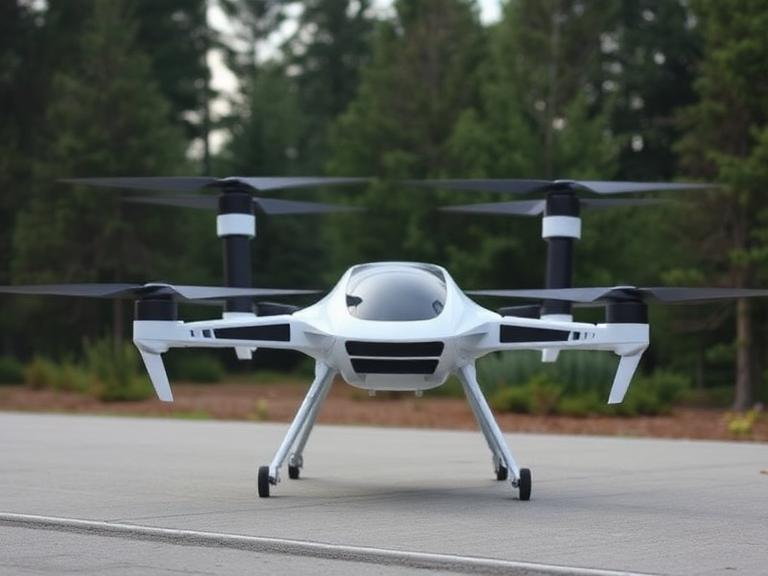
Quick Answer: The ROI of eVTOL Procurement
If you are evaluating whether to procure an eVTOL system as a business asset, the answer is a resounding yes. Is eVTOL a good investment for commercial operations? Absolutely. Here is why:
- Immediate Cost Savings: Replacing manned aerial assets (helicopters or light aircraft) with an unmanned eVTOL reduces operational costs by up to 95%.
- Unmatched Versatility: Unlike traditional fixed-wing drones, eVTOLs require zero runways, catapults, or capture nets. They take off vertically anywhere and transition to highly efficient forward flight.
- Superior Coverage: Compared to standard quadcopters that max out at 40 minutes, a long endurance vtol drone can map thousands of acres or patrol vast borders in a single flight.
We recommend completely ignoring the passenger “flying car” hype cycle. Instead, invest your capital into proven, industrial-grade unmanned eVTOL systems built with robust uav technology solutions including encrypted data links and redundant flight controllers.
Table of Contents
- What It Is: Separating Industrial Reality from Passenger Hype
- How It Works: The Aerodynamics of Transition
- Commercial Benefits and Cost-Benefit Analysis
- Limitations and Operational Constraints
- Who Should Use It & Who Does Not Need It
- Common Procurement Mistakes
- Summary & Comparison Tables
- Strategic Buying Considerations
- Expert Recommendation from ChinaMoneypro UAV
- The Bottom Line
- Frequently Asked Questions
What It Is: Separating Industrial Reality from Passenger Hype
To accurately answer Is eVTOL a good investment, we must define the asset. eVTOL stands for Electric Vertical Takeoff and Landing. While the media focuses heavily on manned air taxis designed to transport humans across cities, the industrial sector relies on unmanned eVTOL aircraft. These are sophisticated drones that combine the hovering capability of a helicopter with the aerodynamic efficiency of an airplane. They utilize multi-rotor arms to lift off the ground vertically. Once at a safe altitude, a rear pusher motor (or tilting rotors) engages, and the aircraft flies forward using its fixed wings for lift, allowing the vertical lifting motors to shut down or feather to reduce drag.
How It Works: The Aerodynamics of Transition
The core value proposition of an eVTOL lies in the transition phase. Quadcopters waste tremendous amounts of energy fighting gravity just to stay aloft. By contrast, a long range vtol drone only uses pure thrust for the first 30 seconds of flight. Once it transitions into forward flight, the wings generate the lift. This drastically reduces the power load on the batteries. This aerodynamic efficiency allows an eVTOL to fly three to five times longer than a comparable multirotor drone carrying the exact same payload. The entire process is managed by advanced flight controllers equipped with RTK (Real-Time Kinematic) GPS modules, ensuring centimeter-level precision during both flight and landing.
Commercial Benefits and Cost-Benefit Analysis
When executing a cost-benefit analysis for your facility or agency, the numbers are overwhelmingly clear. The primary benefit is the democratization of long-range aerial data collection. Consider a mining company needing to survey 10,000 acres. Hiring a manned Cessna or helicopter costs approximately $1,200 to $2,000 per hour, plus the cost of specialized LiDAR or photogrammetry personnel. If the company purchases a commercial eVTOL for $25,000, the payback period is realized in less than 20 flight hours.
Furthermore, eVTOL systems eliminate infrastructure requirements. You do not need a paved runway, which is mandatory for traditional fixed-wing drones. This makes them exceptionally valuable for maritime operations, remote wilderness mapping, and disaster response scenarios where terrain is unpredictable. Some operators even pair their aerial assets with a unmanned surface vehicle to execute synchronized land, sea, and air security patrols.
Limitations and Operational Constraints
We must use commercial judgment: relying on eVTOL technology is not without friction. The primary limitation remains battery energy density. While electric systems are clean and quiet, lithium-ion and solid-state batteries are heavy. If you require massive payloads (e.g., 20kg+ LiDAR sensors combined with heavy cinematic gimbals), pure electric systems struggle with range. In these heavy-duty applications, we advise pivoting from pure electric to a hybrid vtol drone, which utilizes a small gasoline-powered internal combustion engine or generator to constantly charge the flight batteries, pushing endurance past the 10-hour mark.
Who Should Use It & Who Does Not Need It
For commercial users and government agencies: If your operational mandate includes large-scale topographic mapping, linear infrastructure inspection (powerlines, oil pipelines), search and rescue, or continuous border surveillance, an eVTOL is a mandatory investment. It provides the only viable way to cover vast distances without relying on massive, expensive manned aircraft.
Who does not need it: For beginners, real estate photographers, or roof inspectors, an eVTOL is a terrible investment. If your area of operation is confined to a 500-meter radius (like inspecting a single building or photographing a wedding), the transition flight capabilities are useless. You should buy a standard, inexpensive quadcopter. You do not need a fixed-wing asset to hover over a house.
Common Procurement Mistakes
In our testing and industry auditing, the most expensive mistake a procurement officer makes is focusing solely on airframe specifications while ignoring the communication architecture. An eVTOL with a 100km range is useless if you lose telemetry control at 10km. You must invest heavily in a special-grade wireless transmission module that supports frequency hopping and anti-jamming capabilities, ensuring secure Beyond Visual Line of Sight (BVLOS) operations.
Another common mistake is purchasing closed-ecosystem consumer drones that do not allow payload swapping. A true industrial investment requires open-architecture payload bays so you can swap out an EO/IR (Electro-Optical/Infrared) gimbal for a multi-spectral mapping camera depending on the day’s mission.
Summary & Comparison Tables
Quick Summary Table: Asset ROI Comparison
| Asset Type | Average Capital Cost | Operational Cost / Hr | Ideal Application |
|---|---|---|---|
| Manned Helicopter | $1.5M – $3M | $1,200 – $2,500 | Heavy crew transport, massive payloads |
| Industrial eVTOL | $15k – $50k | $5 – $15 | Large-scale mapping, BVLOS surveillance |
| Commercial Quadcopter | $3k – $10k | $2 – $5 | Localized inspection, real estate |
Pros and Cons of eVTOL Procurement
| Pros of eVTOL Investment | Cons of eVTOL Investment |
|---|---|
| Eliminates the need for runways, catapults, or nets. | Higher initial capital cost than basic quadcopters. |
| Flight endurance is 3x to 5x longer than multirotors. | Requires more complex flight controller configuration. |
| Massive reduction in operational and maintenance costs. | Larger physical footprint limits transportability in small vehicles. |
| Capable of fully autonomous BVLOS mission execution. | Payload capacity is highly sensitive to wind and drag. |
Buying Guide Table: Electric vs Hybrid eVTOL
| Specification Focus | Pure Electric eVTOL | Gas-Electric Hybrid eVTOL |
|---|---|---|
| Power Source | Lithium-Ion / Solid State Batteries | EFI Gas Generator + Backup Batteries |
| Endurance | 2 to 4 Hours | 6 to 12+ Hours |
| Maintenance | Extremely Low (No moving engine parts) | Moderate (Requires oil changes, engine tuning) |
| Best For | Standard mapping, stealth surveillance | Border patrol, heavy-lift remote logistics |
Strategic Buying Considerations
When deploying capital for an eVTOL fleet, you must consider the powerplant architecture. If you are operating in high-altitude environments (above 4,000 meters) or require heavy lifting capabilities, pure battery power will suffer due to air density and discharge rates. In these scenarios, you must upgrade to systems equipped with advanced drone engine systems. Some highly specialized defense applications even utilize a turbojet engine for drone integration to achieve rapid intercept speeds, though this is overkill for standard commercial mapping.
Expert Recommendation from ChinaMoneypro UAV
The Manufacturer’s Verdict
In most professional situations, treating an industrial drone as a disposable commodity is a fast track to operational failure. Is eVTOL a good investment? Yes, provided you purchase a system built on defense-grade architecture. ChinaMoneypro UAV is a national-level high-tech enterprise, transformed from a prestigious state-owned research institute. We are among the very few full-stack providers globally offering complete UAV systems, engines, gimbals, radars, and data links built entirely in-house.
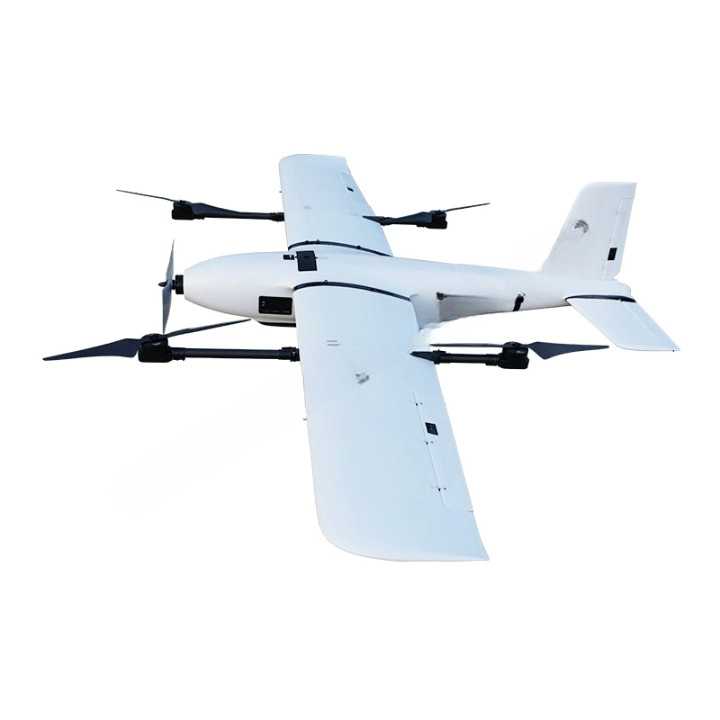
We recommend our flagship China Moneypro M210 Long Endurance Portable eVTOL Drone for Mapping and Surveillance. It represents the perfect equilibrium between capital investment and operational capability. Engineered for rapid deployment, it provides the extended flight times necessary for commercial mapping without the crushing logistical overhead of traditional aviation. When you invest in a full-stack manufacturer, you eliminate the integration nightmares that plague piecemeal drone builds.
The Bottom Line
A Calculated Asset, Not a Speculative Gamble
To definitively answer Is eVTOL a good investment, you must evaluate your operational scale. For individual hobbyists or localized real estate photographers, the expense is unwarranted. However, for serious commercial enterprises, law enforcement, and infrastructure management teams, an industrial eVTOL is a profoundly intelligent capital expenditure. It systematically replaces highly expensive, dangerous manned helicopter operations with silent, efficient, and autonomous robotic data collection. Secure your supply chain, prioritize BVLOS communication architecture, and invest in aerospace-grade manufacturing to dominate your operational airspace.
Frequently Asked Questions
Investing in retail passenger UAM (Urban Air Mobility) stocks is highly speculative and fraught with risk. The timeline for FAA and EASA certification for human-carrying autonomous air taxis is heavily delayed by regulatory hurdles and infrastructure limitations (vertiports). By contrast, investing capital into procuring unmanned industrial eVTOL drones for commercial surveying yields immediate returns today.
A professionally maintained industrial eVTOL airframe constructed from carbon fiber or Kevlar composites can last 5 to 10 years. The primary consumable components are the lithium batteries (which require replacement every 300 to 500 cycle charges) and the servo motors controlling the flight surfaces, which have strict maintenance replacement schedules.
eVTOLs are generally more susceptible to crosswinds during the critical transition phase between vertical hover and forward flight due to the large surface area of their wings. However, once in fixed-wing forward flight, they cut through the air highly efficiently and can often handle higher sustained wind speeds than a standard quadcopter.
Authoritative Industry References
- Federal Aviation Administration (FAA) – Unmanned Aircraft Systems – Authoritative regulatory framework and BVLOS operational guidelines for commercial drone deployment in national airspace.
- European Union Aviation Safety Agency (EASA) – Civil Drones – Standardized safety mandates and certification requirements for eVTOL aircraft and industrial drone operations.
- Institute of Electrical and Electronics Engineers (IEEE) Xplore – Peer-reviewed engineering research regarding aerodynamic efficiency, telemetry data links, and the economic analysis of electric vertical takeoff architectures.