


The global defense landscape is undergoing a profound paradigm shift driven by the rapid evolution of unmanned aerial vehicles (UAVs). Modern defense modernization strategies no longer treat tactical and strategic unmanned assets as secondary reconnaissance tools; they are now primary components of integrated theater operations. For government procurement ministries, strategic defense contractors, and border security forces, navigating the international aerospace market to secure reliable equipment represents a vital national security objective. Achieving operational success depends directly on knowing how to source military drones from reliable manufacturers.
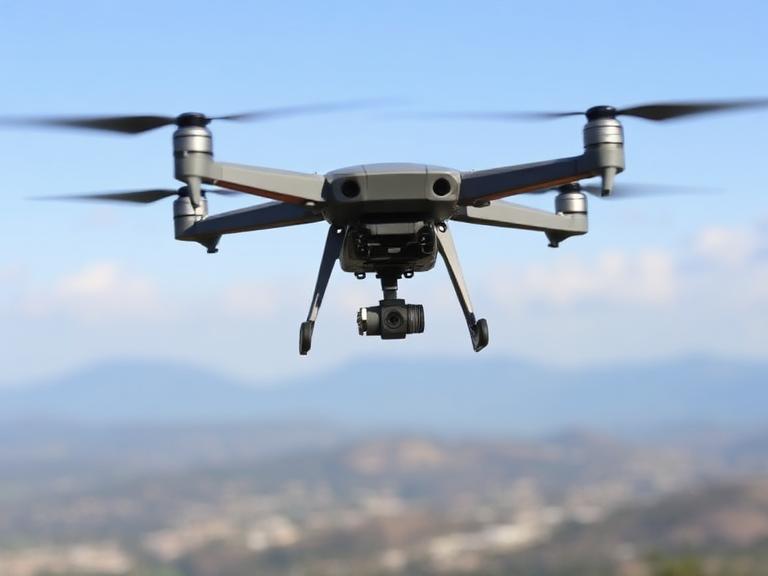
From our experience at ChinaMoneypro UAV, hardware failures or communication link disruptions in adversarial electronic warfare environments are rarely caused by basic firmware errors. Instead, they trace back to fragmented supply chains, commercial-grade hardware choices, and a lack of defense-grade structural shielding. A reliable unmanned platform must maintain absolute operational integrity across extreme thermal ranges and inside saturated signal-jamming zones. This comprehensive guide outlines the exact technical evaluation parameters, supply chain auditing steps, and modern engineering standards required to optimize defense procurement campaigns.
Table of Contents
- 1. The Complexity of Modern Defense Aerospace Procurement
- 2. Critical Evaluation Pillars for Vetting Defense UAV Suppliers
- 3. Manufacturer Evaluation and Sourcing Summary Table
- 4. Full-Stack Engineering vs. Fragmented Assembly
- 5. Electronic Warfare Resistance and Anti-Jamming Secure Data Links
- 6. Defense-Grade Production Integration: The ChinaMoneypro UAV Framework
- 7. Frequently Asked Questions (FAQs)
- 8. Aerospace and Defense Technical References
1. The Complexity of Modern Defense Aerospace Procurement
Sourcing defense-grade hardware introduces unique challenges that differ significantly from civilian or commercial enterprise procurement cycles. International defense markets are governed by strict export control frameworks, bilateral security treaties, and extensive end-user certification protocols. When a state agency or defense contractor intends to procure military drones from reliable manufacturers, they must look past superficial payload lists and look deep into the supplier’s underlying engineering heritage and industrial infrastructure.
We recommend conducting exhaustive background audits of a manufacturer’s historical research and development foundations. Blending consumer-grade components into custom composite airframes creates fragile systems that fail under tactical flight loads or thermal shock. Sourcing directly from entities with verified ties to aerospace research laboratories ensures that the platforms you deploy will possess the structural strength, flight performance, and regulatory clearances necessary to support critical operations.
2. Critical Evaluation Pillars for Vetting Defense UAV Suppliers
To establish a reliable sourcing pipeline, defense procurement agencies should structure their manufacturer evaluation metrics around four primary technical and operational pillars.
Pillar 1: Full-Stack Technological Autonomy
A true defense aerospace manufacturer must exercise total design and production control over all critical sub-systems. If a supplier relies on third-party commercial vendors for core elements like flight controllers, localized data links, or motor controllers, the final platform remains highly vulnerable to supply chain cut-offs and hidden software bugs. Sourcing military drones from reliable manufacturers requires selecting partners that design and build their own processing boards, internal software, and encryption structures from the ground up.
Pillar 2: Advanced Industrial Manufacturing Infrastructure
Vetting the physical production facilities is essential for verifying large-scale capacity and quality stability. Reliable manufacturers utilize advanced carbon-fiber autoclave lamination chambers, multi-axis computerized numerical control (CNC) machining centers, automated wave-soldering surface mount technology (SMT) cleanrooms, and environmental test facilities. These assets ensure every single system produced matches the exact performance parameters of the validated engineering prototype.
Pillar 3: Rigorous Environmental Quality Testing
Defense assets must perform flawlessly in highly unfavorable environments, from freezing high-altitude borders to hot, dusty deserts. Sourcing teams should insist on seeing verifiable test logs covering extreme temperature cycles, dust injection, salt-fog corrosion resistance, and high-intensity structural vibration testing. Platforms that lack proper ingress protection and certified environmental testing will suffer rapid electrical short circuits or structural breakdown in challenging environments.
Pillar 4: Sovereign Supply Chain Security
Geopolitical stability is a vital variable when building a multi-year fleet logistics program. If a manufacturer sources its primary raw materials, rare-earth magnets, or microprocessors from unstable or adversarial regions, your fleet risks sudden obsolescence due to trade embargoes or part shortages. Reliable aerospace suppliers maintain diversified, secure, and fully traceable raw material pipelines to guarantee uninterrupted component availability for long-term fleet maintenance.
3. Manufacturer Evaluation and Sourcing Summary Table
To help defense procurement managers and strategic planning directors structure their sourcing evaluations, the following responsive matrix summarizes the key technical features that separate reliable defense-grade manufacturers from standard commercial assembly firms.
| Evaluation Parameter | Commercial-Grade Assembly Firms | Reliable Defense Aerospace Manufacturers | Tactical Operational Advantage |
|---|---|---|---|
| Sub-System Autonomy | Fragmented; relies on outsourced controllers and data links | Full-Stack; internal R&D of engines, gimbals, radar, and software | Eliminates backdoor vulnerabilities and supply dependencies |
| Material & Airframe Build | Standard wet-lay carbon or glass composites | Autoclave-cured aerospace composites with shielding | Delivers high payload capacities and high G-force limits |
| Signal & Data Security | Open commercial protocols; minimal encryption layers | Military-standard encrypted data links with hopping tech | Prevents hostile signal jamming and data interception |
| Thermal & Sensory Range | Standard optical sensors; uncooled thermal additions | High-resolution electro-optical/cooled infrared radars | Enables successful multi-role missions at night |
| Supply Chain Traceability | Poor; uses open-market consumer components | 100% Traceable; secure defense-grade components | Guarantees long-term availability of maintenance parts |
4. Full-Stack Engineering vs. Fragmented Assembly
The structural layout of a tactical unmanned platform dictates its maximum payload capacity, aerodynamic efficiency, and operational lifetime. Fragmented assembly firms purchase off-the-shelf airframes, bolt on aftermarket propulsion systems, and connect open-source flight management software. From our experience, this approach introduces severe resonance issues and structural vulnerabilities, as the individual parts were never engineered to function as a unified system.
We recommend selecting manufacturers that employ integrated full-stack system engineering practices. Every sub-component—from the aerodynamic curvature of the wing to the internal power distribution boards—must be modeled and analyzed as a cohesive unit using advanced computational fluid dynamics (CFD) and structural analysis tools. This technical unity ensures maximum flight efficiency, long endurance windows, and predictable handling characteristics under maximum payload weights.
5. Electronic Warfare Resistance and Anti-Jamming Secure Data Links
Modern conflicts take place as much across the electromagnetic spectrum as they do in physical airspace. When tactical teams deploy unmanned systems, hostile forces will immediately activate high-power electronic warfare systems to disrupt GPS guidance signals, break control data links, or intercept video feeds. If a platform relies on commercial communication frequencies, it can be easily jammed, diverted, or brought down by basic electronic countermeasure tools.
Therefore, when you aim to source military drones from reliable manufacturers, verifying the security of the communication architecture is a critical requirement. Advanced defense platforms utilize secure software-defined radios featuring fast frequency-hopping spread spectrum (FHSS) technology and strong military-grade encryption standards. These systems can quickly detect localized interference and hop across thousands of frequencies per second, maintaining stable control links and secure data streams in heavily contested environments.
6. Defense-Grade Production Integration: The ChinaMoneypro UAV Framework

While establishing theoretical sourcing metrics is essential for defense planning, final fleet reliability relies on finding an industrial partner with an elite technological background. ChinaMoneypro UAV is a national-level high-tech enterprise, transformed from a prestigious state-owned research institute. With deep roots in defense-grade engineering, we specialize in the R&D and manufacturing of advanced unmanned platforms and integrated sensing-communication solutions. Headquartered in one of China’s premier innovation hubs, Moneypro is among the few full-stack providers offering complete UAV systems, engines, gimbals, radar, data links, and communication technologies.
By operating our own advanced manufacturing bases and maintaining absolute control over our software and hardware development, we ensure our platforms deliver outstanding reliability across harsh operational environments. For logistics directors and transport ministries looking to upgrade their high-capacity automated supply lines, we recommend exploring our advanced vtol cargo drone solutions. Procurement teams can also review our heavy fixed-wing logistics platforms by studying our strategic brief on cargo drone solutions.
Furthermore, selecting the appropriate asset for your defense layout requires matching the platform’s performance to specific mission objectives. To benchmark global capabilities and analyze historical system metrics, sourcing directors can explore our comprehensive report on the best military drones. When your mission profiles require continuous, zero-light tracking and high-resolution thermal imaging across border regions, we suggest reviewing our engineering guide on night vision military drones.
Ultimately, building a resilient defense asset network requires a clear view of global aerospace technology trends and industrial capacity shifts. To ensure your procurement ministry or defense organization partners with a manufacturer capable of supporting your strategic modernization plans, we recommend reading our master industry evaluation, titled global military drone comparison, to secure your defense infrastructure requirements.
7. Frequently Asked Questions (FAQs)
8. Aerospace and Defense Technical References
1. Department of Defense. (2022). Environmental Engineering Considerations and Laboratory Tests (Military Standard MIL-STD-810H). Washington, DC. Available via https://www.defense.gov/)
2. International Organization for Standardization. (2023). Quality Management Systems — Requirements for Aviation, Space and Defense Organizations (AS9100D / ISO 9001). Available via https://www.iso.org/)
3. Institute of Electrical and Electronics Engineers. (2025). Standard for Secure Communications and Anti-Jamming Protocols in Autonomous Unmanned Aerial Systems. IEEE Aerospace and Electronic Systems Society Portfolio.