Next-Generation Repeater Technology: An In-Depth Technical Analysis
nn
In the realm of telecommunications infrastructure, the reliability and precision of signal amplification equipment are paramount. Modern repeaters must navigate complex frequency bands while maintaining stringent performance metrics. This comprehensive analysis reviews the critical specifications that define high-performance repeater systems, focusing on frequency agility, output consistency, and operational durability. Understanding these Repeater Specifications is essential for network engineers and system integrators seeking optimal coverage solutions.
nn
The device under review supports three major cellular frequency bands: the 0.9G, 1.8G, and 2.1G ranges. Each band presents unique challenges in terms of bandwidth allocation, power distribution, and interference management. The following sections break down the component-level performance characteristics that determine overall system efficacy.
nn
Frequency Band and Power Characteristics
nn
The repeater operates across the GSM and UMTS frequency spectrums, with specific uplink and downlink configurations. The 0.9G band offers a downlink range of 935-960 MHz and an uplink range of 890-915 MHz, while the 1.8G band covers 1805-1880 MHz (downlink) and 1710-1785 MHz (uplink). The 2.1G band provides 2110-2170 MHz downlink and 1920-1980 MHz uplink, supporting high-speed data services.
nn
Operating Bandwidth and Sub-band Allocation
nn
Variable bandwidth configurations allow the system to adapt to different network loads. The 0.9G band supports a 0.2-20 MHz range, the 1.8G band operates within 0.2-10 MHz, and the 2.1G band offers selectable bandwidths of 5, 10, 15, or 20 MHz (with effective bandwidths of 3.84, 8.84, 13.84, and 18.84 MHz respectively). Sub-band numbers vary: three sub-bands for 0.9G and 2.1G, and seven sub-bands for 1.8G.
nn
Max output power is carefully regulated, with center frequency power set at 20±3 dBm for downlink and 15±3 dBm for uplink. Gain levels are equally precise, offering 70±5 dB for downlink and 65±5 dB for uplink at center frequency. The attenuation adjustable range spans 0 to 30 dB in 1 dB steps, providing fine-grained control over signal strength.
nn
Signal Integrity and Filtering Specifications
nn
Maintaining signal purity across the bandwidth is critical. At 25°C, the ripple in band is ≤±5.0 dB at effective bandwidth (EBW). The Automatic Level Control (ALC) range covers 0 to 20 dB with an accuracy of ≤|±2.0| dB, while the Automatic Gain Control (AGC) range extends to 30 dB. Intermodulation distortion (IMD3) is maintained at ≤ -36 dBc at 30 kHz offset, ensuring minimal harmonic interference.
nn
Out-of-Band Emission Control
nn
Rigorous emission standards are enforced across all frequency segments. For out-of-band emissions at a ±2.5 MHz offset, the limits are: 9 kHz to 150 kHz at ≤ -36 dB @ 1 kHz resolution, 150 kHz to 30 MHz at ≤ -36 dB @ 10 kHz, 30 MHz to 1 GHz at ≤ -36 dB @ 100 kHz, and 1 GHz to 12.75 GHz at ≤ -30 dB @ 1 MHz. The noise figure at maximum gain is ≤8.0 dB, and total processing delay is kept below 5.0 microseconds.
nn
Comprehensive Repeater Specifications Table
nn
| Parameter | Downlink Value | Uplink Value |
|---|---|---|
| Frequency Range 0.9G (MHz) | 935-960 | 890-915 |
| Frequency Range 1.8G (MHz) | 1805-1880 | 1710-1785 |
| Frequency Range 2.1G (MHz) | 2110-2170 | 1920-1980 |
| Operating Bandwidth 0.9G (MHz) | 0.2-20 | |
| Operating Bandwidth 1.8G (MHz) | 0.2-10 | |
| Operating Bandwidth 2.1G (MHz) | 5/10/15/20 (EBW: 3.84/8.84/13.84/18.84) | |
| Sub-band Number 0.9G | 3 | |
| Sub-band Number 1.8G | 7 | |
| Sub-band Number 2.1G | 3 | |
| Max Output Power at Center Freq (dBm) | 20±3 | 15±3 |
| Max Gain at Center Freq (dB) | 70±5 | 65±5 |
| ATT Range/Step (dB) | 0 ~ 30 / 1 | |
| Ripple in Band at 25°C (dB) | ≤±5.0 @ EBW | |
| ALC Range (dB) | 0 ~ 20 | |
| ALC Accuracy (dB) | ≤ |±2.0| | |
| AGC Range (dB) | 30 | |
| IMD3 (dBc) | ≤ -36 @ 30 kHz | |
| Noise Figure at Max Gain (dB) | ≤8.0 | |
| Total Processing Delay (µs) | ≤5.0 | |
| Input VSWR (Power Up, Min Gain, Pin=-30dBm) | ≤2.5 | |
| Frequency Error (ppm) | ≤0.01 | |
| PCDE at WCDMA2100 (dB) | ≤35 | |
| ACRR at WCDMA2100 (dB) | ≤20 @ ±5MHz & ≤30 @ ±10MHz | |
| EVM RMS 0.9G/1.8G (%) | ≤8.0 | |
| EVM RMS 2.1G (%) | ≤12.5 | |
| Impedance (Ω) | 50 | |
| Radio Connector | N(f) | |
| Power Supply | AC 220V, 45-55 Hz | |
| Housing Class | IP30 (Indoor) | |
| Weight (kg) | ≤12 | |
| Dimensions (mm) | 344 × 308.6 × 81 (Note 1) | |
| Operating Temperature (°C) | 0 to +45 | |
| Power Consumption (W) | ≤100 | |
| Humidity (%) | ≤85 | |
| Control Function | Local: PC via Micro-USB; Remote: GSM Modem | |
| Status Monitoring | Power supply, input/output power (DL), temperature, Power Indicator, Alarm Indicator | |
nn
Out-of-Band Gain Performance
nn
0.9G and 1.8G Band Offsets
nn
At 25°C, the out-of-band gain for the 0.9G and 1.8G bands at various frequency offsets is precisely controlled: offset ±600 kHz yields ≤ 55 dB, offset ±1 MHz gives ≤ 35 dB, and offset ±5 MHz provides ≤ 25 dB. For the 2.1G band, the specifications are more granular: 2.7 MHz ≤ f_offset < 3.5 MHz at ≤ 60 dB, 3.5 MHz ≤ f_offset < 7.5 MHz at ≤ 45 dB, 7.5 MHz ≤ f_offset < 12.5 MHz at ≤ 45 dB, and f_offset ≥ 12.5 MHz at ≤ 35 dB.
nn
Operational and Environmental Parameters
nn
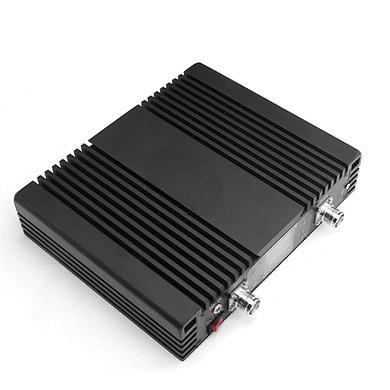
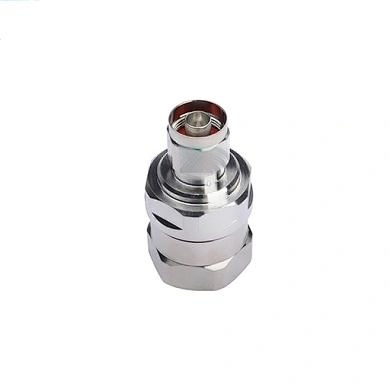
The device is designed for indoor use with an IP30 housing class. It operates on AC 220V at 45-55 Hz, consuming ≤100W. The operating temperature range is 0 to +45°C with humidity ≤85%. Control functions include local configuration via PC through Micro-USB and remote management via GSM modem. Status monitoring covers power supply, input/output downlink power, temperature, and includes both power and alarm indicators. The impedance is 50Ω, using N-type female connectors, and the unit weighs ≤12 kg with dimensions of 344 × 308.6 × 81 mm.
nn
Conclusion
nn
These comprehensive Repeater Specifications demonstrate a device engineered for high reliability and precise signal management across multiple frequency bands. From meticulous power and gain controls to stringent out-of-band emission limits, every parameter is optimized to ensure minimal interference and maximum data integrity. Whether deployed in dense urban environments or specialized indoor coverage zones, this repeater meets the demanding requirements of modern wireless networks, offering flexibility in bandwidth configuration and robust monitoring capabilities for sustained operational excellence.