Optimizing Signal Performance with Triplexer Solutions
n
In modern telecommunications, the demand for seamless connectivity and efficient spectrum utilization has never been higher. Network operators and system integrators face the challenge of managing multiple frequency bands within the same infrastructure, often in confined indoor environments. A high-quality triplexer is essential for splitting or combining signals without interference, ensuring that voice, data, and video services operate simultaneously without degradation. This article explores the critical parameters of a professional-grade triplexer designed for 1800/2100/2300 MHz bands, highlighting how its specifications translate into real-world performance and reliability.
n
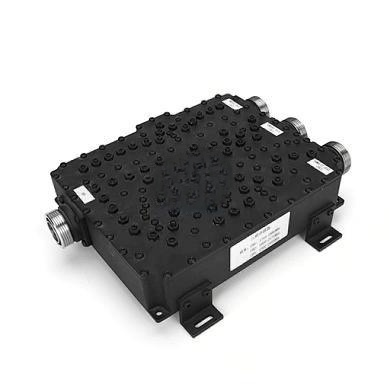
The triplexer discussed here is engineered for demanding indoor applications, including distributed antenna systems (DAS), small cells, and in-building coverage solutions. Its core function is to isolate three separate frequency channels while maintaining low signal loss and high power handling. By understanding the technical attributes detailed below, you can make an informed decision about integrating this component into your RF network.
nn
Critical Triplexer Specifications for Indoor Networks
n
When evaluating a triplexer, key parameters such as insertion loss, isolation, VSWR, and power handling determine how well the device will perform in a live network. The following technical data reveals a component built for precision and durability.
n
This triplexer covers the essential 1800 MHz, 2100 MHz, and 2300 MHz bands, which are widely used for 2G, 3G, 4G LTE, and emerging 5G services. The insertion loss remains below 0.8 dB across all paths, meaning very little signal energy is wasted as heat. Isolation exceeds 80 dB, ensuring that signals from one frequency band do not leak into another, preventing cross-talk and interference. A VSWR of less than 1.3 indicates excellent impedance matching, reducing reflections and signal loss. With a power handling capacity of 100 watts and 50 ohm impedance, this triplexer is robust enough for moderate power scenarios typical of indoor networks.
nn
Electrical and Mechanical Parameters Overview
n
The table below consolidates all specifications for quick reference. Please note that no specs are repeated outside this structured format.
nn
| Parameter | Specification |
|---|---|
| Frequency Range (MHz) | 1710-1880 / 1920-2170 / 2300-2500 |
| Center Frequencies Covered | 1800 / 2100 / 2300 |
| Insertion Loss (dB) | <0.8 |
| Isolation (dB) | >80 |
| VSWR | <1.3 |
| Power Handling (W) | 100 |
| Impedance (Ω) | 50 |
| Connectors | N-Female |
| Mounting | Mounting Holes |
| Colour | Black |
| Temperature Range (°C) | -20 to +70 |
| Application | Indoor |
nn
Why High Isolation and Low Insertion Loss Matter
n
The above specifications are not just numbers; they directly impact network quality. High isolation (>80 dB) between ports means that a strong signal on the 1800 MHz band will not desensitize a receiver on the 2100 MHz band. This is crucial in multi-operator and multi-technology environments where different carriers share the same antenna system. Low insertion loss (<0.8 dB) ensures that the transmitter power reaches the antenna efficiently, extending coverage and improving data rates.
n
Furthermore, the wide frequency ranges within each band (e.g., 1710-1880 MHz for the 1800 path) provide flexibility to accommodate varying spectrum allocations across different regions. The N-Female connectors are industry-standard, known for their robust mechanical design and low RF leakage, making them ideal for permanent indoor installations.
nn
Environmental Reliability and Application Fit
n
This triplexer is rated for indoor use with an operating temperature range of -20°C to +70°C. While not sealed for outdoor exposure, this range covers most indoor environments, including equipment rooms, basements, and covered risers. The black finish and mounting hole pattern simplify attachment to equipment racks or walls. Because it is designed for indoor applications, it prioritizes RF performance over weatherproofing, making it a cost-effective choice for in-building solutions.
n
In summary, the triplexer with specifications for 1800/2100/2300 MHz bands delivers the high isolation, low loss, and reliable mechanical construction needed for modern indoor networks. Whether you are upgrading a legacy DAS or deploying new small cells, this device ensures clean signal separation and minimal power loss.
nn
Conclusion: Selecting the Right Triplexer for Your Network
n
Choosing a triplexer that meets your frequency plan and performance requirements is vital for network efficiency. The device described here, with its balanced parameters, is well-suited for indoor scenarios where footprint and signal integrity are key. By prioritizing isolation over 80 dB and insertion loss under 0.8 dB, you ensure that multiple bands coexist harmoniously. Always verify that the connector type, impedance, and power handling align with your system design. When you need a triplexer that delivers on its specifications without unnecessary complexity, this model provides a trusted, field-proven solution for your indoor infrastructure.