Introduction to Advanced Passive RF Detection
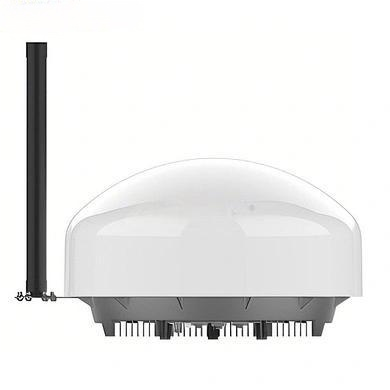
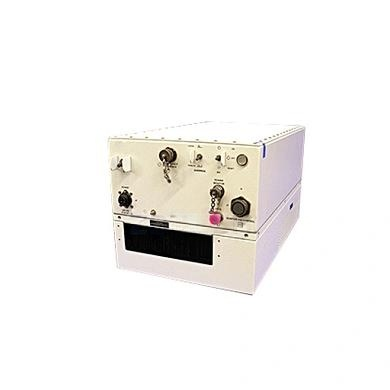
nnIn an era where unmanned aerial vehicles (UAVs) pose increasing security challenges, the MOP-RD02800M fixed RF detector emerges as a critical solution for modern airspace protection. This advanced system leverages passive radio frequency detection to monitor the radio spectrum without emitting any signals, ensuring stealthy and non-intrusive surveillance. As the focus keyword is passive radio drone detection, this technology operates by silently capturing and analyzing the communication signals between drones and their controllers, making it a powerful tool for safeguarding sensitive areas. By covering an ultra-wide frequency range from 20MHz to 8000MHz and providing 360-degree monitoring, the detector offers comprehensive situational awareness in real-time. Its ability to identify drone models, serial numbers, and the precise positions of both the drone and pilot enhances security responses, making it a vital asset for military camps, airports, and critical infrastructure.nn
Core Capabilities of Passive Radio Drone Detection
nn
Ultra-Wide Frequency Coverage and Detection Range
nnThe MOP-RD02800M is designed to detect a vast array of communication links, including both uplink and downlink CNC (Control and Non-Payload Communications). With a frequency range spanning from 20MHz to 8000MHz, it captures signals across multiple bands, ensuring compatibility with diverse drone types. The detection radius extends to over 4 kilometers for DJI series drones and similarly for FPV drones, while also providing accurate azimuth detection. The detection angle covers a full 360 degrees horizontally, with a pitch range from -20° to 70° for precision direction finding and -70° to 90° for accurate identification. This extensive coverage makes the system effective in both open and cluttered environments.nn
High-Precision Positioning and Multi-Target Tracking
nnAccuracy is paramount in drone detection, and the MOP-RD02800M delivers with a detection azimuth accuracy of ≤3° (RMS) above 2GHz and ≤5° (RMS) below 2GHz. It can precisely locate drones and their pilots using two methods: broadcast message parsing with an accuracy of 2 meters, or cross-verification with multiple devices achieving 10 to 100 meters accuracy. The system also supports multi-target tracking, capable of handling up to 40 targets simultaneously, ensuring that no threats are missed during high-traffic scenarios.nn
Technical Specifications and Performance Parameters
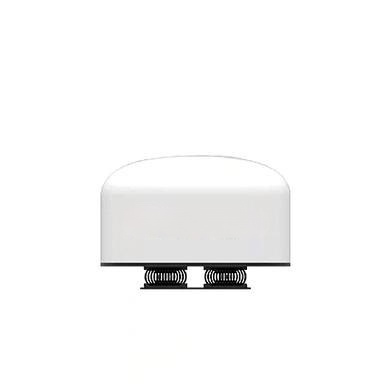
nnTo provide a clear understanding of the system’s capabilities, the following table presents the key specifications in a structured format.nn| Parameter | Value |n| :— | :— |n| Working Mode | Passive Radio Detection |n| Detection Object | UAV uplink and downlink CNC links |n| Recognition Modes | Spectrum recognition, Drone ID recognition |n| Frequency Range | 20 – 8000 MHz |n| Detection Radius | 4 km (DJI series drones, FPV drones) |n| Detection Angle | Horizontal 360°; Pitch -20° to 70° (precision direction finding); -70° to 90° (accurate identification) |n| Real-time Scanning Bandwidth | ≥120 MHz |n| Detection Azimuth Accuracy | ≤3° (RMS) above 2GHz; ≤5° (RMS) below 2GHz |n| Positioning Accuracy | 2 m (broadcast message parsing); 10-100 m (cross-verification) |n| Multi-Target Detection | ≥40 systems |n| Detection Response Time | ≤2 s (120 MHz bandwidth) |n| Continuous Operation Time | 7 × 24 hours |n| Communication Method | RJ45, TCP/IP protocol |n| Power Supply | 220V / 50Hz AC |n| Total Power Consumption | ≤80 W |n| MTBF (Mean Time Between Failures) | 3000 hours |n| MTTR (Mean Time To Repair) | 1 hour |n| IP Rating | IP66 |n| Storage Temperature | -50°C to +75°C |n| Operating Temperature | -45°C to +70°C |n| Dimensions | 599 mm × 599 mm × 386 mm (excluding external omnidirectional antenna) |n| Weight | 19 kg (excluding frame) |nn
Operational Features and Environmental Adaptability
nn
Intelligent Alerts and Data Management
nnThe detector automatically identifies drone models, serial numbers, and the positions of both the drone and its pilot. Upon detection, it triggers audio-visual alarms and supports blacklist and whitelist management for immediate threat classification. Flight paths are stored end-to-end, and all data is exportable for post-event analysis. This seamless data flow enables integration with low-altitude security platforms and jamming equipment for coordinated countermeasure operations.nn
Rugged Design for Harsh Conditions
nnBuilt to withstand extreme environments, the MOP-RD02800M operates continuously 24 hours a day, 7 days a week, with an IP66 protection rating against dust and water ingress. It functions reliably across a wide operating temperature range from -45°C to +70°C and can be stored at temperatures from -50°C to +75°C. With a low total power consumption of ≤80W, a mean time between failures (MTBF) of 3000 hours, and a mean time to repair (MTTR) of just 1 hour, this device ensures long-term, maintenance-friendly performance.nn
Conclusion: The Future of Airspace Security
nnIn conclusion, the MOP-RD02800M fixed RF detector represents a leap forward in passive radio drone detection technology. Its ultra-wide frequency coverage, rapid response time of ≤2 seconds, and high azimuth accuracy make it an indispensable tool for protecting critical areas such as airports, military installations, and key national infrastructure. By passively listening to the radio environment without emitting signals, it ensures covert operation while delivering comprehensive threat identification and localization. As drone threats continue to evolve, solutions like this offer a robust foundation for low-altitude protection, seamlessly integrating with existing security platforms to form a resilient defense against unauthorized UAV activity.