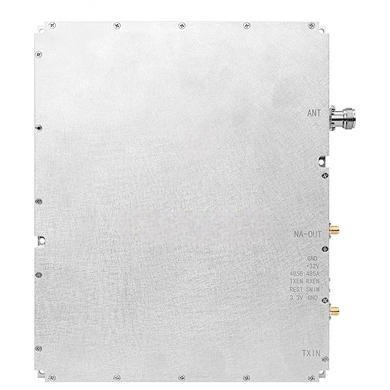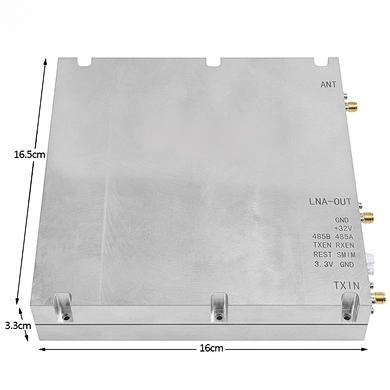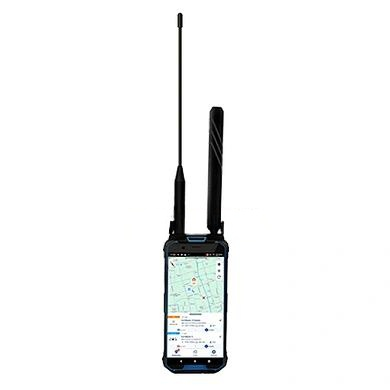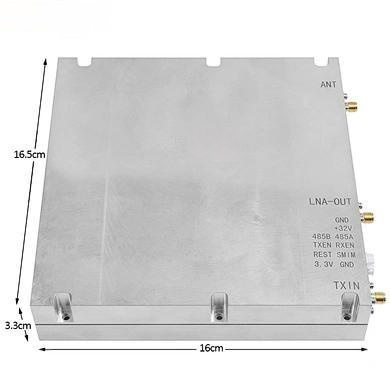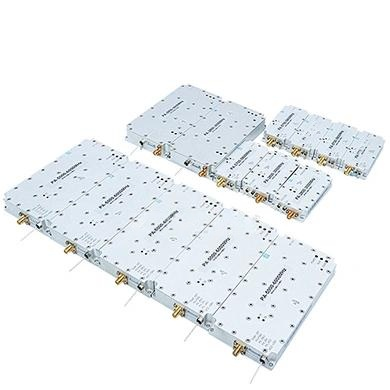
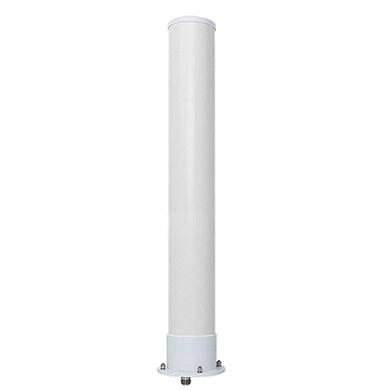
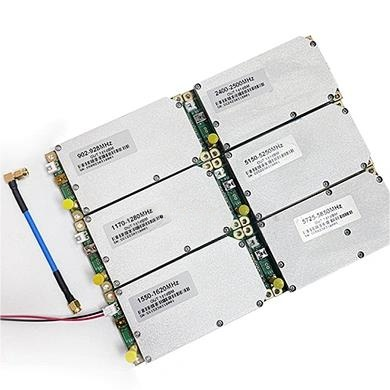
Unleashing Performance: The 50W Power Amplifier for Demanding Applications
nn
In the world of high-frequency communications, signal integrity and output power are paramount. Whether you are deploying a point-to-point microwave link, powering a drone data link, or enhancing a wireless network infrastructure, the amplifier at the heart of your system determines the overall reliability and range. The 50W power amplifier is a critical component engineered to deliver robust performance in the critical 5000-6000MHz frequency band.
nn
This unit is not merely a component; it is a precise instrument designed for engineers who demand consistent gain and minimal distortion. With a rated output of 50 watts, this amplifier bridges the gap between low-power signal generation and the high-power transmission required for long-distance or obstacle-dense environments. Understanding its detailed specifications is crucial for proper system integration, and we have structured the key technical parameters for clear comparison.
nn
Critical Specifications of the 50W Power Amplifier
nn
To ensure optimal system design, we have organized the amplifier’s core metrics. From RF performance to environmental resilience, every parameter is engineered for stability under load.
nn
| Parameter | Specification |
|---|---|
| Operational Bandwidth | 5000 – 6000 MHz |
| Output Power (Rated) | 50W |
| Gain (Typical) | 46 ± 2 dB |
| In-band Flatness | Ensures consistent output across the band |
| Working Current | ≤ 5A |
| Operating Voltage (DC) | +28 V |
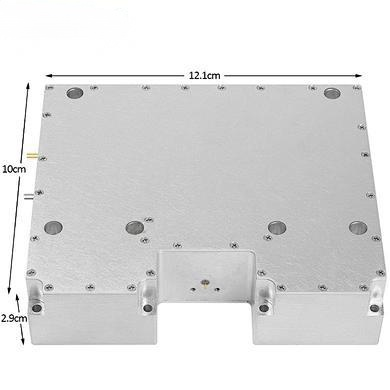
| Dimensions (W x D x H) | 141 x 71 x 20 mm |
| Power Supply Interface | Feed-through Capacitor |
| RF Port: Input (RFIN) | SMA-KFD |
| RF Port: Output (RFOUT) | N-F |
| Monitoring Interface | Feed-through Capacitor |
| Input/Output VSWR | ≤ 1.5 |
| Maximum Lossless Input | +10 dBm |
| Out-of-band Spurs | 9kHz-1GHz: ≤ -36 dBm/30kHz 1GHz-12.75GHz: ≤ -30 dBm/30kHz |
| Operating Temperature | -10°C to +55°C |
| Relative Humidity | 5% – 95% (Non-condensing) |
| Storage Temperature | -25°C to +65°C |
nn
Understanding RF Ports and Impedance Matching
n
The amplifier features a specific combination of RF connectors. The input utilizes an SMA-KFD port (SMA female with a keying feature for secure connections), while the output uses a standard N-F (N-Type Female) connector, which is ideal for high-power handling up to 50W. The stringent VSWR specification of ≤1.5 ensures that signal reflection is minimized, protecting upstream components and maximizing power transfer efficiency.
nn
Power Handling and Thermal Stability
n
Operating under a DC bias of +28V and drawing no more than 5A, this unit is designed for efficiency. The feed-through capacitors on the power supply and monitoring interfaces provide critical filtering, preventing high-frequency noise from traveling back into the DC line. The compact size (141x71x20mm) allows for integration into space-constrained enclosures, while the broad operating temperature range ensures reliable performance in both indoor and controlled outdoor environments.
nn
Why Choose This 50W Power Amplifier?
n
This amplifier excels in applications requiring clean signal amplification across a full 1GHz bandwidth. The low spurious emission levels mean it complies with stringent regulatory standards for out-of-band emissions, making it suitable for licensed spectrum use. Whether you are operating in the 5.8 GHz ISM band or military communication bands, the high gain and consistent output of this 50W power amplifier ensure your signal reaches its destination intact.
nn
Environmental Resilience and Longevity
n
Designed to withstand humidity levels up to 95% (non-condensing) and storage temperatures from -25℃ to +65℃, this amplifier is built for mission-critical reliability. The careful selection of materials and port interfaces ensures that thermal cycling and mechanical stress do not degrade performance over time.
nn
Conclusion
n
Selecting a 50W power amplifier for your 5-6 GHz system is a decision that impacts signal reach, data throughput, and overall system robustness. The detailed specifications provided in this article—from the precise VSWR requirements to the rigorous spurious emission limits—highlight a device engineered for high-stakes environments. By integrating this amplifier, you are not just boosting power; you are ensuring signal fidelity and system longevity. For deployment in backhaul links, UAV communications, or test labs, this 50W power amplifier stands as a benchmark for performance and reliability.