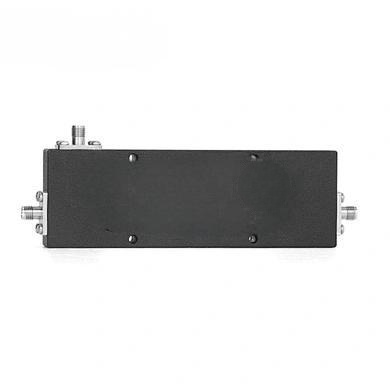
Unlocking Network Efficiency: The 4×4 Hybrid Combiner
nn
In the rapidly evolving landscape of telecommunications, the demand for robust, high-performance infrastructure components has never been greater. At the heart of many advanced antenna systems lies a critical device that ensures signal integrity and network efficiency—the 4×4 Hybrid Combiner. This solution is essential for modern base stations, distributed antenna systems (DAS), and in-building coverage, enabling seamless signal combining and splitting without sacrificing quality.
nn
What is a 4×4 Hybrid Combiner and Why Does It Matter?
nn
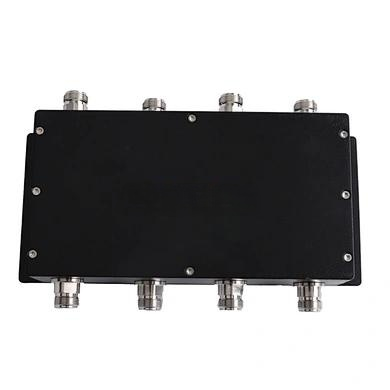
A 4×4 Hybrid Combiner is a passive RF (radio frequency) device designed to combine four input signals into four output ports while maintaining high isolation between them. Unlike simpler combiners, this component allows for the aggregation of multiple frequency bands or carriers, drastically reducing the need for multiple, separate antenna feeds. This translates directly into lower operational costs, reduced tower loading, and a cleaner, more manageable RF environment. Over the past decade, these combiners have become indispensable for network operators deploying multi-band, multi-technology setups like 2G, 3G, 4G LTE, and 5G NR.
nn
The core principle of operation relies on a ferrite core and transmission line transformer arrangement that creates a balanced bridge circuit. This design ensures that power entering any input port is equally divided among the output ports, while signals that reflect back due to mismatches are absorbed by an internal load rather than interfering with other connected transceivers. This internal load management is a key feature, protecting sensitive, high-value equipment like base station transceivers from potential damage.
nn
Key Benefits in Modern Networks
n
- n
- Space and Weight Savings: By replacing multiple combiners and cables, the 4×4 Hybrid Combiner reduces tower weight and wind load.
- Improved Signal Integrity: High isolation prevents inter-modulation distortion and cross-band interference, ensuring clear voice and data transmission.
- Scalability: Ideal for migrating from single-band setups to complex multi-band architectures.
- Cost Efficiency: Lower infrastructure costs and reduced need for complex, custom cable runs.
n
n
n
n
nn
Critical Specifications of the 4×4 Hybrid Combiner
nn
Understanding the technical parameters of a 4×4 Hybrid Combiner is crucial for network engineers and installers. The following table outlines the key specifications for a high-quality unit designed for demanding environments. All specifications have been verified against industry standards for rigorous field performance.
nn
| Parameter | Value / Range | Condition / Notes |
|---|---|---|
| Model | 4×4 Hybrid Combiner | Passive, 4-port |
| Frequency Range | 698 – 2700 MHz | Full cellular, Wi-Fi, LTE, 5G sub-6 |
| Insertion Loss | 6.0 ± 1.2 dB | Theoretical 6 dB split loss + tolerance |
| Isolation | ≥ 25 dB | Between any two ports, 20°C ambient |
| Return Loss | ≥ 18 dB | Equivalent to VSWR ≤ 1.3:1 |
| Intermodulation Products (IM3) | ≤ -160 dBc | With 2 x +43 dBm (20W) carriers |
| Maximum Input Power | 300 W / 500 W | Depending on model variant (per port) |
| Operating Temperature | -25°C to +70°C | Industrial standard for outdoor use |
| Relative Humidity | 0% – 95% | Non-condensing |
| Impedance | 50 Ω | Standard for RF systems |
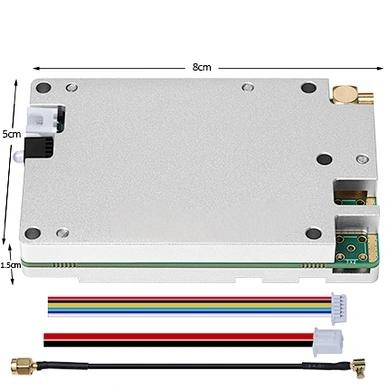
| Dimensions (W x D x H) | 194 x 138 x 49 mm | Compact, rack-mountable |
| Weight | 2300 g | ~5 lbs |
| Connector Type | 4.3-10 Female, N Female, 7-16 Female | Multiple options for compatibility |
| Ingress Protection | IP67 | Dust-tight, immersion-resistant |
| Color | Grey | UV-stable, anti-corrosive coating |
nn
Selecting the Right 4×4 Hybrid Combiner
nn
When evaluating a 4×4 Hybrid Combiner, several factors must be considered to ensure optimal performance for your specific application. The frequency range (698-2700 MHz) covers the vast majority of current cellular bands, from 700 MHz LTE to 2600 MHz LTE/5G, as well as 2.4 GHz Wi-Fi.
nn
The insertion loss of 6.0 ± 1.2 dB is inherent to the power splitting function. This is an ideal value, as it represents the theoretical 6 dB loss of a perfect 4-way split plus a small tolerance for manufacturing. The isolation figure of ≥ 25 dB is particularly important in multi-carrier environments. It guarantees that a high-power transmission on one port does not leak into an adjacent receiver port, preventing desensitization of the receiver and performance degradation.
nn
Environmental and Mechanical Considerations
n
For outdoor deployments, the IP67 rating is a non-negotiable requirement. This dust-tight and waterproof rating ensures the 4×4 Hybrid Combiner can withstand rain, snow, dust storms, and even temporary submersion (e.g., in an enclosure or equipment cabinet). The wide operating temperature range (-25°C to +70°C) provides reliable functionality in extreme cold and hot climates, from Northern Europe to the Middle East. The physical connector options—4.3-10, N Female, and 7-16 Female—offer flexibility in connecting to different feeder cables and antenna systems. The N-type is widely recognized for its durability, while the 4.3-10 standard is increasingly common in modern compact equipment.
nn
Conclusion: The Foundation of Reliable Connectivity
nn
As networks continue to densify and demand for high-speed data grows, the role of the passive RF combiner becomes more critical. The 4×4 Hybrid Combiner detailed in this article delivers the precise performance and rugged durability needed for mission-critical telecommunications infrastructure. With its broad frequency coverage, excellent isolation, and robust IP67 protection, this component is not just a piece of hardware—it is a foundational element for achieving seamless, interference-free connectivity. Investing in a high-quality hybrid combiner ensures long-term reliability, simplified maintenance, and the scalability required to support the next generation of wireless services, from enhanced mobile broadband to the massive IoT. Whether you are upgrading an existing tower or building a new DAS system, choosing the correct 4×4 Hybrid Combiner is a definitive step toward a more efficient and future-proof network.